Triathlon Across the USA: State #23 – North Dakota

Mandan, North Dakota; July 18, 2015 – Bismarck Triathlon, Harmon Lake Park.

What is it like to do a triathlon in winds gusting to 40 miles per hour (64 km per hour)? Our North Dakota triathlon showed just how much wind can affect a race.

This race is one chapter in a 50-state journey—now told in full in Triathlon Adventures Across America .

Planning the North Dakota Triathlon

How to Choose Your Next Triathlon highlights factors we typically use to select a triathlon, especially those involving overnight travel. For Joy and me, one of the keys to out-of-state triathlons has been to combine travel to the event with a visit to friends or family or a place of special interest (e.g. Savannah, Georgia – Hilton Head, South Carolina).  Sometimes, we accomplish more than one of these.

North Dakota was unique in this respect. Here’s the reason.

In 2015, North Dakota had among the fewest triathlons of any state.  On top of this, one of the three scheduled triathlons involved kayaking and mountain biking as an alternative to swimming and road biking.

I was concerned that the lone conventional sprint triathlon in North Dakota might eventually become extinct.

So, in February, we decided that this would be the year to complete the North Dakota triathlon and put behind us concerns about completing a triathlon in this state.

A Pleasant Surprise at Registration

During registration for the event, I learned I could save $2 on the fee if I shared news of the registration with my Facebook friends.  Of course, I took advantage of this. (Don’t judge.)

After sharing the post, I learned that one of my friends, Tom Lipp, had completed the Bismarck Triathlon a year earlier. 

I also learned that Tom was now training for Ironman Wisconsin. You can read about his experience training for and racing in Ironman Wisconsin here.

Getting to Bismarck for the North Dakota Triathlon

Bismarck is actually a twin city with Mandan, North Dakota, home of Harmon Park and the Bismarck Triathlon. The two cities are separated by the Missouri River with Bismarck, the capital of North Dakota, on the east side of the river. Mandan is on the west side of the Missouri River.

By the way, did you know that the Missouri River is the longest river in the United States, beating out the Mississippi by 21 feet?  And, that’s before it joins the Mississippi River just north of St, Louis, Missouri.

Driving to the Bismarck-Mandan area from our Minneapolis, Minnesota area home was about as easy a trip as one can make – start the audiobook, get on Interstate 94 West, and stay on it for just under six hours past the Red River Valley and some of the flattest parts of the USA.

We left home on Friday around 10:30 am and set our GPS coordinates for Epic Sports in Bismarck, location for race packet pick-up. After collecting the packet, including the race T-shirt, we checked into the Holiday Inn Express & Suites.

We then headed downtown, taking a short detour around the North Dakota State Capital building.

North Dakota state capital building for the Bismark triathlon
The North Dakota capitol building in Bismarck.

Following a short walk around the renovated downtown area, we stopped at one of the restaurants recommended by the hotel desk clerk, Blarney Stone Pub. Dinner tonight included authentic Irish food – creamed cabbage and corned beef for Joy and fish & chips for me.

11th Annual Bismarck Triathlon

The Bismarck event included sprint and Olympic distance triathlons. There was also a sprint distance relay option in which three members of a relay team each completed one of the legs.

Distances for the three legs of this USAT-sanctioned sprint triathlon were:

  • Swim: 0.31 mile (500 m)
  • Bike: 12.4 miles (20 km)
  • Run: 3.1 miles (5 km)

The 10 am starting time for the Bismarck Triathlon was the latest of any I had raced so far. The transition area did not even open until 8:30 am, a time at which most triathlons are starting or well underway.

Because of the later start, I had been concerned about the fact that the average high temperatures during the week before the triathlon had been just under 100°F. (I am not a fan of running in extreme heat.)

Today, however, the air temperature at race time was a chilly 60°F (16°C). On top of this, the wind was howling, with an average speed of 25 miles per hour (40 km per hour) and gusts to 40 miles per hour (64 km per hour).

transition area of Bismark North Dakota triathlon
Transition area of the Bismarck Triathlon in Harmon Park. The picture was taken near the beach of Harmon Lake.

Swim

It quickly became apparent to the poor souls who were assigned the job of placing the race buoys for the sprint and Olympic distances that the wind was too strong for the anchors meant to secure the buoys. The buoys simply would not stay where placed.

On top of this, the volunteers in kayaks who were to provide a rest stop along the course for swimmers needing a break during the swim leg had to spend all of their time paddling to stay near the course. With the wind today, they would not be able to provide the support for swimmers intended by the race director.

So, just before the start of the race, with the wind clearly in control, the race director shortened the swim course. Instead of the original course, he created one that ran parallel to the shore, a few yards away from it.

The revised course, reported to be 250 m by one swimmer with a GPS watch, was judged to be safe for the conditions of the day. Fortunately, everyone was safe through the swim. We completed the remaining legs of the race as planned.
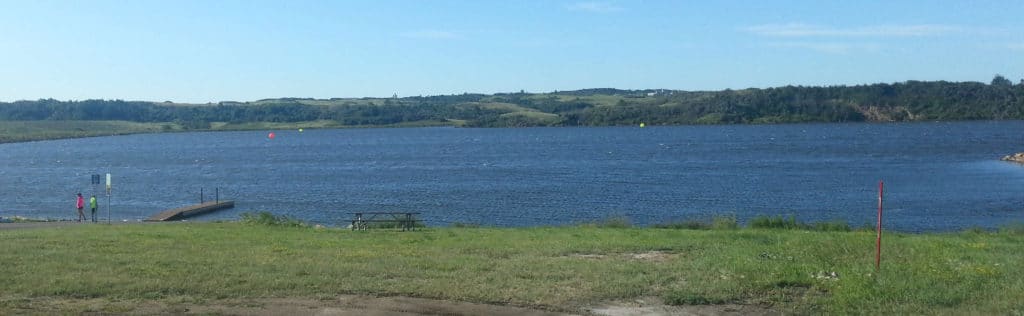
Harmon Lake with triathlon buoys near Mandan North Dakota
Harmon Lake early in the morning before the wind picked up. Note the orange and yellow buoys near the other side of the lake for the sprint and Olympic distances, respectively.

Bike

For the bike leg, the numbers on my bike computer tell the story. The average speed was 14 mph (23 km/hr) while the maximum speed was 37 mph (60 km/hr).

While biking uphill, into the wind, the speed was incredibly slow at between 9 and 11 miles per hour (14-18 km/hr). For most of the ride, I avoided the aero position for fear of being blown off the road.

After the initial approximately two miles into the westerly wind, we turned. Now, the wind was from the side, making the ride even more treacherous.

Triathlon training tip – While we may be inclined to avoid inclement weather when training, we should take advantage of these opportunities, at least some of them. Training in conditions, such as rain or wind, which could be part of race day, helps to prepare for these when we eventually face them during a race. Reminds me of James 1:2-4.

The maximum speed came on the return of this out-and-back course, where we road downhill with the wind at our back.

Run

I prefer that the run course not include a hill immediately out of transition. The legs are already struggling to adapt to running after biking.

But today I was not getting my wish. The run out of transition involved a significant hill on the same road within the park that we had just returned from the bike course. And, with the wind today, my legs were more tired after the tough bike ride.

The run was also on an out-and-back course, sharing a section of the bike route. The initial portion took us past the campground within Harmon Park where campers turned spectators cheered us on.

As with the bike, we ran into the wind for the major portion of the first half of the run. But just as with the bike leg, the wind helped us back to the finish line after the turnaround.

Results

I ended the race with the second best time of five participants in the 60+ year Age Group in which I raced. Nothing to brag about, but no injuries.

Another state closer and nearly half way to the goal.

Race Firsts

  • First race in which strong winds forced a change in the swim course.
  • Latest start time; first race with a start time of 10 am.
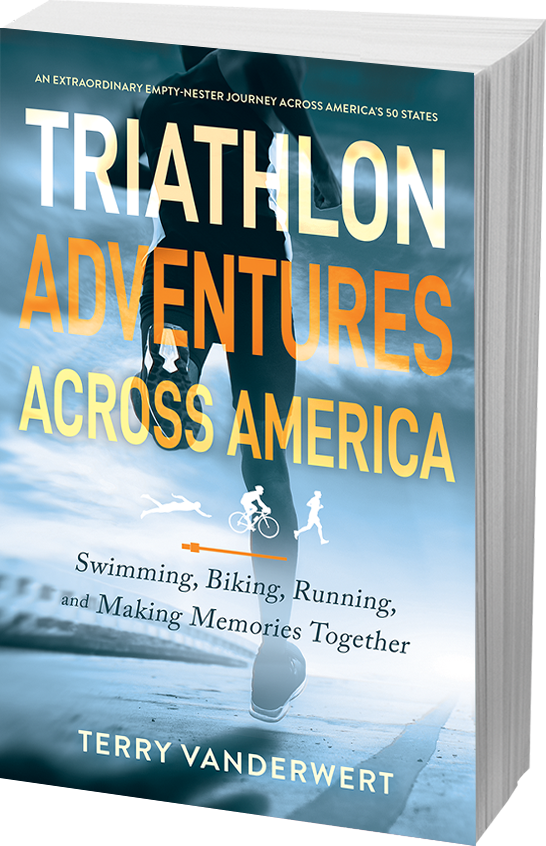
Triathlon Adventures Across America book cover

A Story That Resonates

“A must-read for every athlete and retiring business executive committed to living healthy.”

Discover the complete story

Tell Us About Triathlons In Which Weather Was A Major Factor

Have you raced in inclement weather? How did it affect you personally and other racers?

Tell us about it in the Comments below.
Comments: We’d love to hear about your experience. Join the conversation below. All comments are reviewed before they appear.

Reply notifications: Click the bell icon above Post Comment to be notified when someone replies to your comment.

Follow the discussion: Click Subscribe above the comment box and enter your email address to receive notifications whenever a new comment is added—even if you don’t leave a comment. After subscribing, check your email and click Confirm to activate notifications.

Product Review: Nose Clip for Triathlon Swim Training

Does water in your nose during swimming lead to sneezing or a running nose after your swim? How about congestion?  If you share any of these symptoms, you will also find my experience with a nose clip useful for your triathlon swim training.


I Love Swimming Except For Water In My Nose

I am comfortable when swimming, whether in a pool or the open water.

My breathing during both pool and open water swimming is comfortable and relaxed.  I exhale through my mouth and nose while my face is in the water.  This keeps me from taking in much water during the swim.  But, there is always some water that gets into my mouth and nose.

The pool water that gets into my nose will invariably result in a runny nose and sometimes sneezing over the next few hours.

When I swim in lake water, even the slightest amount of water in my nose will leave me with a plugged nose, making sleeping the next night difficult.  I blame it on an allergy to the algae in the lake water.

While a nasal decongestant will help reduce the congestion, I avoid using one until it is necessary.

In the past, I had tried a nose clip that I dug out of my wife’s gym bag.  However, it was more hassle than help since it slipped off my nose after a short time in the water.


Rethinking the Nose Clip for Triathlon Swim Training

Recently, I came across an article about Olympic swimmer and gold medalist Missy Franklin.  The article showed her wearing a nose clip.

This got me thinking.

Since I live near a lake, open water swim training is very accessible.  I decided that I wanted to solve the problem.

I took to the internet to review various nose clips.  For every positive review, there was an equally negative one.  In most cases, the reviewers with negative comments wrote of the clip falling off their nose.  Several even lost their clip during its first use.  No brand seemed to be immune from this.

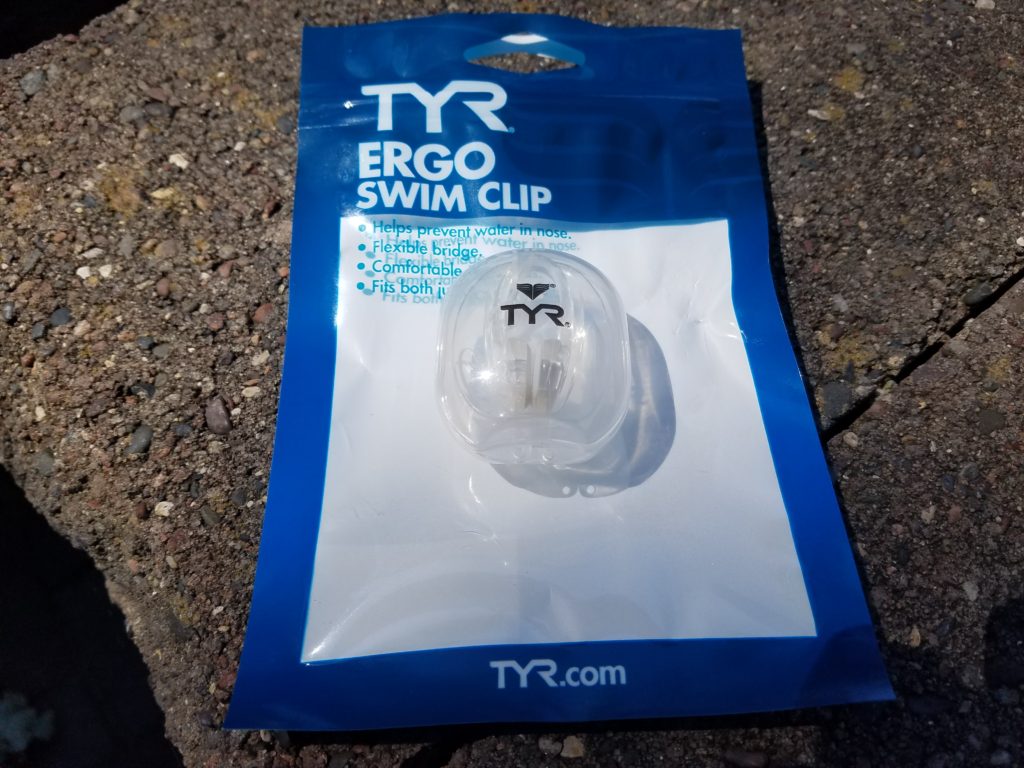
In the end, I went to local sporting goods stores, finally finding a clip at a local REI.  I purchased the last unit of the only model they had in stock, the TYR Ergo Swim Clip.

You can also purchase the TYR Ergo Nose Clip at SwimOutlet.com.

Tyr Ergo nose clip for triathlon swim training

My experience with the TYR Ergo Swim Clip has been positive, especially with the clip attached to my swim goggles.


Protecting My Investment

The nose clip is inexpensive (around $5) so it would not be terrible if I lost it in the lake.

However, losing it would mean that I would be back to square one, getting water in my nose.  Also, I preferred to not be running around shopping for another if I were to lose this one.  Remember, my experience with nose clips was that they fell off.

I decided to find a way to keep from losing the clip in the lake.  The first attempt was to use some good quality dental floss to secure the clip around my neck (like a necklace).  This was similar to the design of the clip that I had borrowed from my wife, except that hers used a rubber strap.

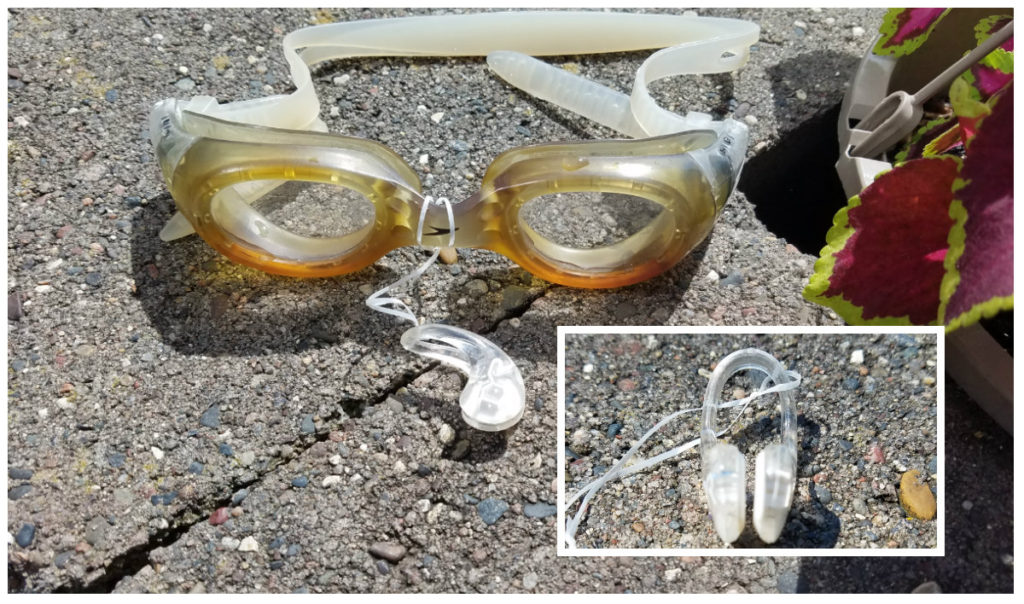
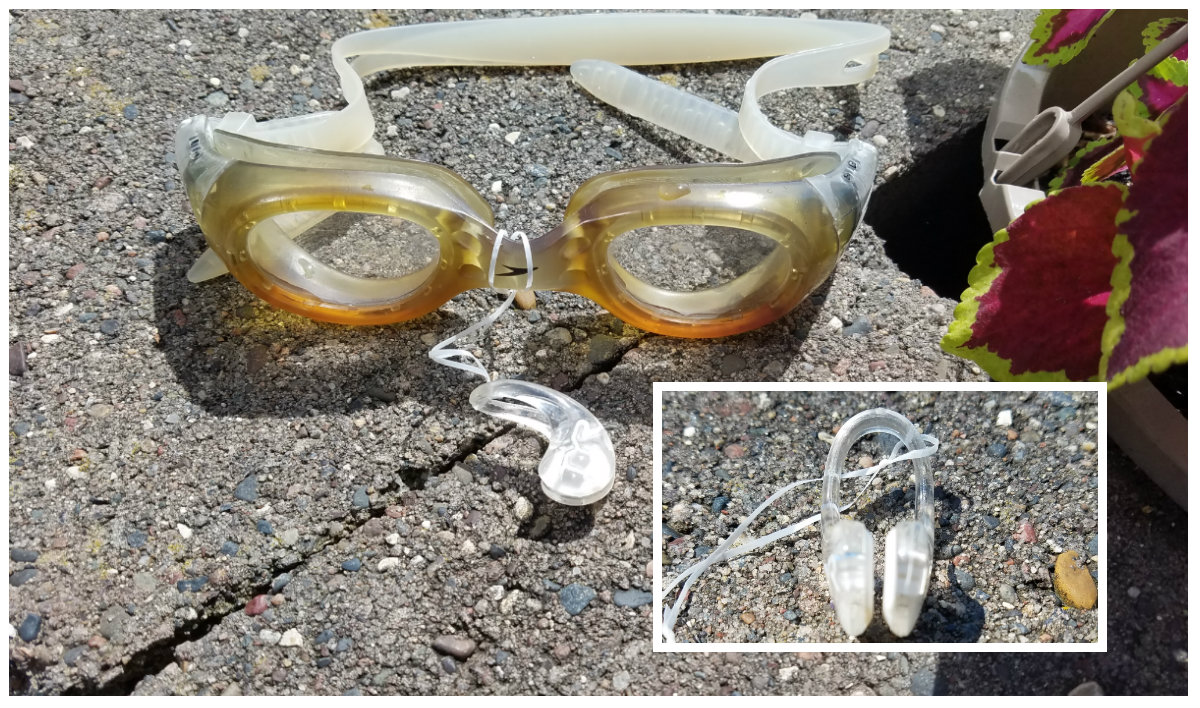
I secured the floss to the clip using a loose knot around the bridge of the clip.  The knot was smaller than the ends of the clip so that it would not come off.  For reference, see the inset in the picture in this article for which the caption begins with “Here is what worked for me“.


First Open Water Swim

In my first open water swim of one mile, the clip came loose two times, the first time after swimming more than a half mile.  Since the process of coming off my nose was relatively slow, I could stop and reattach the clip before it came completely off.


Pool Swim

The second time, I used the clip in the LA Fitness swimming pool.  Again, I found that the floss holding the clip around my neck would catch on my face, occasionally tugging on the clip.  I was certain that this is the reason the clip started to come off my nose.

While in the pool, I also found that the nose clip did not sink to the bottom of the pool when dropped in the water.  Instead, it floated somewhat below the surface of the water.  Still, I was not giving up on securing it.


Second Open Water Swim

The next time, during an open water swim in a nearby lake, I attached the floss holding the clip to my goggles (see picture below).  The floss was still the original length; throughout the swim, I could feel the floss dancing around my face, occasionally catching momentarily on my skin and tugging on the clip.

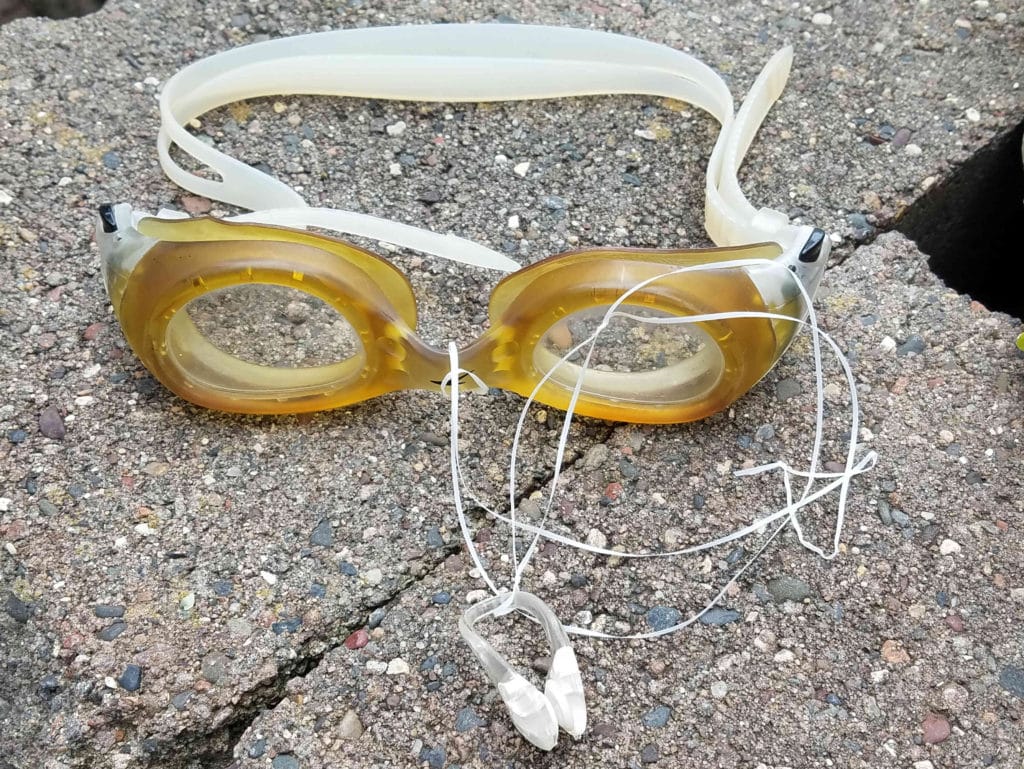
Tyr-Ergo-nose-clip-attached-to-goggles-with-long-connection

Swim goggles with TYR Ergo Nose Clip connected by dental floss. In this case, the floss is longer than needed which caused it to catch on my face during the swim.

However, over the course of a mile, the nose plug came loose, but not completely off, only once.  Progress!


Third Time’s a Charm

Before the next lake swim, I reduced the length of the floss holding the clip to the bridge of my goggles so it was not brushing against or catching on my face.

Tyr Ergo nose clip for triathlon swim training

Here is what has worked for me for triathlon swim training. Swim goggles with Tyr Ergo Nose Clip connected by floss. The floss is secured to the nose clip by a knot that prevents the floss from passing over either of the two larger ends of the clip.


The result was exactly as I hoped.  The clip stayed on my nose throughout a one mile lake swim.  And, more importantly, there was no runny nose or congestion.

Not Used in Racing—Yet

I have not worn the nose clip in a triathlon.   However, I know I would have benefited from it in races involving open water swims, especially those in which the algae-filled water led to post-race nasal congestion.

An Inexpensive Aid for Triathlon Swim Training

If you have problems with water getting in your nose during swimming, the swim clip may be the solution.  You can avoid losing it—or worrying about losing it—in the pool, lake, river, or ocean by clipping it to your goggles using a short piece of floss or string.


You May Also Be Interested in These Posts

Triathlon Across the USA: State #22 – New Mexico

Santa Fe, New Mexico; September 20, 2014—City of Santa Fe Triathlon

Reports of wildfires in the Sangre de Cristo Mountains in southern Colorado during early July 2018 brought back memories of our trip to the area in 2014. Part of the trip for the New Mexico triathlon routed us through Colorada for visits with friends and family.

This race is one chapter in a 50-state journey—now told in full in Triathlon Adventures Across America .

Planning the New Mexico Triathlon

In early July 2014, Joy and I were talking with our friends, Steve and Lori.  We had visited them at their Colorado Springs, Colorado home around the time of the Colorado triathlon.

They had made the 1-1/2 hour drive to Englewood, Colorado to attend the event along with my parents. However, we had never taken the opportunity to visit their cabin in southern Colorado, despite more than one invitation.

This time was different.  Our calendar was clear for the period around the New Mexico triathlon, an event yet to be checked off our ‘to-do’ list.

Joy and I were certainly interested in visiting Santa Fe. We had yet another invitation to visit our friends’ cabin, which was a little over 150 miles north of Santa Fe. After that, we could visit my parents in the Denver area.

It was a straightforward decision.

Getting To Santa Fe

We started the roughly 2,500 mile (4,020 km) round-trip journey on Wednesday, September 17th.  Our first overnight stop, a bonus for this road trip, was in Bennington, Nebraska, home of our son and daughter-in-law and their daughter, Mari Lyn.

For the remaining distance to Santa Fe, we followed the less traveled route of US highways, avoiding the Interstate highways and their often heavy truck traffic.

It turned out to be a tremendous choice. Not only was this route about 100 miles (160 km) shorter, but the traffic was much lighter. Besides, traveling through the smaller towns was also a much more entertaining.

We arrived in Santa Fe at about 9pm, ate dinner at a chain restaurant next to the hotel, and crawled into bed for welcomed sleep.

First, Some Sightseeing

After breakfast the next morning, we headed to the historic Santa Fe plaza, where we hopped on a bus for a guided tour of the city. The tour took us past the Loretto Chapel (which we visited after lunch at the Thunderbird Bar & Grill on the plaza), through the art district of Santa Fe, and into the surrounding areas of the city.

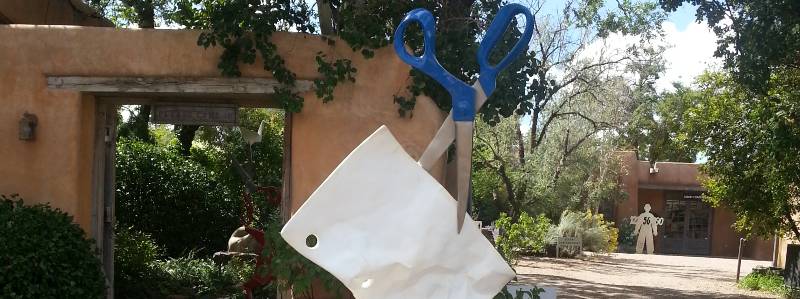
horse-head-and-giant-scissors-sculpture-and-Loretto-Chapel-staircase-in-Santa-Fe-New-Mexico
Examples of displays from the Santa Fe art district (top/bottom left) and the mysterious spiral staircase at Loretto Chapel (right).

Later in the afternoon, we popped over to the Genoveva Chavez Community Center, the headquarters for the triathlon. I picked up the race packet which, of course, included the race t-shirt for my collection and race course maps.

Steve and Lori arrived at the hotel about the time we returned to the hotel from packet pickup, in time for some authentic Mexican cuisine. While Mexican is not my usual pre-race meal choice because of the spice, I couldn’t pass it up.

7th Annual City of Santa Fe Triathlon

There was one surprise between the time I registered for this triathlon and we arrived in Santa Fe—the altitude.

In mentioning my plans for the New Mexico triathlon, a colleague asked if I knew the altitude of Santa Fe. I responded that I did not.

I then learned that Santa Fe is 7,250 feet (2210 meter) above sea level. I had been to Santa Fe several times previously for business. However, I had never considered that its elevation is 50% higher than that of Denver, the ‘mile-high city’.

The City of Santa Fe Triathlon was a reverse triathlon, the second of this type in which I had taken part.  In the reverse triathlon, the three legs occur in reverse order, or as run-bike-swim, compared to the conventional order of swim-bike-run.

Distances for the three legs of this USAT-sanctioned event were:

  • Run: 3.1 mile (5 km)
  • Bike: 12 mile (19 km)
  • Swim: 0.25 mile (400 m)

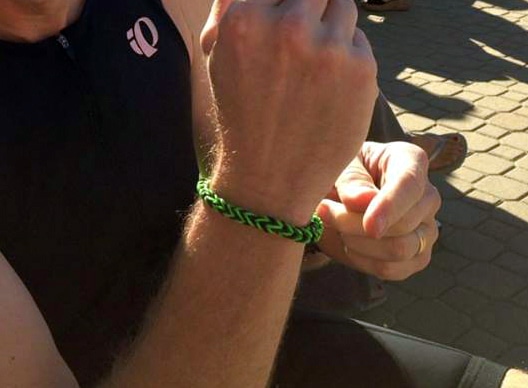
This race was also the first one at which I adorned the bracelet, color coordinated to my triathlon suit, that my granddaughter, Kate, had made for me.

bracelet-for-New-Mexico-triathlon
My granddaughter, Kate, made me a bracelet, color coordinated with my triathlon suit, for the New Mexico triathlon.

Run

Race day morning was a comfortable, with the temperature in the low 60s °F.

The run started fast, at more than 7.5 miles per hour. The fast start was in part because the course was downhill and in part because all racers began together. Even though I tried to start at a pace I thought I could maintain throughout the run, I started much too fast, even without considering the altitude. The result was a lot of walking later in this leg.

Bike

The bike portion took us away from the city center into streets with little automobile traffic. The course was also hilly and, once again, I felt the effects of the altitude.

At one point, while climbing a hill, I felt light-headed. I was sure that I was going to end up walking the bike up the hill. However, I slowed down, avoiding the need to walk. I even picked up few places in the bike leg.

Swim

The swim leg took place in the eight lane, 50 meter long indoor pool of the Community Center. At the end of each length of the pool, we ducked under the lane divider to cross into the next lane and swam to the other end in this lane.

About the only thing that I like about the reverse triathlon is the swim at the end. While probably not great for the pool water, the swim washes off the sweat and dust accumulated during the first two legs of the race.

As a result, I exited the pool refreshed.

Results

There were only three participants in my age group.   This meant that despite a slow run and bike, I finished with a podium place and medal.

The medal for this race was actually a laser engraved wood plague. You can see the medal, #4 in the post titled ‘5 Unique Triathlon Medals; They are No Longer Just Metal’.

After the Triathlon

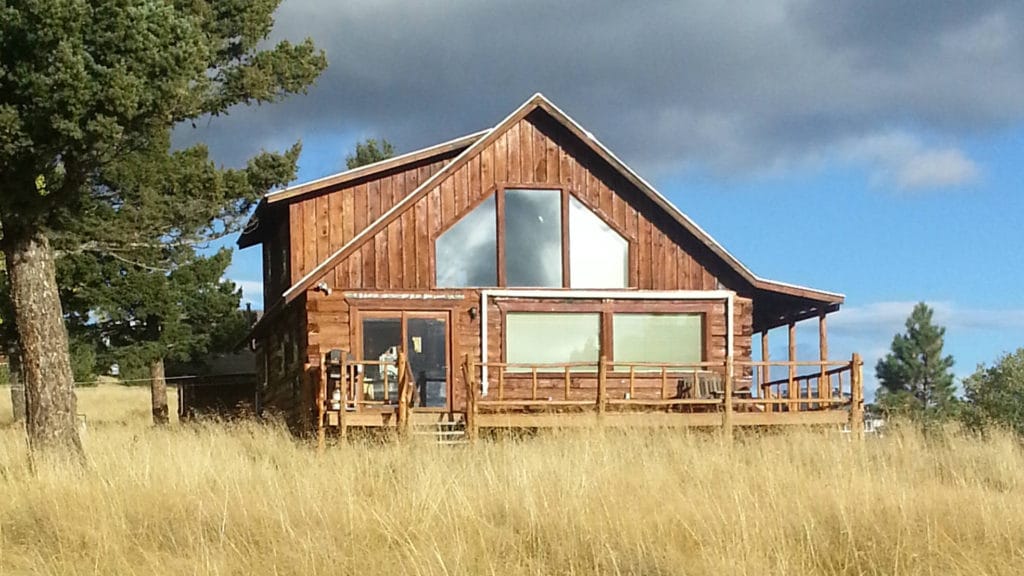
It was then on to Steve and Lori’s cabin. Our home for the next four days was in the Malcolm Forbes Wagon Wheel Creek Estates, a few miles northeast of Fort Garland, Colorado. In July 2018, the area was evacuated because of the threat of wildfires.

Getting to their cabin from the main highway involved an 8 mile, 20 minute trek up a rugged and windy gravel road. On the way to 10,000 feet elevations, we passed cattle and mule deer. Cattle graze on the property as a source of income for the homeowner’s association.

cabin-in-the-Sangre-de-Cristo-Mountains-near-Fort-Garland-Colorado
Our friends’ cabin in the Sangre de Cristo Mountains near Fort Garland, Colorado, our home for four days after the New Mexico Triathlon.

After a relaxing four days, which included a trip to the Great Sand Dunes National Park and Preserve during one day, we headed toward home. On the way, we stopped for overnight visits with my parents in Parker, Colorado, and , for the second time on this trip, with our son and his family in Nebraska.

Another memorable trip with a host of new experiences.

Race Firsts

  • First race at over 7,000 feet (2,100 meters) elevation (Santa Fe is 7,250 ft elevation).
  • First reverse triathlon above 1,500 ft elevation (Mesa, Arizona, venue of the previous reverse triathlon, is 1,243 ft. elevation).
  • First triathlon with an Age Group award produced from wood.
Triathlon Adventures Across America book cover

A Journey Beyond This Race

“Uplifting, real, and full of heart—I couldn’t put it down.”

Read the full journey in Triathlon Adventures Across America

Have You Done a Triathlon in New Mexico?

What triathlon(s) have you done in New Mexico? Is there one you recommend for other triathletes age 50 and over?

Share your comments below.

Comments: We’d love to hear about your experience. Join the conversation below. All comments are reviewed before they appear.

Reply notifications: Click the bell icon above Post Comment to be notified when someone replies to your comment.

Follow the discussion: Click Subscribe above the comment box and enter your email address to receive notifications whenever a new comment is added—even if you don’t leave a comment. After subscribing, check your email and click Confirm to activate notifications.

“At Age 70, I Had 19 Days To My First Triathlon” – Pat Johnson’s Story

The Villages, Florida – Can you prepare for your first sprint triathlon in less than 30 days, even at age 70?

According to Pat Johnson, you can. She did it and is now an advocate for seniors to compete in triathlon.

Pat’s story was first published on June 24, 2018. Recently, I contacted her for an update on her triathlon journey. Now approaching age 77, Pat remains active in triathlon and is still enthusiastic about it as a way for seniors to stay fit.

This post, updated on February 8, 2021, combines the story of Pat’s first triathlon and her experiences with the sport over the past two-and-a-half years.

Pat Johnson’s First Triathlon at Age 70

Pat Johnson’s triathlon story begins with a conversation she had a few years ago with her then 35-year-old niece, Barb. Barb told her Aunt Pat about her goal to complete an Ironman triathlon before age 40. Excited by the idea of doing a triathlon, Pat committed to complete a shorter, sprint triathlon by age 70.

Fast forward a couple of years and Barb had completed the Ironman triathlon well before age 40. Meanwhile, the deadline for Pat to complete her first sprint triathlon was quickly approaching.

“19 Days To Get Ready for My First Sprint Triathlon”

Pat did not even know where she could do a triathlon.

“I knew I was going to have to practice swimming in order to complete the triathlon. So, I contacted a guy who also lives in The Villages and was part of the masters swimming program called VAST (Villages Aquatic Swim Team).”

Her swimmer friend told her about triathlons regularly held in Clermont, Florida. She said, “I found out that the next triathlon was in 19 days.”

Undaunted by the short time until the race, Pat registered for it, her first sprint triathlon.

The next morning, while waiting between pickle ball games, Pat casually mentioned to another person that she had signed up for a triathlon in Clermont.

Much to Pat’s surprise, the lady replied “Oh, no. That’s the worst place to do a triathlon. There are hills.”   

Pat, a Wisconsin native, admitted, “Until then, I did not even realize that there were hills in Florida.”

This fellow pickle ball player took Pat under her wing and helped her prepare for her first triathlon. She even provided swim goggles and clips for her bike pedals.

Nineteen days after registering for the Central Florida Triathlon Series Race 3, Pat completed her first sprint triathlon, fulfilling the agreement she had made with her niece.

Ironically, the person who helped Pat, Donna Maguire, had been thinking of giving up triathlon. Instead, she started The Villages Triathlon Club. Since then, Donna has completed many triathlons, including at least one Ironman.

Catching the Triathlon Bug At Age 70

Pat had planned to do only one triathlon. However, like so many of us, she caught ‘the bug’. As of this update, she has completed 21 triathlons. And she’s not finished.

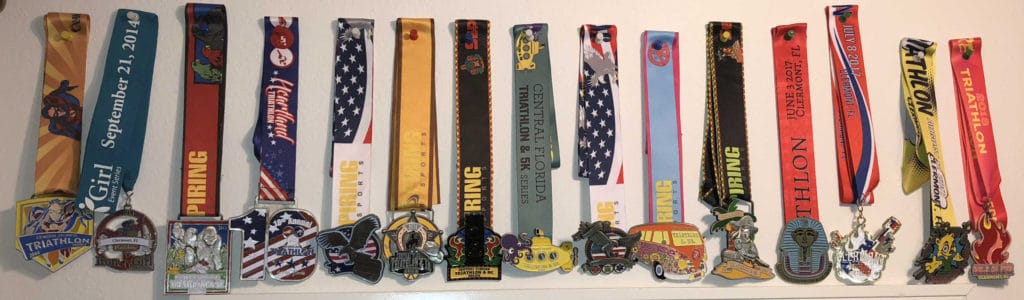
Pat Johnson prepared for her first sprint triathlon at age 70 in less than 30 days. Since then, she has created a collection of finisher medals.  Included is one from Pat's first sprint triathlon.
Pat Johnson has earned a fine collection of triathlon medals.

Racing with Sally Edwards

Most who have completed a few triathlons have been asked to name their favorite.

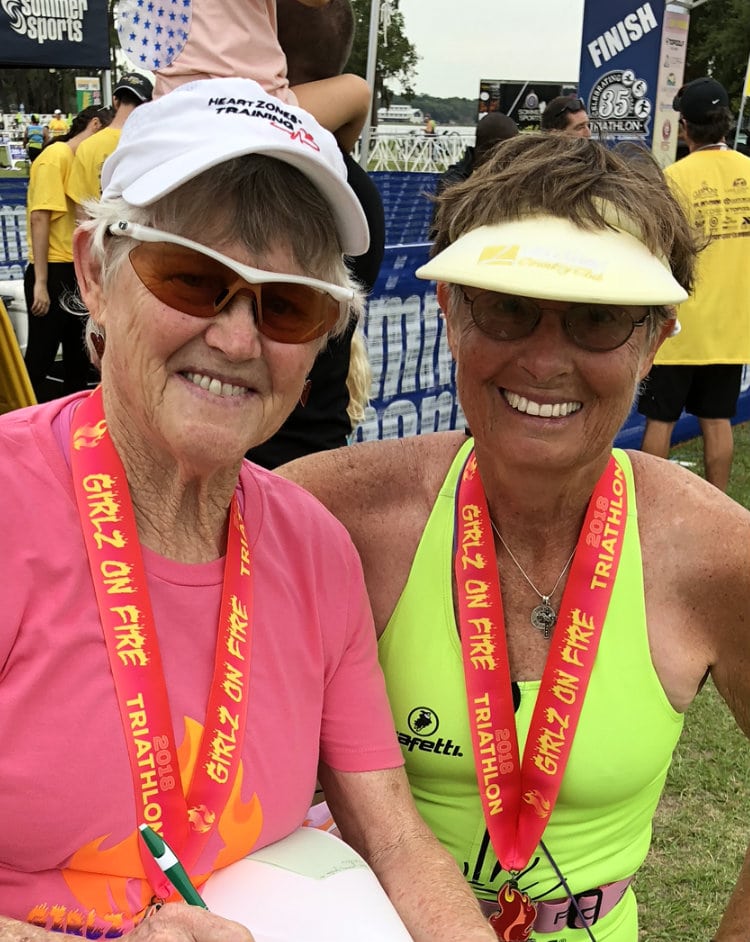
For Pat, the ‘Girlz on Fire’ triathlon in Clermont, Florida has been her most memorable. This race was particularly special in that she could not only meet, but compete alongside, Sally Edwards, a triathlon icon.

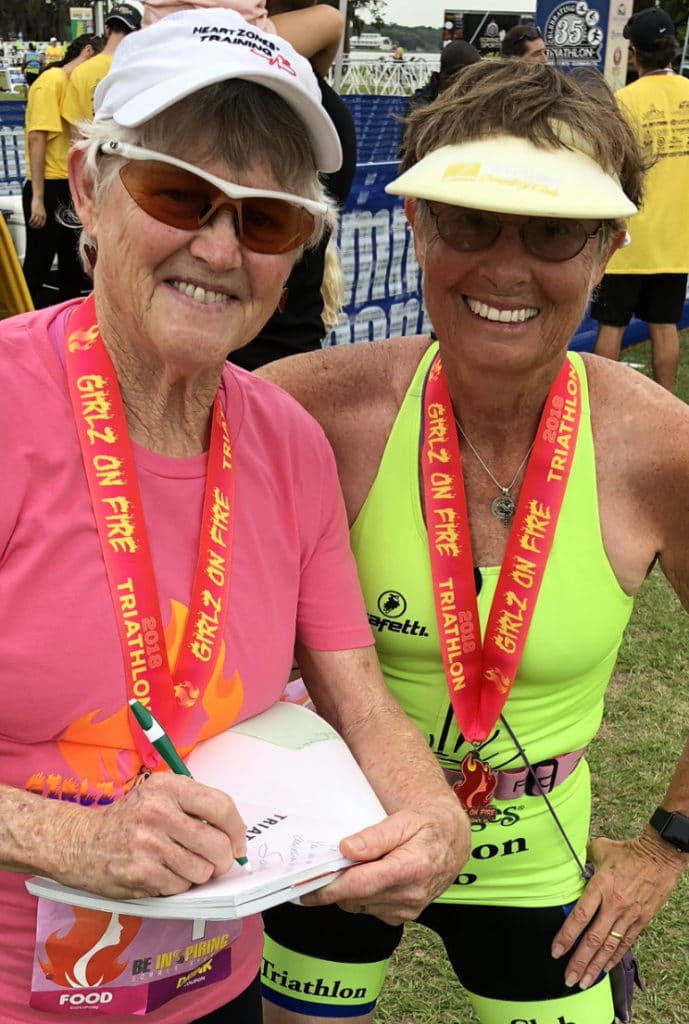
At the conclusion of the race, Pat posed with Sally while Sally signed her book “Triathlons for Women” which Pat had purchased earlier and brought with her to the race.

Sally Edwards book signing.  Pat first started her triathlon journey at age 70.
Sally Edwards with Pat Johnson signing Pat’s copy of ‘Triathlon for Women’.

Racing in the ‘Girlz on Fire’ Triathlon with Sally Edwards was one of the highlights of my triathlon career. 

Pat Johnson

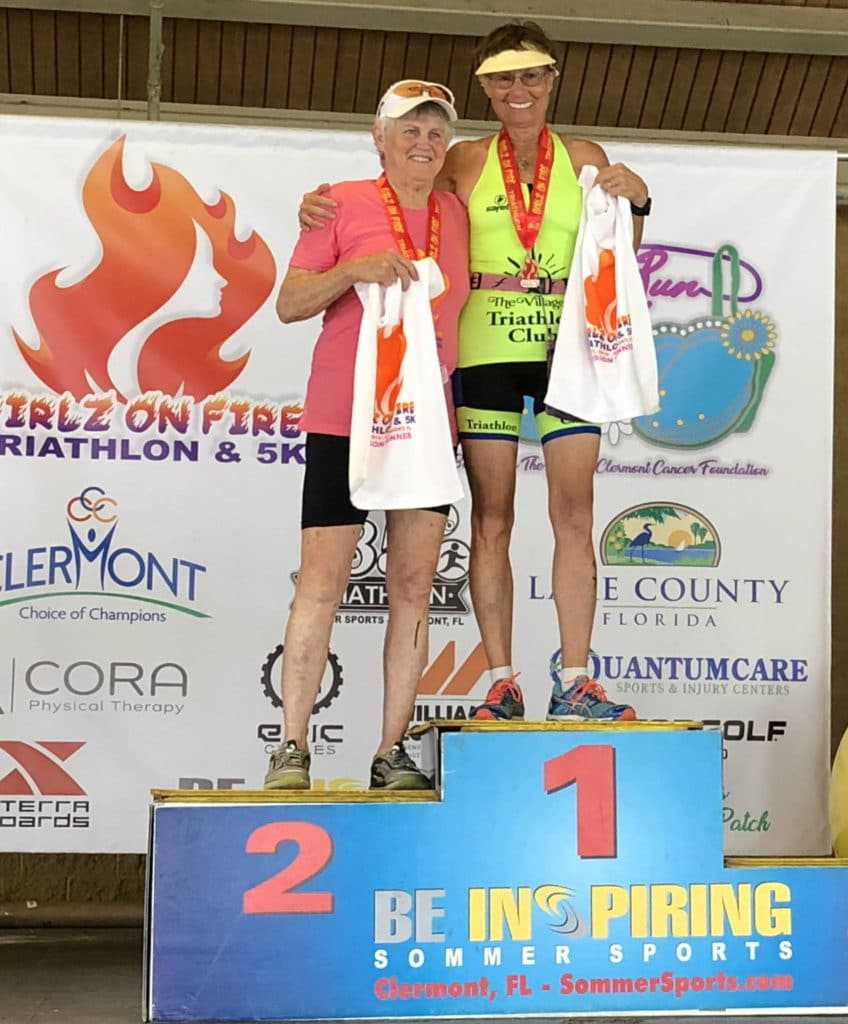
Speaking of the ‘Girlz on Fire’ triathlon, Pat said, “There were only two people in my age group. As she often does, Sally purposely stayed back so that she could cross the finish line with the last finisher as a show of support. She is really a sweetheart. When you meet her, you feel like you have been friends forever.”

Age-group-triathlon-award-ceremony
Pat Johnson (first place) and Sally Edwards (second place) at the awards ceremony of the Girlz on Fire Triathlon in Clermont, Florida.

Some Triathlons Are Challenging Even With Experience

Pat, who is approaching age 77, will soon enter her eighth year in the sport. She has no plan to stop “Tri-ing”.

Over the past two years, Pat has volunteered at an Extreme Triathlon each year. She has also completed two triathlons.

The first race she completed was at the Daytona Speedway. According to Pat, this triathlon was “amazing”.

“Running on the speedway track was a wonderful experience.”

In contrast, Pat refers to her last triathlon, one in Crystal River, Florida, as her worst.

“During the swim portion, I was near a swimmer who kept cutting me off each time I tried to pass them. I am sure it was unintentional, but that didn’t make it any less frustrating.

“The bike portion was even worse. The rear brake rubbed on the wheel throughout the course. I couldn’t get my bike to go any faster than 14 miles per hour. I had picked up my bike from the shop too close to the race to give it a test ride.

“By the time I got to the run, I was really down. Since I walk instead of run, I think I was the only one still on the course. I felt humiliated. While I was continuing the last leg, other racers were already leaving, since there was no awards ceremony because of COVID.”

A Personalized Approach to Training

Pat has developed her own training approach, one that works well for her. Since she has problems with her back, she runs very little. Instead, she trains in race walking, which she uses during the run leg of the triathlon.

Pat describes her approach to her run leg as “race walking with a tiny bit of running. I get excited near the finish, so I save just enough juice to run across the finish line.”

In any week, Pat will go on at least one 10 to 12 mile bike ride along with a few shorter rides. She also takes advantage of the wonderful lap pools in The Villages with two to three swims per week.

Pat developed her open water swimming by connecting with another local triathlete, Lorri, who lives on Lake Weir. Lorri has a daughter who is an accomplished swimmer. Lorri’s daughter provided “a couple of great big yellow ducks” used to practice sighting, a skill important to staying on course in an open water swim.

Advice for Seniors Thinking of a First Sprint Triathlon at Age 70

Pat is an outspoken advocate for seniors to stay fit. 

“If you have the slightest inclination to do a triathlon, go for it.  Meet people who are involved in triathlon and ask them for advice. You will find them eager to help you on the journey.”

Pat is living proof of the ‘no excuses’ lifestyle. If you were going to use the excuse of not having enough time to prepare for a triathlon, perhaps you need to think again. Pat had less than 19 days to get ready for her first triathlon.

Even if you cannot complete the three legs of a triathlon, there are plenty of races that include a relay option. In these, each team member performs one leg, the one with which they are most comfortable, capable, and prepared.

Applying Faith in Triathlon

Triathlon has given Pat Johnson an opportunity to stay fit and meet new friends. It has also provided her opportunity to put her faith in Jesus Christ into action.

Pat’s Christian faith goes with her on the racecourse. She starts each competition with a personal prayer for God’s guidance during the triathlon.

“One of my favorite promises from the Bible is Philippians 4:6-7.” This verse says:

‘Don’t worry about anything; instead, pray about everything. Tell God what you need, and thank Him for all He has done. Then you will experience God’s peace, which exceeds anything we can understand. His peace will guard your hearts and minds as you live in Christ Jesus.’

Triathlon for women and cross following first triathlon at age 70
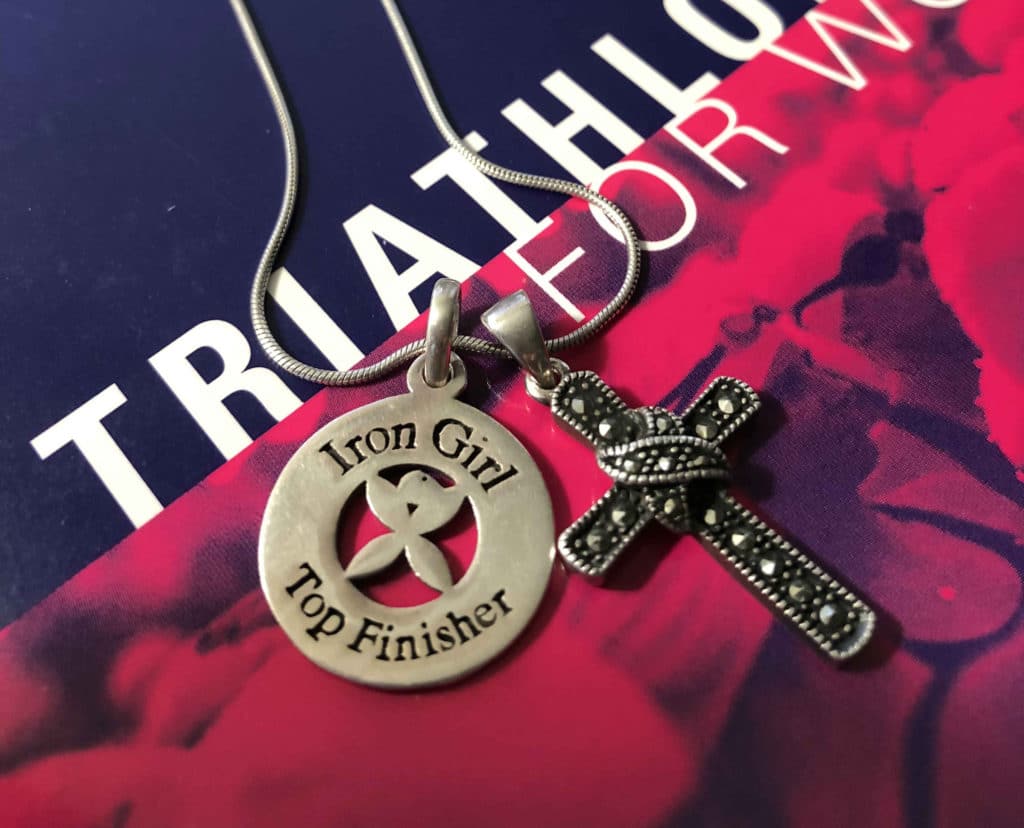
Pat Johnson proudly wears a cross symbolizing her Christian faith with one of her triathlon finisher medals.

After the particularly difficult Crystal River Triathlon mentioned above, Pat stopped to reflect.

“As I said, this was my worst experience with a triathlon. What I learned from it was that I hadn’t relied on the most powerful source available to me. My LORD!

“I was so wrapped up in self pity that I didn’t use the power that we all have when we have Jesus as our advocate.

Philippians 4:13 says ‘I can do all things in Christ who strengthens me’.

“Hopefully next time I will keep my focus where it should be.”

Do You Want To Do Your First Triathlon at Age 50? 60? 70? 80+?

Would you like to complete your first triathlon as a senior triathlete? What help can we provide?

Tell us in the Comments section below. You will find plenty of support from this wonderful community.

Disclaimer: Please note that SeniorTriathletes.com is a participant in the Amazon Services LLC Associates Program.  This is an affiliate advertising program that provides a way for sites to earn advertising fees.  They do this by advertising and linking to amazon.com. Amazon, the Amazon logo, AmazonSupply, and the AmazonSupply logo are trademarks of Amazon.com, Inc. or its affiliates.  As an affiliate, I will receive a small commission for any purchases of this product that you make through Amazon if you use the links in this post.

error

Enjoy this post? Please spread the word :)