Triathlon Across the USA: State #22 – New Mexico
Santa Fe, New Mexico; September 20, 2014—City of Santa Fe Triathlon

Reports of wildfires in the Sangre de Cristo Mountains in southern Colorado during early July 2018 brought back memories of our trip to the area in 2014. Part of the trip for the New Mexico triathlon routed us through Colorada for visits with friends and family.

This race is one chapter in a 50-state journey—now told in full in Triathlon Adventures Across America .

Planning the New Mexico Triathlon

In early July 2014, Joy and I were talking with our friends, Steve and Lori.  We had visited them at their Colorado Springs, Colorado home around the time of the Colorado triathlon.

They had made the 1-1/2 hour drive to Englewood, Colorado to attend the event along with my parents. However, we had never taken the opportunity to visit their cabin in southern Colorado, despite more than one invitation.

This time was different.  Our calendar was clear for the period around the New Mexico triathlon, an event yet to be checked off our ‘to-do’ list.

Joy and I were certainly interested in visiting Santa Fe. We had yet another invitation to visit our friends’ cabin, which was a little over 150 miles north of Santa Fe. After that, we could visit my parents in the Denver area.

It was a straightforward decision.

Getting To Santa Fe

We started the roughly 2,500 mile (4,020 km) round-trip journey on Wednesday, September 17th.  Our first overnight stop, a bonus for this road trip, was in Bennington, Nebraska, home of our son and daughter-in-law and their daughter, Mari Lyn.

For the remaining distance to Santa Fe, we followed the less traveled route of US highways, avoiding the Interstate highways and their often heavy truck traffic.

It turned out to be a tremendous choice. Not only was this route about 100 miles (160 km) shorter, but the traffic was much lighter. Besides, traveling through the smaller towns was also a much more entertaining.

We arrived in Santa Fe at about 9pm, ate dinner at a chain restaurant next to the hotel, and crawled into bed for welcomed sleep.

First, Some Sightseeing

After breakfast the next morning, we headed to the historic Santa Fe plaza, where we hopped on a bus for a guided tour of the city. The tour took us past the Loretto Chapel (which we visited after lunch at the Thunderbird Bar & Grill on the plaza), through the art district of Santa Fe, and into the surrounding areas of the city.

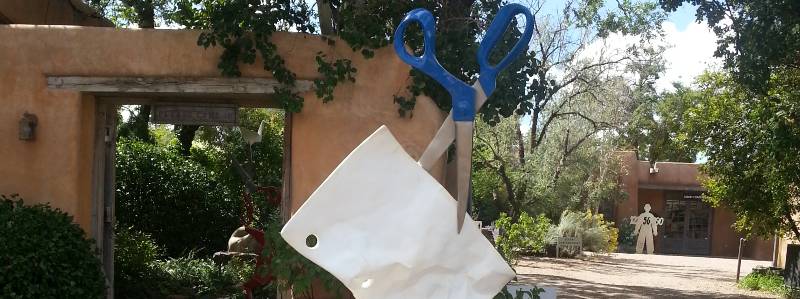
horse-head-and-giant-scissors-sculpture-and-Loretto-Chapel-staircase-in-Santa-Fe-New-Mexico
Examples of displays from the Santa Fe art district (top/bottom left) and the mysterious spiral staircase at Loretto Chapel (right).

Later in the afternoon, we popped over to the Genoveva Chavez Community Center, the headquarters for the triathlon. I picked up the race packet which, of course, included the race t-shirt for my collection and race course maps.

Steve and Lori arrived at the hotel about the time we returned to the hotel from packet pickup, in time for some authentic Mexican cuisine. While Mexican is not my usual pre-race meal choice because of the spice, I couldn’t pass it up.

7th Annual City of Santa Fe Triathlon

There was one surprise between the time I registered for this triathlon and we arrived in Santa Fe—the altitude.

In mentioning my plans for the New Mexico triathlon, a colleague asked if I knew the altitude of Santa Fe. I responded that I did not.

I then learned that Santa Fe is 7,250 feet (2210 meter) above sea level. I had been to Santa Fe several times previously for business. However, I had never considered that its elevation is 50% higher than that of Denver, the ‘mile-high city’.

The City of Santa Fe Triathlon was a reverse triathlon, the second of this type in which I had taken part.  In the reverse triathlon, the three legs occur in reverse order, or as run-bike-swim, compared to the conventional order of swim-bike-run.

Distances for the three legs of this USAT-sanctioned event were:

  • Run: 3.1 mile (5 km)
  • Bike: 12 mile (19 km)
  • Swim: 0.25 mile (400 m)

This race was also the first one at which I adorned the bracelet, color coordinated to my triathlon suit, that my granddaughter, Kate, had made for me.
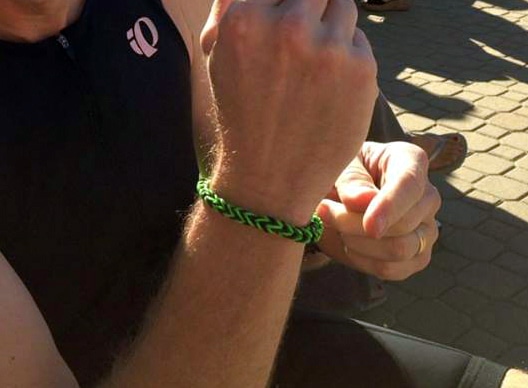
bracelet-for-New-Mexico-triathlon
My granddaughter, Kate, made me a bracelet, color coordinated with my triathlon suit, for the New Mexico triathlon.

Run

Race day morning was a comfortable, with the temperature in the low 60s °F.

The run started fast, at more than 7.5 miles per hour. The fast start was in part because the course was downhill and in part because all racers began together. Even though I tried to start at a pace I thought I could maintain throughout the run, I started much too fast, even without considering the altitude. The result was a lot of walking later in this leg.

Bike

The bike portion took us away from the city center into streets with little automobile traffic. The course was also hilly and, once again, I felt the effects of the altitude.

At one point, while climbing a hill, I felt light-headed. I was sure that I was going to end up walking the bike up the hill. However, I slowed down, avoiding the need to walk. I even picked up few places in the bike leg.

Swim

The swim leg took place in the eight lane, 50 meter long indoor pool of the Community Center. At the end of each length of the pool, we ducked under the lane divider to cross into the next lane and swam to the other end in this lane.

About the only thing that I like about the reverse triathlon is the swim at the end. While probably not great for the pool water, the swim washes off the sweat and dust accumulated during the first two legs of the race.

As a result, I exited the pool refreshed.

Results

There were only three participants in my age group.   This meant that despite a slow run and bike, I finished with a podium place and medal.

The medal for this race was actually a laser engraved wood plague. You can see the medal, #4 in the post titled ‘5 Unique Triathlon Medals; They are No Longer Just Metal’.

After the Triathlon

It was then on to Steve and Lori’s cabin. Our home for the next four days was in the Malcolm Forbes Wagon Wheel Creek Estates, a few miles northeast of Fort Garland, Colorado. In July 2018, the area was evacuated because of the threat of wildfires.

Getting to their cabin from the main highway involved an 8 mile, 20 minute trek up a rugged and windy gravel road. On the way to 10,000 feet elevations, we passed cattle and mule deer. Cattle graze on the property as a source of income for the homeowner’s association.
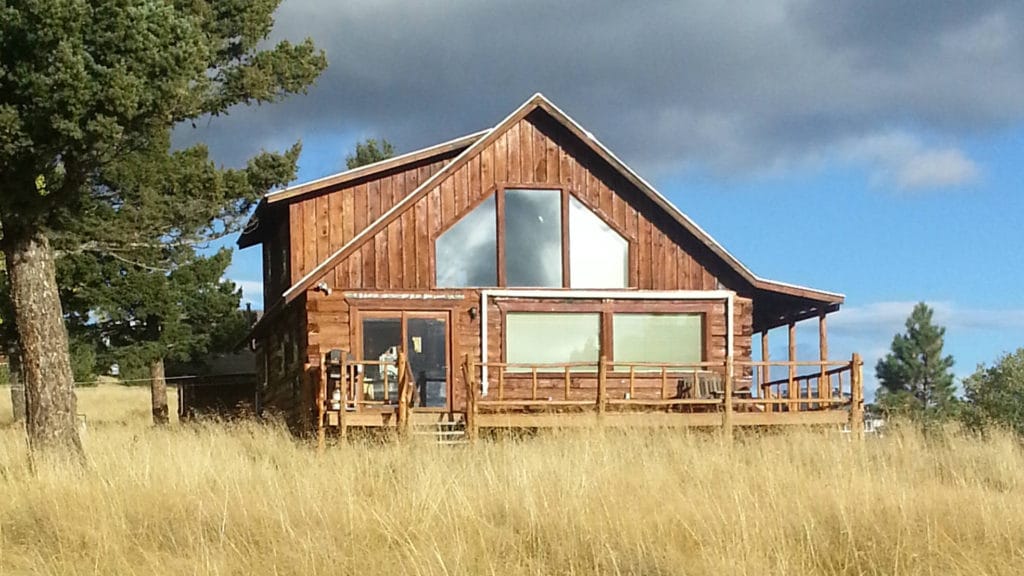
cabin-in-the-Sangre-de-Cristo-Mountains-near-Fort-Garland-Colorado
Our friends’ cabin in the Sangre de Cristo Mountains near Fort Garland, Colorado, our home for four days after the New Mexico Triathlon.

After a relaxing four days, which included a trip to the Great Sand Dunes National Park and Preserve during one day, we headed toward home. On the way, we stopped for overnight visits with my parents in Parker, Colorado, and , for the second time on this trip, with our son and his family in Nebraska.

Another memorable trip with a host of new experiences.

Race Firsts

  • First race at over 7,000 feet (2,100 meters) elevation (Santa Fe is 7,250 ft elevation).
  • First reverse triathlon above 1,500 ft elevation (Mesa, Arizona, venue of the previous reverse triathlon, is 1,243 ft. elevation).
  • First triathlon with an Age Group award produced from wood.
Triathlon Adventures Across America book cover

A Journey Beyond This Race

“Uplifting, real, and full of heart—I couldn’t put it down.”

Read the full journey in Triathlon Adventures Across America

Have You Done a Triathlon in New Mexico?

What triathlon(s) have you done in New Mexico? Is there one you recommend for other triathletes age 50 and over?

Share your comments below.
Comments: We’d love to hear about your experience. Join the conversation below. All comments are reviewed before they appear.

Reply notifications: Click the bell icon above Post Comment to be notified when someone replies to your comment.

Follow the discussion: Click Subscribe above the comment box and enter your email address to receive notifications whenever a new comment is added—even if you don’t leave a comment. After subscribing, check your email and click Confirm to activate notifications.

How A Wisconsin Triathlon Benefits Kids In The Caribbean

Eau Claire, Wisconsin; June 3, 2018 – Mayo Clinic Health System Eau Claire Triathlon; Halfmoon Park.

The Eau Claire Triathlon, our Wisconsin race in the ‘Triathlon Across the USA’ journey, is a great example of how triathlons often double as fundraisers for important causes locally and across the world.

This race is one chapter in a 50-state journey—now told in full in Triathlon Adventures Across America .

Planning the Wisconsin Triathlon

Our schedule for June was up in the air, as we say. Since we liked to stay near our Minnesota home on weekends during the summer months, we really did not want to travel far for a June triathlon. On the other hand, I needed to keep pressing toward the 50-state goal.

Both the timing for the Eau Claire Triathlon (first weekend in June) and its proximity to our home (two-hour drive) made it attractive. Upon learning about the triathlon’s priority for supporting local and international causes, we made the commitment.

Travel to the Eau Claire Triathlon

Eau Claire, Wisconsin was an easy two-hour drive east of our home in Minnesota. It will no doubt be the race in the ‘Triathlon Across the USA’ quest closest to our home yet outside our home state.

We left our house at about 2pm on Saturday. This allowed us time to check-in to our hotel before picking up the race packet, grabbing a couple of kid’s meals (yes, for us) at Culvers, and attending the Saturday evening worship service at Peace Lutheran, one of the race sponsors.

We made it back to the hotel just before the skies opened and rain poured down. It was still raining when we turned in for the night.

Fundraising Through Triathlon

The Eau Claire Triathlon is a fundraiser for two causes dear to the hearts of the organizers, the Friends of the Orphans and the Chippewa Valley Free Clinic.

For over 40 years, Friends of the Orphans has provided safe and loving homes for children in Latin America and the Caribbean. Currently, over 3,500 children lived in the homes supported by the organization.

Meanwhile, closer to home, the Chippewa Valley Free Clinic provides medical services for those living in western Wisconsin without health insurance.

9th Annual Eau Claire Triathlon

Race morning was cloudy and a little under 60°F with a light wind. Fortunately, the rain had passed and would not appear any time during the rest of our stay in Eau Claire.

Distances for the individual legs of this USAT-sanctioned sprint triathlon were:

  • Swim: 0.31 mile (500 m)
  • Bike: 17 mile (27 km)
  • Run: 3.1 mile (5 km)

Racers competed individually, in age groups or as Clydesdale and Athena, or in relay teams. 

The race was well organized. More than 100 volunteers were stationed at various locations along the race course.

Another unique feature of this event was that on the day before the adult triathlon, organizers held a kid’s triathlon for children ages 7-14. Young people competed individually or as teams with two different distances for those aged 7-10 and aged 11-14. Details of the kid’s triathlon are here.

Swim

The first of the 153 racers to enter the water for the open water swim were two men, each pulling an inflatable raft connected to a cord wrapped around their waist. Each raft carried a physically disabled child who would be with them through each of the legs of the race. I know this because I passed both on the bike leg. Later, during the run, each of them passed me.

The two men started five minutes before the first group (“wave” in triathlon-speak) of male age groupers aged 40 and under. The other waves started at two-minute intervals, with the last wave including relay team members.

With the air temperature at 60°F and the water temperature only slightly warmer, I was happy to wear a wetsuit. Most of those who lined up for the swim without a wetsuit wished they had worn one. At least, that’s what the looks on their faces told me.

Halfmoon-Lake
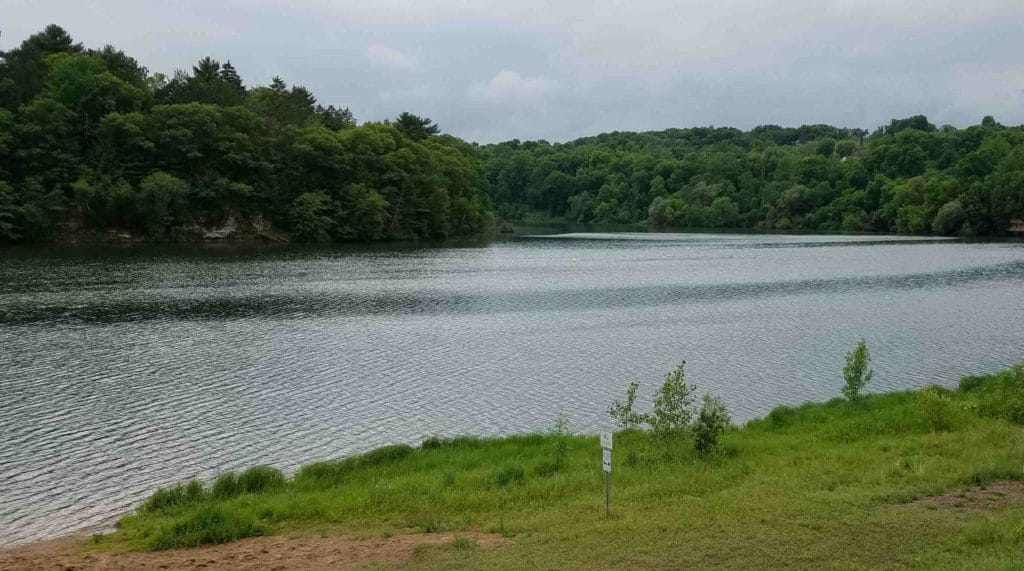
The open water swim occurred in Halfmoon Lake. The first turn in the counterclockwise swim occurred at a red buoy located near the center of the picture on race day.

Bike

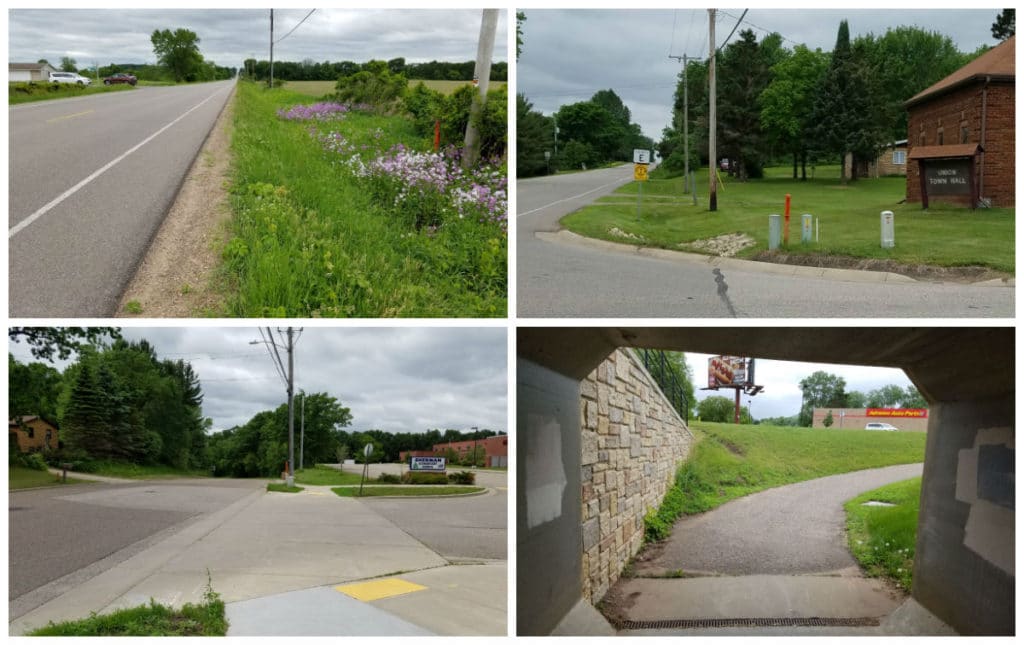
The 17-mile bike course took us on rolling hills through residential streets out into the country west of Eau Claire, past fields, beautiful patches of wildflowers, and farms. The condition of the roads was mostly good, absent of potholes and cracks that characterize many northern roads at this time of year.

There was just enough wind to know its direction from the effect it had on the bike. The good thing was that the wind provided a tailwind during the last portion of the course.

Eau-Claire-Triathlon-bike-course
The bike course covered a mix of city streets and country roads, past wildflowers and livestock. Pictured are the Sherman Elementary School (lower left), Claremont Road west of Eau Claire (upper left), Union Town Hall (upper right), and the Claremont Road tunnel heading back to the transition area (lower right).

Run

The run began on a paved trail leading from the transition area to a bridge crossing Halfmoon Lake and leading into Carson Park. Other than the hill leading into and out of the park, the course was quite flat.

Shortly after entering the park, I heard a clanging sound, like that of glass bottles clanking into each other. My first thought, odd as it seemed for a Sunday morning, was that someone was emptying recycling containers.

I eventually found the actual source of this noise when I came upon a horseshoe court. There were at least ten games of horseshoes being played simultaneously. I later read that “Carson Park features 18 horseshoe courts with a seating capacity of 100”.

A little further down the road, I saw something in the distance lying in the middle of the road. At first, I thought it was the remains of an animal that a car had struck. A little further and this object came into view. It was a huge, snapping turtle lazily munching on a bunch of leaves. It seemed truly unfazed by the many runners passing it.

The run continued through the park, past the statues of Paul Bunyan and his blue ox, Babe, and past the Chippewa Valley Museum. We eventually exited the park, crossed back over the bridge, and got onto the path leading to the finish line. 

The final jog to the finish line was the only portion of the run course not on a paved trail. These last two hundred yards covered a narrow dirt trail, a grassy patch, and a short section of a coarse gravel covered path.

After Crossing the Finish Line at the Wisconsin Triathlon

refreshments-after-Eau-Claire-Triathlon
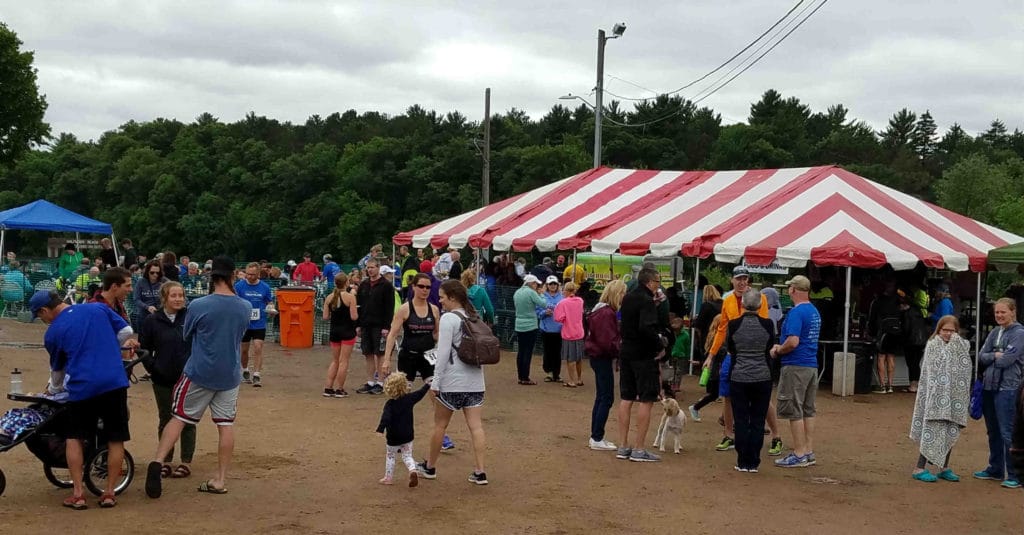
Race organizers provided a post race meal of grilled burgers with various condiments, root beer, and chips.

After crossing the finish line, I bent over to remove the Velcro-strap holding the timing chip around my left ankle. As I stood up, a young volunteer handed me a bottle of ice cold water.

While downing the water, Joy and I headed over to the refreshment tent. Here we exchanged our meal and drink tickets for a grilled burger, some grilled onions, potato chips, and two ice cold root beers. My mouth waters even while writing this string of words.

With the refreshments consumed and the transition area open for removing the items left during the run, we packed up. 

Following a quick shower at the hotel, we headed home with the Wisconsin triathlon completed.

Race Firsts from the Wisconsin Triathlon

  • First triathlon after retiring from full-time employment.
  • First bike course involving a pedestrian tunnel.
  • First race with a turtle in the middle of the run course
Triathlon Adventures Across America book cover

What Could Your Journey Be?

“It made me think, ‘Wow, wouldn’t it be fun to try to do this too?’”

Explore the journey across all 50 states

Triathlon as a Fundraiser?

Is there a triathlon that doubles as a fundraiser which you like to support? Please tell us about it in the Comments below.

Comments: We’d love to hear about your experience. Join the conversation below. All comments are reviewed before they appear.

Reply notifications: Click the bell icon above Post Comment to be notified when someone replies to your comment.

Follow the discussion: Click Subscribe above the comment box and enter your email address to receive notifications whenever a new comment is added—even if you don’t leave a comment. After subscribing, check your email and click Confirm to activate notifications.

Triathlon Across the USA: State #20 – Alaska

Chugiak, Alaska, June 1, 2014 – Eagle River Triathlon

About 30 minutes north of the Anchorage Airport along Glenn Highway is Chugiak High School, ground zero for our Alaska triathlon, the Eagle River Sprint Triathlon. 

While race day was rainy, the following week provided spectacular views of Mt. McKinley, a surprise visit to North Pole, and close-ups of glaciers, birds, and whales in Resurrection Bay.

This race is one chapter in a 50-state journey—now told in full in Triathlon Adventures Across America .

A Family Connection for the Alaska Triathlon

During the summer of 2012, shortly after embarking on our Triathlon Across the USA adventure, Joy and I attended a wedding of her cousin Linda’s son.  During one of the reception speeches, we learned that he and his new bride would be living in Anchorage, Alaska.  He was enlisted in the US Air Force and they would be stationed at Joint Base Elmendorf-Richardson for four years.

When we heard this, Joy and I looked at each other and in near unison mouthed the word ‘Alaska’.  Later that evening, we shared our idea about visiting Alaska during their tour with the newlyweds.  They agreed, probably sure that we would never follow through.

Little did they realize that we started almost immediately laying plans for the Alaska triathlon.

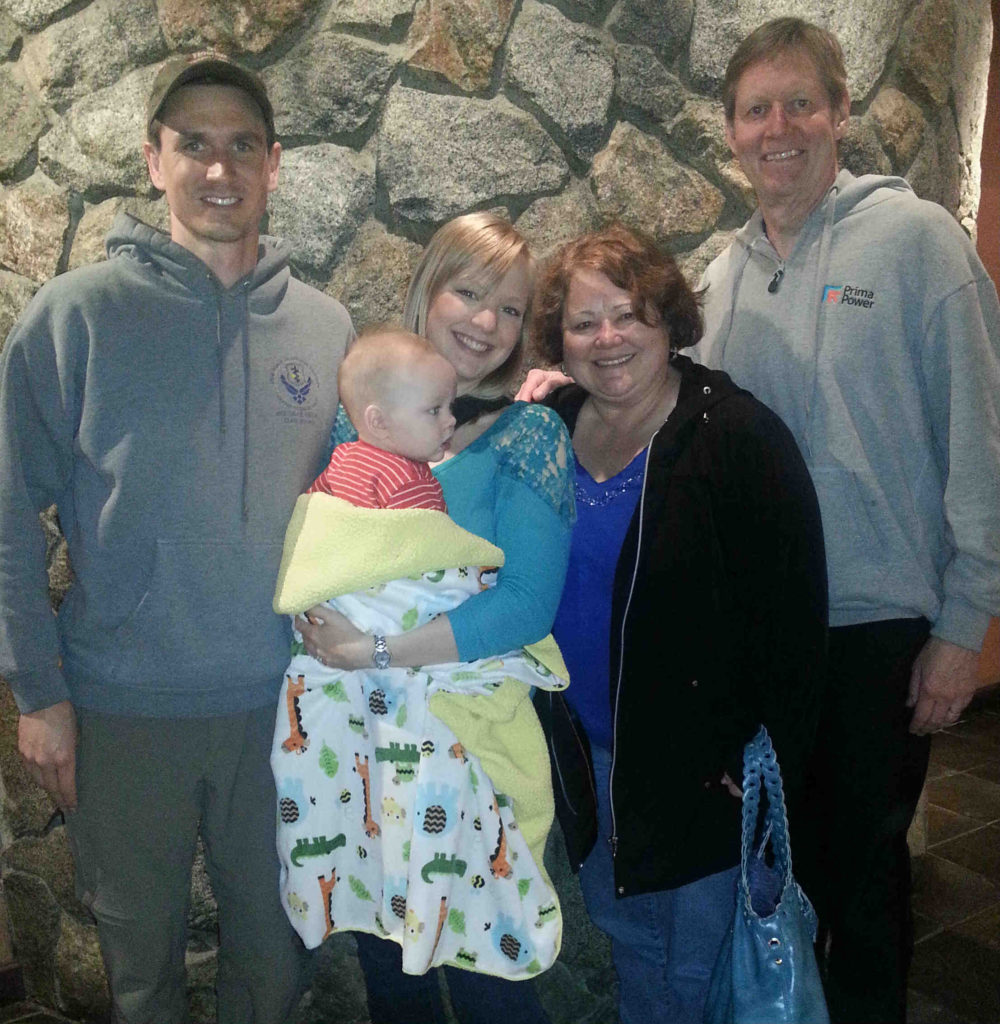
Fast forward two years and this young family had grown to include another member, their son.  On the Saturday before the triathlon, we were able to take the young family to lunch at Glacier Brewhouse in downtown Anchorage.

family-picture-at-Glacier-Brewhouse
The Eagle River Triathlon gave us opportunity to visit Joy’s cousin’s son, daughter-in-law, and 6-month old grandson in Anchorage.

Preparing for the Alaska Triathlon

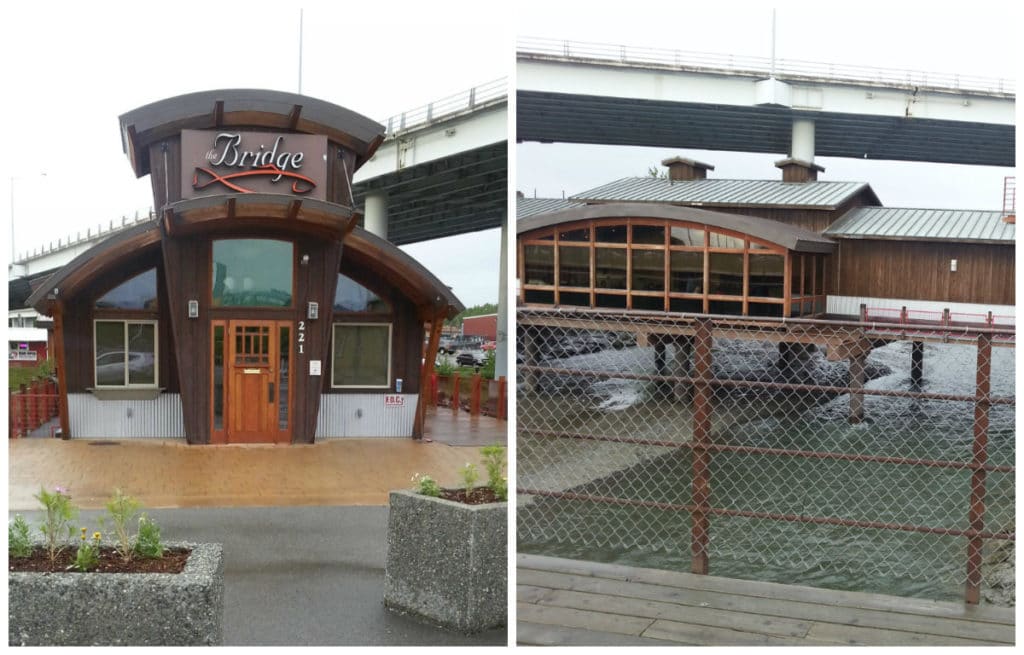
We arrived in Anchorage a couple of days early in order to tour the city and to test out the bike that I rented for this race.   During these two days, we sampled the local cuisine (lots of seafood) of various restaurants, including Seward’s Folly Bar & Grill, Gwennies, Glacier Brewhouse, and Bridge.

We were soon reminded of the long periods of sunlight in Alaska during this time of year.  Throughout our stay, we occasionally woke at night to peek outside and realize that it was never darker than a Minnesota dusk.   Thank goodness for thick room darkening curtains.

The day before the race, we picked up the race packet at Chugiak High School.  We also picked up the Scott rental bike at Chain Reactions Cycles.  In between we met the couple whose wedding we had attended two years earlier.

Bridge-Restaurant-Anchorage-Alaska
Locals recommended that we sample the seafood at the Bridge restaurant. A good choice.

Eagle River Triathlon

I don’t think of Alaska as a hot spot for triathlon.  So, I was surprised to learn that the Eagle River Triathlon has been held every year except one (2003) since 1993, making 2014 the 21st running of the triathlon.

Headquarters for the Eagle River Triathlon was Chugiak High School.  The school is located about 25 miles northeast of downtown Anchorage just off Glenn Highway, also known as AK-1 (Alaska Highway 1).

Distances for the individual legs of this USAT-sanctioned sprint triathlon were:

  • Swim: 0.3 mile (500 m)
  • Bike: 12.4 mile (20 km)
  • Run: 3.1 mile (5 km)

Unique Transition Area

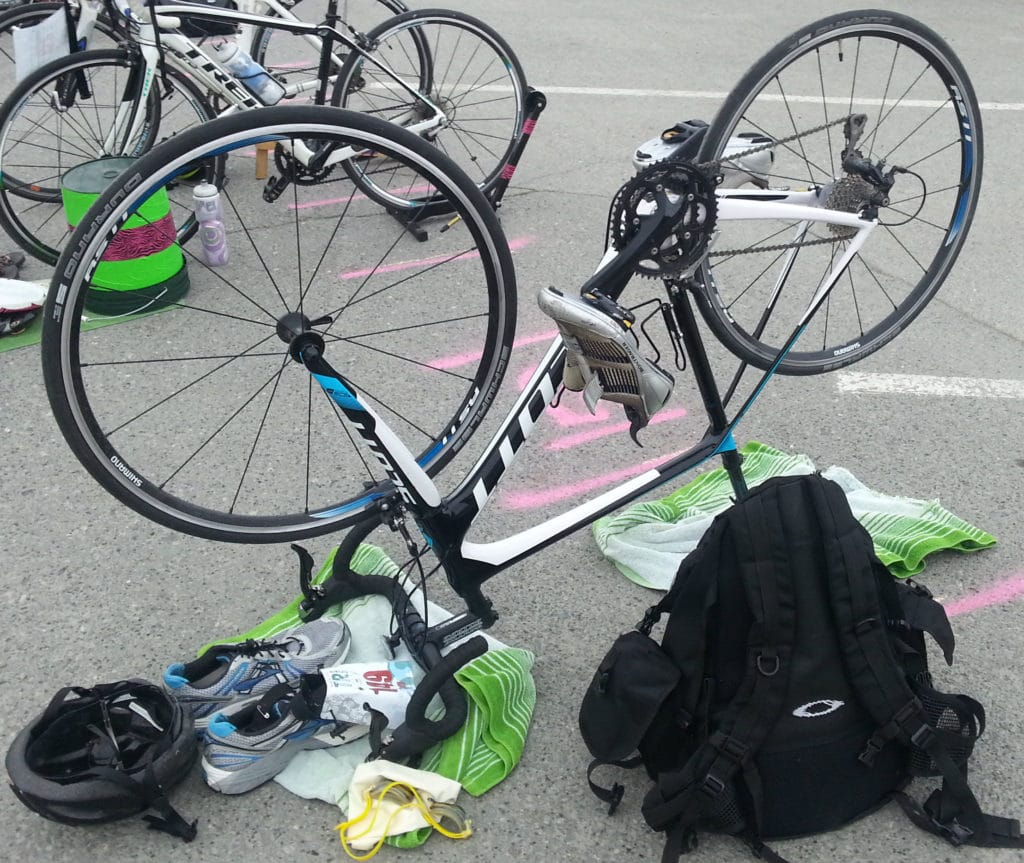
Somehow I missed the information on the Eagle River Triathlon’s Facebook page that race organizers did not provide racks for holding bicycles in the transition area.   Other racers brought their own means of supporting their bikes. Some of these were purchased while others were clearly homemade.

Since there was plenty of space in transition, I stood my road bike upside down.  (This would not have worked with my Trek SpeedConcept tri-bike.) 

As you can see in the picture below, other racers still gave me more space, probably fearing that my bike would tip over.

triathlon-transition-area-without-bike-racks
Racers of the Eagle River Sprint Triathlon were asked to provide their own bike stands, such as that used by the person whose bike was setup next to mine. I missed the information so was forced to improvise.

Swim

The swim leg occurred in the Chugiak High School Swimming pool.  The 500-meter swim consisted of 10 laps (20 lengths) of the 25-meter long pool, all within the same lane.  Swimmers started according to bib number with about 100 swimmers completing the swim each hour.  The result was that the entire field of triathletes was spread out over nearly four hours.

Bike

On race morning, the temperature was just under 50ºF (10ºC).  By the time I had completed the swim and headed out onto the bike course, a light drizzle had begun to fall.  The combined temperature and rain made the ride chilly, bordering on just plain cold.

The course left the transition area in the Chugiak High School parking lot, turned north following Birchwood Lane to the first turnaround.  From here, we returned on the same route past the transition area to a second turnaround about two and one-half miles past the school.  From the second turnaround, we rode back to transition.

I had used a rented bicycle in a previous triathlon, the Hilton Head Sprint Triathlon.  However, the bike rented for the Alaska triathlon did not fit me nearly as well.  The time to complete this leg of the triathlon showed it.

The lesson? Next time I rent a bike, I will pay closer attention to the fit.

Run

The run course followed a single loop, out-and-back course.  The course followed a paved trail that left the transition area, passed under Glenn Highway, and then turned left to follow another paved trail that paralleled the highway.  Upon reaching the halfway mark, we turned around and returned to the red inflatable Finish Line (shown behind me in the picture below).

triathlon-run
Heading out of transition for the run at the Eagle River Triathlon. There was no worry about becoming overheated on this day.

A Small World Story from the Alaska Triathlon

While chatting with other triathletes before the race, Joy and I struck up a conversation with a young lady and her parents.  We learned that while she and her husband were living in Fairbanks, her parents were from Hutchinson, Minnesota, a rural community about 1-1/2 hours drive west of our home, also in Minnesota. That was interesting.

However, as we continued talking with the young lady, we learned that she had not only grown up in Hutchinson but that she had also swam in high school with our daughter-in-law.  Now that made the world seem just a little smaller.

Here we were more than 3,000 miles from home. We not only met, but raced in a triathlon with, a person who had swam with our daughter-in-law. 

Besides, this young lady represented Minnesota well. She was the first overall female finisher for the Eagle River Triathlon.

Results

Finishing third in the Male 60-64 age group earned me a ceramic plague.  You can see it listed third in “5 Unique Triathlon Medals; They are No Longer Just Metal”.

Exploring Alaska

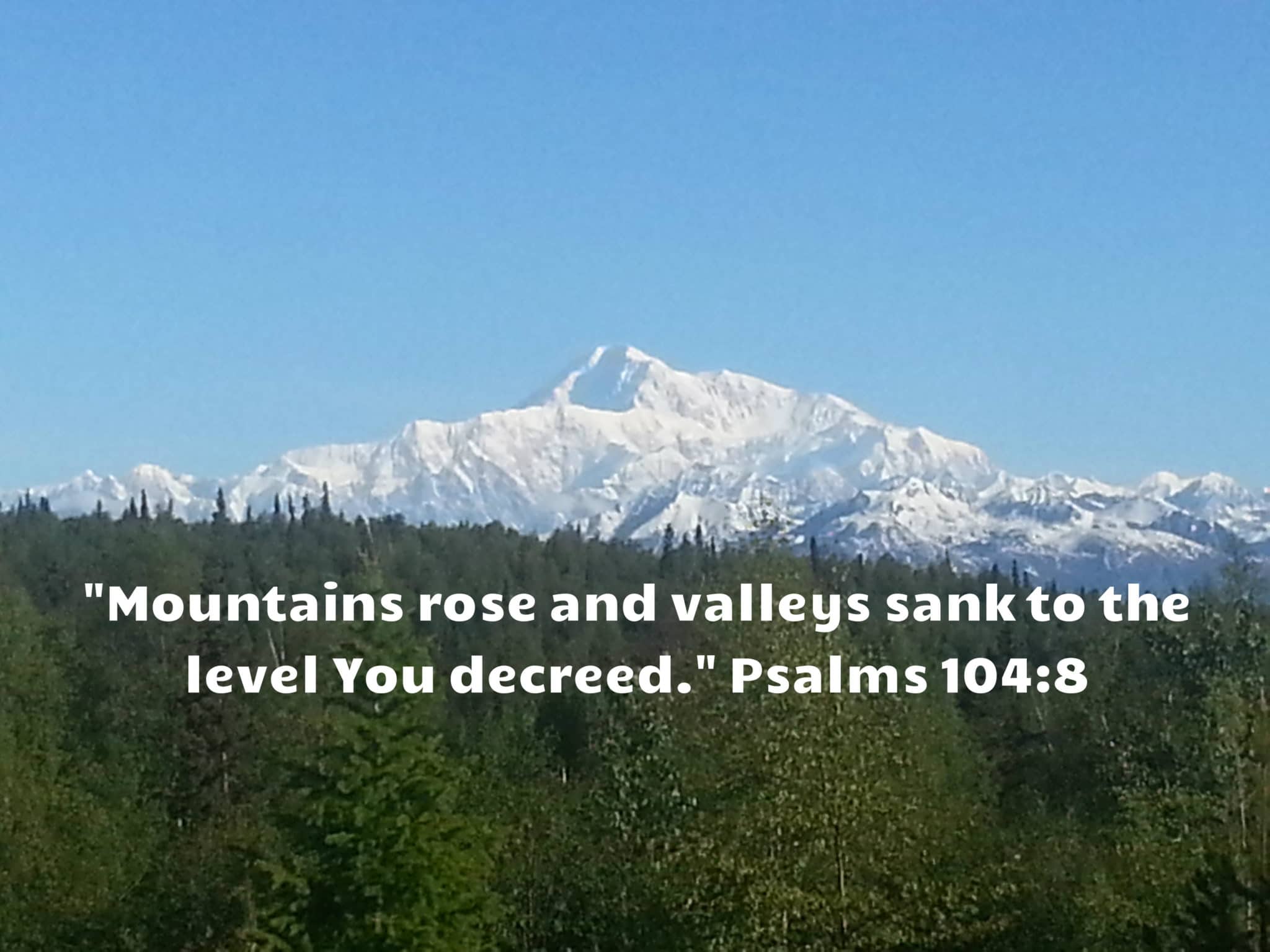
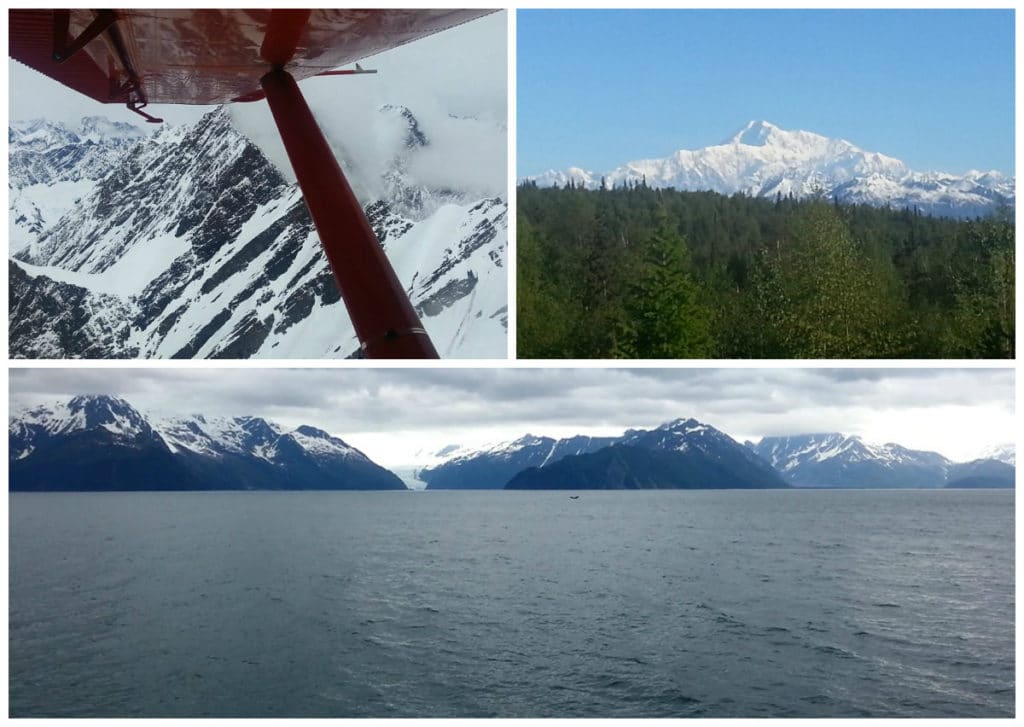
Joy and I took the next week to put on a bunch of miles in the rental car, first driving to Fairbanks.  Enroute, we spent one night in Talkeetna from where we took an air tour of Mt. McKinley and surrounding mountains and glaciers, and one night at the Mt. McKinley Princess Lodge.

Mount-McKinley-and-Resurrection-Bay
After the triathlon, we traveled to Fairbanks staying in Talkeetna and at the Mt. McKinley Princess Lodge along the way (upper two pictures). It was then on to Seward and Resurrection Bay (lower picture). The tail of a whale is visible near the center of the lower picture.

After a quick tour of Fairbanks and North Pole, we returned back to Anchorage and onto Seward for two days.  On one of these days, we joined Kenai Fjord Tours Aichik of Resurrection Bay for whale watching and glacier viewing.

Race Firsts

  • There were no common bike racks in the transition area, a triathlon-first for me.
  • First race in which I was #1 in both T1 and T2 time for my age group.
  • First race in which the swim start was spread over several hours.
Triathlon Adventures Across America book cover

A Story That Resonates

“A must-read for every athlete and retiring business executive committed to living healthy.”

Discover the complete story

Have You Done a Triathlon in Alaska?

Have you done a triathlon in Alaska? If so, let us here about it in the Comments below.

Comments: We’d love to hear about your experience. Join the conversation below. All comments are reviewed before they appear.

Reply notifications: Click the bell icon above Post Comment to be notified when someone replies to your comment.

Follow the discussion: Click Subscribe above the comment box and enter your email address to receive notifications whenever a new comment is added—even if you don’t leave a comment. After subscribing, check your email and click Confirm to activate notifications.

Triathlon Across the USA: State #35 – Iowa

Waverly, Iowa; May 5, 2018 – Wartburg College; TriByKnight Sprint Triathlon.

It had been 27 years since we last spent time with our friends, Paul and Susan. In the summer of 1991, Paul, Susan, and their three children had traveled from their home in Algona, Iowa, to join our family in Minnesota. During that visit, our two families served as volunteers for the International Special Olympics being held in the Minneapolis–St. Paul area. As part of the event, we met Kirstie Alley, Fred Savage, and Olympic gymnasts, Nadia Comăneci and Bart Conner.

With our kids now grown, Joy and Susan had been trying to find a way for the four of us to get together. An opportunity emerged in early March when we learned about the TriByKnight triathlon in Waverly, Iowa.

A check of schedules showed we were available. Our first weekend in May was going to involve triathlon and friends.

This race is one chapter in a 50-state journey—now told in full in Triathlon Adventures Across America .

Snow in late April?

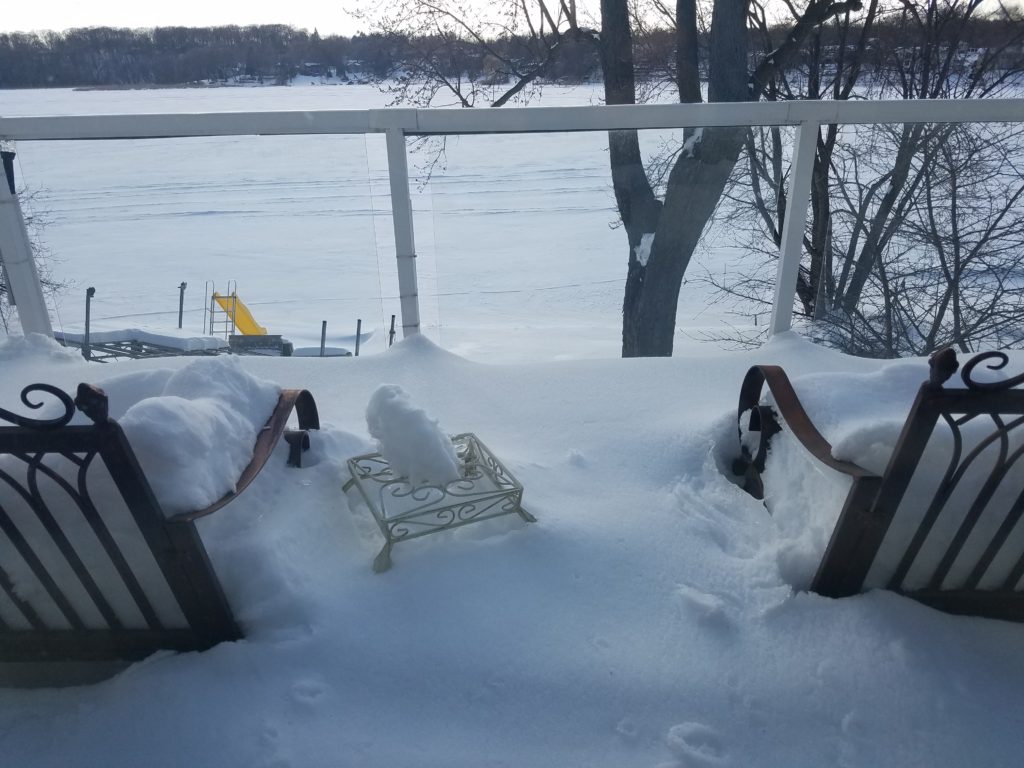
My training for the Iowa triathlon had all been indoors – pool, stationary bike, and treadmill – thanks to the extended 2017-18 winter. To top it off, twenty-two inches of snow fell at our Minnesota home exactly three weeks before the TriByKnight sprint triathlon.

snow-in-April
Three weeks before the triathlon in Waverly, Iowa, we received 22 inches of snow at our Minneapolis area home. The snow delayed outdoor training, especially biking.

While the weather warmed and the snow quickly disappeared, it was difficult to get outside for training. The first opportunity for an outdoor bike ride was less than one week before the race.

I approached the race with some questions about how ready I would be.

Visiting Waverly for the Iowa Triathlon

We left home around 1:30pm on Friday, May 4th for the 3-hour drive to Waverly. By the time we arrived, we could proceed directly to pick up the race packet at Thompson Shoes, one sponsor of the triathlon.

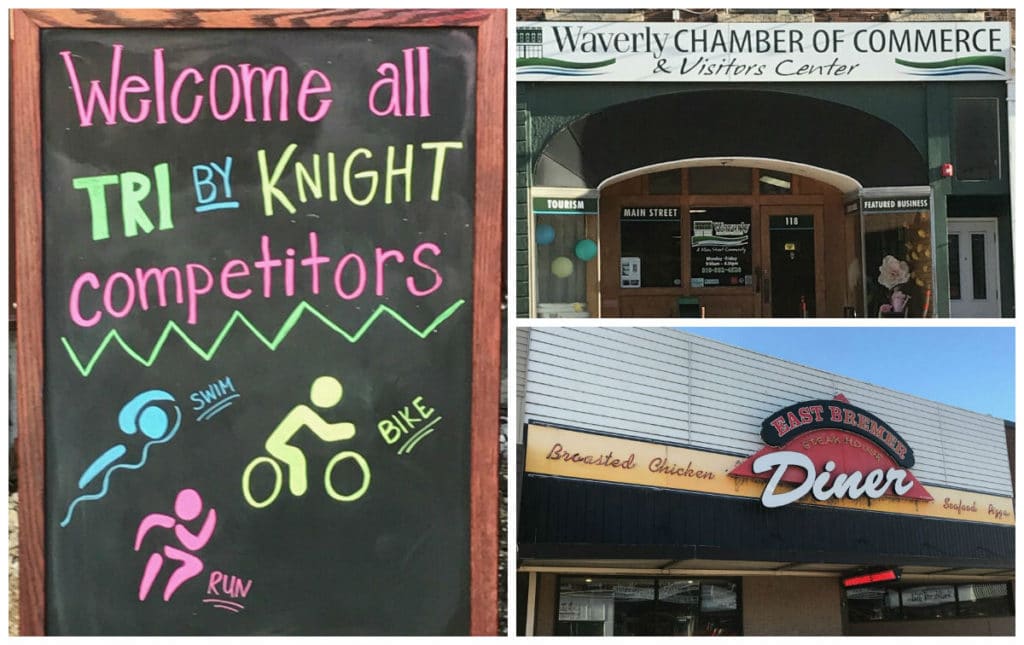
With this important task complete and our stomachs rumbling, we walked next door to the East Bremer Diner to sample the local cuisine. After an exceptional prime rib dinner, complete with the signature East Bremer Diner salad dressings, we headed out for a drive along the bike course for the next day’s triathlon.

scenes from downtown Waverly
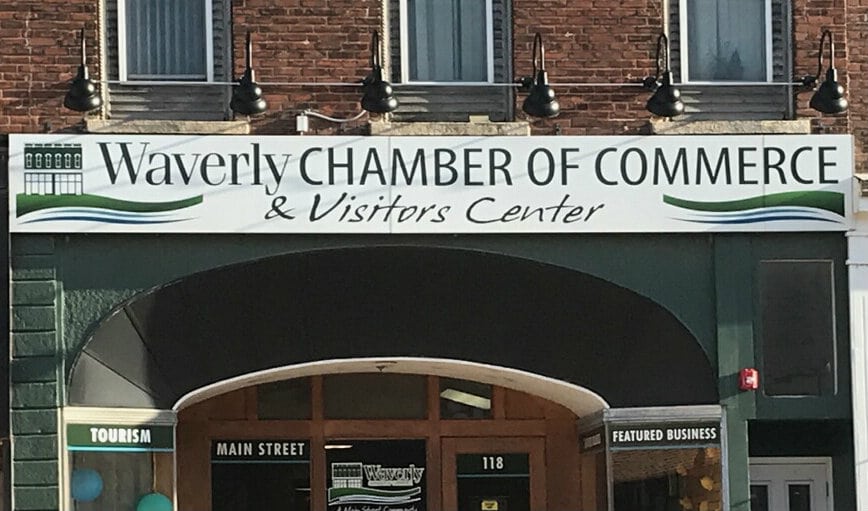
Packet pickup was at Thompson Shoes (left), across the street from the Waverly Chamber of Commerce (upper right) and next door to the East Bremer Diner (lower right).

Joy and I like to checkout the course before the race. Our goal is to identify road conditions for the bike leg. In particular, we look for potholes and cracks in the road that could pose trouble, if not avoided.

After driving the bike course, we checked into our hotel. Before calling it a night, I finished preparing for the next morning by:

  • applying the race number to the bike and race number belt,
  • preparing drinks for before and during the race, and
  • inflating the bike tires.

7th Annual TriByKnight Sprint Triathlon

The TriByKnight sprint triathlon was held on the Wartburg College campus, home to the Wartburg Knights. The triathlon was also managed by the college.

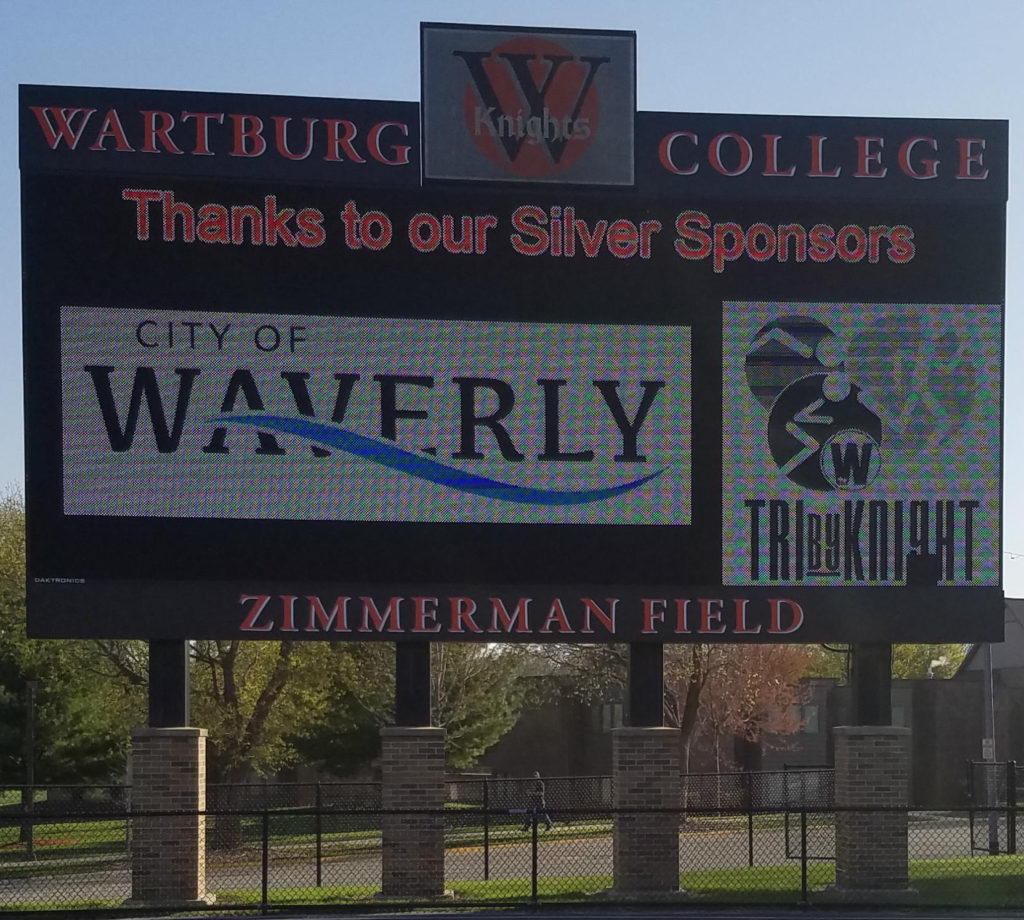
Wartburg Knights footfall field scoreboard for the Iowa triathlon
Wartburg Knights scoreboard on race day. The City of Waverly was among the many sponsors of the TriByKnight triathlon.

Distances for the individual legs of this USAT-sanctioned sprint triathlon were:

  • Swim: 300 yard (274 m)
  • Bike: 15 mile (24 km)
  • Run: 3.1 mile (5 km)

We could not have asked for a more perfect day. Clear skies. Light breeze. Mild temperature. While on the ride, I looked down at my bike computer, which showed the temperature to be 77°F (25°C).

Swim

The Schuldt Natatorium, location for the swim leg, includes a six-lane, 25 yard long pool. Before the race, swimmers lined up according to their estimated swim time.  

Following the singing of the national anthem, race staff sent the first triathlete into the pool to begin his race. The rest of the nearly 200 racers started at approximately 5-second intervals.

We swam down and back in each lane (except for the last lane) to make up the 300 yards. After swimming back in each lane, we ducked under the lane divider and repeated the down and back excursion in the next lane.

After completing the ‘down’ portion of the sixth lane, we turned and swam approximately halfway to the starting end, then turned about 45 degrees to the left, and swam across an area of the pool designated for water sports (e.g. volleyball, water polo). We exited the pool, walking up several steps.

From here, we left the building, heading toward the fitness center and pool parking lot, which on this day was the transition area for the triathlon.

Bike

The bike course was a 15 mile loop on paved roads in the rural area north of Waverly. The ride involved a continuous series of rolling hills. While the hills were not extreme, they were still challenging, considering that I had ridden outside for the first time this year less than a week earlier.

During the first two miles, the combination of cars, trucks, bikes, and hills created a slow down for some bikers. While I did not slow down because of a car or truck, several of the bikes in front of me were required to slow. This brought back memories of the Texas triathlon.

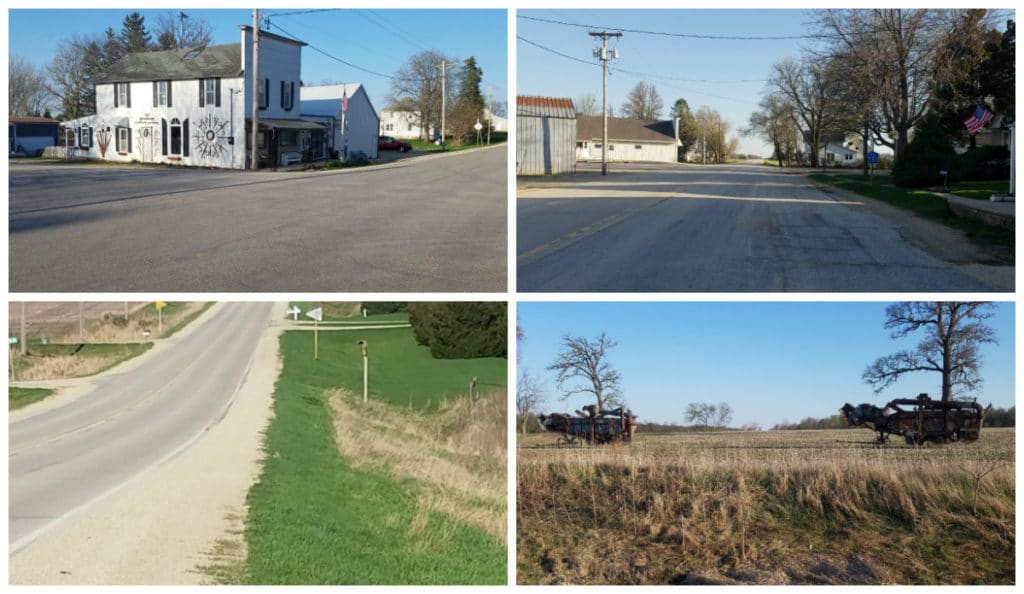
Near the halfway mark of the bike course, we passed through the small town of Bremer (see picture below). About a mile outside of Bremer, we passed by a farm with three antique threshing machines sitting in a grassy field. While there was no sign of the owner trying to sell them, I did note that he had a plot of land for sale.

scenes from the TriByKnight bike course
The bike course took us on rolling hills north of Waverly, through the very small town of Bremer, and past some retired threshing machines.

A few miles later, with the longest hill of the course behind us, we were back on Waverly streets. This last section of the bike leg included a wooden pedestrian bridge that crossed the Cedar River. In a few more blocks, we were at the dismount line and back into the transition area.

Run

The 5k run leg was three loops of a course on streets within the Wartburg campus and about a half lap on the asphalt track of Walston-Hoover Stadium. 

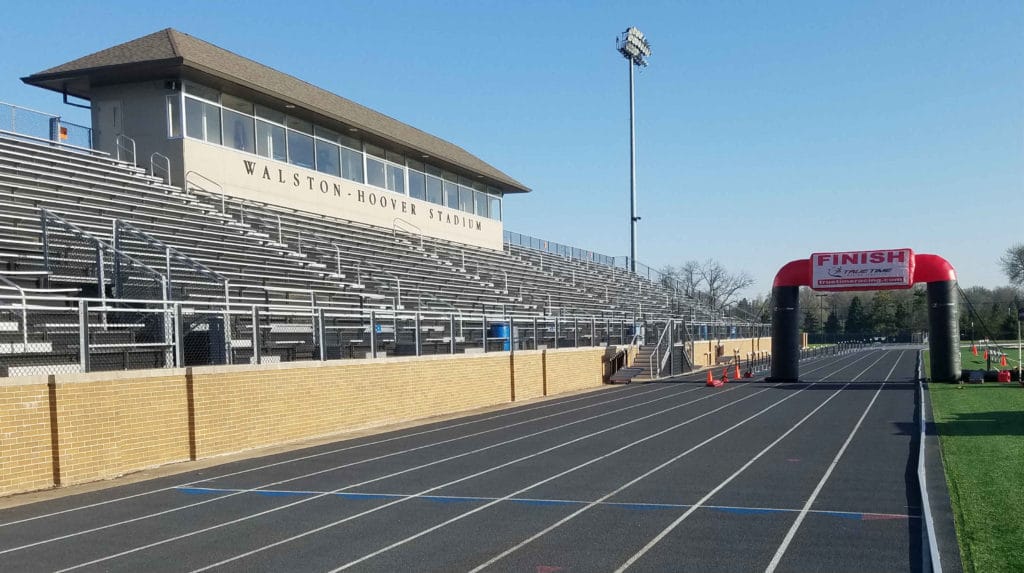
During the final loop, the course led runners to the finish line on the track at the 50-yard line of the football field.

finish line of TriByKnight triathlon
The finish line of the TriByKnight sprint triathlon was near the 50-yard line of the Walston-Hoover Stadium on the campus of Wartburg College.

Taking the Long Way Home

As often as we can, we combine travel to a triathlon with visits to family and friends. More often than not, we choose the location of the triathlon so that we can accomplish both goals.

This time was no different. Following the triathlon, we traveled north and west to Clear Lake, Iowa. Following a quick lunch, we headed on to Algona, Iowa, to visit friends, Paul and Susan.

While we had passed through Clear Lake many times on past trips between Minneapolis and Des Moines, Iowa, Clear Lake had a special significance this time.

About six months earlier, Joy’s book club had read “Stars Over Clear Lake” by Loretta Ellsworth. This historical fiction novel describes events around the World War II German POW Camp in Algona, Iowa.

At the end of the book, Joy had learned of a museum memorializing the Camp and the area residents who had served in the war effort. So, while in Algona, we jumped on the opportunity to visit the museum.

A Stop in Algona

The docent of the POW Camp museum, Glenn, added to the various displays by sharing some heartwarming stories from interviews of area residents. Glenn had conducted some of the interviews himself.

At least one of these stories is told in “Common Valor”, a book to which Paul and Susan’s daughter Leah was a contributor and that we now own.

Following the museum visit, Paul and Susan showed us Algona, of which they are rightfully proud. We finished the day with a great home-cooked dinner and a late night of catching up. After attending church with Paul and Susan the next morning, we headed toward home.

Since US Highway 169 passes through Algona and within a few miles of our home, we returned along this route. Along the way, we stopped briefly in Blue Earth, Minnesota, to visit with Sherryl and Penny, Joy’s sister and niece.

Race Firsts

  • First time racing in the 65-69 Age Group
  • First race with a portion of the bike course on a wooden pedestrian bridge over Cedar River.
  • Passing through a second town (Bremer, Iowa) on the bike course was another first.
Triathlon Adventures Across America book cover

A Story That Resonates

“A must-read for every athlete and retiring business executive committed to living healthy.”

Discover the complete story

Have You Done a Triathlon in Iowa?

This was not the first time I had done a triathlon where the swim was in a college pool. How about you? Have you done a triathlon on a college campus? How about a triathlon anywhere in Iowa?

Please tell us your experiences in the Comments below.

Comments: We’d love to hear about your experience. Join the conversation below. All comments are reviewed before they appear.

Reply notifications: Click the bell icon above Post Comment to be notified when someone replies to your comment.

Follow the discussion: Click Subscribe above the comment box and enter your email address to receive notifications whenever a new comment is added—even if you don’t leave a comment. After subscribing, check your email and click Confirm to activate notifications.

error

Enjoy this post? Please spread the word :)