Triathlon Across the USA: State #17 – Colorado
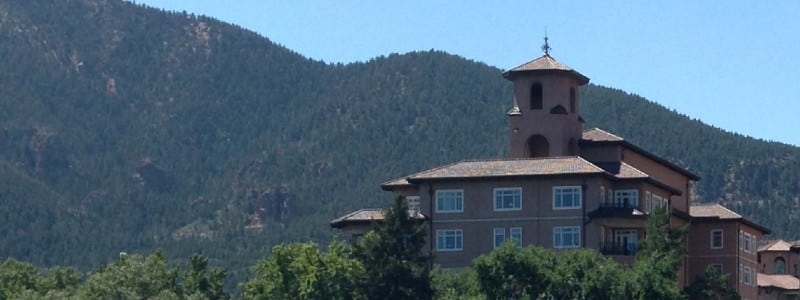
Englewood, Colorado, September 8, 2013 – Inverness Triathlon

Adding Colorado to the 2013 Triathlon Season

We decided that 2013 was the year to share my love for triathlon with my parents.  Since they were living in the south Denver suburb of Parker, it was a matter of finding Colorado triathlons that fit our schedule.  We decided on the one closest to Parker.

As long as we were making the trip, Joy and I decided to add a few days and a couple of extra stops to check in on family in South Dakota and Nebraska and to visit friends in Colorado Springs.

This race is one chapter in a 50-state journey—now told in full in Triathlon Adventures Across America .

An Indirect Route to the Colorado Triathlon

The path from Minneapolis to Denver was anything but direct.  We started the six-day, six-state trip on Wednesday morning by heading to Rapid City, South Dakota for a visit with Joy’s aunt Evelyn.

The next day, we reached our friends Steve and Lori in Colorado Springs for a visit with them.  Then, on Friday, we made the hour and a half drive from Colorado Springs to my parent’s house in Parker.
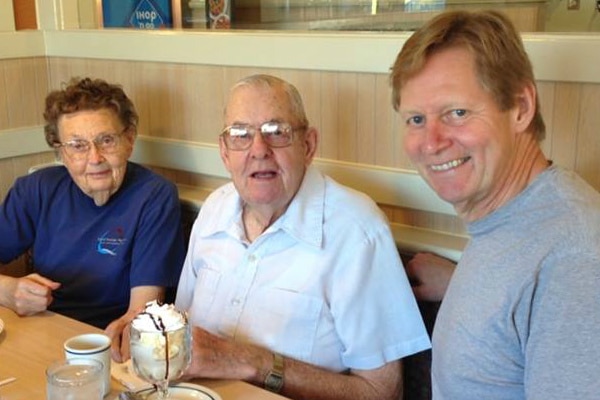
Terry with parents at IHOP before the Colorado triathlon
Enjoying ice cream and good conversation with my parents. Photo courtesy of Joy.

Last Minute Equipment Problem

While on a short bike ride around my parent’s neighborhood on Friday afternoon, I noticed that the seat kept sliding down, not just a little but almost a foot within a few blocks.  While I could still ride the bike, it took more effort to keep moving at a normal pace than it did with the seat at its correct height.

Not wanting to over tighten (over torque) the seat post clamp and risk cracking the carbon fiber frame of the Trek SpeedConcept, I called the Trek bike shop in Parker for ideas on how to solve the problem.

We agreed that I would bring the bike into the shop on Saturday.

The people working at bike shops are among the most generous I know. The guys at the Parker store of Treads (the local Trek dealer at the time) were no exception.

They spent several hours trying to solve the mystery of the sinking seat. Much of the time was spent with the bike on a trainer so I could test ride the bike after they implemented what they believed would be a fix for the problem.

The final solution appeared to be applying a grit filled, sticky/greasy substance to the seat post. This material was designed to create additional friction between the seat post and clamp to keep the post from moving.

In the end, they did not ask for anything. I decided to purchase a tube of the grit filled material in case I needed more in the future.

When I left the bike shop, I was convinced they had solved the problem. I headed into the race confident in my equipment.

Inverness Triathlon

The Inverness Triathlon, held at the Colorado Athletic Club in Englewood, included individual and relay sprint triathlon and aqua-bike events.

Distances for the individual legs of the USAT-sanctioned Inverness triathlon were:

  • Swim: 0.3 mile (574 yd or 525 m)
  • Bike: 12 mile (19.3 km)
  • Run: 3 mile (4.8 km)

The aqua-bike race was available for those who did not want to or were unable to run the three mile distance of the triathlon. For example, one of the guys who swam in the same group as me competed in the aqua-bike. He explained that he chose this event because of a chronic knee problem that prevented him from running.

The aqua-bike included the swim and bike distances of the triathlon with only short walk or jog to the finish line from the transition area.

Later, while chatting before the race, he told me that, from his perspective, the bike course for this race was ‘quite flat’. When we later met on the course, I shared with him that flat from the perspective of a Minnesotan is clearly different from that of one from Colorado.

Swim

The triathlon began with the slowest swimmers (those who reported the longest expected swim times) starting first.  Five swimmers occupied each lane and started about 10 seconds apart from each other. This is commonly referred to as a ‘time trial start’.

There was also one lane for the fastest swimmers, those who expected to swim the 525 m in 7 minutes, 30 seconds or less.

Since I was in neither camp – neither among the slowest nor the fastest, I waited and eventually found a group of five other swimmers who expected to complete the swim in a similar time as me.

The swim involved 21 lengths of the 25 m pool, all within the same lane shared by the five swimmers. The odd number of lengths meant we exited the pool at the end of the swim leg at the end opposite from that at which we entered it.

From the exit of the pool, it was a short walk or jog to the transition area just outside the pool area.

Bike

The bike course took us through a business area in the south Denver suburb of Englewood. The course had the feel of a labyrinth of side streets lined with modern office buildings and the occasional green space. The altitude was between 5,720 and 5,900 feet – a little over one mile high.

The bike course was a bit hillier than typical venues, though not especially difficult. After a 120 foot descent over the first 2-1/2 miles, the course ascended 180 feet over the next 8 miles.

Late in the bike leg, it became clear that the gritty material applied to the seat post at the bike shop the day before was not doing its job. In fact, by the time I finished the bike leg, the seat post had dropped about a foot. At least it had taken longer for this to happen than it had on Friday.

While the bike was still working fine, I was not generating the same amount of power with each stroke of the pedal as with the seat at the correct height.  The result: it was taking longer to get through the course.

What should I have done differently? The guys at the bike shop in Parker had done everything that they knew to do.

In hindsight, I should have taken the bike for a ride a week before leaving home for Colorado. This would have at least provided more time to diagnose and solve the problem.

Another lesson learned.

Triathlon Lesson: A triathlon is a microcosm of life. The unexpected often occurs during a race. It is best to accept whatever comes along and learn from it.

St. Paul to the Romans (Romans 5:3-4)

Run

The run was partially on a combined walking and running trail and partially on city sidewalks, all behind the fitness center. Even though the run course was relatively flat, my run was actually a mix of running and walking.

I expected the run to be a challenge with the difference in altitude between my Minnesota home and Colorado. Running near my parent’s home during several previous visits had taught me that running at the higher altitude was more difficult.

Results

Despite the challenges with the bike and run legs of this race, I ended up finishing 50th of 200 overall and second within my 60-64 year men’s age group. For me, that was respectable.
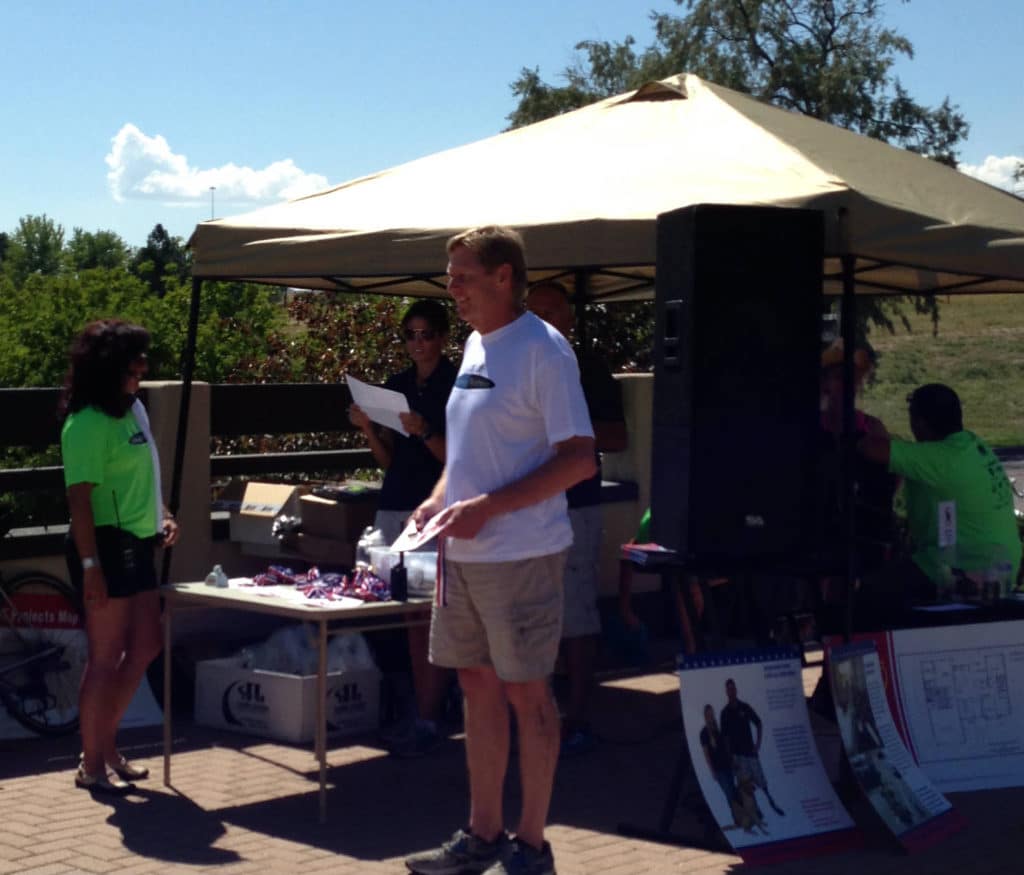
Receiving award at Inverness Triathlon, Englewood, Colorado triathlon.
Receiving the award for a second place age group finish at the Inverness Triathlon, Englewood, Colorado.

Reflections on the Colorado Triathlon

Other than for the swimming portion, triathlon is not much of a spectator sport. Nevertheless, my parents stayed for the entire race and even seemed to enjoy all the activity around the event.

We were glad that we had made the trip. This weekend was among the last times we spent time with my parents. Within a few years, both had passed away.

After the award’s ceremony, we headed back to Minneapolis with an overnight stop in Omaha, Nebraska, to see our son Ben, daughter-in-law Lindsey, and granddaughter Mari (Anna Joy was not yet born). More precious time with family.

Fixing the Bike Seat

A week or so after returning home, I took the bike into my local bike shop, Maple Grove Cycling. After explaining the problem, I learned that Trek had very recently announced a recall of the seat post clamp. A Maple Grove Cycling technician installed the new and improved clamp.

I no longer needed the grit-filled material for the seat post.

Race Firsts

  • First race at over one mile altitude
  • First triathlon involving a problem that affected the bike fit
  • This was the first (and only) triathlon attended by my parents
Triathlon Adventures Across America book cover

A Story That Resonates

“A must-read for every athlete and retiring business executive committed to living healthy.”
Discover the complete story

Comments: We’d love to hear about your experience. Join the conversation below. All comments are reviewed before they appear.

Reply notifications: Click the bell icon above Post Comment to be notified when someone replies to your comment.

Follow the discussion: Click Subscribe above the comment box and enter your email address to receive notifications whenever a new comment is added—even if you don’t leave a comment. After subscribing, check your email and click Confirm to activate notifications.

Triathlon Across the USA: State #13–Hawaii

Kailua (Honolulu), Hawaii; April 21, 2013 – BOCA Hawaii Lanikai Sprint Triathlon

The Hawaii triathlon was the perfect opportunity to introduce my aunt, a resident of the island of Oahu, to triathlon.  It also led to several firsts in the “Triathlon Across the USA” adventure.

This race is one chapter in a 50-state journey—now told in full in Triathlon Adventures Across America .

Planning the Hawaii Triathlon

Joy and I are fortunate to have a close relationship with my aunt Nelda, who lives 10 minutes by walking from Waikiki Beach in Honolulu, Hawaii. For the past several years, we have visited her during the heart of the Minnesota winter.  In turn, we welcome her to our home during the summer.

Planning an April trip to Hawaii for the BOCA Hawaii triathlon seemed almost a waste. After all, why make the long flight to visit Hawaii at a time when the weather in Minnesota is typically spring-like. April in Minnesota generally means spring flowers in bloom and trees beginning to bud and sprout green after the winter.

As it turned out, the 2013 winter in Minnesota was longer than usual.  It snowed on and off at home throughout our time in Hawaii.

Before the Race

Joy and I, along with my Trek SpeedConcept triathlon bike, arrived in Hawaii a little more than a week before the triathlon. After re-assembling the bike, I took a short ride to make sure that I had put it together properly.  I had planned to get in some serious biking before race day.  However, this didn’t happen.

Why? Biking in Honolulu was challenging and even dangerous. Traffic is congested and there are many distracted tourists driving on streets with which they are not familiar. In addition, there are few designated bike lanes on the city streets and roads.

By January 2018, this condition had improved due to the more than 1,000 rental bicycles that are part of the Biki ride sharing program. Bicycles are available at more than 100 rental locations throughout the main tourist areas of Honolulu.

12th Annual BOCA Hawaii Lanikai Triathlon

The BOCA Hawaii Lanikai Triathlon, managed by the multi-sport training and racing company BOCA Hawaii, started and ended in Kailua Beach Park on the eastern side of the island of Oahu.

Distances for the individual legs of the USAT-sanctioned race were:

  • Swim: 0.3 mile (550 yd or 500 m)
  • Bike: 10.7 mile (17.1 km)
  • Run: 3.6 mile (5.7 km)

This race had the distinction of including part of the bike course on Marine Corps Base Hawaii (MCBH).  For reference, MCBH was formerly known as Marine Corps Air Station Kaneohe Bay and originally called Naval Air Station Kaneohe Bay. (Source: https://en.wikipedia.org/wiki/Marine_Corps_Base_Hawaii.)

Swim

The over 350 competitors ran or walked into Kailua Bay together with the sounding of the air horn that signaled the start of the triathlon. The 500 meter (550 yard) swim in the calm, clear, and comfortably warm waters of Kailua Bay took me a little over 11 minutes. Given the water temperature, swimmers could not use a wetsuit according to USA Triathlon rules.

Note: According to USA Triathlon rules competitors are not allowed to wear wetsuits if the water temperature is 84 degrees Fahrenheit or above.

Swim start at BOCA Hawaii Lanikai Sprint Triathlon
The open water swim in Kailua Bay (with Mokulua Island in the background) was my first triathlon involving a swim in the Pacific Ocean. The darker section of the water near the center of the picture (between kayaks) is created by the swimmers.  I am in there somewhere.

Bike

The bike leg took us from the transition area in Kailua Beach Park onto city streets parallel to the Bay. We eventually entered MCBH.

The course was flat except for one nasty hill that ended with a turnaround in a neighborhood of base housing. To put things in perspective, the hill leading to the turnaround was the kind that causes you to wonder if you are going to fall over from going so slowly even though you are in the lowest possible gear and giving it your all.

We all know that whatever goes up must come down. This day, coming down meant extreme attention (and braking) to avoid ending up in Kailua Bay while navigating the near right angle turn near the base of the hill.

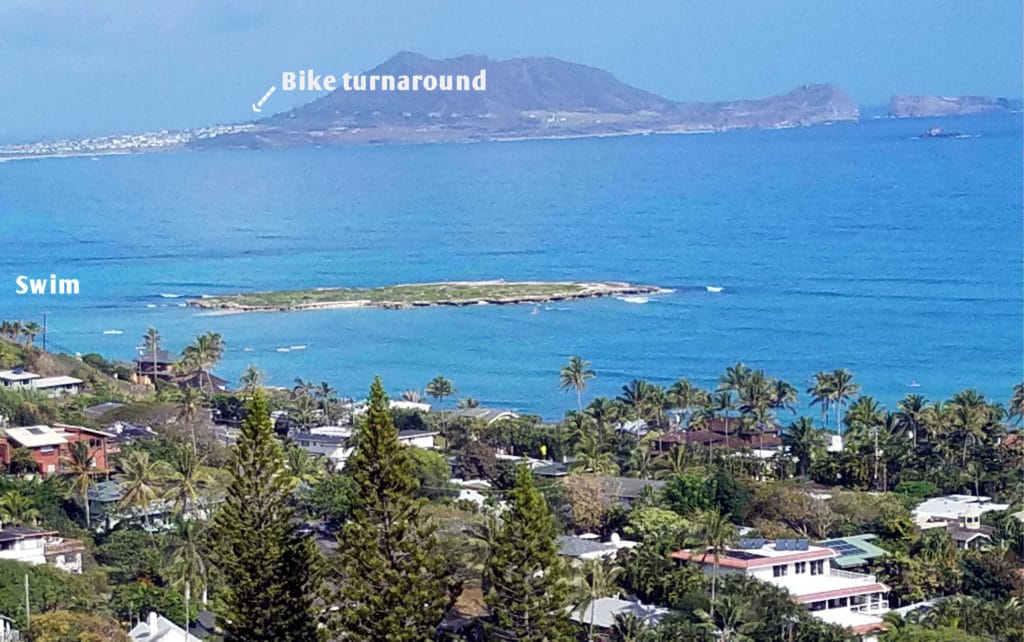
Bike turnaround on Marine Corp Base Hawaii
The swim took place in Kailua Bay between land (left) and the small, flat island near the center of the picture. The bike turnaround occurred on Marine Corps Base Hawaii (upper section of the picture). The run took place in the Lanikai neighborhood in the lower section of the picture. This view is from Pillbox hiking trail.

This was the first race applying a strategy on the bike of using a gear that allowed me to maintain a cadence (pedal revolution) of 90 rpm. The one exception was on the aforementioned hill. This approach seemed to work as hoped. While I was not always biking as fast as I could have, the higher cadence saved my legs for run.

Transition

Transition occurs between the individual legs of a triathlon and typically involves a change of gear and shoes. The time to complete the two transitions (from swim to bike, called T1, and from bike to run, called T2) is included in the overall time for completing the triathlon. Time spent in transition is just as important as time spent in each of the legs. For more about this, see How to Minimize Transition Time.

The video clip shows how to use multitasking to minimize time spent in transition.

VIDEO: Connecting the race number belt while running out of the transition area is one way to minimize transition time.

Triathlon Tip: Reduce your transition time by completing certain tasks together.  I connect my race number belt while running out of transition.  If the triathlon involves a wetsuit, I wear the race number under the wetsuit from the beginning of the race.

Run

Most of the 3.6 mile run was on the hilly streets of the Lanikai neighborhood.

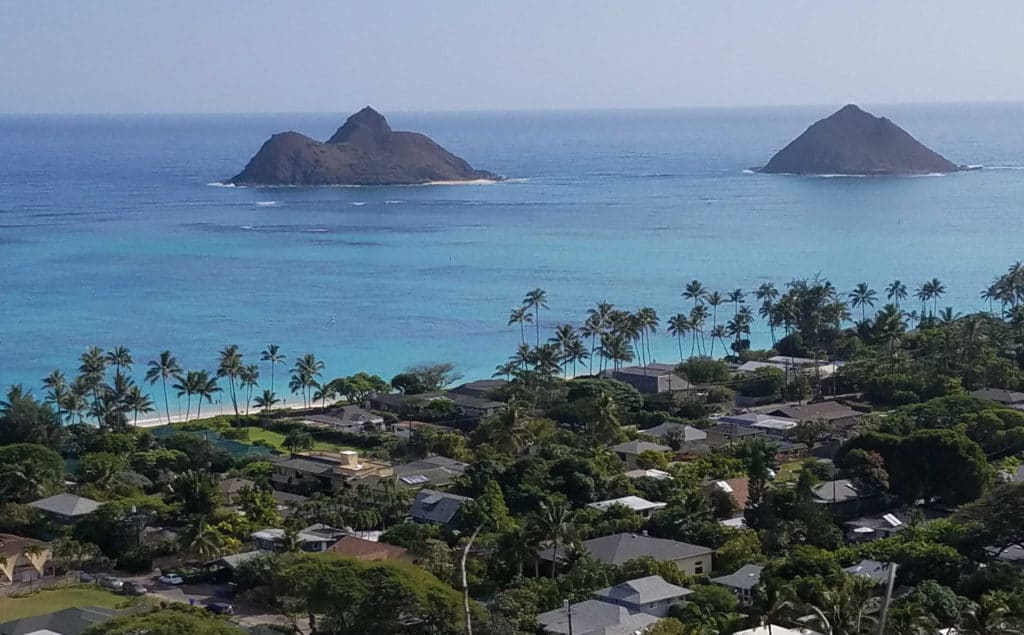
The run course of the BOCA Hawaii Lanikai Sprint Triathlon took us through the Lanikai neighborhood (with Mokulua and Moko iki Islands in the background).
The run course of the BOCA Hawaii Lanikai Sprint Triathlon took us through the Lanikai neighborhood. Mokulua and Moko Iki Islands are visible in the background.

The last six-tenths of a mile was on the beach, on sand packed by water from the waves which had washed ashore. Finishing the run required running a few yards through soft, deep sand. While I try to sprint to the finish line, the sand made this difficult.

Results

There was no award for me this time. I finished fourth of seven in my age group. I was not even close to the guy who finished third. While I was ‘in the hunt’ after the swim and bike legs, the three guys in my age group who finished ahead of me were much stronger runners.

My aunt and me in her condo overlooking the Ala Wai canal near Waikiki
Thanking my aunt Nelda for giving Joy and me a place to stay while in Hawaii and for making the early morning trek across the island to cheer me on during the race.

Race Firsts

  • Part of the race course was on a USA military base (Marine Corps Base Hawaii), a first.
  • This was my first triathlon with the swim in the Pacific Ocean.
  • First triathlon outside the continental USA
Triathlon Adventures Across America book cover

A Journey Beyond This Race

“Uplifting, real, and full of heart—I couldn’t put it down.”

Read the full journey in Triathlon Adventures Across America

Let Us Know About Your Races in Hawaii?

I know some of you have raced in Kona-Kailua on the Big Island. Others may have done different races like the one I did on Oahu.

What did you think about your Hawaiian races? Tell us in the Comments below.

Comments: We’d love to hear about your experience. Join the conversation below. All comments are reviewed before they appear.

Reply notifications: Click the bell icon above Post Comment to be notified when someone replies to your comment.

Follow the discussion: Click Subscribe above the comment box and enter your email address to receive notifications whenever a new comment is added—even if you don’t leave a comment. After subscribing, check your email and click Confirm to activate notifications.

Triathlon Across the USA: State #18 – South Carolina

Hilton Head Island, South Carolina; October 12, 2013—On On Tri Hilton Head Triathlon

Joy and I used the occasion of the Hilton Head Island Sprint Triathlon to celebrate our 40th wedding anniversary in and around Savannah, Georgia and Hilton Head, South Carolina. In addition, I checked off the state of South Carolina in the Triathlon Across the USA quest.

This race is one chapter in a 50-state journey—now told in full in Triathlon Adventures Across America .

Planning the South Carolina Triathlon

Unbeknownst to me, Joy had been dreaming about visiting Hilton Head Island for quite some time. Friends had told her of the many wonderful sights in the area. She shared her desire one evening, while we were discussing plans for the 2013 triathlon season.

About the same time, the race management company for the On On Tri Hilton Head Sprint Triathlon, Setup Events, opened registration for the 2013 race.

When we learned that the 2013 running of the Hilton Head Triathlon would take place in the week of our 40th wedding anniversary, we looked at each other and said, “Why not?”. Here was an opportunity to explore a part of the USA we had not previously visited and check off another state visited for a triathlon.

Hilton Head via Savannah

Eleven months after registering for the race, Joy and I left Minneapolis for our combined mini vacation and triathlon weekend. The Thursday, October 10th flight to Savannah, Georgia, with a connection in Atlanta, got us into Savannah at around noon.

After picking up our rental car, we drove to the Savannah Visitors Center. Here we purchased tickets and boarded the Old Town Trolley Tour for a narrated trip through historic Savannah.

About three-fourths of the way through the tour, we hopped off the trolley for lunch at Paula Deen’s restaurant, Lady & Sons. The buffet-style lunch included southern staples of grits, fried okra, and peach cobbler. There were plenty of other items, like green beans, more commonly found on our Minnesota table.

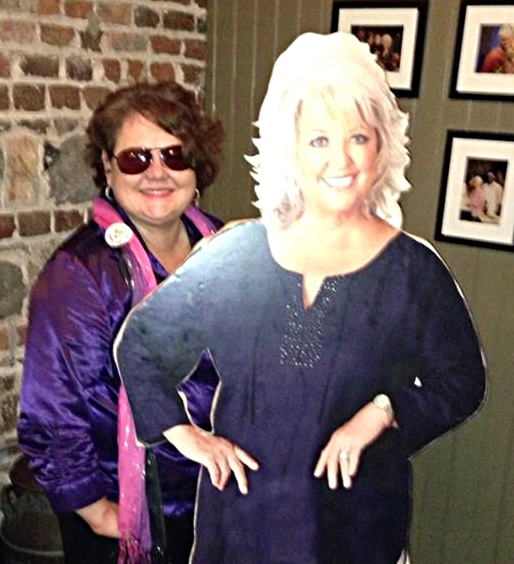
Joy with Paula Deen cutout, part of the South Carolina triathlon weekend.
Joy and I enjoyed southern cuisine with Paula Deen, actually her cutout, at Lady & Sons Restaurant in Savannah, Georgia.

After finishing the tour, we headed north out of Savannah toward Hilton Head Island, crossing from Georgia into South Carolina just outside Savannah. It took about an hour to make the roughly 40 mile trek to our hotel, The Beach House Holiday Inn, at Coligny Beach on Hilton Head Island.

Following a brief rest and walk on the beach, we headed over to Steamers for a swordfish dinner. Before turning in for the night, we took a dip in the hotel’s outdoor hot tub.

Renting a Bike for the South Carolina Triathlon

Months earlier, I decided to rent a bicycle for the race from a bike shop on Hilton Head Island. Renting meant I did not travel with my bike to this race.

There were several reasons in favor of this option.

First, at $50 for a 24-hour rental, it was a lot less expensive than the $300 ($150 each way) to bring my bike as airline luggage.

By the way, I had previously offered Delta Airlines the option of sponsoring me in triathlon by giving me free bike shipment. Unfortunately, they hadn’t taken me up on what I thought was a reasonable offer.

Second, by renting a bike, there was a lot less hassle. Renting avoided the need for unpacking and re-assembling my bike once at the race venue, then disassembling and re-packing it after the race and before heading back home.

Finally, traveling with the bike case would have required renting a larger vehicle, also at greater cost, than the mid-size sedan I reserved.

Concerns about a rental bike

Clearly, there were good reasons, mostly financial, for renting a bike locally. However, I worried a bit about getting a bike of the right size and fit that would not cost me too much time during the triathlon.

I am accustomed to riding a triathlon-specific bike (‘tri-bike’) which includes aero bars. However, there were no bike shops on Hilton Head Island with rentals of this type. The closest rental option was a road bike, without aero bars.

If you want to learn about renting a bike on Hilton Head Island, check out this article on Hilton Head bike rentals. There are a few bike rental companies. Don’t be afraid to shop around to find the best bike or deal for your needs.

Picking Up the Rental Bike

After lunch on Friday, Joy dropped me off at Road Fish Bike Shop to pickup the rental bike, a Trek Madone 3.1. The bike shop staff exchanged the pedals with mine and adjusted the seat to fit me. After a quick test ride and another minor adjustment, I headed back to the hotel.

The ride back to the hotel reminded me why I am paranoid about riding on city streets. While crossing an exit from a parking area, I was nearly struck by, of all things, a school bus as it barreled out of the lot. Had I not hit the brakes hard enough to lift the back wheel off the ground, I would have been hit by the bus.

Packet Pickup for the South Carolina Triathlon

Later that afternoon, it was time to pickup the race packet and T-shirt. Remembering the close call with the school bus earlier in the afternoon, I walked rather than rode the few blocks to Go Tri Sports.

While crossing a bridge along the walking trail, I glanced down into the water to see something that you don’t find on walks around any of the 10,000+ lakes and ponds in Minnesota—an alligator.

Fortunately, I already knew that the swim was in the gator-free ocean and not in a local lake or pond where these guys spend their time.

Alligator on Hilton Head on the way to packet pickup at the South Carolina triathlon.
While walking to pickup the race packet, I looked down from a footbridge to see this young Hilton Head alligator, Sure glad that our swim was in the ocean.

On On Tri Hilton Head Triathlon

Distances for the individual legs of the USAT-sanctioned On On Tri Hilton Head Sprint triathlon were:

  • Swim: 0.3 mile (550 yd or 500 m)
  • Bike: 12.4 mile (20 km)
  • Run: 3.1 mile (5 km)

Swim

Just before the start of the race, all triathletes made their way from the transition area to Coligny Beach. It was here that the race director gave us final instructions for the swim.

We then walked up the beach 550 yards, the distance of the swim, to the starting line. Once here, we waded into the water up to between chest and neck level (depending upon a person’s height). Here we waited for the signal for the race to begin.

Once the gun went off, the entire group of triathletes swam parallel to the beach until reaching the end point for the swim. The waves were small today, making it easy to swim in a straight line and stay on course.

Exiting the water, we ran the roughly 100 yards across the beach (on the right side of the volleyball court pictured below), through the Holiday Inn parking lot passing directly below the room where Joy and I were staying, across South Forest Beach Drive, and into the transition area.

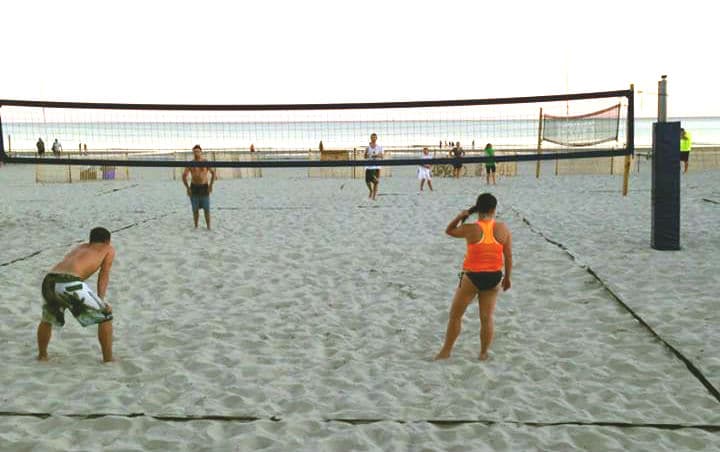
Beach volleyball at Coligny Beach, location of the swim for the South Carolina triathlon.
The open water swim for the On On Tri Hilton Head Triathlon was held at Coligny Beach, popular for beach volleyball.

Bike

After removing my wetsuit, I grabbed the rented bike and jogged it to the line designated for mounting. Hopping onto the bike, I slipped my feet into the shoes already clipped into the pedals.

The bike course was three loops of a very, very flat, tree-lined four mile section of local streets. The course left the transition area, which was near the Coligny Circle roundabout, and went right onto South Forest Beach Drive.

At about one mile from the start, South Forest Beach Drive split into North Sea Pines Drive and Cordilla Parkway. The course followed Cordilla Parkway back to Pope Road, where we made a right turn. Once at the Coligny Circle roundabout, we took the first exit of the roundabout. This put us back onto South Forest Beach Drive for the second and, eventually, third loops.

The rental bike turned out to be a success. I normally ride a triathlon specific Trek SpeedConcept 7.5. However, the Trek Madone road bike worked well. My pace during the triathlon was the same as I would have expected with my bike.

Triathlon Tip: Renting a bike from a local bike shop, especially for shorter distance races, can be a cost-effective alternative to shipping your bike to a race. Tell the person at the bike shop the size bike you normally ride. Ask the shop if you can bring your pedals in order to use your clip-in shoes. And don’t forget to have the shop fit you to the bike, at least as much as they can.

Run

There is not much to report about the run. The run course was quite familiar since it was a somewhat shortened, single loop of the bike course. As they say in triathlon-speak: “flat and fast”.

Results

This will probably be recorded as the flattest course ever, at least of the triathlons in which I have competed. This should not be surprising considering the course was on a small coastal island cut up by many waterways. Waterways and ponds occupy 40% of the island. Nearly every square inch of the island is at sea-level.

The flat course no doubt helped me to achieve a competitive time and to place first in my age group. We were grateful for a positive end to a marvelous trip.

Race Firsts

  • First race with a rented bike.
  • First race in which our hotel room looked out onto the path between the swim exit and transition area. The trip to transition on race morning was about one block.
Triathlon Adventures Across America book cover

What Could Your Journey Be?

“It made me think, ‘Wow, wouldn’t it be fun to try to do this too?’”

Explore the journey across all 50 states

Is There a South Carolina Triathlon You Recommend?

Have you done a triathlon in South Carolina? What was your experience? Please share your comments below.

Comments: We’d love to hear about your experience. Join the conversation below. All comments are reviewed before they appear.

Reply notifications: Click the bell icon above Post Comment to be notified when someone replies to your comment.

Follow the discussion: Click Subscribe above the comment box and enter your email address to receive notifications whenever a new comment is added—even if you don’t leave a comment. After subscribing, check your email and click Confirm to activate notifications.

Triathlon Across the USA: State #14 – New Jersey

Tuckerton, New Jersey; May 5, 2013–Bassman Sprint Triathlon

Swimming, biking and running in the Garden State (New Jersey) tested my recent triathlon training plan. This triathlon was also the motivation for visiting a part of the Atlantic coast we had not seen before.

This race is one chapter in a 50-state journey—now told in full in Triathlon Adventures Across America .

Planning the New Jersey Triathlon

One goal for the 2013 season was to complete triathlons in New Jersey, Pennsylvania, and Maryland. With these under our belt, we would check off the northern portion of the Mid-Atlantic states in my quest to complete a triathlon in all fifty of the USA states.

This weekend, it was New Jersey. Joy and I would travel to Maryland and Pennsylvania about one month later for triathlons in these two states. This left Delaware, North Carolina, and Virginia, the remaining Mid-Atlantic states, for later.

Travel to New Jersey for a Triathlon

We left our house in Chicopee, Massachusetts early Saturday morning to make the roughly 250-mile trek to Bass River State Forest just west of Tuckerton, New Jersey.

Bass River State Forest, the location of the Bassman Triathlon, is about 100 miles south of New York City and about 30 miles north of Atlantic City, New Jersey, which sits directly on the Atlantic Coast.

On Saturday afternoon, we picked up the race packet at the Bass River State Forest.  While at the park, we took a brief walk to check out Lake Absegami where we would swim the next morning.  We then headed out on the 45-minute drive south to Atlantic City.

A Quick Visit to Atlantic City

While neither of us is a fan of casinos nor gambling, we were curious to see the draw that this city had on Pat and T, two of Joy’s friends from our Chicopee neighborhood.  Twice each year, these two ladies would drive to Atlantic City for gambling and an overnight stay in Pat’s timeshare.

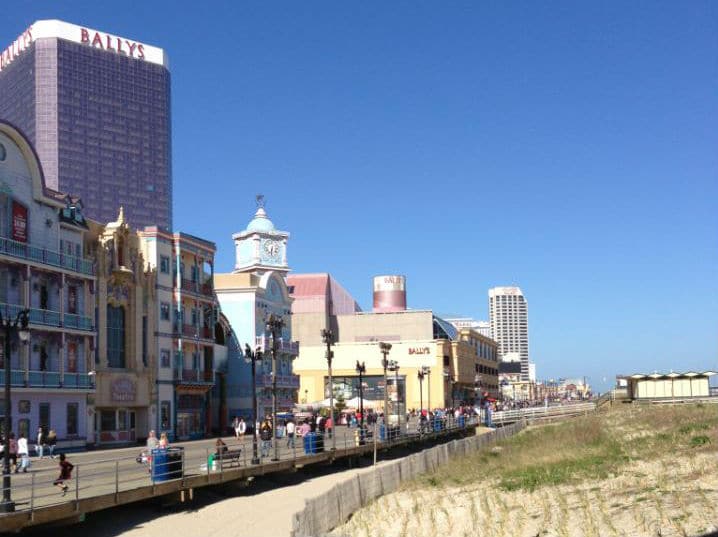
Atlantic City boardwalk.

We drove along the strip, which was lined with a mix of casinos – small and large, simple and opulent.  With the gusty winds and air temperature in the mid-50s °F, not to mention expensive parking, Joy and I took turns walking from a nearby hotel loading dock for a quick look at the famous Atlantic City Boardwalk.

We then headed a couple of miles further up the strip to Brigantine Beach where we stopped for lunch at the Pirates Den.

About six months earlier, Hurricane Sandy had passed through the area. While there was still some debris from Sandy, the beach was in good shape. I can certainly understand the attraction of these sandy beaches, especially in warmer weather.

After a short tour of Brigantine, we headed to our hotel, the Holiday Inn Manahawkin/Long Beach Island, for last-minute preparations for the triathlon and for an early dinner.  Remember my motto: “The early triathlete gets the best spots in transition.”

6th Annual Bassman Sprint Triathlon

It was a busy day for the people of City Tri who managed the race.

The Bassman event included three triathlon distances (half Ironman, Olympic, and sprint) as well as half Ironman and Olympic distances of a duathlon (run-bike-run) and aquabike (swim-bike).

Distances for the individual legs of this USAT-sanctioned sprint triathlon were:

  • Swim: 0.35 mile (620 yds or 560 m)
  • Bike: 12.5 miles (20.1 km)
  • Run: 3.1 miles (5 km)
Lake Absegami Day Use Area of the Bass River Forest, venue for the New Jersey triathlon
The Bassman Triathlon transition area and swim were in the Lake Absegami Day Use Area of the Bass River Forest.

Swim

The air temperature on race morning was still in the 50s °F. With the temperature of the Lake Absegami water reported to be around 65ºF, the race was ‘wetsuit-legal’.  In fact, the race director encouraged triathletes to wear a wetsuit during the swim.

I started out too fast in the swim, which led to a moment of panic as I became light-headed. The congestion I had been battling during the previous week probably didn’t help.

After slowing my stroke rate, which allowed my heart rate to drop a bit, I was able to resume the swim without any further difficulty.

Triathlon Tip: One reason I now take a short swim just before the start of a race is to get my heart rate up.  When the gun goes off, I can start swimming already partially warmed up.

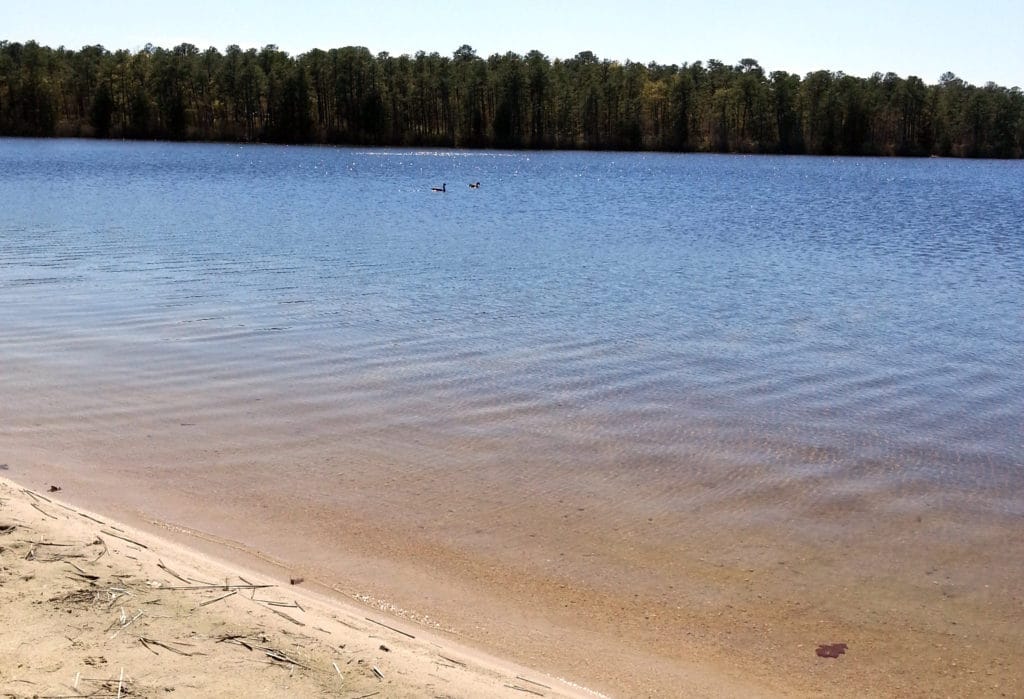
The swim for the Bassman triathlon was in Lake Absegami.
The open water swim for the Bassman triathlon was in Lake Absegami.

A Slightly Different Approach to Timing

If you are not familiar with the transition part of a triathlon, you can feel free to skip this section.  Or, you can learn about triathlon transition in How to Achieve Faster Transition Times.

Anyway, back to the race.

It was a short run from the exit of Lake Absegami to the transition area.

For this race, there was only one timing mat for the transition area.  Normally, there are two timing mats, one at each end of the transition area.

The swim time officially ended upon crossing the timing mat and entering the transition area.  Bikes exited the opposite end of the transition area where there was no timing mat.  Upon completing the bike leg, athletes entered the transition area where they had previously entered after the swim.    Crossing the timing mat officially ended the bike leg and started the run leg.

As a result, the T1 (transition from swim to bike) and T2 (transition from bike to run) times were included in the bike and run times, respectively.

Bike

The bike portion of the race included a loop out of the park onto local roads.  The loop rejoined the original portion with about two miles back to the transition area.

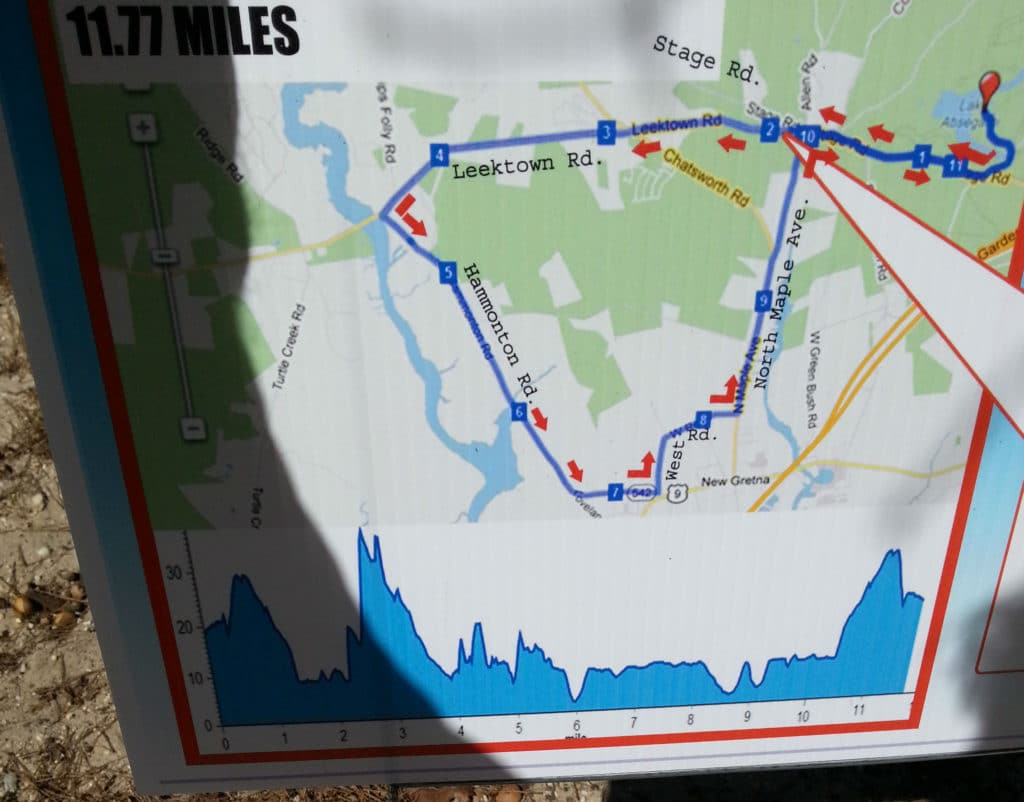
Map of Bassman sprint triathlon bike course
The bike course for the Bassman Triathlon was a loop on roads outside Bass River State Forest

As suggested by the map, the view from the bike was mostly forest, with the occasional body of water. Picturesque. The course was relatively flat, with the maximum difference in elevation of just over 30 ft (9 m).

The most unique ‘scenery’ was near the end of the course. We passed two large turkey vultures cleaning up a deer carcass. The animal had probably been hit by a car and was now lying on the shoulder of the road. The vultures seemed unfazed by the many bikers who passed within a few feet of them.

Run

The 3.1 mile (5 km) run in the Bass River Forest was on a combination of dirt, hiking trails, and park road.

In no way bragging, I sweat during typical races as much as anyone. With that wonderful word picture in mind, the fact that I did not break a sweat until the very end of the run tells you a lot about the temperature during the race.

In fact, my feet were almost numb during the run.  The good news is that the cool temperatures helped me to achieve the run pace that I had set for races this season.

After the New Jersey Triathlon

Much to my surprise, I was the first finisher age 60 and over (my age group was 60-64).

As a result of the finish, this was the first time that I qualified for the USA Triathlon National Championships.  Finishers in the top 10% of their age group automatically qualify for Nationals.

About New Jersey, the ‘Garden State’

When those of us from the Midwestern USA think of New Jersey, we most often picture the sprawling metropolitan areas like Newark from which you can see New York City across the Hudson River.

While driving back to Massachusetts from Bass River Forest, we were struck by the contrast between the massive green areas found throughout most of New Jersey and the asphalt and concrete covered areas of the more well known metropolitan areas.

New Jersey is called the ‘Garden State’ for good reason.  Get away from the major cities and you see the importance of fruit and vegetable farming.

Race Firsts

  • First race in which I finished first in my 60-64 age group and qualified for USAT Nationals
  • Vultures picking at a dead deer lying alongside the bike course was a first.
  • First race in which I did not break a sweat until the very end of the run.
Triathlon Adventures Across America book cover

A Story That Resonates

“A must-read for every athlete and retiring business executive committed to living healthy.”
Discover the complete story

Have You Done a Triathlon in New Jersey?

Tell us about your favorite or most memorable triathlon in the Garden State. Leave your Comments below.

Comments: We’d love to hear about your experience. Join the conversation below. All comments are reviewed before they appear.

Reply notifications: Click the bell icon above Post Comment to be notified when someone replies to your comment.

Follow the discussion: Click Subscribe above the comment box and enter your email address to receive notifications whenever a new comment is added—even if you don’t leave a comment. After subscribing, check your email and click Confirm to activate notifications.

error

Enjoy this post? Please spread the word :)