
Ultriix S1 Review: Why I Changed My Mind About This Ultrasonic Recovery Device
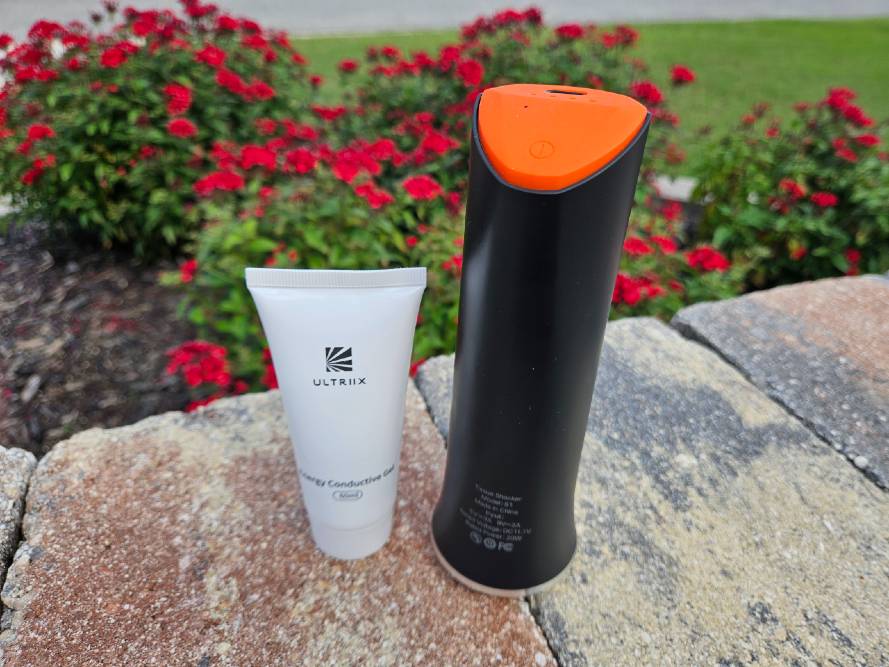
My experience with an ultrasonic muscle recovery tool—and what the science says about its potential benefits.
Disclosure: Ultriix provided the devices discussed in this review at no cost. I was not paid to write this article. If you purchase through my affiliate link, I may receive a commission at no additional cost to you. The opinions and conclusions are my own.
Why I Almost Didn’t Write This Review
Late last year, Ultriix offered to send me its S1 ultrasonic massager for evaluation. As an older triathlete who also strength trains, I was interested in a tool designed to relieve muscle soreness and tension.
My initial experience was disappointing.
My wife, Joy, who is not an endurance athlete, and I tried the device on several areas of soreness and tightness, with little success. Although I experienced one apparently positive result, I eventually told Ultriix that I couldn’t recommend the product and wouldn’t write a review.
Months passed and I was certain that my previous email had ended discussion with this company. However, to my surprise, someone from the Ultriix Support Team wrote me to share their findings from my experience with the initial unit. They explained that some early units had components that didn’t meet their specifications. They also offered to send a replacement, one they believed addressed the previous issue. I received the second unit about four months ago.
This time, our experience was remarkably different.
Joy experienced relief from neck tightness, including after a recurrence. After a strength-training session using heavier weights than usual, I developed shoulder soreness that nearly disappeared following treatment and was gone the next morning.
While muscle soreness can resolve naturally, the positive results Joy and I experienced with the replacement S1—and have continued to experience—convinced me that it deserved a place in my recovery routine.
Before recommending it to readers, however, I wanted to understand the technology, examine the scientific evidence, and investigate the product’s limitations.
What Is the Ultriix S1, and How Does It Work?
The Ultriix S1 is a rechargeable handheld ultrasonic massager. Unlike a massage gun, which uses rapid mechanical percussion, the S1 uses high-frequency sound waves.
According to its user manual, the S1 operates at approximately 1.1 megahertz (MHz)—1.1 million cycles per second—and offers eight intensity settings. That frequency is far beyond the range of human hearing.
Ultrasound transducers convert electrical energy into high-frequency mechanical vibrations. When transmitted into tissue, these waves can produce mechanical effects and, depending on the treatment parameters, heating.
The S1 uses a metal treatment head placed against the skin with an ultrasound-conducting gel. The gel is essential because ultrasound energy doesn’t transmit efficiently through an air gap.
The device is approximately 6.6 inches long, weighs about 11 ounces, and has a rechargeable battery and single-button control.
Ultriix describes its technology as producing microscopic mechanical effects within tissue that may relieve muscle tension and discomfort. According to the manufacturer, the ultrasound can penetrate approximately 3–6 centimeters (1.2–2.4 inches) into tissue. Actual penetration depends on factors such as tissue composition and ultrasound settings.
The Ultriix website provides additional information, photographs, and demonstrations of the S1.
My Experience Using the S1
Using the S1 is straightforward. I apply conductive gel to the treatment area or metal head, turn on the device, select an intensity level, and move it slowly over the area of soreness or tightness.
Ultriix recommends beginning at the lowest setting and increasing intensity according to comfort. Treatment sessions generally last 10–15 minutes per area.
The experience differs considerably from other recovery tools.
A massage gun delivers repeated mechanical impacts, while a foam roller applies pressure over a larger muscle area. Both can be useful, and I continue using them.
The S1 provides another option, particularly when I want to work on a relatively small area without the pounding of a massage gun.
I consider these tools complementary rather than interchangeable.
Can You Actually See Ultrasound Working?
One reason I initially approached the S1 skeptically is that ultrasound is invisible and inaudible. I’ve encountered enough products promising benefits from invisible forms of energy (e.g. magnetic, light) to know that claims alone aren’t sufficient evidence.
To explore its operation, I made a short video showing what happens when the S1’s operating head contacts water.
The video shows visible water activity accompanied by an audible buzzing sound. The ultrasonic frequency itself is too high for humans to hear, so the buzzing comes from lower-frequency activity associated with the device’s operation.
While this demonstration doesn’t establish the device’s therapeutic effectiveness, it provides an interesting illustration of the physical activity associated with its operation.
What Does the Science Say About Ultrasonic Muscle Recovery?
Ultrasound has been used in medical and physical therapy applications for decades. But research supporting one application doesn’t automatically validate every ultrasound device.
I focused on two questions: Can ultrasound relieve muscle pain and tension? And can it reduce soreness following exercise?
Ultrasound for Muscle Pain and Tension
A 2024 systematic review examined 16 randomized trials involving 1,063 people with myofascial pain syndrome, a condition involving painful areas of muscle and surrounding connective tissue.
Researchers found that low-intensity ultrasound reduced pain compared with sham ultrasound (a placebo treatment in which no therapeutic ultrasound energy is delivered) or no treatment. However, treatment methods varied considerably, and evidence of improved physical function was less convincing.
The findings suggest that ultrasound can relieve certain types of muscle pain, but they don’t establish that every ultrasonic device will produce comparable results.
Ultrasound for Post-Exercise Muscle Soreness
A 2021 systematic review found that ultrasound may reduce delayed-onset muscle soreness (DOMS), the discomfort sometimes experienced after unfamiliar or demanding exercise.
However, the evidence was rated low quality, and other studies have found little or no benefit.
Therefore, the research doesn’t establish that ultrasound consistently accelerates recovery after exercise.
Does This Research Apply to the Ultriix S1?
According to Ultriix, the S1 operates at 1.1 MHz, with eight intensity settings ranging from 0.2 to 2.2 watts per square centimeter and pulsed ultrasound output.
Some clinical studies have used broadly comparable frequencies and intensities. However, ultrasound dose also depends on pulse duration, duty cycle, treatment time, and how acoustic output is measured.
Ultriix supplied detailed manufacturer specifications and third-party documentation covering product compliance and safety-related testing. The acoustic specifications have not been independently verified, and I found no published clinical trials specifically evaluating the S1.
Nevertheless, the published research provides a reasonable scientific basis for the potential benefits of ultrasound, including relief from certain types of muscle discomfort. Although results from studies of post-exercise soreness have been mixed, the findings are consistent with the possibility of benefits like those Joy and I have experienced.
After several months of regular use, I find those benefits sufficiently convincing to continue using the S1 as part of my recovery routine.
What I Like About the Ultriix S1
After using the replacement device regularly, several things stand out.
It has repeatedly helped me. I’ve experienced relief from muscle soreness and tightness often enough that I continue using it.
Joy has experienced benefits, too. Her relief from neck tightness gave me another reason to take the product seriously.
It provides an alternative to percussion massage. I appreciate treating a smaller area without repeated mechanical impacts.
It is convenient. Its USB-C rechargeable design, compact size, and simple operation make it easy to incorporate into my routine or while relaxing during the evening.
Perhaps most importantly, I didn’t begin this evaluation expecting to endorse the product. The first unit was sufficiently disappointing that I had decided not to review it. The replacement changed my mind.
What to Know Before Buying the S1
No Satisfaction-Return Period
One limitation prospective buyers should understand is Ultriix’s return policy. The company provides a one-year limited warranty for qualifying manufacturing defects but does not allow customers to return a used S1 simply because they don’t experience the expected benefits.
I asked Ultriix whether it would consider offering SeniorTriathletes readers a reasonable trial period. The company explained that international shipping and the inability to resell used devices make this impractical.
I would prefer a more flexible policy. Nevertheless, I believe readers should weigh this limitation against the product’s potential benefits and its $119 promotional price.
Should Triathletes Over 50 Consider the S1?
Recovery becomes increasingly important as we age. Swimming, cycling, running, and strength training all place demands on our muscles, and occasional soreness and tightness can accompany even well-planned training.
Recovery tools may provide relief, but none replaces adequate sleep, appropriate training loads, good nutrition, and sufficient recovery time.
For me, the S1 has become a useful addition to my recovery routine, particularly for relieving localized muscle soreness and tightness after training.
I wouldn’t recommend it as a treatment for injuries, unexplained pain, or medical conditions. Ultriix identifies the S1 as a home wellness device rather than a medical device.
Its manual also lists contraindications, including restrictions involving implanted medical devices, metal implants in treatment areas, and acute injuries. These precautions are especially relevant to older athletes who may have joint replacements or other surgical hardware.
Review the manufacturer’s safety instructions carefully and consult a healthcare professional if you’re uncertain whether ultrasound is appropriate for you.
My Recommendation: A Useful Addition to My Recovery Toolkit
After initially deciding the Ultriix S1 wasn’t worth reviewing, I changed my mind. The replacement unit has repeatedly helped Joy and me relieve muscle soreness and tightness, and I continue using it regularly.
I now consider the S1 a useful complement to my massage gun and foam roller, especially when I want to work on a smaller area without percussion.
The scientific research on ultrasound provides a reasonable basis for these potential benefits, although it doesn’t guarantee that everyone will experience the same results.
Based on my experience, I recommend the Ultriix S1 as a recovery tool worth considering for older endurance athletes. It has earned a place in my own recovery routine.
Interested in the Ultriix S1?
Ultriix is currently offering the S1 at a promotional price of $119, reduced from $199. In addition, Ultriix has provided SeniorTriathletes.com readers with a discount code, AYS93MF7, for an additional 6% off.
You can learn more about the product or purchase it through this link. Enter the discount code at checkout to receive the additional savings.
Research and Product References
- Efficacy and Safety of Low-Intensity Ultrasound Therapy for Myofascial Pain Syndrome: A Systematic Review and Meta-Analysis (2024)
- Physical Therapy Interventions for the Treatment of Delayed Onset Muscle Soreness (DOMS): Systematic Review and Meta-Analysis (2021)
- Ultriix S1 User Manual, Version 1.5 — manufacturer specifications, operating instructions, and safety precautions.
- Ultriix shipping, return, and warranty policies — available through the manufacturer’s website.
Do You Have Experience with an Ultrasonic Recovery Tool?
What questions do you have about the S1? Or maybe you already have experience using ultrasonic recovery tools. Please share these in the Comments below.






Comments: We’d love to hear about your experience. Join the conversation below. All comments are reviewed before they appear.
Reply notifications: Click the bell icon above Post Comment to be notified when someone replies to your comment.
Follow the discussion: Click Subscribe above the comment box and enter your email address to receive notifications whenever a new comment is added—even if you don’t leave a comment. After subscribing, check your email and click Confirm to activate notifications.