
Should You Choose Your Triathlon Distance Based On Body Type?
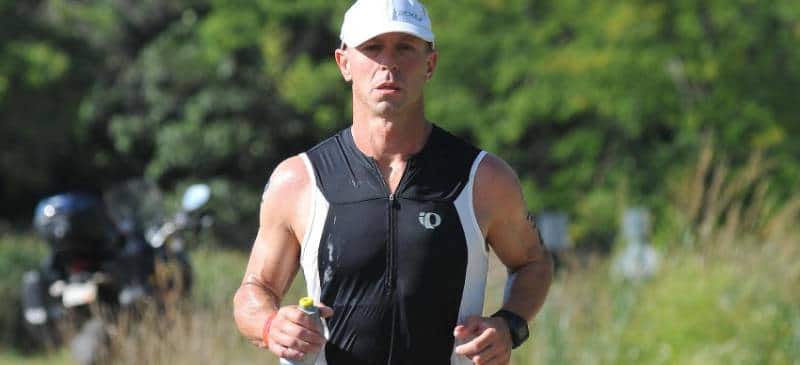
Does your body type make you better suited to compete at a particular triathlon distance? Are you better suited for sprint triathlons or for Ironman distance races?

I started wondering this after recently finishing a difficult training. This post summarizes what I learned while looking for an answer to this question.

In Search of the Ideal Triathlon Distance

Most of you know there are triathlons covering a wide range of distances – from super sprint to full Ironman 140.6. If you want to learn more, check out this post.

Over the past several years writing for SeniorTriathletes.com, I have spoken with many triathletes age 50 and over. Some have done sprint and Olympic distance races. Many have also done Ironman triathlons. Some have even done ultra-endurance events.

I recalled a conversation I had with a man, an Ironman triathlete, a spectator of my New Mexico triathlon. While waiting for the awards ceremony, he told me he preferred Ironman triathlons over sprint triathlons. He went further to tell me he disliked sprint triathlons, the reason he had not done this race.

Why? Because in a sprint triathlon, he felt pressure to push harder, that is, to literally sprint during the entire race.

Then, I remembered my conversation with Ironman Craig Cross. Craig believed his body was better suited for weightlifting than triathlon. Yet, he was doing Ironman triathlons.

I wondered if my body makeup made me better suited for sprint triathlons than the longer, endurance-based Ironman races. Or was my experience just a result of my training and the time I devoted to it?

Can Somatotyping Link Body Type and Ideal Triathlon Distance?

To answer this question, I turned to the internet. Here, I learned of somatotyping, a field of sports medicine and research involving characterization of body type. Somatotyping is also used to correlate body type to performance in various sports.

Interestingly, I found that many fitness trainers use somatotyping to tailor an individual’s training program to achieve a body type best suited for their particular sport.

Definitions

A few definitions will be helpful in following the information in this post and in your own research should you choose to go further into this topic.

Somatotypes – categories into which individual bodies are categorized according to their shape. A typical somatotype will include a ratio of each of the following three basic body types:

  • Ectomorph characterized by a long and lean frame with little body fat and little muscle (think, ‘super model’). With a lean build, this body type may have an advantage in swimming due to reduced drag in the water. A lean frame may also lead to better aerodynamics on the bike.
  • Mesomorph types have greater than average muscular development and, generally, a medium frame. Those with this type develop muscles easily and have more muscle than body fat. American football lineman are predominantly of this body type. They may also be excellent cyclists because of their ability to generate power.
  • Endomorph types have a higher percentage of body fat and less muscle mass. Endomorphs are often heavier and have rounder bodies. However, this does not mean they are obese, though they gain weight more easily. With proper training, those with this body type are able to compete in triathlon.

Anthropometry is the systematic study and characterization of human body measurements. As illustrated in this paper, anthropometry involves a complex set of measurements and calculations based on these measurements. The output is a score representing the proportion of each of the three body types – ectomorph, mesomorph, endomorph – in an individual.

Body composition is a measure of the relative amounts of fat, bone, muscle, and water that make up one’s body. It is a more useful indicator of health than weight.

Body Type Affects Sports Performance

Sports medicine research has repeatedly documented that body type is an indicator, not guarantee, of performance in sports. For example, the body type of elite athletes varies between sports, as shown in this study comparing the body types of elite kayakers, football (soccer) players, and basketball players.

“Several studies have shown that body composition is related to higher performance in endurance sports, especially in sports where athletes must transport their body weight. Thus, for each kg of extra weight in the trunk, aerobic demand increases by 1%, and for each additional kg in the legs, aerobic demand increases by 10%.”

These studies have shown that a body type that reflects less weight based on fat mass leads to higher performance in sports that require endurance. This is especially true for sports that involve a lot of running. Less fat corresponds to higher VO2max values.

A big body type that is ectomorphic or mesomorphic is going to be much better at sprinting as these traits make people much stronger.

Shorter runners with thin body types tend to make better long-distance runners than taller runners as long and large legs make it difficult to lift and propel a body forward. Shorter strides and less weight tend to lead to greater speeds over long distances. 

What Is The Perfect Body Type For Running

What About Body Type and Triathlon Performance?

Results of a study published in the European Journal of Sports Science concluded that body type is a significant factor for male Ironman triathletes while not one for their female counterparts.

This study, based on competitors of Ironman Switzerland, concluded the ideal somatotype for male Ironman triathletes is 1.7-4.9-2.8 (ectomorph-mesomorph-endomorph). Somatotype (body type) contributed to 28.6% of the variation in Ironman times.

“The endomorphy component was the most substantial predictor. Reductions in endomorphy by one standard deviation as well as an increased ectomorphy value by one standard deviation lead to significant and substantial improvement in Ironman performance (28.1 and 29.8 minutes, respectively).”

Similarily, an article titled “Physical and physiological factors associated with success in the triathlon” reported:

“Elite triathletes are generally tall, of average to light weight and have low levels of body fat, a physique which provides the advantages of large leverage and an optimal power to surface area or weight ratio.”

Other researchers have drawn similar conclusions from studies of body type and triathlon performance. In Changes in Triathletes’ Performance and Body Composition During a Specific Training Period for a Half-Ironman Race, the authors concluded from their review of prior research, “Body composition is also related to performance in endurance sports, including triathlons. An excess of body weight is especially disadvantageous in the run segment”.

The consensus appears to be that excess body fat correlates to lower VO2max, which leads to lower performance in endurance races, like triathlons.

Performance is Not Just About Body Type

The authors of Kenyan and Ethiopian Distance Runners: What Makes Them so Good? help us see that athletic performance is more than just about genetics. Environmental factors such as diet, where we live (in this case, altitude), and culture (active from a young age) influenced the runner’s body type.

The study also highlighted psychological influences within a culture which have led to the dominance of this group in distance running.

You Can Change Your Body Type Through Training and Diet

The study involving Ironman Switzerland triathletes mentioned earlier also concluded:

“Athletes not having an ideal somatotype of 1.7-4.9-2.8 could improve their performance by altering their somatotype. Lower rates in endomorphy, as well as higher rates in ectomorphy, resulted in a significant better race performance.”

How does one change their body type? In part, through training and diet.

The National Association of Sports Medicine (NASM), which provides training and certification for personal trainers, nutrition coaches, and many other fitness-related disciplines, provides recommendations for training and diet based on body type.

While your genetics may predispose you to a general body type that works against being an elite triathlete, you can change your body composition and type to improve your performance.

Reducing weight by reducing body fat is the first place to start. Developing upper body muscles for swimming and lower body muscles for the bike and run will lead to further improvement.

Is There An Ideal Triathlon Distance For Your Body Type?

I encourage first-time triathletes to first do a sprint triathlon. If you are like me, you fall in love with this distance and continue with it. However, many others aspire to longer distance triathlons.

Barring physical limitations that prevent you from training for a desired distance, you can go after your goal. It’s a matter of priority, of commitment.

You might not be the highest performing triathlete in your age group. However, neither you nor I can use body type as an excuse for not going after a triathlon goal.

What Triathlon Distance Do You Prefer? Why?

Let us know in the Comments (below) your favorite triathlon or other endurance sport distance and why you prefer it.

Ask Our Coaches: Comfortably Biking Longer Distance

Question

I have been considering longer distance triathlon or aquabike races. However, the saddle on my bike leaves my bottom numb after 10 miles. I am not comfortable riding more than about 15 miles in this condition. What do you recommend? Is there a different type or brand of bike saddle I should use? Are there other things I can do to comfortably ride 50 or even 100 miles?

Terry V.

Our Coaches’ Replies

Following is the email string in which three coaches answered the question.

Coach Tony Washington

Terry,

Saddle soreness can have multiple causes. Bike fit is a good place to start. Especially since anything over 10 miles is painful. Fore/Aft, tilt and height are important in how your sit bones interact with the bike. One of my athletes tried 5 different (all borrowed) saddles. After she had a proper bike fit, it turned out her original saddle was perfect. Shorter crank length helped with a more open hip angle. Been on the same saddle for 4 years now.

My saddle recommendations vary depending on bike type. On a triathlon or TT bike, I like a split nose saddle like the ISM Adamo or Bisaddle. Rolling your hips forward when you are in the aero position on the bike puts pressure in a different spot on your pelvis. These noseless saddles are better suited for most athletes.

On a road bike, it can be very subjective. The nicer seats have a cutout that encourages normal blood flow to keep you pain and numbness free. If you have a good relationship with your local bike shop, they often have loaner saddles to mount and try for a few rides. I’ve personally had great luck with Selle Italia. I have used them since 1982.

Good trunk stability/mobility/strength can aid in being comfortable for a long ride. Strong and stable hips with a smooth pedal stroke balancing your quads, hamstrings and glutes is key here. Higher cadence (above 80) enhances pedal smoothness and can help with pain.

Hope this helps,

Cheers,

Tony

Email: tony.washington@tridot.com

Coach Jenn Reinhart

That is a great answer Tony and not much I could add to it. Bike fit is definitely the place to start. Good bike fitters can usually offer suggestions for a saddle based on your fit too.

Being that uncomfortable so quickly definitely should not be the norm. At times, even with the best fit and saddle, a change in shorts (depending on if you ride in cycling or tri shorts), can cause some chaffing, but not the degree of discomfort you are describing.

Jenn Reinhart 

Email: jenn.reinhart@tridot.com

Coach Kurt Madden

Terry,

I echo everything that Tony has shared and learned that a new saddle takes at least six weeks to break in and feel comfortable. Over the past 10 years, my two most favorite and most comfortable saddles are the. Adamo and ISM 3.0

Regards,

Kurt Madden

Email: kurt.madden@tridot.com

Coach Tony Washington (follow-up reply)

To add to what Jenn mentioned about shorts, bib shorts can lift and hold everything in place better than shorts with a drawstring when leaned over in the aero position.

To add to Kurt’s comments, ISM has several models of different lengths, widths and padding thickness. A fitter can help with making a choice.

Cheers,

Tony

Email: tony.washington@tridot.com

Have a Question For Our Coaches?

Send your question to Our Coaches here.

Leveraging TriDot to Optimize Your Training at Any Age

Editor’s Note

This post is a response to a reader’s request for information on triathlon training at age 65 compared to when he or she was 55. The reader wrote “The last of my 6 IM races was 10 years ago when I was 55. I’m able to train and race at 70.3 distance, but can’t seem to knock out a 12 – 14 hour training week anymore.”

Since the reader did not give his or her name, I was not able to clarify the request. However, I assume IM refers to IRONMAN 140.6. This is how I framed my request of Kurt Madden.

Terry VanderWert


by Kurt Madden, Head of Coach Development, TriDot

As we go through life, we often know that “experience is the best teacher.” Ideally, all of us will get better and find satisfaction and fulfillment by reaching our fitness goals too.

Before answering the specific request about training for an IRONMAN 140.6 race, I will answer two questions about the TriDot training system.

  1. How does TriDot factor in age into training plans for IRONMAN races?
  2. What type of options and/or plans and resources does TriDot provide that will meet the wide range, including age, of people in the sport, from beginner to mid-packer to elite?

About TriDot

The beauty and benefit of the TriDot training plan is the utilization of Normalized Training Stress (NTS). We are the only online training platform that offers this feature. NTS simply means that the system quantifies the amount of training stress, environmental conditions, and age for each training session.

For example, if TriDot prescribed a 50-minute run with intervals, it might give a 35-year-old beginner triathlete a warm-up of 10 minutes, drills and strides, and a main set of 3 x 6 minutes at Zone 4 with 1 minute of recovery between each repetition and a cool down. Conversely, for a 65-year-old beginner triathlete, the session might be 45 minutes, with a warm-up of 10 minutes, different drills, fewer strides, and a main set of 3 x 4 minute at Zone 3 with 2 minutes of recovery between each repetition and a cool down.

The differences are based off the NTS that gathers that information to create the workout rather than an athlete guessing or a coach guessing what type of session would be best for each athlete. Furthermore, the personalized workout is based on the data that continuously goes into the TriDot system. The system is continuously adjusting the duration and intensity depending upon data and your recovery. TriDot takes the guesswork out of what type of workout is best for the athlete through the NTS. This prevents injuries while optimizing their fitness.

Environmental Normalization

TriDot also utilizes our Environmental Normalization. This accounts for temperature, humidity, elevation, and terrain to assess the impact on an athlete’s performance. This is invaluable to help prescribe the best session for the athlete and also works in coordination with the NTS.

For example, the run workout just mentioned for a 65-year-old athlete would have different paces and different heart rate zones, due to the Enviromental Normalization and NTS that TriDot provides, if he were at home in Florida or on vacation in Boulder, Colorado. TriDot takes all the guesswork out of what training session is optimal for this athlete.

Experience With Older Athletes

As a TriDot coach, I find athletes who are in the 55 – 80 age range continue to have success with their training plans and IRONMAN races with fewer injuries. For example, I had three male athletes at the recent IRONMAN California event. Each one’s time improved by over an hour from their race the year before and all were training approximately 13 – 16 hours per week.

Additionally, an athlete that I have coached for six years with TriDot will turn 80 years old next year. He has qualified for both the IRONMAN World Championships in Kailua-Kona and the IRONMAN 70.3 World Championships in New Zealand. He trains an average of 10 – 12 hours per week without being injured. His times in all three disciplines are impressive. As his coach, I can also make adjustments to his training sessions when needed. I also work with him on nutrition, goal setting, recovery, and race execution.

Now, About IRONMAN Triathlon Training Hours Per Week At Age 65

Training for a full IRONMAN race on much less than 12 – 14 hours a week, such as 10 – 12 hours a week, is a little bit of a stretch. I suggest training 12 – 14 on most weeks, with every fourth week being a recovery or “unloading” week. A recovery or “unloading” week is when the volume of training and intensity of training is reduced. This gives the athlete’s body a chance to regenerate and recovery.  When this occurs, typically an athlete will find they will be able to generate more power or train at a faster pace in all three disciplines.

Feel free to contact me by email or through the Comments below if you have other questions.

TriDot Resources

The other attraction with utilizing the TriDot platform is the various options we offer for all of our athletes. For the beginner, we have an Essentials option which provides the TriDot platform which is ideal for the beginner to intermediate or budget-conscious triathlete at $29.00 per month. The Complete option provides fully optimized training for the intermediate to competitive triathlete at $99.00 per month.

The next option is the Mark Allen Edition option. This includes fully optimized training for the intermediate to highly competitive triathlete. This option includes various videos and supplemental material from Mark Allen and is priced at $149.00 per month. The fourth option is Premium, which offers fully optimized training with your dedicated coach ranging in price from $249.00 – $399.00 per month.

Other resources that TriDot provides are weekly podcasts that are educational and entertaining. A few months ago, we downloaded our 1,000,000th podcast. Access these free podcasts at https://tridot.com/podcast-index/.

If you have to choose one, please check out Episode 123: Aging Up: Getting Faster as You get Older, in which I am featured.

Moreover, TriDot’s Facebook page has close to 17,000 followers. This is a great community and forum for triathletes and coaches.

“Never Say You Are Too Old”

In summary, I encourage all of you to look further into the benefits of training and racing with TriDot. We are the only online platform that has the NTS and Environmental Normalization which makes adjustment for the age of the athlete as well as environmental conditions where the training or racing is taking place.

An added option is to include a coach. A coach will help you be accountable and will enhance your performance over someone just training on their own. Never say you are too old to achieve your goals and stay healthy. It is much better to say that you are “trusting the process” and getting “faster before going further” and that you have a coach.

About Kurt Madden

Learn more about Coach Kurt Madden at https://seniortriathletes.com/kurt-madden/

Leave Your Questions and Comments Below

Do you have questions about the TriDot training system for Coach Madden? Please leave it below.

Comments: Please note that I review all comments before they are posted. You will be notified by email when your comment is approved. Even if you do not submit a comment, you may subscribe to be notified when a comment is published.

Ask Our Coaches: Breathing During Freestyle Swimming

Question

I would like to freestyle for at least a half mile. However, I have the hardest time maintaining my breathing after about 50m. I end up swimming on my back. What do you recommend?

Linda K.

Our Coaches’ Replies

Coach Kurt Madden

Linda,

I would recommend you start off at a comfortable pace which is aerobic and what we might refer to as a Zone 2 effort. In other words, not too fast, just comfortable and at an effort that you can maintain for 30+ minutes.

I would also add that you really want to make sure that you are exhaling and getting all of the air out of the lungs so your heart rate does not increase and slow down the accumulation of carbon dioxide in the lungs.

Another strategy would be to breath more often or every stroke rather than every third stroke, which allows you to breathe more often and should also delay any type of fatigue or breathing issue. This would be similar to breathing regularly when you are running as compared to holding your breath while running and breathing every three steps.

Regards, 

Kurt Madden

Email: kurt.madden@tridot.com

Coach Jenn Reinhart

Great answer Kurt!

I would add that if your form is poor & you are struggling to turn your head to get a good breath, you might need to find a lesson or two with a swim coach. Generally someone who is quickly out of breath suffers from one or more of these issues:

  1. Holding their breath between breaths. You need to be blowing bubbles constantly between breaths. 
  2. Body position is not good, making it nearly impossible to get a good breath. 
  3. Not enough shoulder rotation to allow a good breath. 
  4. Not breathing often enough, usually as it is hard to turn their head to get a good breath, so they just don’t breathe!
  5. Poor or inefficient kick such as kicking from the knees and/or over kicking to try to go faster.  

Linda, if you don’t have access to a coach for lessons, many of us can analyze a video of your swim stroke and give direction. TriDot Pool School is super beneficial if there is one in your area. You can see the next few months’ schedule here.

Jenn Reinhart 

Email: jenn.reinhart@tridot.com

Coach Tony Washington

Hi Linda,

This is a challenge for many adult onset swimmers. Good body position is key. Rotating your head to the side to breathe with good shoulder and hip rotation can keep you level in the water without your legs sinking. A relaxed, bent elbow arm recovery in front of the shoulder will help prevent cross over. Underwater, pull with your arm bent, elbows pointing to the side of the pool and fingers straight down until your thumb hits your thigh.

TriDot Pool School has been very successful at improving your form and speed in the water. There are dates and locations available all over the country.

It is also Preseason time at TriDot. Get two months of free training to prepare for the 2024 season.

Cheers,

Tony

Email: tony.washington@tridot.com

Register tridotpoolschool.com

TriDot app.tridot.com

Related Senior Triathletes Posts

Learning to Swim for Triathlon–Breathing Correctly

Have a Question For Our Coaches?

Send your question to Our Coaches here.

error

Enjoy this post? Please spread the word :)