Triathlon Across the USA: State #45 – Oklahoma
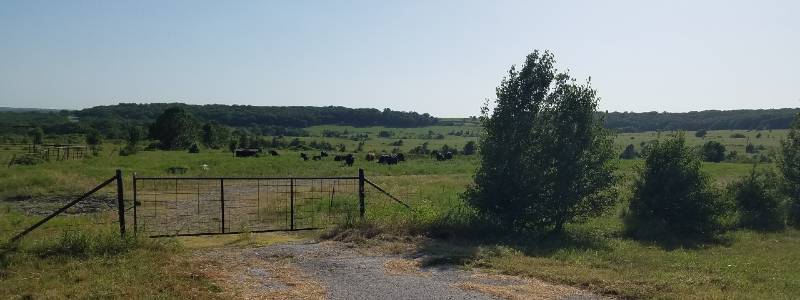
Barnsdall, Oklahoma; June 25, 2022 – Tulsa Sprint Triathlon, Twin Coves Beach at Birch Lake.

Our Oklahoma triathlon introduced us to the diversity of vegetation and terrain in the northeastern part of this state. I will also fondly remember the unique spectators along and on the bike course.

This race is one chapter in a 50-state journey—now told in full in Triathlon Adventures Across America .

Planning the Oklahoma Triathlon

The date Joy and I had set for completing the ‘Triathlon Across the USA’ goal was in sight. In fact, I had committed to reaching it within the next year. I had six states in which to complete triathlons.

Meanwhile, a wedding and high school graduation meant we would return to Minnesota for at least two weeks in late May 2022. Late in 2021, I looked for triathlons that would fit into the next summer’s schedule.

The first two states on the itinerary were Oklahoma and Kansas, two states on back-to-back days at the end of June. Then, after a couple of weeks back in Minnesota, we would head west for the three remaining states in the west – California, Idaho, and Montana.

To avoid a price increase at the end of 2021, I registered for the Tulsa Tri on December 21st.

Previewing the Oklahoma Triathlon Course

A few months after committing to the Oklahoma triathlon, we learned that our son and his family would move from their home in Omaha, Nebraska, to a neighboring state. Their timing matched ours. They planned to leave Nebraska on the day of the Oklahoma triathlon.

We joined them for ten days prior to their move to help them pack and load the rented U-Haul truck. While this time was not exactly restful, it kept us active. It also helped develop some muscles not typically used as strenuously in my triathlon training.

By the Thursday evening before the Oklahoma triathlon, we had packed the truck with everything except one bed. A neighbor helped our son pack this after we left.

Since we would drive south from Omaha to the race venue on Friday afternoon and the pre-race packet pickup location was another 45 miles south of here, I opted to delay picking up the race packet until the morning of the triathlon.

Instead, we visited Twin Coves Beach and Birch Lake late Friday afternoon, the day before the race, to (1) make sure we knew the way to the park the next morning and (2) drive the bike course. We did the latter to check out the condition of the roads and check into memory sections of the course of which to be especially mindful.

The hills I saw while driving the bike course on Friday afternoon left an impression. In fact, some of these appeared in my dreams that night. Not exactly a nightmare, but close.

Oklahoma Triathlon Venue

The Tulsa Triathlon took place at Twin Coves Beach on Birch Lake about one and one-half miles outside Barnsdall, Oklahoma.

The man-made lake formed in 1977 when the US Army Corps of Engineers completed a dam on Birch Creek a short distance before it joined another small river, Bird Creek.

With various hardwood trees, shrubs, prairie grasses, and wildflowers covering the terrain around the lake, it was easy to see why the area is a popular year-round destination for outdoor enthusiasts.

8th Annual Tulsa Triathlon

The Tulsa Triathlon is one of several running and multisport events managed by the Tulsa Area Triathlon Club.

The sprint triathlon was part of a two-day event which included:

  • Saturday: Sprint triathlon, with options to race individually or as part of a team. Following the adult triathlon, there was a kid’s triathlon.
  • Sunday: Olympic and half-iron triathlons and aquabike races with the swim-bike distances of the Olympic and half-iron triathlon.

The advertised distances for the individual legs of this USAT-sanctioned sprint triathlon were:

  • Swim: 500 m (550 yards) – Actual: 538 m (588 yards)
  • Bike: 12 miles (19 km) – Actual: 12.6 miles (20 km)
  • Run: 3.1 miles (5 km) – Actual: 3. miles (5 km)

Actual distances shown above are from my Garmin Forerunner 920XT.

A Steamy Morning

I knew it was going to be a sweaty race as I stepped outside our hotel on race morning. Even at 5 am, the temperature and humidity were enough for me to perspire while simply stowing our overnight luggage in the van.

We left the hotel around 5:15 am to make the roughly 30-minute drive from Bartlesville to Barnsdall and Twin Coves Beach. Our goal was to reach Birch Lake in time for me to pickup my race packet at 6 am, setup my transition area, and get settled for the race set to begin at 7:10 am.

Swim

The water temperature in Birch Lake this morning was 85°F. This was significant since the race followed USAT rules. According to USAT rules, no one could wear a wetsuit during the swim.

The rule as written on the USAT website is:

  • 4.4 Wet suits. Each age group participant shall be permitted to wear a wet suit without penalty in any event sanctioned by USA Triathlon up to and including a water temperature of 78 degrees Fahrenheit. When the water temperature is greater than 78 degrees, but less than 84 degrees Fahrenheit, age group participants may wear a wet suit at their own discretion, provided however that participants who wear a wet suit within this temperature range shall not be eligible for prizes or awards. Age group participants shall not wear wet suits in water temperatures equal to or greater than 84 degrees Fahrenheit.” Source: USA Triathlon.

About ten minutes before the race began, I went for a short, warmup swim to jumpstart my heart rate.

Another goal of the swim was to learn about the lake bottom. I wanted to know if I would walk or run into the water on rocks. Or would the bottom be slippery or covered with weeds?

I learned that the bottom of Birch Lake was smooth, composed of soft clay, not slippery, and with no noticeable weeds. While the water was cloudy, it provided for a comfortable swim.

The triathlon began when a portion of the 156 swimmers, the so-called ‘first wave’, started their swim on this triangular course marked by two orange buoys.

Birch Lake at Twin Coves Beach, location for the swim during the Tulsa Triathlon.

Bike

One of the first things I noticed after mounting my bike was the temperature reported on my bike computer – 84°F. (By the end of the bike leg, around 50 minutes later, the temperature was 99°F.)

This course could well be the most hilly course of any I have biked during a triathlon. I had not expected this in Oklahoma. Fortunately, my bike was in great shape.

While riding this course, I learned that some people’s definition of rolling hills differ greatly from mine. Yes, these hills ‘rolled’ in that the course had a sinusoidal pattern, up then down. What made this different from normal rolling hills was their amplitude. My speed throughout the bike leg reflected the hilliness.

A Different Profile of Spectators

In many triathlons, residents along the bike path sit in lawn chairs and cheer on the racers. Today, there were no human spectators. However, there was a multitude of other spectators – a pair of horses who looked as if they were trying to figure what was happening. There were also the less interested but attentive cattle and goats keeping their eyes on racers, without actually cheering them on.

Near mile nine of the ride, as I was coming down a hill before a right-angle turn, a small turtle raced into the road. Apparently, it saw me coming as it reached the middle of the road. He froze, pulled in his head and legs, and lay still as I passed him.

Run

The run course left the transition area near Birch Lake on a paved service road. Within the first mile, the initial road joined the main one leading to the park entrance.

With the temperature now approaching 100°F, my run actually alternated between running on flat and downhill sections of the course and walking on the upside of the hills.

After reaching the park entrance and stopping for a drink of water, I followed the course to the right for a short distance needed for the 5k distance. We turned around and returned in the direction of the finish line, this time making a short loop through one of the camping areas within the park.

After leaving the camping area, the finish line was a few hundred yards away – downhill.

After the Oklahoma Triathlon

By the time I crossed the finish line, I was a sweaty, dripping mess.

Joy graciously volunteered to drive for the three-hour trip to Wichita for the Mudwater Triathlon the next morning.

While we were eager to get started on our journey, I first took advantage of a generous supply of water, sports drinks, and fruit to start rehydrating.

I looked for a shower facility or a place in which to change clothes. Unfortunately, I didn’t find any. So, I spread a towel on the van’s passenger seat and stayed in my triathlon suit for the ride.
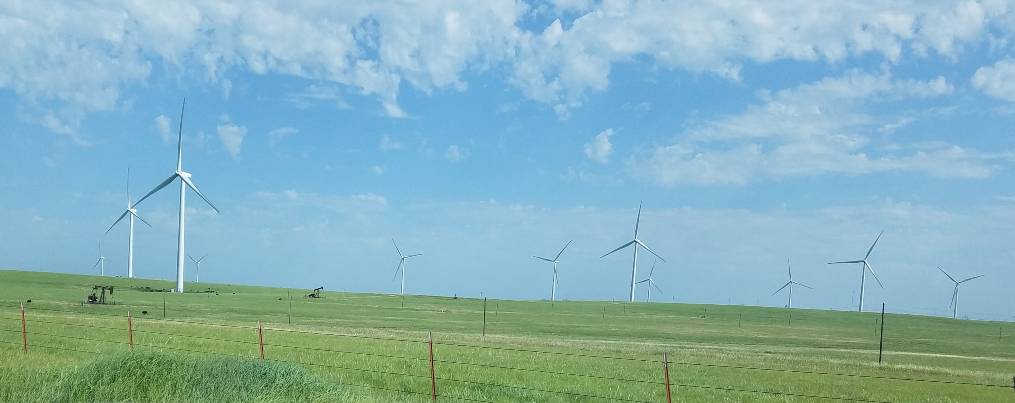
After experiencing the hills of northeastern Oklahoma during the Tulsa Tri, it was time to see the vast prairies, wind farms, oil derricks, and grazing cattle, also part of this state.

Race Firsts from the Oklahoma Triathlon

  • First triathlon in which I wore prescription glasses on the bike.
  • USAT rules prohibited wetsuits, another first.

Triathlon Adventures Across America book cover

What Could Your Journey Be?

“It made me think, ‘Wow, wouldn’t it be fun to try to do this too?’”

Explore the journey across all 50 states

Unique Spectators

Tell us in the Comments below about the most unique spectators you have had during a triathlon.
Comments: We’d love to hear about your experience. Join the conversation below. All comments are reviewed before they appear.

Reply notifications: Click the bell icon above Post Comment to be notified when someone replies to your comment.

Follow the discussion: Click Subscribe above the comment box and enter your email address to receive notifications whenever a new comment is added—even if you don’t leave a comment. After subscribing, check your email and click Confirm to activate notifications.

Planning For A Triathlon At Higher Altitude

How can you prepare for racing in a triathlon or other multisport endurance event that is at a significantly higher altitude than where you live and train?

While crossing the USA to complete a triathlon in every state, I have raced in western states, where the altitude on the courses was between 4,000 and 7,000 feet above sea level. Having trained in areas well below this, between sea level and 1,000 feet, I felt the effect of the altitude on race day.

Related post: Triathlon Across the USA: State #22 – New Mexico

Santa Fe, New Mexico sits at around 7,000 feet elevation. This picture was taken in the city’s art district.

What Happens When We Travel to Higher Altitude

As pictured in the chart below, the most important change is that the amount of oxygen in the air effectively decreases with altitude.

The people at APEX (Altitude Physiology Expeditions) describe it like this:

“At real altitude (in the mountains), the barometric pressure of the atmosphere is much lower than sea-level environments. The result is that oxygen molecules are spread further apart, lowering the oxygen content of each breath.”

While each air molecule contains the same amount of oxygen no matter the elevation, the density of air molecules decreases with altitude. This effectively reduces the oxygen content.

In other words, we draw in fewer air molecules with each breath at high altitude compared to a lower one. Each breath provides less oxygen for our muscles to burn fuel and create the power to move us through the water or along the road.

The result is that for a particular rate of perceived exertion (RPE), we will have less oxygen with which to power our muscles. We aren’t able to swim, bike, or run as fast as we are with more oxygen.

information about effective oxygen content with altitude for a triathlon at higher altitude
Effective Oxygen Content vs. Altitude (Data Sources: Mile High Training, Altitude Dream.com).

How I Selected the Altitude Range For The Graph

The 106° West Triathlon, first (and apparently only) held in 2016, was touted as the ‘Highest Triathlon in the World’ held at an elevation of 9,156 feet (2,791 meters). This race included quarter and half distances of the IRONMAN 140.6.

Let me know in the Comments (below) of any triathlons held at an altitude higher than this one.

Dealing With Altitude: Acclimatization and Adaptation

Two words – acclimatization and adaptation – are used to describe what happens when we travel to a higher altitude.

Acclimatization

Acclimatization refers to the immediate and short term (up to two weeks) changes that occur with altitude.

This process begins immediately upon arriving at the higher altitude. The effect we recognize as breathing harder is called ‘respiratory alkalosis’.

Within a day, the hemoglobin concentration increases. We do not have more red blood cells at this point. However, the liquid component of our blood, the plasma, decreases to normalize the oxygen content in our blood. Lower oxygen content divided by lower plasma volume equals normal oxygen concentration (but not volume) in the blood.

Acclimatization continues over about two to three weeks.

Adaptation

Adaptation describes the longer-term effects, ones that take place over several months.

With extended time at altitude, our body will produce additional red blood cells through the production of the erythropoietin (EPO) hormone. Increasing the number of red blood cells increases the amount of oxygen available to our muscles and other organs.

It takes months, typically eight months according to what I have read, for the body to produce all the additional red blood cells and for adaptation to be complete.

‘Sleep High, Train Low’

There is evidence that the ideal adaptation comes from sleeping at high altitude (between 6,600 and 8,200 feet, which is equal to 2,000 and 2,500 meters) and training at or near sea level.

Sleeping high leads to an increase in hemoglobin. Training low allows for more intense training to increase the key parameter for endurance, VO2max.

How Does Age Affect These Changes?

As seniors in the multi-sport community, we know that age changes the way we train compared with our younger competitors. But, does altitude give us an advantage or create a disadvantage on race day?

Altitude may be one of the few factors that are on our side. According to a report titled Effect of High-Altitude Exposure in the Elderly, age does not seem to be a factor in adjusting to the higher elevation. According to the authors of this study:

“Fortunately, the elderly appear to acclimatize well and after 5 days of acclimatization were physiologically almost indistinguishable from sea level. Thus, aging does not appear to impair the physiological adaptive response to either acute or chronic hypoxia, even in the presence of substantial comorbidity.”

Beautiful mountain view with the caption 'Racing at a higher altitude can mean experiencing some of the most awe-inspiring places on this planet.'
Racing in a triathlon at a higher altitude can mean experiencing some of the most awe-inspiring places on this planet.

What Can You Do To Prepare For A Triathlon At Higher Altitude?

The audience for this post is beginner and intermediate age group athletes. Therefore, I am assuming you will not invest the time and money for training at an altitude camp for several weeks.

However, even if you do, there is no guarantee of increased performance, according to many coaches and scientists. Some people do not adapt. And, the training must be tailored to the individual for it to have significant benefit. (Continue reading for more information on high altitude training.)

Nevertheless, there are ways you can prepare for a triathlon at a higher altitude.

1. Arrive at the race altitude from 2 to 14 days before the race

In a paper titled “Timing of Arrival and Pre-acclimatization Strategies for the Endurance Athlete Competing at Moderate to High Altitudes”, authors Robert F. Chapman, Abigail S. Laymon, and Benjamin D. Levine (see the complete reference in the quotation below) conclude that arriving at the race altitude 14 days before the event is the most ideal. However, they also acknowledge that this amount of time will not be practical for most, given the cost and other responsibilities related to family and work.

Arriving the night before the competition, on the other hand, is a risky strategy. This is especially true if you suffer from any disruption in sleep, a critical component of acclimatization.

While longer is better, 2 to 14 days before the race at the altitude of the event reduces performance declines. This comes from settling into a consistent pattern of quality sleep and reducing the deleterious physiological effects of altitude, such as a reduction in plasma volume.

Performance decrement at altitude appears to decline with each day of altitude residence (up to ~14 days).

Chapman, Robert F., Abigail S. Laymon, and Benjamin D. Levine, “Timing of Arrival and Pre-acclimatization Strategies for the Endurance Athlete Competing at Moderate to High Altitudes”, High Altitude Medicine & Biology, Volume 14, Number 4, 2013, pp. 319-324.
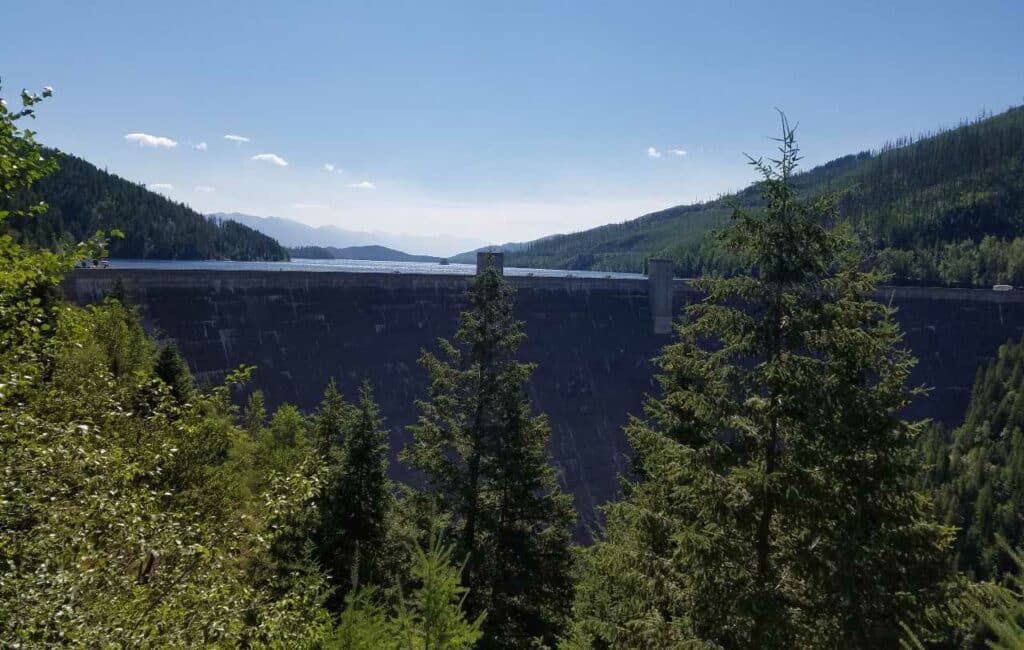
Hungry Horse Reservoir and Dam near Glacier National Park in northwestern Montana. By the time I competed in the Montana triathlon, I had stayed above 5,000 feet elevation for over two weeks.

2. Pay extra attention to factors that degrade at altitude

This is in line with the previous point, but worth repeating.

First, stay hydrated. Along with lower effective oxygen, higher altitude also means lower relative humidity of the air. Therefore, fluid loss is greater than in higher humidity regions.

Also, the higher altitude may compromise your sleep. According to this TrainingPeaks article, getting sleep during the initial time at higher altitude can be difficult for some. Some people initially suffer from acute mountain sickness (AMS). Symptoms of AMS include headaches, nausea, dizziness, and fatigue.

Give yourself time to become rested.

3. Pace yourself on race day

According to an article in Triathlete magazine, our VO2max decreases by 7.7 percent for every 1,000 meters of altitude. If you are able, go for a swim, bike, or run before the race to get a sense of how the altitude is affecting your performance. Otherwise, plan to go out slower to avoid having your body put the brakes on unexpectedly.

Remember to ease into the altitude and pace yourself as your body becomes acclimatized.

4. Train to offset performance declines that come with altitude

As we just read, our VO2max decreases with altitude even after several days of acclimatization. However, one strategy for mitigating the decline is to increase your VO2max.

In the last weeks before traveling to the higher altitude, perform harder sessions, like hill repeats, at your typical training altitude. These will simulate the feeling of working harder that will accompany racing at higher altitude.

If you want to learn more about the ins and outs of training at high altitude, I recommend listening to this podcast from Fast Talk Labs.

Final Comments

The human body is amazing in its ability to adapt to different environments. However, the comments on various websites and in academic research papers continually remind me we are all different.

Be sure to discuss with your coach or your doctor any plans to race in a triathlon or other multisport endurance event at higher altitude.

What Has Been Your Experience With Racing At Higher Altitude?

Please share in the Comments below what you have learned about training and racing in a triathlon at higher altitude?

How A Coach Can Help Throughout Your Triathlon Journey

Why should I use a triathlon coach? This is a question asked by many triathletes in various stages of their triathlon journey.

Triathlon coaches have helped many senior triathletes navigate their triathlon training and racing. This is true for first timers, competitive master triathletes with decades of experience, and those in between.

After rejoining Lifetime Fitness during our visit to Minnesota this summer, I sat down with Cheryl Zitur, personal trainer and senior triathlete, to get her thoughts on several triathlon training-related questions, most of which have come from members of our community over the past months.

If you’re new to triathlon after 50, this guide on how to start triathlon after 50 will help you take the first step.

About Cheryl Zitur

Before I dive into sharing Cheryl’s thoughts on how a triathlon coach can help you along your triathlon journey, let me tell you a bit about her.

Cheryl came to triathlon with a background in competitive swimming during high school and college. At age 41, she trained for and completed her first sprint triathlon, the Buffalo Triathlon (Buffalo, Minnesota).

This first triathlon reignited the competitive spirit from her swimming days. After a couple of years competing in triathlon, Cheryl began exploring ways of training that would improve her performance and make her more competitive. Within two years, Cheryl experienced her first age group win.

It was time for a new goal, one that eventually led to her winning her first triathlon at age 49.

With a more effective approach to training, Cheryl was on a roll. She went on to win 18 more triathlons as a senior triathlete.

Along the way, Cheryl started training for longer distance triathlons, including Olympic, IRONMAN 70.3, and IRONMAN. It was at the beginning of this part of her triathlon journey that Cheryl first hired a coach to help her train for the longer distance races.

In 2013, Cheryl left her career in accounting to become a personal trainer, triathlon coach, and, more recently, coach of the Masters swim group at Lifetime Fitness in Maple Grove, Minnesota.

Today, Cheryl is a Certified Personal Trainer (CPT), Corrective Exercise Specialist (CES), and Performance Enhancement Specialist (PES) with certifications from NASM (National Academy of Sports Medicine). She is also a Level 1 USAT Triathlon coach and IRONMAN Certified Coach.

During the summer, Cheryl also runs an 8-week kids triathlon club for girls and boys ages 8 to 14. The goal of the club is to introduce young people to the sport of triathlon.

Navigating Life While Continuing With Triathlon

Many triathlons double as fundraisers for causes that help others, young and old, locally and across the world. Cheryl has demonstrated this spirit while continuing her triathlon journey. In 2016, a year before completing her first IRONMAN triathlon, Cheryl donated one of her kidneys to her oldest son. While being a lifesaver for her son, donating her kidney has not hindered her performance or ability to remain active in triathlon. Cheryl encourages others – triathletes and everyone else – to consider being a living donor and to check the donor box when the opportunity presents itself.

Triathlon As A Journey

Some seniors complete a triathlon, check this off their bucket list, and move on to the next item.

However, it is far more common that the first-time triathlete becomes ‘hooked’ on the sport. Triathlon is just the motivation needed for them to train consistently and maintain a healthy lifestyle, so they continue to compete.

Many who continue with triathlon do so with new goals. These include getting faster and going longer distances.

What I heard from Cheryl, who has been on her own triathlon journey as well as helped others on theirs, is that a coach can help triathletes at the various stages along the way.

I love helping people get to the finish line.

Cheryl Zitur

Coaching for First Time Triathletes

If you can swim, bike, and run, you are starting your triathlon journey from a good place. But you are not there yet. Triathlon is more than swimming, biking, and running as individual sports.

If you doubt this, go for a 45 minute fast paced bike ride. Then, immediately after getting off the bike, go for a 3-mile run.

How do you feel? A little wierd?

A triathlon coach will help you learn to run after the bike leg.

A coach will also help the first-timer prepare for the inevitable chaos that every triathlete faces during an open water swim start. He/she will also help the new triathlete plan the swim-to-bike and bike-to-run transitions.

A triathlon coach will show beginners how to put together the various pieces of a triathlon and complete distances in each sport back-to-back at a pace matching their level of fitness.

Helping You Become More Confident

Chances are you have one leg of the triathlon in which you are weaker than the other two.

From your questions, swimming is that leg for many of you. This is especially true when the swim is in open water. This is also Cheryl’s experience with the beginner triathletes she coaches.

Having come from a background of competitive swimming, Cheryl leads a Masters swim class in which new swimmers and swimmers who lack confidence can pick up the basic skills for swimming. Along the way, they become more confident.

She also leads a group, many of these triathletes, who head out into the open water once each week. By swimming in various conditions, triathletes gain the confidence to tackle the swim leg no matter the conditions.

Cheryl also advises her students to use a wetsuit, that is, if the water temperature is within a range where USAT rules allow use of a wetsuit. A wetsuit will cover a multitude of swimming ‘sins’ by keeping the body and legs high in the water.

While a coach cannot guarantee your confidence, they will help you be more prepared for the unknowns.

Coaching For a Longer Distance Triathlon

Many triathletes progress to compete in longer distance races. You can find many such stories on this site.

Related Posts:

A progression from sprint to Olympic to half or full IRONMAN is common, even among those in their 60s, 70s, and beyond. Cheryl appreciates the differences between training for and racing in the varying distances, having completed all of them, from sprint to IRONMAN.

What seems to be a small step in going from the sprint to the Olympic distance, especially when you consider IRONMAN distances, turns out to not be so small.

Nutrition is huge for any race over two and a half hours long.

Cheryl Zitur, Lifetime Fitness

For sprint distance triathlons, the winning approach involves going more or less all out (Zone 4 in a triathlon coach’s language) for the entire race. However, each longer distance brings additional considerations.

For example, compared to the sprint distance, the Olympic distance triathlon introduces another dimension to the training and race plan – nutrition consumed during the race. And longer distances each bring new challenges. For example, training for a full IRONMAN triathlon often requires 12 to 14 hours per week during the last months.

A coach with the education and personal experience of training for and racing in the various distances seems essential, especially for the IRONMAN races.

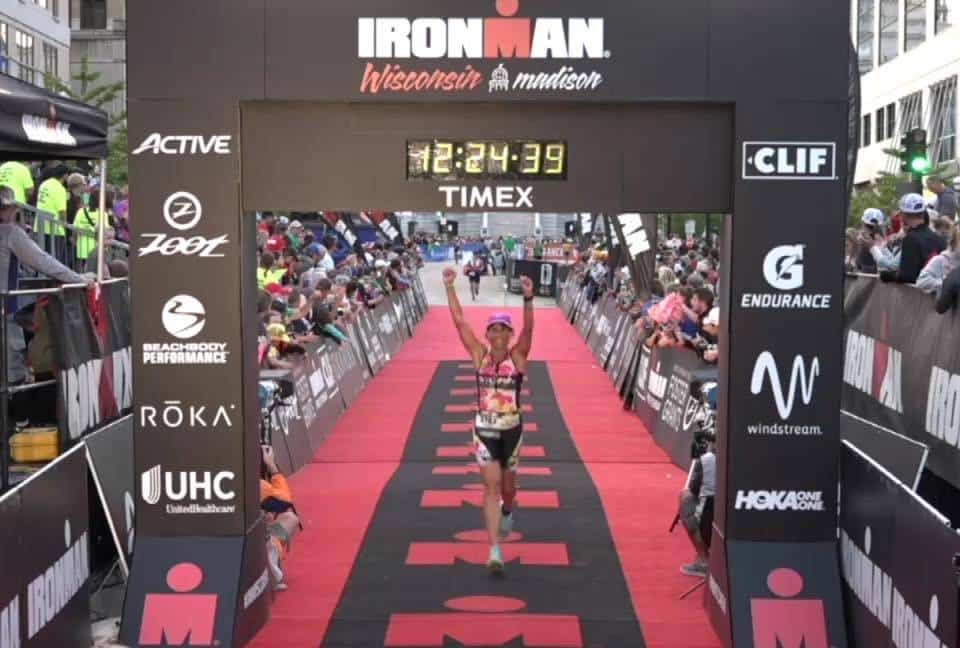
According to Cheryl, finishing IRONMAN Wisconsin in 2017 is one of the top 10 highlights of her life.

Coaching for Better Performance With Age

Once you have witnessed the awards ceremony at a triathlon and decided to continue competing, you will probably want to be faster.

It’s possible. Some triathletes deliver their best performance later in their triathlon careers. They are faster now than they were ten years ago.

So, you want to be on the podium some day. How do you get there?

There are a lot of books on triathlon training you can read. The internet is full of material as well. However, many seniors realize that most of the literature in print or on the internet assumes a younger triathlete, at least someone 40 years or younger.

But the needs of our community differ significantly from the younger triathletes.

According to Cheryl, the most important difference between coaching a 30-year-old triathlete and a 60 to 70-year-old triathlete is the need for recovery. Older athletes are more prone to injury and therefore require more time for recovery between hard training sessions.

As noted in Rest and Recovery: Why It’s Important for Senior Triathletes, recovery does not mean retiring to the sofa. Cheryl prescribes active recovery, including yoga and other forms of stretching that develop core strength and balance.

Smarter Training for Senior Triathletes

Balancing training and recovery is part of what Cheryl calls ‘smart training’. This is her focus with all the endurance athletes she coaches.

The training often begins with a treadmill test to measure an individual’s heart rate versus running pace. From this, she will define the person’s four heart rate zones, which are used as the basis for an individual’s specific training plan.

The training plan she prepares will include the right mix of training within the various heart rate zones. A typical schedule will include about 80% of the training time in heart rate zones 1 and 2 for building aerobic base fitness and one workout per week in each of zones 3 and 4 for cardiovascular fitness.

The training schedule will also include strength training (an important element of training that is often the first to be cut by most triathletes), active recovery, and rest.

Finally, a triathlon coach will also help with specific issues, such as bike handling or the swim stroke, based on the triathlete’s needs.

Conclusion

Reflecting on my conversation with Cheryl Zitur, I wondered if, by remaining self-coached, I have missed an opportunity to become a stronger competitor.

A triathlon coach can help the beginner triathlete prepare and complete their first triathlon. Beyond this, a coach can guide the triathlete to new goals, whether it is to longer distance races, higher performance and competitiveness, or both.

Want to take the next step? Choose your path below.

Whether you’re just getting started or looking to improve, here are your next steps:

New to Triathlon?

Start with a step-by-step guide to triathlon after 50 designed specifically for older athletes.

Start Here →

Already Training?

Learn how to train smarter, recover better, and improve performance after 50.

Improve Performance →

Do You Use A Triathlon Coach? Why?

What are your thoughts about hiring a triathlon coach? Or maybe a coach for one of the legs, for example swimming? Share your thoughts and questions in the Comments below.

Comments: We’d love to hear about your experience. Join the conversation below. All comments are reviewed before they appear.

Reply notifications: Click the bell icon above Post Comment to be notified when someone replies to your comment.

Follow the discussion: Click Subscribe above the comment box and enter your email address to receive notifications whenever a new comment is added—even if you don’t leave a comment. After subscribing, check your email and click Confirm to activate notifications.

Should Senior Triathletes Track Heart Rate Variability?

We know that recovery is critical for older triathletes. If heart rate variability can measure how well we have recovered, can it also help senior triathletes recover more completely?

My First Experience With Heart Rate Variability

Joy and I started using a new Sleep Number bed recently. While reviewing our sleep scores from the Sleep IQ app, it surprised me to see Heart Rate Variability, or HRV for short, as a metric for sleep quality.

I had previously come across articles about HRV in relation to triathlon training. However, I had paid little attention since there seemed to be a fair amount of controversy about HRV measurement and its usefulness for training.

In this post, I share what I have learned about the current state of heart rate variability for triathlon training and how it may be useful for senior triathletes.

What Is Heart Rate Variability (HRV)?

According to Sleep Number’s Sleep IQ app, “Heart rate variability (HRV) is the measure of different time durations between each heartbeat.”

For example, a heart rate of 60 beats per minute suggests that the heart beats an average of once each second. However, the actual time between beats varies, sometimes more and sometimes less, around the average time.

The variation between heartbeats comes from our autonomic nervous system’s (ANS) effort to fine tune our bodily functions in response to various sources of stress.

The ANS helps us maintain balance through its two branches:

  • sympathetic nervous system (SNS) which manages our ‘fight or flight’ stress response needed for short-term survival.
  • parasympathetic nervous system (PSNS), which handles our ‘rest and digest’ responses required for long-term survival.

The commonly reported value for HRV is the standard deviation of the variations in the time between heartbeats. Another name for this is the standard deviation of normal-to-normal inter-beat intervals (SDNN) measured in milliseconds. (Don’t worry if your memory of statistics is rusty.)

What Can Senior Triathletes Learn From Heart Rate Variability?

The SleepIQ app adds, “A high HRV is good. High HRV means high energy, good recovery, enhanced cognitive performance, and balance of heart and mind. Monitor stress and well-being by monitoring your heart rate variability.”

Under most conditions, high HRV shows that your body can adapt to many types of changes. Conversely, lower HRV suggests a less flexible body, one currently experiencing or on the verge of health problems.

According to the Cleveland Clinic, low HRV is “also more common in people who have higher resting heart rates. That’s because when your heart is beating faster, there’s less time between beats, reducing the opportunity for variability.”

However, there are some exceptions, which complicate use of this metric. High HRV can also occur when the stress from training has exceeded our ability to recover, at the onset of illness, and because of changes in sleep and exercise patterns.

Can We Influence Our HRV?

If a high HRV is generally better, what can we do to increase it?

As illustrated in the table below, there are many factors that affect HRV. Some, like diet and exercise, we can control. Others, such as age and gender, we cannot.

LifestyleTrainingBiologicalMental HealthEnvironmental
Sleep VolumeAgeStressChemical
Exposure
NutritionIntensityGenderDepressionElectromagnetic
Field (EMF) Exposure
ExerciseOverall
Fitness
EthnicityAnxietyAir Quality
Alcohol
Consumption
Unfamiliar
Stimuli
GeneticsEmotionsWork Schedule
Tobacco &
Drug Use
IllnessMeditationUse of Vibrating
Tools
Table 1: Some factors that affect HRV by category (Source: Elite HRV)

Getting good sleep, eating a heart-healthy diet, avoiding unhealthy environments whenever possible, and training at a level appropriate for our level of fitness are actions we can take to increase our HRV.

In addition, alternative medicine approaches, including biofeedback training, may be helpful. Biofeedback is a method mentioned by Cleveland Clinic for improving heart rate variability for those who suffer from stress, emotional disorders, physical issues such as hypertension, and addictions.

Related post: 11 Passages to Read to Help Fight Worry

The numerous factors affecting HRV explain why it is best to track HRV during sleep, that is when many of the factors will not affect the measurement. If manual measurement is required, then measure HRV immediately upon waking.

HRV For Triathlon Training

HRV is already recognized as a tool for assessing the risk of sudden cardiac death. Meanwhile, measurement of HRV for applications like endurance training is still emerging, albeit quickly.

For example, in the past few years, HRV measurement has advanced from requiring ECG sensors to using a cell phone camera. Its use has expanded to include guiding day-to-day triathlon training.

Earlier Research Demonstrated the Potential for HRV as a Training Metric

In principle, because HRV measures the effects of mental and physical stress, it should be an indicator of training stress.

A 2016 report titled “Detailed heart rate variability analysis in athletes” documented the higher HRV for elite and masters triathletes compared to “healthy, but not athletic” adults. The author’s conclusions included: “Further investigations are needed to determine its [HRV’s] role in risk stratification, optimization of training, or identifying overtraining”.

In another 2016 report titled “The role of heart rate variability in sports physiology“, the author noted that studies in which HRV was used to monitor exercise training “suggested that monitoring indices of HRV may be useful for tracking the time course of training adaptation/maladaptation in order to set optimal training loads that lead to improved performances”. In other words, HRV could be used to optimize training load and recovery.

Triathlete and triathlon coach Dr. Dan Plews describes himself as “a big proponent of using daily, resting measures of heart rate variability (HRV) to help guide day-to-day training decisions”.

Plews completed his PhD on heart rate variability in 2017. In an interview with Mikael Eriksson on the Scientific Triathlon podcast during the same year, Dr. Plews shared some results of his research.

He stated that our resting HRV, that measured first thing after waking, can tell a lot about how well we have recovered. However, since many factors affect this single measurement, it is better to look at the trend in HRV, typically over seven days.

HRV Measurement for the Amateur Athlete

Over the last five years, HRV has grown from a research topic to a metric used by amateur athletes and fitness enthusiasts to plan their training schedules.

HRV measurement is more accessible. Today, you can measure your HRV with a smart bed, such as Sleep Number. You can also measure HRV with your smartphone or a host of wearable devices, like smart watches and finger rings.

Smartphone apps are also more capable of interpreting and summarizing the measurements.

For example, the following is from a post on the EdureIQ blog. “HRV, which can be measured reliably and with validity using a smartphone application, gives us insight into the functioning of our autonomic nervous system, and trends in our daily, resting HRV give us insight into the balance between stress and recovery; downward trends in HRV, or big daily fluctuations in HRV, tell us that stress and fatigue is accumulating”. 

One word of caution. There is significant disagreement about the accuracy of devices that use light, rather than electrical impulses, to measure heart rate through the skin. It is not clear whether this is based on fact or marketing tactics.

However, the consensus is that the day-to-day trend in HRV is more useful than an isolated HRV measurement, even if made during sleep or immediately after waking.

Some Suppliers of Sensors and Software for HRV

If you are interested in exploring heart rate variability for your training, look at these suppliers of devices and software for measuring and reporting it.

I would also like to hear (in the Comments below) what you learn and/or decide.

Elite HRV

This company supplies a free cell phone app for use with a select list of heart rate chest strap which they have qualified for HRV measurement.

Garmin

Garmin supplies sports watches, including heart rate monitoring devices and apps for measuring and tracking HRV.

HRV4Training

This business provides a paid smartphone app described to provide “Heart Rate Variability (HRV) insights to help you quantify stress, better balance training and lifestyle, and improve performance”.

ithlete

According to the ithlete website, “A convenient one minute daily measurement with ithlete will provide you with all the information you need to tailor your training and recovery ensuring maximum performance.”

Polar

This leader in heart rate measurement offers the Polar Flow app for use with one of their heart rate straps to measure HRV.

Whoop

Whoop uses a wearable device to measure heart rate, heart rate variability, breath rate, and other factors (e.g. skin temperature) to calculate a degree of recovery.

Is Tracking Heart Rate Variability Helpful for Senior Triathletes?

There is growing evidence that heart rate variability is useful for tracking training stress and recovery. Measuring HRV is no longer an issue. However, interpreting the results may still be a challenge because of the many factors that affect day-to-day and even longer trends in HRV.

What do you think about using HRV as a metric for monitoring your triathlon training and recovery?

error

Enjoy this post? Please spread the word :)