A few weeks ago, bright white blossoms covered the Montmorency cherry trees in our backyard. My thought? First, I was reminded at how beautiful they are. Next, I began to imagine the fresh cherry juice, cherry flavored kombucha, and tart cherry salsa we would soon enjoy.
The taste of freshly picked and pitted fruit from these cherry trees is wonderful. However, the mouth puckering liquid from this fruit also heals and strengthens. You see, tart cherries are packed with anti-inflammatory and anti-oxidant compounds.
Incorporating tart cherry juice as part of a healthy eating pattern can be a great way to add variety into an individual’s diet.
For the report cited in this release, researchers analyzed results of ten separate studies on the role of tart cherry juice on performance in endurance exercise. Only those based on randomized controlled trials were included in the research.
For their work, researchers used meta-analysis to analyze the combined results of individual studies. For reference, meta-analysis is a common research method. Meta-analysis applies statistical analysis to dig deeper into combined results of multiple scientific studies that address the same question.
According to the press release, co-author Philip Chilibeck, PhD, professor in the College of Kinesiology at the University of Saskatchewan concluded:
“The results of this meta-analysis found that tart cherries did help improve performance, and we gained greater insight into the potential mechanism responsible for this benefit.
Other findings of the study were:
Timing: Tart cherry concentrate is effective when taken for 7 days to up to 1-1/2 hours before exercise.
Fitness level: The least trained athletes showed the lowest improvement from consuming tart cherry juice.
Dose: The daily consumption of anthocyanins (compounds with anti-oxidant properties) by study participants ranged from 66 to 2,760 mg. However, the study did not identify the relationship between the amount of tart cherry concentrate consumed and athletic performance.
Mechanism: Improvements in performance are most likely related to the low glycemic index, anti-inflammatory, anti-oxidative, and blood flow enhancing effects of tart cherry concentrate.
How Can Triathletes Most Benefit from Tart Cherry Juice?
According to registered dietician Beth Schutt, tart cherry juice has the greatest benefit for athletes who are well into their training plan. In an article for USA Triathlon, she wrote:
“It is readily agreed upon, though, that prior to racing and directly after racing, tart cherry is most useful. For the athlete who is deep into racing season and in a cycle of race, recover, repeat, tart cherry should be on the menu consistently.”
As the study cited above shows, there is less benefit when beginning to train and during the base building phase. Conversely, tart cherry juice’s benefits for recovery and performance become more valuable as race day approaches.
Benefits Beyond Sports Performance
For older adults, there are additional reasons for consuming tart cherries. According to registered dietician Sakiko Minagawa:
“In addition to sports performance, research suggests other benefits for older adults. Tart cherry juice may help reduce cardiovascular risk factors such as blood pressure and LDL cholesterol in this group.”
Looking for Tart Cherry Juice?
Not sure where to purchase tart cherry juice or its other forms (powder, juice concentrate)? One source is Swanson Vitamins. Please note that Senior Triathletes is an affiliate of this business. This means I will earn a small commission on any purchases from this company if you use this link.
Leave Your Questions and Comments Below
What is your go-to food or drink for post exercise recovery?
Triathlon training must change as we age to reflect the changes in our bodies. The consequences of improper training can be career-ending. Following an approach that recognizes six principles of triathlon training for seniors age 50 and over will ensure strong performance.
Meanwhile, many of the questions I receive indicate that most triathlon training programs do not consider the changes that occur with aging. This post is the beginning of an effort to address age-related needs for the senior triathlete.
Introduction
Academic research has shown that decreased performance with age is not a given. Often, decreases have more to do with reduced energy, lower intensity in training, and less time spent training.
In one study, researchers measured VO2 max, an indicator of the size of one’s athletic engine, of elite athletes of various ages. The study showed a linear decline with age for athletes from age 18 to 103. However, they did not observe a ‘cliff ‘, or abrupt change, in performance.
On the flip-side, triathlon training following the six principles outlined here will help senior triathletes continue strong and with minimal injury.
How Should Triathlon Training Change for Seniors?
Consistent exercise can slow aging. However, being consistent can be easier said than done. For some, lower energy with age makes it difficult to find the motivation for regular exercise. For others, jam-packed schedules make consistent exercise a challenge.
Also, the physiological changes that occur with age are the ingredients for more injuries. Never in our lives has the adage “working smarter, not harder” been more appropriate.
Physiological Changes with Age
King David understood what researchers today confirm – the human body is awesome. David wrote in Psalm 139:14 “I praise you, for I am fearfully and wonderfully made. “
Included in this wonderful design of the human body is the capability for self-repair of many types of tissue, including those of the muscles, tendons, and bones. Through repair, muscles become stronger during strength and endurance training. This same process promotes recovery from injuries.
However, in the typical aging process, our bodies become less efficient in making these repairs. Recovery from normal exercise and especially from injury takes longer. Tissues become stiffer. Taken together, these ultimately affect our athletic performance.
We need not give up, however. Recent research cited in Masters Athletes: A Model for Healthy Aging has shown that our ‘old’ cells can be re-programmed through physical exercise to behave like younger cells.
According to a report published in Preventive Medicine, people who did the equivalent of 30-40 minutes of jogging per day, five days a week showed biological markers of a person seven years younger.
The Aging Musculoskeletal System
Beginning at around age 50, our skeletal muscles lose cells and become smaller and stiffer according to Dr. Vonda Wright in Masters Athletes: A Model for Healthy Aging. Accompanying this decrease in muscle mass is a reduction in strength and the power they are able to generate.
More frequent muscle strains and joint pain also result from reduced muscle mass and strength and increased stiffness. For example, knee pain, sometimes incorrectly attributed to osteoarthritis, often highlights weak quadriceps. Shoulder pain in swimming is often a consequence of ignoring the smaller muscles responsible for joint stability. Finally, hip injuries are often rooted in stiffness and weakness of the core and gluteal muscles.
Tendons stiffen with age, in part, because of decreases in water content, hormonal changes, and thickening of elastin fibril tissue. On top of this, overuse which produces micro tears in the tissue leads to further stiffening of connective tissues .
Overuse injuries, those caused by continuing to exercise fatigued and/or tight muscles, are the most common among senior athletes. So here’s the dilemma: We need to keep moving to be strong and flexible, but moving more can lead to injury. Hint: strength training and stretching are two of the six pillars of triathlon training for seniors.
Nothing good happens in running, or in most sports, when you get tight. Tight muscles never outperform loose muscles simply because their range of motion is restricted, meaning they can’t move the full length for optimal power.
The lower mass and stiffening of tissue observed in older muscles and tendons is also seen in the cardiovascular system. According to Dr. Wright, “a 70-year old heart has 30% fewer cells than the heart of a 20 year-old.”
With the stiffening comes less efficient delivery of much-needed oxygen to cells. With less oxygen, performance, metabolism, and energy levels suffer.
The good news is that through endurance training, oxygen consumption increases. Dr. Wright reports that “Through endurance conditioning, one is capable of modifying maximum oxygen consumption, diastolic filling, relaxation, and arterial stiffness.”
Aging and Nutrition
How do the changes in our bodies affect our needs for fueling before, during, and after training?
As reported in “What Masters Athletes Need To Know About Nutrition“, the physiological changes that take place with age mean that we need “fewer (net of exercise) calories, higher amounts of protein, and greater amounts of key nutrients”. We also need to pay close attention to staying hydrated which can be accomplished through choices of food and drink.
Principles of Training for Senior Triathletes
More stretching
Proper strength training
Leveraging high-intensity interval training
Getting enough rest
Staying hydrated
Nutrition – eating enough of the right food
More Stretching
Proper warm-up and stretching before vigorous exercise with additional stretching during cool down prevents the gradual shortening of tendons and cartilage. From my experience, I can say the same for muscles.
Pre- and post-workout stretching is a fundamental of triathlon training for seniors. Photo by Abigail Keenan on Unsplash
Stretching the entire body prevents imbalances. For example, in my early days of running, I was religious about stretching my hamstrings after running. However, I was not as diligent about stretching my quadriceps.
A chiropractor who diagnosed my knee pain identified an imbalance of flexibility in these two muscles. After a short time of consistent stretching of my quadriceps, the knee pain disappeared.
Earlier, I highlighted the connection between injury and muscle strength. Weak muscles are more prone to injury and provide less support for joints during activity.
It is important to strengthen the right muscles. While many athletes focus on strengthening cosmetic muscles (biceps, triceps, calves), these may not be the best ones on which to focus.
There are also plenty of personal stories in favor of strength training. One example is from ultrarunner Judy Cole (age 73). Judy ran every day during her early 30s. However, early on, she reported having problems with her knees. Strengthening her quads and hamstrings eliminated the pain allowing her to continue running.
High-intensity interval training, or HIIT for short, is an approach to training characterized by short periods, or intervals, of high-intensity exercise followed by periods of recovery.
HIIT first gained notoriety in 1996 through a report published by the Japanese speed-skating coach and professor Izumi Tabata. Tabata’s paper documented the value of HIIT for elite athletes. Another study published in the Journal of Applied Physiology documented the benefits of HIIT over medium-intensity training for increasing VO2 max, an indicator of aerobic fitness. HIIT continues to be used for athletes of all levels, including cyclists and distance runners, for both endurance and strength training.
I have included HIIT here because it’s used for training in swimming, biking, and running. It also supports strength and fitness while simultaneously reducing the risk of overuse injury compared to long periods of lower intensity training. It also promotes variety and exercising of the entire body.
For more information about HIIT training and its benefits, look at Dr. Joseph Tieri’s book Staying Young with Interval Training. After an introduction to HIIT and its benefits, most of the book shows various HIIT exercises.
Rest and recovery apply to all ages. As suggested in an earlier post, we ought to make consistent, high-quality sleep a priority.
However, one liability of age can be the ‘ability’ to persevere through pain. If you only take one lesson from this post, it is that we must train smarter, not just harder, with age.
Tired muscles are more prone to injury. Abused cartilage and muscle will get their revenge. It is best to rest or change your training plan to avoid aggravating sore areas.
Staying Hydrated
As we age, our sensation for thirst becomes weaker. At the same time, lower water content of body tissue is one contributor to injury. The message? Stay hydrated.
Nutrition – Eating Enough of the Right Food
Consuming additional protein to ensure that we are producing muscle from strength training is the most significant takeaway. Eating anti-inflammatory foods and a full range of different colored fruits and vegetables is good advice for all ages. See the related post below for more detailed advice.
We would love to hear what you have learned from your experiences? Your reading? From your coaches or training partners?
How have you adjusted your training with age?
“Let us run with endurance the race that is set before us,” Hebrews 12:1
Comments: We’d love to hear about your experience. Join the conversation below. All comments are reviewed before they appear.
Reply notifications: Click the bell icon above Post Comment to be notified when someone replies to your comment.
Follow the discussion: Click Subscribe above the comment box and enter your email address to receive notifications whenever a new comment is added—even if you don’t leave a comment. After subscribing, check your email and click Confirm to activate notifications.
Disclaimer: Please note that SeniorTriathletes.com is a participant in the Amazon Services LLC Associates Program. This is an affiliate advertising program that provide a way for sites to earn advertising fees. They do this by advertising and linking to amazon.com. Amazon, the Amazon logo, AmazonSupply, and the AmazonSupply logo are trademarks of Amazon.com, Inc. or its affiliates. As an affiliate, I will receive a small commission for any purchases of this product that you make through Amazon.
Laurent Labbe recently finished Ironman Nice, a long course triathlon that boasts swimming in the Mediterranean Sea, biking in the Alps, and running along the French Riviera in Nice’s historic waterfront. While the beautiful venue made the race enjoyable, Nice was even more special for Laurent. It confirmed an Ironman triathlon hydration and nutrition plan he had been working to develop.
Disappointment at Ironman Vietnam
Before diving into the story from Nice, let’s go back a little less than two months to Vietnam. It was here that Laurent competed in Ironman 70.3 Vietnam, his 10th long course triathlon.
Following a disappointing race at Ironman Vietnam, Laurent determined to come up with a better approach to nutrition and hydration for an ironman triathlon. Regarding Ironman Vietnam, Laurent said:
“The bike part was a little bit slower than I had planned, but the running was the worst leg. It was very hot. The temperature at the start of the swim was 29⁰C (84⁰F) and 35⁰C (95⁰F) during the run. I didn’t manage it well. I was overheated and the only way I found to complete the run was to put water on me every 2 km (1.25 mile) to cool down.”
Laurent had anticipated the heat. He had prepared an adequate amount of water to carry on the bike. He also carried a cereal-based energy bar to eat about halfway through the bike course.
However, he had not included any sports drink with electrolytes. This was his first mistake. He also forgot to eat the cereal bar during the bike leg until much later than planned.
The consequence of not consuming a sports drink with its electrolytes on the bike became especially evident when he got to the run. While his body craved the electrolytes, he found the sports drinks provided by the race organizers to be “disgusting”.
And, when he tried to make up for not eating early enough on the bike by consuming bananas and gels during the run, his stomach revolted.
An Incentive for a New Ironman Triathlon Hydration and Nutrition Plan
Laurent is not alone in forgetting to eat on the bike during an Ironman triathlon. I have lost count of the number of stories of triathletes who were so caught up in the excitement of a race that they forgot to eat or drink until it was too late. As a result, they “bonked” or at least hurt their performance on the run. Maybe it’s happened to you.
With this not-so-pleasant experience in Vietnam, Laurent was determined to finding a better approach to hydration and nutrition for his next race in Nice, France. The challenge was that he had less than two months.
Hydration and Nutrition Plan for Ironman Nice
With the memory of Vietnam fresh in his mind, Laurent stayed focused on developing his race plan for Ironman Nice. He reflected on his experience in training and racing, spoke with other triathletes, scoured the internet, and tested various nutrition and hydration products.
In looking back on the Nice triathlon, he was able to say with a smile, “It seems that all the preparation and, this time, the race management was right”.
So, what was the race plan that made such a big difference?
Let’s start by looking in on Laurent a few days before the Nice triathlon while he was putting the final touches on his plan.
A Pre-Race Test of the Plan
During the week before the race, Laurent rented a bike and he and his son road to the top of Le Mont Ventoux, one of the most famous portions of the Tour de France.
He used this ride to test a bike computer having a screen large enough for him to continuously monitor his heart rate and to watch the time so that he would eat and drink at precise intervals.
It became clear to Laurent during this ride that without a clock his perception of time was wildly inaccurate. However, by maintaining a heart rate within the aerobic zone and drinking a little every 10 minutes, Laurent was able to ride the 40 km (25 km) distance to its 1,909 m (6,260 ft) elevation without stopping.
Laurent felt prepared for Nice.
Laurent Labbe and his oldest son on the climb to the summit of Le Mont Ventoux. Picture courtesy of Laurent Labbe.
Racing Ironman Nice
The temperature on race day in Nice was also high, 27⁰C (80⁰F) at the start of the swim. The day’s high of 34⁰C (93⁰F) occurred during the bike leg. Anticipating these temperatures, race organizers reduced the distance of the race a bit to 150 km (93 miles) for the bike and 30 km (18.6 miles) for the run.
Racing with a Heart Rate Monitor
Laurent used the heart rate monitor to control his effort on both the bike and run to maintain a heart rate within the endurance range.
For the bike leg, this meant maintaining an average rate of 144 beats per minute (bpm); his heart rate never went above 161 bpm. “I could have probably gone faster (on the bike) without any problem. However, the target for this race was to finish within the time limit.”
For the run, Laurent’s target was an average heart rate of 139 bpm, his endurance training rate. The highest rate came in the last 500 m during his sprint to the finish line.
“I saw many people on the bike and run forcing themselves and having difficulty breathing. In contrast, I was able to ride and carry on conversations with other racers including a Chinese guy, a Moroccan lady, and a man from Dubai.
Hydration and Nutrition for Ironman Nice Triathlon
Laurent’s nutrition and hydration plan reflected his experience in previous hot weather Ironman races and with the week earlier ride to the summit of Le Mont Ventoux.
Specifically, the plan was as follows.
On each of the three days leading up to the triathlon, he took a serving of Overstim Malto. Admittedly, this was based solely on the recommendation of a friend and not on any personal experience.
On the bike:
Alternated drinking from one of the two bottles of sports drink, one bottle each of Overstim Long Distance Hydrixir and Hammer Nutrition Sustained Energy, every 10 minutes throughout the bike leg. Laurent also carried extra packages of the powders. These would be used to refill the bottles if he happened to run out before the end of the bike leg.
Ate one packet of a fruit-based energy gel, such as those from Overstim, every hour. Since the gels come either with or without added salt, he took one of the salted versions at the mid-point and near the end of the bike.
Stopped eating any solid food around one hour before the end of the bike. This provided time for the food consumed during the bike to be digested before beginning the run. Running with undigested food can cause stomach problems.
On the run:
Drank some water with a little added salt provided by race organizers at each aid station.
Ate a salted biscuit or a salted gel at each of the aid stations.
Used showers provided by race organizers to help cool down.
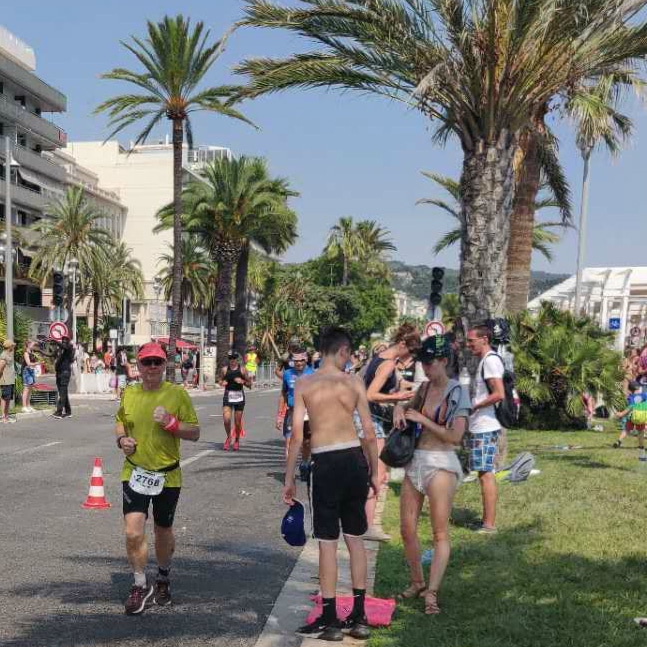
Laurent Labbe on the run at Ironman Nice. Picture courtesy of Laurent Labbe.
Will This Plan Work Next Time?
Laurent completed the race feeling strong, healthy, and with little to no pain during and after the race. Racing with a heart rate monitor, staying hydrated, and consuming calories at the right times appeared to be the key.
Laurent found this approach to be effective, at least for one long bike ride and one long course triathlon. However, he is quick to acknowledge that he has no training in sports medicine or nutrition.
It will be interesting to hear what happens when he uses this approach in the next triathlon.
Please Share Your Questions and Comments
What do you think about Laurent’s racing plan?
Have questions about hydration and nutrition for ironman triathlon?
What are the most important lessons you have learned from training and competing in a triathlon?
Share your thoughts and questions in the Comments section below.
Following the 25th Annual Rocky Gap Triathlon, I received some valuable advice about run training and fueling for triathlon from a fellow senior triathlete. I included the lesson on run training in the Rocky Gap Triathlon post.
How the Conversation Started
During the run portion of the triathlon, a man with a number in the 70s marked on his right calf passed me. This meant that he was at least 10 years older than me. Older men and women had passed me before. However, this guy looked strong.
During the cool-down after the race, I struck up a conversation with the guy, Mr. James Chapman, about his training program.
Fueling for Triathlon
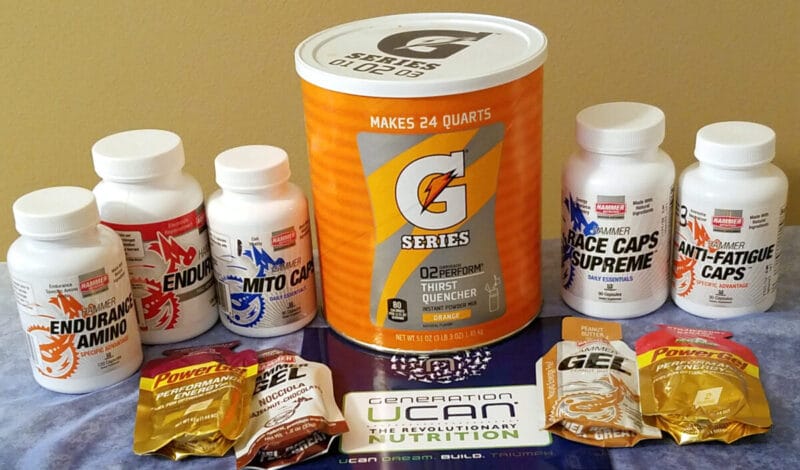
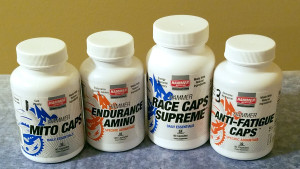
Jim provided information about his run training. He also introduced me to his fueling regimen for triathlon training and racing. His advice, based on products from Hammer Nutrition, follows.
One hour before every hard workout or race of over one hour:
1 – Race Cap Supreme
1 – Mito Cap
3 – Anti-Fatigue Caps
2 – Endurance Amino Acid
Early in the bike leg of the triathlon
1 – Anti-Fatigue Caps
1 – Endurance Amino Acid
Post workout/race: (whey protein + carbohydrates)
Pre-race fueling recommended by Hammer Nutrition is aimed at energy production and fatigue prevention.
What is Behind This Approach to Fueling for Triathlon?
To learn about the products and their roles in training and racing, I contacted Hammer Nutrition (support@hammernutrition.com) about the recommendations.
Steve Born, Hammer Nutrition’s Endurance Fueling Expert, replied. He confirmed that Jim’s advice was ‘spot on’. In addition, he explained why these supplements are helpful.
Race Caps Supreme-This supplement contains CoQ10 and idebenone, keys to energy production. It also contains antioxidants. Taking this product before exercise gives your body a head start on free radical neutralization.
Mito Caps-These provide the nutrients necessary for optimal mitochondrial function, which is vital for energy production and overall health. They also help your body use the calories from fatty acids as fuel more efficiently. And, they also increase the volume and activity of substances involved in producing energy from food and oxygen. R-alpha lipoic acid (r-ALA) is also a superb antioxidant.
Anti-Fatigue Caps-These supply two nutrients, potassium/magnesium aspartate and OKG, that help neutralize the negative effects of excess ammonia, a primary culprit in premature fatigue.
Endurance Amino-These contain specific amino acids, headed up by the branched-chain amino acids (BCAAs). BCAAs apparently help delay fatigue, enhance endurance, minimize muscle tissue breakdown, and provide antioxidant support.
Recovery from Triathlon Training
Steve also recommends consuming a mixture of Recoverite in water and a capsule of Chromemate after workouts. According to the Hammer Nutrition website:
“Recoverite supplies carbohydrates and protein in an ideal 3:1 ratio for superior glycogen synthesis and muscle tissue rebuilding, the two main components of recovery. For carbohydrates Recoverite contains only maltodextrin, a complex carbohydrate with a high glycemic index, to ensure rapid metabolism.” As for the protein component, the website says “Recoverite contains only whey protein isolate (grass fed, hormone free, and antibiotic free), which is virtually fat-and lactose-free, and yields the highest percentage of protein. For rebuilding lean muscle tissue and immune system support, whey protein isolate has no peer.”
Paraphrasing Dr. Bill Misner, Director of Research & Product Development, Emeritus, Hammer Nutrition, “The anabolic response for converting carbohydrates to muscle glycogen will not completely take place in the absence of GTF chromium (Chromemate). If only a minute amount of GTF chromium is available, only a third of the amount of muscle cell refueling will occur. Consuming a sufficient amount of carbohydrates along with Chromemate will result in a 300% increase in the rate of glycogen synthesis compared to no supplementation.”
Race Duration and Weather Matter
The optimum program for race fueling depends on the weather conditions (temperature, humidity), race type, and distance. Fueling for a sprint triathlon in hot humid weather differs from that for a half marathon run on a cool fall day. At least that’s my experience. If you too have been looking at the various powders that you can take to help with your fitness levels, you may want to check out brands like Magnak to see how they can assist you.
Read Steve’s recommendations here if you are preparing for a longer distance triathlon, such as a half or full Ironman.
What Is Your Approach to Fueling?
Please leave your questions and comments below.
This post was published on March 26, 2016. It was last updated on August 7, 2020.











Comments: We’d love to hear about your experience. Join the conversation below. All comments are reviewed before they appear.
Reply notifications: Click the bell icon above Post Comment to be notified when someone replies to your comment.
Follow the discussion: Click Subscribe above the comment box and enter your email address to receive notifications whenever a new comment is added—even if you don’t leave a comment. After subscribing, check your email and click Confirm to activate notifications.