
Ironman Kona After Open-Heart Surgery: A 66-Year-Old’s Comeback
by Darrell Myrick
The Breakdown
It’s June 3rd, a little over three months until the 2022 Ironman World Championship in Kona, triathlon’s most prestigious race. I’m halfway up Glendora Mountain Road on my road bike, and my legs are failing me. My heart rate is well above the ceiling my cardiologist set, and I can’t push another turn of the pedals. I put a foot down and collapse onto my handlebars, sweating and gasping for air.
Glendora Mountain is one of Southern California’s iconic climbs — eight miles of 4–8% grade. For years, it was a route I treated as a warmup before long days in the San Gabriel Mountains.
But on this day, I can’t finish it.
Earlier that week I had also struggled through a two-mile run and cut short a swim. A quiet panic begins to build as I picture the Kona race on the horizon.
This isn’t who I’ve been. I had open-heart mitral valve repair surgery at the end of January. I’ve followed the rehab plan, taken the medications, and rebuilt carefully under my cardiologist’s supervision. By now, I thought I’d be climbing strong again.
Hunched over my bike, I’m forced to confront a difficult question: how do I reconcile my identity as an endurance athlete with a body that feels fragile and unpredictable?
The Backstory
I qualified for Kona in June 2021 at Ironman Coeur d’Alene. The race was later postponed due to the pandemic, delaying what had felt like a rare opportunity.
For years I had known I had a faulty mitral valve. It became impossible to ignore when I collapsed at Ironman Santa Rosa after going into A-Fib. Doctors diagnosed a moderately leaking valve but initially recommended monitoring since I was still performing well.
Three months after qualifying for Kona, I failed on the run at the Arizona Half Ironman when my heart rate spiraled out of control. That moment made the situation clear. I could no longer dismiss what was happening.
Surgery became unavoidable.
Shortly before my scheduled surgery date, I contracted COVID, which forced a postponement. By the time I underwent open-heart mitral valve repair at the end of January, my condition had worsened. Complications followed — recurring A-Fib episodes and heart rates in the 150s — leading to a 13-day hospital stay. Recovery would require patience, medical supervision, and a reset of expectations.
By February, Kona in October still felt distant enough to aim toward. I committed to rehabilitation cautiously, understanding that progress would need to be gradual and closely monitored.
Related post: I Found ‘Athlete’ In The Words ‘Heart Health’ – David Conover’s Story
Identity, Aging, and Doubt
Returning to training wasn’t only about racing. It was about returning to the discipline of what I call “The Ironman Lifestyle.” This approach to life has shaped much of my adult life. Endurance sport has required structure — sleep, nutrition, balance — and it has helped stabilize both my physical and mental health.
Progress, however, came slowly.
Another bout of COVID delayed consistent training until June. By then, I was twenty pounds heavier, detrained, and easily winded. Even walking pushed my heart rate into the 100s.
For the first time, I wondered whether my 66-year-old body would respond the way it once had. I had always trusted that steady work would produce improvement. Now, after weeks of effort, the gains were minimal.
The psychological strain weighed heavily. Physical activity had long been my safeguard against depression. Without measurable progress, doubts crept in.
Thankfully, I wasn’t alone. My family and triathlon friends believed in me when I struggled to believe in myself. Their steady encouragement kept me moving forward, even when results lagged behind effort.
Resetting the Goal
While still in the hospital, I had established three goals:
- Regain full mobility and daily function.
- Complete an Ironman.
- Perform competitively in an Ironman again.
By mid-summer, I had achieved the first goal. It became clear that chasing peak competitiveness this season was unrealistic. I shifted my focus to finishing Kona.
That adjustment brought relief. Instead of comparing myself to previous performances, I focused on building enough endurance to complete the race safely and within the allotted time.
In August, progress finally began to show. I lost weight, extended workouts, and recovered more consistently. With the help of training partners, I completed a 100-mile ride, an 18-mile run, and multiple 2.5-mile swims. They weren’t fast — but they were sufficient.
Consistent recovery after exercise is a key strategy for staying active with age. You can explore these insights further in our post on recovery strategies for triathletes over 50.
Race Week in Kona
I arrived in Kona six days before the race, joined by my wife and eight friends who made the trip to support me. Their presence felt like a reminder of how fortunate I was simply to stand on the starting line.
On race morning, I found a quiet place before my wave start and reflected on what had brought me there: being alive, having a supportive family, and being healthy enough to attempt one of the most demanding endurance events in the world.
When the horn sounded, the day began.

The Bike: Managing the Effort
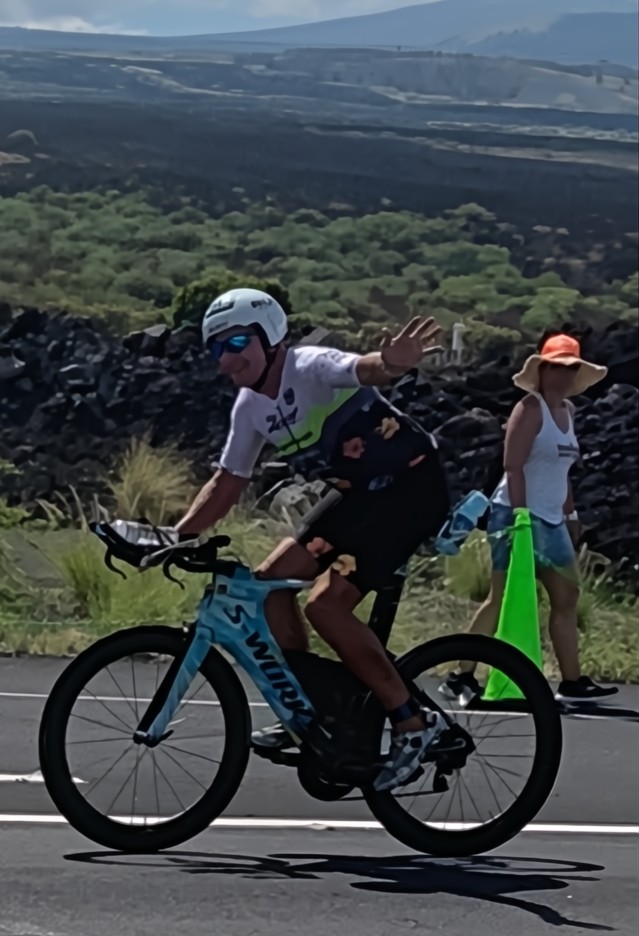
The swim was steady and uneventful. On the bike, I deliberately held back — riding about five miles per hour below the pace I would have targeted in previous years. Conservation was critical.
Around mile 100, climbing toward the scenic overlook on the Queen K Highway out of Waikoloa, fatigue caught up with me. A headwind and rising heat drained my legs. My nutrition stopped digesting properly, and nausea set in.
The final miles were about preservation. Speed no longer mattered. Forward progress did.
The Run: One Mile at a Time
In transition, I sat briefly and asked the only question that mattered: Did I have enough left to finish within the cutoff?
I realized I could think just as clearly while walking. So I stood up and began moving.
The first couple miles were slow — mostly walking. Anyone tracking online could see I was close to the time limit.
A few miles in, teammates met me on the course and told me the pace I needed to maintain. I settled into a controlled walk/jog rhythm, carefully monitoring effort to avoid pushing beyond safe limits.
At mile 18, I recognized something encouraging: I was slightly ahead of schedule. I could finish even with steading walking.
Relief replaced anxiety. The task became simple — keep moving.
🎧 Related Podcast: The Ironman Lifestyle – The Courage to Keep Moving Forward
Hear Darrell Myrick discuss this journey in more depth on The PhD Journey Unplugged Podcast Episode 52 .
The Finish Line
Turning onto Ali’i Drive, I heard the unmistakable voice of the longtime Ironman announcer Mike Reilly welcoming finishers with his iconic “You Are An Ironman” call.
I don’t remember much of the final stretch. I moved in what felt like a slow shuffle up the finisher’s ramp.
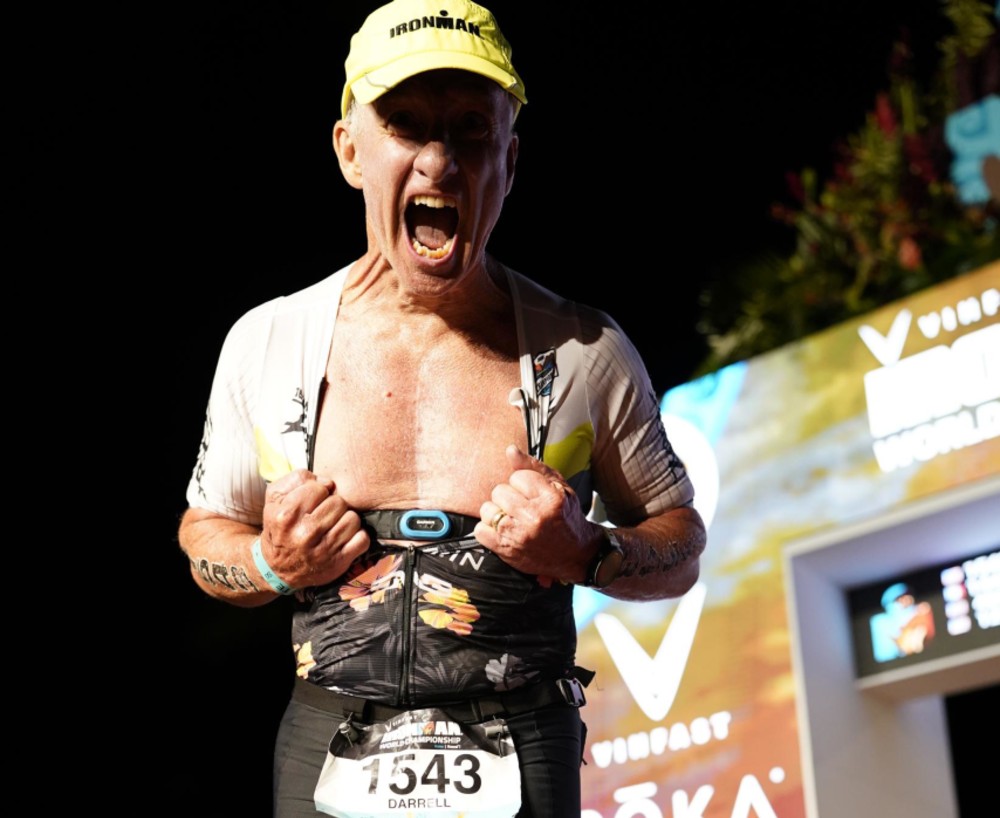
At the line, I unzipped my tri suit and revealed for the photographers the scar from my open-heart surgery — not for attention, but as a quiet acknowledgment of what the previous nine months had required.
Then I collapsed.
Friends volunteering at the finish line guided me to the medical tent. After IV fluids, monitoring, and a brief visit to a trash can to relieve my unsettled stomach, I stabilized. One doctor, smiling after hearing the story, suggested I might not have been the brightest participant that day. He may not have been entirely wrong.
What the Journey Taught Me
Endurance sport often mirrors life. Both demand focus, patience, and adaptation. Neither unfolds as a steady line of personal bests.
Recovery required accepting realistic expectations rather than chasing earlier versions of myself. The challenge was not recreating the past, but discovering what remained possible.
The months between surgery and Kona were frustrating, humbling, and at times frightening. But they were also clarifying. Progress did not arrive on my preferred timeline, and success looked different than it once had.
Like life, Ironman rewards steady forward motion — however modest — especially when circumstances force you to redefine the goal.
Nine months after open-heart surgery, finishing in Kona was not about proving anything. It was about gratitude, resilience, and the quiet satisfaction of continuing when stopping would have been easier.
Have Questions or Comments for Darrell?
Join the conversation by sharing your questions and comments below.
Amazing story!! Congrats and kudos to your fortitude. I just had heart surgery 3 weeks ago (not as serious as yours) your story inspired me to set new goals and continue in the sport we all love
Glad it helped! Be patient coming back, but do keep moving. Even just easy walking will stave off atrophy.
Always glad to talk if you think I can assist.
Way to Go – this is what Ironman and life are all about
Darrell, you are a beast! What’s most impressive about you is not your prowess as an athlete, but your incredible resilience in the face of circumstances that would have caused most to give up. Still following your journey!





Comments: We’d love to hear about your experience. Join the conversation below. All comments are reviewed before they appear.
Reply notifications: Click the bell icon above Post Comment to be notified when someone replies to your comment.
Follow the discussion: Click Subscribe above the comment box and enter your email address to receive notifications whenever a new comment is added—even if you don’t leave a comment. After subscribing, check your email and click Confirm to activate notifications.