Triathlon Across the USA: State #7 – Connecticut

Ridgefield, Connecticut; June 3, 2012 – TriRidgefield, Martin Park.

Preparing for the Connecticut triathlon reminded me that who you know, or where you are from, is sometime very important. Even in a triathlon.

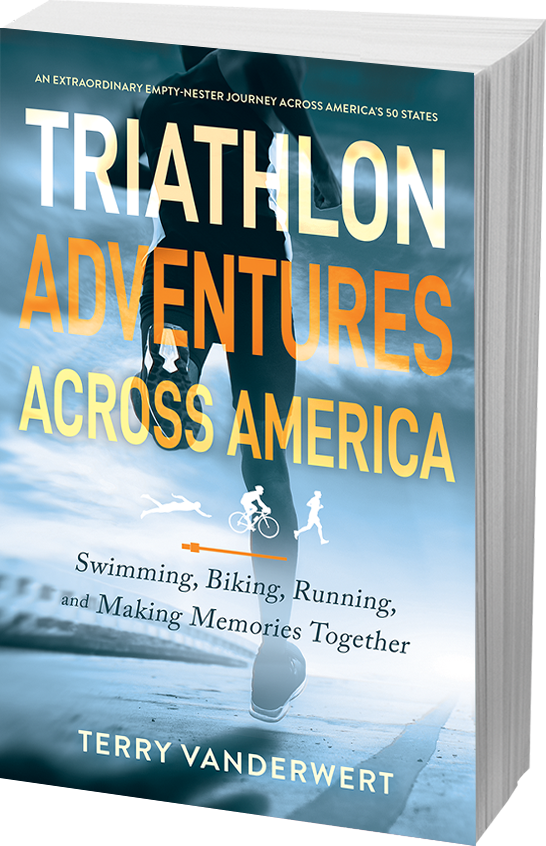
This race is one chapter in a 50-state journey—now told in full in Triathlon Adventures Across America .

Planning the Connecticut Triathlon

We had just finished lunch on New Years Day, 2012.  I sat dumbfounded at the island in our kitchen. How could this be? Registration for the TriRidgefield sprint triathlon had just opened that morning. Now, in the early afternoon, registration for this race was full. I had counted on completing this triathlon in 2012.

I wrote to the race director, Evan. Had I understood the situation correctly? I surely had.

After exchanging e-mails over the next couple of hours, I was ‘gifted’ an opportunity to race in TriRidgefield 2012.

Why? Because of my superior negotiating skills?  No, because Evan’s wife made him give me have a place in the race. As it turns out, she is a native of Minnesota, our home state.

Pictured below is a portion of the e-mail exchange that took place between Evan and me during the afternoon of New Years Day 2012.

e-mail exchange related to the TriRidgefield sprint triathlon
New Years Day 2012 e-mail exchange that led to the opportunity to race in the ultra-popular TriRidgefield sprint triathlon.

Travel to the Connecticut Triathlon

Ridgefield is a 300-year old community of about 25,000 in the southwest corner of Connecticut, south of Danbury.

Since the race venue was a 1-1/2 hour drive from our Chicopee, Massachusetts house, we commuted to the race. 

After arriving in Chicopee via Bradley International Airport in Hartford on Friday night, we drove from Chicopee to Ridgefield on Saturday afternoon to pick up the race packet, drive the bike course, and look around this historic town.

On the way back to Chicopee, we stopped for a lunch of fish and chips and seafood chowder at McGuire’s Ale House in Newton, Connecticut.  Upon arriving home, we packed the car for an early departure the next morning and headed to bed early.

The next morning, we awoke at 3 am and left the house at 3:30 am to arrive at the transition area just after it opened at 5 am.  The payoff? I arrived early enough to get a transition spot on the outside of a bike rack.

6th TriRidgefield Sprint Triathlon

2012 was the 6th running of the TriRidgefield Sprint Triathlon.

Distances for the individual legs of this USAT-sanctioned sprint triathlon were:

  • Swim: 0.5 miles (800 m)
  • Bike: 12.8 miles (20.6 km)
  • Run: 3.1 miles (5 km)
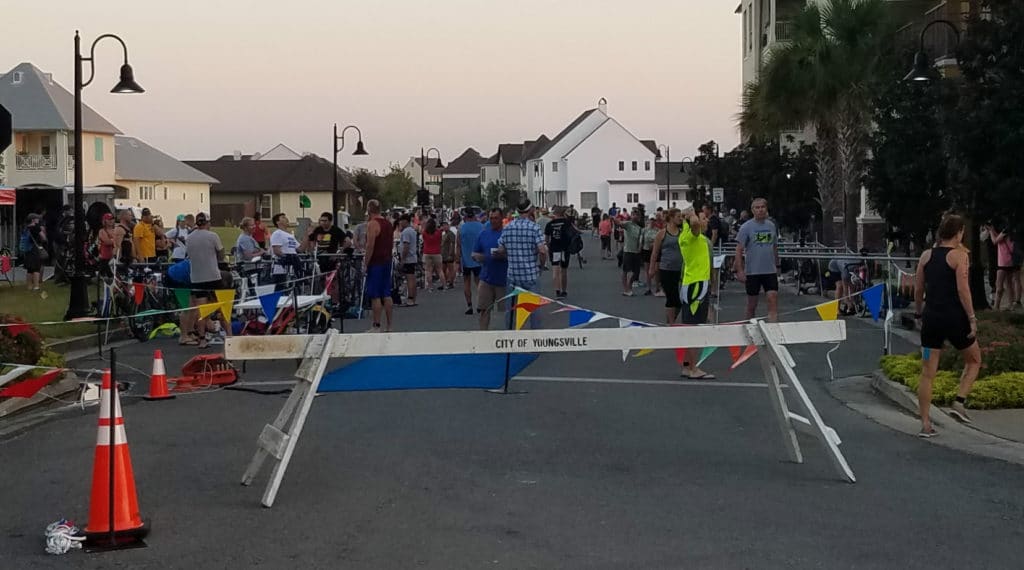
transition area at TriRidgefield
Transition area beginning to fill long after I had set up my space. We arrived at the transition area just after it opened at 5 am.

Swim

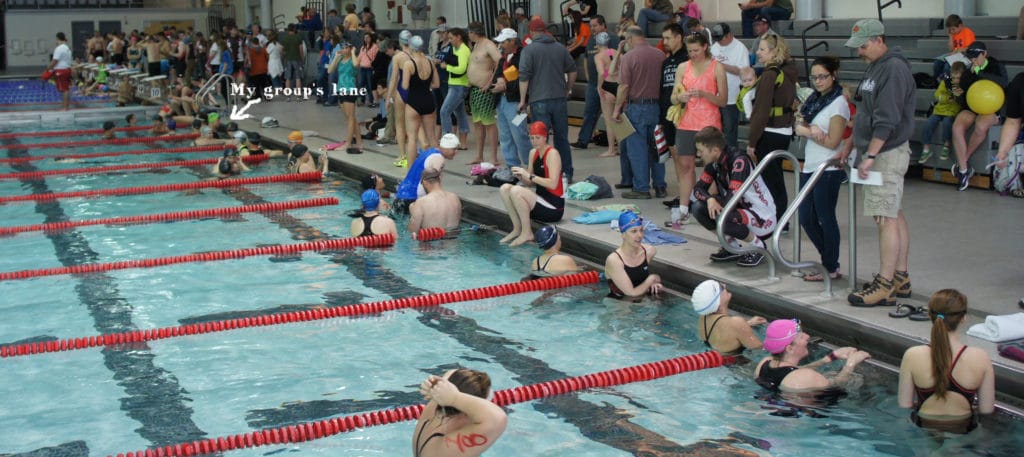
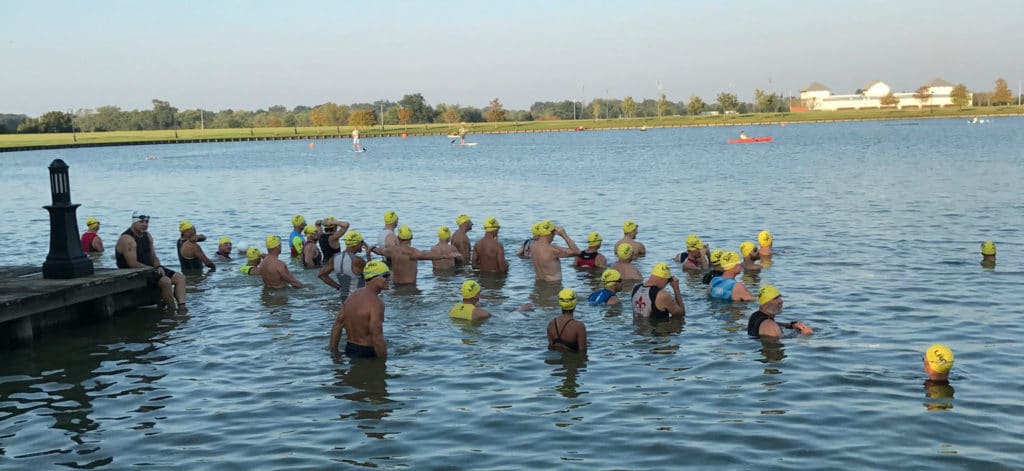
The half-mile swim leg took place in Martin Lake. The water temperature at race time was in the upper 60s °F, comfortable – when wearing a wetsuit, that is.

We started on the left side of the beach, swam out to an orange buoy, made a right turn and swam parallel to shore toward a second buoy. After a second right turn at the next buoy, we swam back to the sandy shore.

Lake Martin near Ridgefield Connecticut
The TriRidgefield sprint triathlon started with a half-mile swim in Martin Lake. Swimmers started from the left of the fence and finished on the right side of the fence.

Bike

The bike course headed west of the park on local streets cut through densely wooded, rolling hills. Near the mid-point of the course, where we began the return to the park, we were within one mile of the New York state line.

The course took us into the downtown area of Ridgefield. Following another left turn, we rode back to the park and into the transition area. Despite the rolling hills, the course was fast, with my average speed over 20 miles per hour (32 km per hour).

Run

The run course initially followed the bike course west of the park.  After a short distance, the run course split onto a side street to the left in a loop that eventually rejoined the road leading into the park. As with bike course, the course was full of hills, making it a challenging run, at least for me.

Results of My Connecticut Triathlon

My ‘55-59’ age group for this race was impressive. Even with some respectable personal times, I finished eighth of eighteen in my age group.

This was just one of the many times that I would find my former, and even some recent, views about age and athletic performance, to be total nonsense.

What Would Triathlon Be Without Volunteers?

Volunteers are critical to a safe and organized triathlon. You will find volunteers at many intersections on the bike course; they make sure racers navigate turns at a safe speed or even turn at the correct locations. Other volunteers occupy kayaks and paddle boards along the swim course. You will also find them passing out water and sports drinks at run course aid stations, guiding races at the transition area, and doing various things at the finish line. They are everywhere and highly valued by racers.

Let’s face it, triathlon is not the most exciting spectator event. However, triathlons are an easy place to make new friends.

Joy’s Role in Making This a Safe Race

Once again, Joy served as a volunteer. Her decision may have initially come from a feeling of gratitude for me being allowed into this race. However, in the end, she participated because there was a need and the opportunity to be part of the event and make new friends.

The race director stationed Joy at the exit of Martin Park, at the intersection of Great Pond Road and Highway 7. Her assignment was to direct incoming bikers to “stay to the right”. By doing so, they would avoid hitting the runners exiting the park on the same road. 

She also had the critical job of preventing drivers of cars, and one determined RV operator, passing by the park on the highway, from colliding with bikers and runners.

Typical of many volunteers, she was so laser-focused on her assignment that she did not see me as I passed her on my way out of the park or back into it during the run.

TriRidgefield finisher medal
Finisher medal with TriRidgefield triathlon logo.

Race Firsts

  • First triathlon for which I entered the race after registration had officially closed.
  • First New England triathlon with my wetsuit and Trek bike.
  • This triathlon took place on the first anniversary of my first triathlon.
Triathlon Adventures Across America book cover

A Journey Beyond This Race

“Uplifting, real, and full of heart—I couldn’t put it down.”

Read the full journey in Triathlon Adventures Across America

Tell Us About Your Connecticut Triathlon

Have you done one or more triathlons in Connecticut? Which was your favorite one and why?

Comments: Join the conversation below — Click on “Subscribe” (located above the Comment box) if you’d like to be alerted to replies to your Comment. Even if you do not submit a comment, you may subscribe to be notified when a new comment is published. Please note that I review all comments before they are posted.

Aging Athletically: Becoming a Sexagenarian and a Triathlete

Urban Yoga 2012

Urban Yoga 2012

By Jessica Perkins – In 2014 before my 58th birthday, I made the decision to complete a triathlon before my 60th birthday in June 2016. My decision wasn’t really out of the blue because for many prior birthdays, I always completed a physical challenge, which, for me, equated to feeling alive and functioning.


Learning About Triathlon

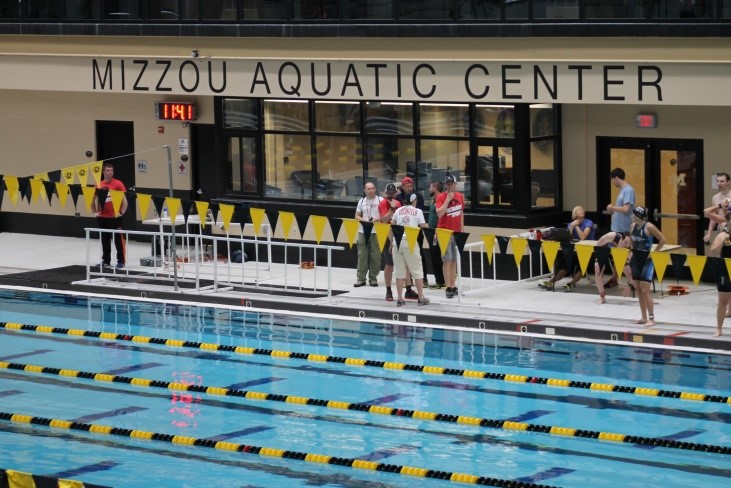
At the time of my decision, I knew very little about triathlons, other than the swim-bike-run sequence. While I wasn’t a couch potato – I had slogged a few 5Ks and practiced Bikram yoga 3 to 4 times weekly with a few 30 to 60-day challenges over the previous five years – my swimming, biking and running were more recreational than competitive. Luckily, in this era of having information at our fingertips, I conducted Internet research and watched YouTube videos to learn more. One valuable piece of information gleaned was triathlon distances vary from a combined mileage total of approximately eight miles (super sprint) to 140.3 miles (Ironman). I thought, “Whew, at least my goal was doable because all I knew about was the Ironman held in Kona.” Also, I learned that triathlons could be fully and partially indoors, as well as fully outdoors.

After my research, I realized my goal was somewhat of an anomaly for many reasons. I am an African American female who is slightly overweight and was approaching sexagenarian status. The demographics of an average triathlete don’t even come close to my profile. According to the 2015 USA Triathlon (USAT) Membership Demographics Survey, 6% of the registered females were between 50 and 59 years of age and only 1% were between 60 and 69 years of age. By the way, participating in triathlons later in life means fewer competitors in your age group. There is always a chance you will place in the top three. “Podium, baby!”

Additionally, in 2009, USAT reported that only ½ of 1% (.005) of triathletes were African Americans! Ironically, this statistic was the impetus for the 2014 formation of the Black Triathletes Association, a social networking group and official USAT club of nearly 3,300 members who share triathlon related information daily through Facebook and who have meet-ups at many local, national and international events.

Of course, you could ask, “Why so few African Americans or so few females over the age of 50?” There are many barriers to entry for the demographics mentioned, but that could be the focus of another article. These statistics did become another goal for competing – showing others, especially those matching my demographics, that it could be done.


Getting Started

Like many triathletes, my Achilles heel was swimming. I enrolled in group classes, took private lessons, hired a triathlon coach and even attended a Total Immersion (TI) weekend boot camp during 2015. I figured if I didn’t survive the swim, I couldn’t cycle, a sport I enjoyed leisurely. My swimming progress was as slow as molasses, but I was progressing, just not as rapidly as I wanted. I swam 2 to 3 times weekly, but after TI camp I increased my training to four times weekly.

“This could be me.” Tri Try Edwardsville, April 2015

“This could be me.” -Tri Try Edwardsville, April 2015

The motivational literature says “set a goal”, then train for that goal. I registered for Try Tri Edwardsville’s super sprint (150-yard pool swim, 10-mile cycle, and a two-mile run) in April 2015. As the date approached, I began second guessing myself and I decided not to participate. Although the date came and went and I had my first DNS (Did Not Start), I did observe the race as a spectator and realized, I was more than capable of swimming the distance.

Lesson Learned: Trust your training and always show up unless you are physically unable.


Being Active Yields Unexpected Benefits

Not being deterred by my DNS, during the next three months, I trained in all three sports and prepared for another pool swim triathlon in August. The distance was a bit longer, but I felt confident and ready.

However, in July 2015, I contracted a virus that developed into Guillain-Barre, an autoimmune disease attacking the peripheral nervous system. Within days and for three weeks, I was in unbearable pain all over my body and my right arm was paralyzed! Before being diagnosed, I wondered if my goal would be thwarted before I even approached the start line. Finally, I went to a neurologist and she ran a nerve conduction test and confirmed that I had Guillain-Barre.

My results were so low that I should not have been able to walk unassisted or even balance on one foot. But I did. After telling the neurologist my story, she surmised that my years of yoga and recent triathlon training probably made me stronger than most and I was able to fight off the virus without any medical intervention. It took me about three months to regain my strength fully and in September of 2015, I was back in training mode.

 Lesson Learned: Stay active because you never know how that strengthens you physically and mentally for other challenges in life.


Participating in My First Indoor Triathlon, Finally!

The body is a wonderful healing machine because, in December 2015, I completed my first indoor triathlon (300-yard pool swim, 10-mile spinning cycle and 3-mile treadmill run)! Funny, I did not feel like a triathlete, just someone who was a multi-sport athlete. Why? I was slow and sore afterward! I thought falsely that if I trained, I would be fast and pain-free.

Throughout the winter, I competed in three more indoor triathlons and got stronger and faster. I was ready for redemption at my first and only DNS race from earlier in 2015.


Progressing to the Big Leagues – Try Tri Again

I registered for Try Tri Edwardsville’s super sprint in April 2016. Much to my surprise, my 27-year old son, Chris, who was attending graduate school in New York, flew in and raced with me. We both finished the race – he, the sprint and me, the super sprint. It felt amazing to finish. Even though I was one of the last ones, I wasn’t THE LAST!

“We got it done!” Tri Try Edwardsville, April 2016

“We got it done!” -Tri Try Edwardsville,, April 2016

Progressing to the Big Leagues – First Open Water Triathlon

My first OW (open water) sprint triathlon – the St. Louis Inaugural Triathlon – was in May 2016. With it being only 10 minutes from my home, I had to participate. But the open water wasn’t my friend. I had three practices in open water prior to the race and all were dismal. Being unable to sight and touch the bottom made me panic. Unfortunately, the practice the day before the race was the worse one.

“Rocking the Medal from First OW” St. Louis Triathlon, May 2016

“Rocking the Medal from First Open Water” -St. Louis Triathlon, May 2016

I came home that evening doubting my skills and I almost decided another DNS would be a part of my record. Luckily, my significant other talked some sense into me and I participated with my snorkel! It took me one hour to swim 750 meters! This was a newbie friendly race and as long as a swimmer wasn’t a detriment to themselves or others, the kayakers would stay with the swimmer. I finished my first open water triathlon by the grace of God, a lifeguard named Phillip and my sheer determination not to ever have another first attempt at an OW triathlon.

Lesson Learned: Build your support network – friends, family members and tri club members. When you second guess yourself, they will encourage you, challenge your thinking and if necessary, kick you in the behind!

 Finally, I felt like a triathlete, not just a multi-sport athlete. Even though I wasn’t quite 60, the number on my leg said I was! After my first OW experience, I vowed never to use the dreaded snorkel again in a race. I looked like a waterlogged elephant!


Participating in My First National Race“Rocking another Medal” Chicago Triathlon August 2016

Before my “A” race, the Chicago Triathlon, I participated in another local OW triathlon in July. The Chicago Triathlon is/was an event to remember. First, it was my first non-local race; second, with more than 9,000 triathletes participating over two days, it was the largest; and third, it had the largest expo, I have ever seen. Note to self…save a little extra from the triathlon budget for the larger races.


In Chicago, I also met some BTA members who had traveled from all over the U.S. to participate.  Luckily, BTA was able to race in the charity wave. Why was that important? My swimming still wasn’t as strong as it needed to be and by racing in the earlier charity wave, I was guaranteed to make the cut-off. The swim was okay, the cycling was amazing as the route was on Lake Shore Drive and the run was uneventful, but steaming hot. I finished triathlon #10!

“Rocking Another Medal” Chicago Triathlon August 2016

“Rocking Another Medal” -Chicago Triathlon August 2016

Lesson Learned: Enjoy the journey, regardless of how slow the progress. You will eventually arrive.

Finishing My First Competition Year

As I closed out 2016, I competed in a race that occurs in both the spring and fall of the year. I was hoping to show great improvements across all sports. Unfortunately, a late flight the night before and high temperatures and humidity during the race slowed me down considerably. At the finish line, I had a slight asthma attack and I hadn’t experienced breathing problems in more than five decades. Again, I finished!

 Lesson Learned: Hydrate, hydrate, hydrate, at least three days prior to a race. Always listen to your body and adjust, as necessary.


Reflecting on the Journey

Starting with a seedling of a thought three years ago, my triathlon garden has bloomed, but not as I expected. If you are a gardener, you understand the first growth year of a perennial is a hit or miss.  In the second year, that perennial is normally very healthy and grows larger; and in the third year, you might be able to divide it and start new plantings. With my newfound experience and knowledge, I can now recruit others to tri-life, the available resources and what it can offer. Additionally, I have made a point to debunk many triathlon myths about costs, training, and ability, so others might consider this journey.

Since my first triathlon in December 2015, I have completed 13 races and by December 2017, I will have a least three more under my belt. In the first year, my goal was to finish each race and I accomplished that. Now, in my second full year, my goal is to improve my time while managing my nutritional needs before, during and after an event and hopefully, finish the year with an Olympic distance race. Mentally, I am preparing for a HIM (half Ironman) for late 2018. My HIM registration and participation will depend on my ability to meet my speed, distance and nutritional goals in 2017.


Takeaways

Here are my takeaways from the first two years…

  • Anyone, regardless of age and physical ability, can compete in a triathlon with sufficient training. Start with short distance pool swim triathlons and work your way to the longer distances with open water swims. You have to want it bad enough and not be afraid to try.
  • Mental fortitude and grit are just as important as physical ability. In the past two years, my focus has been on improving my swim technique and I have trained minimally for the bike and run. Yet, I have finished all my races because my mind tells me I can and I will. For the second year, in order to achieve my goals of faster speeds and longer distances, I am training at least three days weekly in each sport. After the swim, you can push through the cycle and run, but without sufficient training, your speed will never increase.
  • Taking on a challenge bigger than you expect to handle exposes you to new people and perspectives. It keeps you physically and mentally growing. I have met so many amazing and inspiring athletes (young and old) who all have their own reasons for taking this journey. Learn their stories and when it gets tough, remember someone has walked in your shoes before.
  • Finally, don’t just race, volunteer at races. I have just as much fun cheering other triathletes to their victories because I understand what it means to live to “tri” another day.

Much Success to All!

You may also be interested in these posts


Triathlon Across the USA: State #4 – Texas

Katy, Texas, April 28, 2012 – No Label Triathlon, Morton Ranch Natatorium/No Label Brewing Company.

A detour through Texas on the way to Massachusetts provided an opportunity to spend time with friends and complete a sprint triathlon in Texas.

During this time, I was splitting my work weeks between Champlin, Minnesota, and Chicopee, Massachusetts. A detour through Texas on the way to Massachusetts allowed us to be with friends and complete the No Label Triathlon a sprint triathlon in Texas.

Why this triathlon? Two reasons. 

First, we were eager to complete triathlons in as many states as reasonable this year, considering that we also wanted to stay in Minnesota during June through August.

Second, following the guidelines for race selection laid out in the post about planning triathlons, we chose a location where we could combine the ‘business’ of the race with the ‘pleasure’ of meeting friends.

This race is one chapter in a 50-state journey—now told in full in Triathlon Adventures Across America .

Travel to the Texas Triathlon

For this race, we had two sets of friends that we could be with in Katy. Diana, a longtime family friend that had moved to Houston years earlier, was gracious enough to open her home for us to stay with her. Other friends, Alan and Carol, from Fort Worth, Texas, could meet us in Katy for the weekend.

Joy and I left Minneapolis Thursday evening for Houston. My Trek SpeedConcept 7.5 bike was packed in a Thule RoundTrip Sport hard side bike case for its maiden flight as a piece of luggage. Alan and Carol met us at Houston International Airport and we traveled together in the rental car to Diana’s.

bike packed for air shipment as luggage
Believe it or not, there is a Trek SpeedConcept 7.5 with its wheels and assembly tools nestled into the Thule hard case ready to be closed and taken on the flight to Houston, Texas.

The next morning, I reassembled the bike and took a test ride to confirm that it was working as expected. Thanks to a lot of foam padding and several straps to secure everything in place, the bike arrived without a single scratch and worked like a charm.

We spent the rest of the day shopping and touring Houston. The latter included a visit to Baylor University where we spent about an hour watching a college track & field competition.

Later in the afternoon, we picked up the race packet at the No Label Brewing Company. We took a drive around the bike course, surveying it for any potholes, loose gravel, and other obstacles to avoid the next morning during the triathlon.

1st No Label Triathlon

2012 was the first running of the No Label Brewing Company triathlon managed by i Tri Events.

Distances for the individual legs of this USAT-sanctioned sprint triathlon were:

  • Swim: 0.17 mile (300 m)
  • Bike: 14 mile (22.5 km)
  • Run: 3.0 mile (4.8 km)

This was my first triathlon with two distinct transitions areas. For the No Label Triathlon, the transition areas were separated by 2-1/2 miles.

The first transition (called T1), which is between the swim and bike portions, took place in the parking lot outside the Morton Ranch High School Natatorium. The second transition (called T2), between the bike and run legs, occurred in a parking area at the No Label Brewing Company.

Swim

Another first for me was that the swim leg took place in an indoor pool. I had reported a seed time of 6:00 minutes for a 300 meter swim so started with a group of people that I thought were of similar speed. The guy in front of me was slower, which made for what felt to be a relaxing swim. As it turned out, my time was still 6:00 minutes exactly.

Once out of the pool, we headed outside to the first transition area and our bikes.

Morton Ranch High School and No Label Brewing in Katy Texas
The first transition (T1) was in the parking lot outside the Morton Ranch High School Natatorium (left). The second transition (T2) was opposite the taller white colored structure at the No Label Brewing Company (right).

Bike

The bike course was incredibly flat, with only a slight headwind in one short section near the end. In fact, five years and nearly thirty triathlons later, I still believe that this was the flattest and fastest bike course that I have ridden.

Police controlled every major intersection and every turn. The only real obstacle was a caravan of two trucks, each towing a trailer carrying lawn care equipment. However, after following them at a reduced speed for a minute or so, I passed them. Just as I was about to do so, they turned off the course to the right.

The bike leg ended at the second transition area at the No Label Brewing Company. After dismounting the bike, I ran barefooted from the dismount line to the bike rack.   Why barefooted? I left my bike shoes clipped into the pedals.

Unfortunately, this 30 yard run was on crushed rocks, a surface to which my soft, nearly callous-free feet were not accustomed. I made it, though more than a few utterances of “ouch” and “ooh” passed my lips.

Run

The flat run course took us through the neighborhoods next to the brewery.

I started out running faster than I probably should have. Thankfully, my GPS watch made me aware of this. I slowed a bit in order to complete the race with a credible time.

Overall, I ended up with a third place finish in my age group (55-59).

Post-race refreshments

After the race, we relaxed together with a glass of cold No Label beer and some food.

I spent the rest of the morning re-packing my bike for the next leg of our trip. Afterwards, I joined the others as we lounged around Diana’s pool. That evening, we enjoyed one last dinner together at a local Mexican restaurant. What a fun weekend!

Note: As I am finishing this post a little more than five years after the triathlon, Joy and I are once again in Houston. This time, the trip was to attend Diana’s daughter Christina’s wedding. More great fun!

Friends after triathlon
After the race, we celebrated at the finish line with friends.

Race Firsts

  • First triathlon for which I traveled by air with my Trek triathlon bike
  • First triathlon during which we stayed with a friend
  • First triathlon sponsored by a brewery
  • First triathlon involving a pool swim
  • First triathlon in which the T1 and T2 transition areas were in different locations, separated by 2.5 miles
Triathlon Adventures Across America book cover

A Journey Beyond This Race

“Uplifting, real, and full of heart—I couldn’t put it down.”

Read the full journey in Triathlon Adventures Across America


Tell Us About Your Most Memorable Texas Triathlon

What triathlon(s) have you done in triathlon? In which area of this great state? Share your experience in the Comments section below.
Comments: Join the conversation below — Click on “Subscribe” (located above the Comment box) if you’d like to be alerted to replies to your Comment. Even if you do not submit a comment, you may subscribe to be notified when a new comment is published. Please note that I review all comments before they are posted.

Triathlon Across the USA: State #33 – Alabama

Montgomery, Alabama; April 29, 2017—Baptist Health Capital Of Dreams Tri, Riverfront Park.

How can I describe my Alabama triathlon? Here is one way.

I jumped off a paddleboat in the middle of the Alabama River and, after swimming back to the dock, hopped on my bike for a ride in the country. I then ran around the Alabama State Capitol.

Just when I was wondering if I had experienced all the ‘race firsts’, I competed in the Capital of Dreams Triathlon in Montgomery, Alabama.

This race is one chapter in a 50-state journey—now told in full in Triathlon Adventures Across America .

Planning for the Alabama Triathlon

Joy and I made a 10-day vacation to the south out of the trip to compete in the Tupelo, Mississippi and Montgomery, Alabama sprint triathlons on back-to-back weekends, the proverbial “killing of two birds with one stone”. You can read more about how we arrived at this decision in the post about the Mississippi triathlon.

Travel to the Triathlon

Following the Tupelo Sprint Triathlon the previous weekend, Joy and I headed to the Gulf Shores area of Alabama and western panhandle of Florida for some rest and relaxation. As part of this, we walked the white sugar sand beaches of the coast and watched beach volleyball.

On Thursday afternoon of that week, we made our way north to Montgomery, Alabama. Enroute, we traveled through mile-after-mile of green forests with the occasional cluster of flowering magnolias. We spent Friday exploring the historic sites of Montgomery, picking up the triathlon packet, and preparing for Saturday’s race.

5th Capital of Dreams Triathlon

The 2017 Capital of Dreams Triathlon, managed by Team Magic, was the fifth time this race had been held. The triathlon’s name comes from Montgomery’s description as the Capital of Dreams.

The name is fitting. First, Montgomery is the capital of the state of Alabama. It was also the 10-year home of Pastor Dr. Martin Luther King, Jr. Dr. King, one of the most important leaders of the 1960s Civil Rights movement, is famous for his 1963 “I have a dream” speech.

The transition area for the Alabama triathlon was in the historic Union Train Shed at Riverfront Park.

Distances for the individual legs of this USAT-sanctioned sprint triathlon were:

  • Swim: 0.25 mile (400 m)
  • Bike: 12.4 mile (20 km)
  • Run: 3.1 mile (5 km)

The Capital of Dreams Triathlon got underway at around 7am with all racers gathering at the dock in Riverfront Park. Here, race director Therese Bynum shared pre-race instructions and safety tips.

Just before beginning the race, racers and spectators sang ‘Happy Birthday to You’ for those celebrating their birthday that day. We followed this by singing the National Anthem.

Swim

We then boarded the Harriott II paddleboat for a roughly quarter mile ride up the Alabama River where we would start the swim.

Once the boat had reached its destination for this trip and stopped, swimmers, one-by-one, started their race by jumping into the river as Therese called ‘Go’.

Once the previous swimmer surfaced and was on their way, Therese signaled the next racer to jump in.

Harriott 2 paddleboat
After taking us up river the distance of the swim (0.25 mile for the sprint distance), we jumped off the side of the Harriott II paddleboat and swam back to the dock.

Therese reported that the water temperature at race time was 72ºF (22ºC) making the race ‘wetsuit legal’ according to USAT rules. While I would have been comfortable without a wetsuit at this temperature, I used a wetsuit for its added buoyancy.

A wetsuit makes it easier for the swimmer’s legs to stay more or less parallel to the surface of the water, rather than dip down slightly. The reduced drag provided by the wetsuit helps to save the leg muscles by avoiding the need to kick in order to keep the legs at the surface of the water.

Swimming in the Alabama River

Aside from a couple of small branches in the water which caught in between my fingers, the water was free of debris. Despite looking for one, I never saw a snake. According to the locals, the snakes were probably nearby at the beginning of the swim. However, with the commotion we were making, they chose not to hang around.

About three quarters of the way through the swim, my swim cap popped off my head. I stuffed it into the front of my wetsuit and finished without the cap. 

This was not the first time I had lost my swim cap during the open water swim portion of a triathlon. The first time was during the swim in the Missouri River at the South Dakota triathlon. However, that time, I kept the cap in one hand while continuing to swim.

Upon reaching the dock, I climbed out of the river using a metal ladder similar to that used in swimming pools. From here, I made my way to the transition area along a concrete walkway and stairway.

Bike

The out-and-back bike course was relatively flat, with only a few small hills. My bike computer showed an average speed of 20.6 mph.

There were an incredible number of volunteers on the bike course to protect the racers. I am sure that there was at least one volunteer at every intersection.

The drivers with whom we shared the road were also courteous. At one intersection, a lady driver who was signaling a left turn that would cross the bike lane, stopped and waited with a smile on her face for me to pass before making the turn.

Her thoughtfulness was typical of what we found throughout our stay in Montgomery.

Run

By the time I got onto the run course, the temperature was around 80ºF. It was also quite humid by my standards.

For reasons I do not fully understand, I needed to combine running and walking. I also took advantage of every aid station for Powerade or water.

It was at this triathlon that I learned a new way to cool down, or at least feel cooler.

While I was drinking a Powerade at one of the early aid stations, a volunteer asked if I wanted some water to help cool down. I nodded yes.

I expected him to pour the water over my head. However, to my surprise, the cold water hit my upper back and ran down the back of my triathlon suit. The water cooled all the way down, instantly making me a fan of this method.

Having water poured down the back seems better than having it poured on one’s head. In fact, I enjoyed it so much that I asked a volunteer at an aid station later in the run to repeat the process.

No Rest for the Weary

One more memory from this triathlon came through another volunteer. This one, a woman who looked to be about my age, was directing traffic on the run course.

About two-thirds of the way through the course, I came upon an intersection with a car waiting patiently to cross in front of me.

From at least three car lengths from the intersection, I yelled to the woman to let the car pass. My exact words were, “Let them go. I could use a break right now.”

Without hesitation, she answered, “I know you could, but I’m not going to be giving you one. C’mon through.”  

I thanked her and passed through. I couldn’t help but smile. 

“A cheerful heart is good medicine.” (Proverbs 17:22)

The run course took us past Dexter Avenue King Memorial Baptist Church (left), where Dr. Martin Luther King preached from 1954 to 1960, and around the Alabama State Capital (upper and lower right).
The run course took us past Dexter Avenue King Memorial Baptist Church (left), where Dr. Martin Luther King preached from 1954 to 1960, and around the Alabama State Capitol (upper and lower right).

Inspiration from Other Seniors at the Alabama Triathlon

I am often humbled by the stories of other senior triathletes. While I was finishing the Alabama triathlon, Joy was meeting other racers to learn of their experiences with the sport.

She met one man who had completed more than 150 triathlons since the early days of the sport. Another man, who started triathlon later in life, had finished over 100 triathlons, including 27 races in a single year.

Yet another had started triathlon after the death of his wife. He told Joy that triathlon had given him a new focus and the opportunity to meet new people.

Triathlon is a tremendous sport for maintaining physical fitness. The three sports work different parts of the body. Besides, research has shown that regular exercise benefits mental health and slow aging of both body and brain.

It has also been good for keeping me humble, grateful, and aware of the amazing people who participate in the sport.

Race Firsts

  • First transition area in a covered area,.the historic Union Station Train Shed.
  • This was my first triathlon in which the race started from the deck of a paddleboat.
  • The triathlon run past a state capitol was another first.
The historic Union Station Train Shed (location of the triathlon transition area) with Alabama River (location for the swim) in the background.
The historic Union Station Train Shed, location of the triathlon transition area. To the left is the Alabama River where the triathlon swim took place.
Triathlon Adventures Across America book cover

What Could Your Journey Be?

“It made me think, ‘Wow, wouldn’t it be fun to try to do this too?’”

Explore the journey across all 50 states

It’s Your Turn

What has been one of the most memorable experiences in your triathlon journey?

Comments: Join the conversation below — Click on “Subscribe” (located above the Comment box) if you’d like to be alerted to replies to your Comment. Even if you do not submit a comment, you may subscribe to be notified when a new comment is published. Please note that I review all comments before they are posted.