Triathlon Across the USA: State #3 – Massachusetts
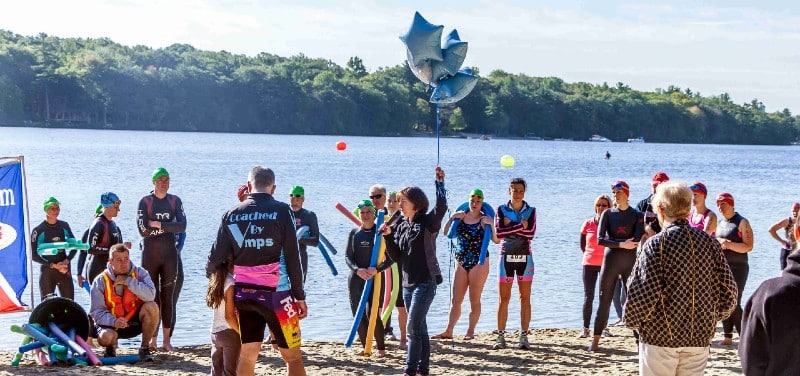
Douglas, Massachusetts, September 17, 2011 – TDD Triathlon, Douglas State Forest.

It had been nearly one year to the day since my friend, Jim Philipsek, had talked me into doing my first triathlon. Now, I found myself in the fourth one.

Two had been in Minnesota. My first triathlon had been in Buffalo and the second in Maple Grove. My third triathlon had been in Yankton, South Dakota.

In my experience, this triathlon was unique in that it was the first that doubled as a fundraiser. However, it turns out that this would be quite common – see Reason #2 of 15 Reasons for Those 50 and Older to Do Triathlons.

triathlon fundraiser
Logo for the TDD Triathlon held in rural Massachusetts. The race is held in memory of the Vescio triplets.

This race is one chapter in a 50-state journey—now told in full in Triathlon Adventures Across America .

Getting to the Massachusetts Triathlon

During this period, I was working half-time in Chicopee (Springfield), Massachusetts. This meant that Joy and I were living around one hour from Douglas State Forest. We made the short trip east from Chicopee on Friday afternoon for packet pickup and a pre-race training session on open water swimming.

Bright and early – well, it was not so bright when we started out – the next morning we made the same trip for the race.

TDD Triathlon

The TDD Triathlon, managed by FIRM (Fiske Independent Race Management), is a memorial for Tyrus, Dante, and Daniel Vescio. The triplet sons of local racers, Don and Elaine Vescio, died shortly after birth. This annual race serves as a fundraiser for the University of Massachusetts Memorial Newborn Intensive Care Unit (NICU) in Worcester, Massachusetts.
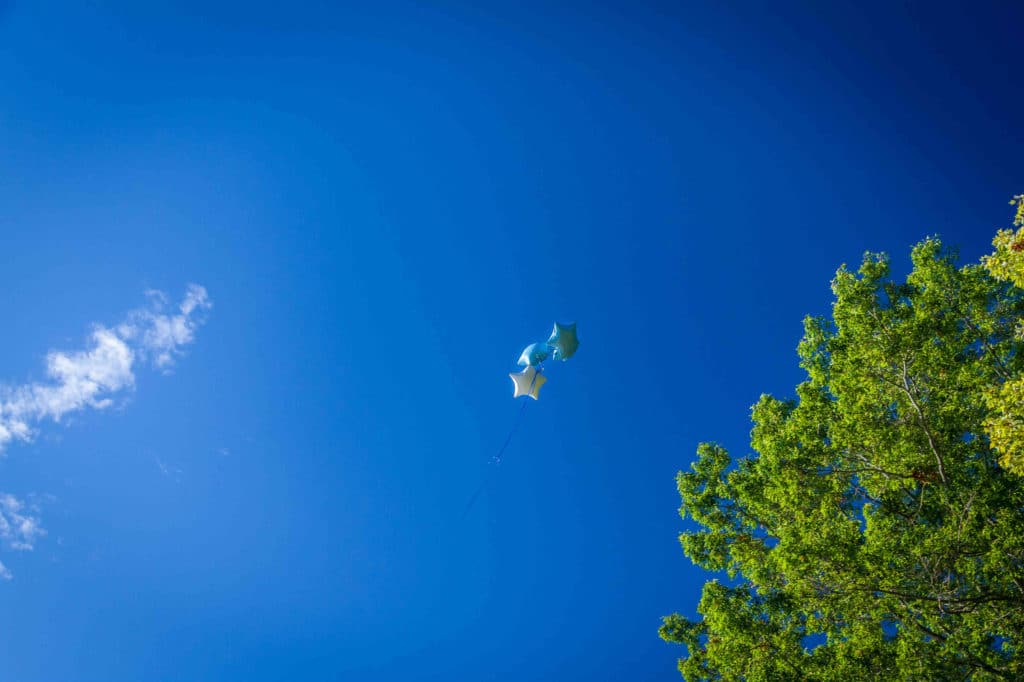
Memorial balloons at the Massachusetts triathlon
Balloons launched in honor of Tyrus, Dante, and Daniel Vescio rise above the trees in Douglas State Forest just before the swim start at the TDD Triathlon in Massachusetts.

Distances for the individual legs of this USAT-sanctioned sprint triathlon were:

  • Swim: 0.25 mile (400 m)
  • Bike: 11 mile (17.7 km)
  • Run: 3.2 mile (5.1 km)

The temperature on arriving at the race site was a brisk and sunny 42ºF. Even though the water was considerably warmer than the air temperature, I was grateful for the wetsuit I had recently purchased.


Swim

The triathlon began with a hail of cheers for the first swimmer, a man who towed a green and yellow rubber raft carrying his disabled son.  I remember later, in the final stretch of the rectangular swim course, passing the raft and thinking about the kindness of this man.


Bike

Since this was the last triathlon of the season, I used the hybrid bike that I kept at our house in Chicopee rather than ship my Trek SpeedConcept tri-bike for a single race. 

The hybrid bike I used was a three-year-old Giant Cypress DX, similar to the one used in my first triathlon. While it was comfortable and fit me very well, it is not a tri-bike and clearly not as fast as my Trek.

The bike course followed rolling roads within the State Forest and on public roads with a few hairpin turns to make sure we were paying attention.

While the bike leg took me longer than I had wished because of the bike used, I finished the bike portion with legs that were ‘ready to run’, unlike the experience of my first triathlon.


Run

I had learned earlier that one way to reduce the transition time is to take care of certain tasks while on the way out of the transition area.  One of these is putting on the race number belt.

This time, the fourth time I used this race number belt, one end of the belt came out of the loop of one of its clasps.   As a result, I could not secure the belt, a race requirement.   This also meant that I could not proceed out of the transition area.

So, before starting the run, I wasted time re-threading the belt through the clasp and securing it.  Since this experience, I have used a small safety pin to secure the belt to prevent it from coming loose.
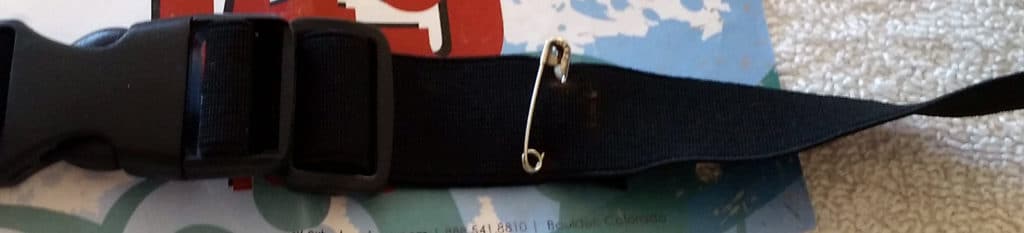
Race number belt with safety pin
Pinning the race number belt has prevented it from coming loose in future triathlons.

The ‘out-and-back’ run course took us on a combination of a dirt trail, complete with tree roots and rocks, and a road within the forest.


Another New Experience – Volunteering

What would a triathlon without volunteers be? Chaos. Impossible. A ‘free-for-all’. All of the above!

It was during this race that Joy decided she would become a triathlon volunteer. Well, it was actually more like they drafted her into being a triathlon volunteer because of a shortage of volunteers. 

Joy’s job? The very important role of directing runners to make an important right-angle turn a short distance from the finish line.

She did very well, taking charge and shouting out instructions. It was the perfect job for her, playing to her strengths.


Race Firsts

  • First triathlon that doubled as a fundraiser
  • Joy’s first experience as a race volunteer
  • First triathlon attended from our house in Chicopee, Massachusetts
  • First triathlon held in a state forest
Triathlon Adventures Across America book cover

What Could Your Journey Be?

“It made me think, ‘Wow, wouldn’t it be fun to try to do this too?’”

Explore the journey across all 50 states

Have You Done a Triathlon in Massachusetts?

Have you done a triathlon that doubles as a fundraiser? in Massachusetts?
Comments: We’d love to hear about your experience. Join the conversation below. All comments are reviewed before they appear.

Reply notifications: Click the bell icon above Post Comment to be notified when someone replies to your comment.

Follow the discussion: Click Subscribe above the comment box and enter your email address to receive notifications whenever a new comment is added—even if you don’t leave a comment. After subscribing, check your email and click Confirm to activate notifications.

Triathlon Across the USA: State #16 – Pennsylvania

Quakertown, Pennsylvania; June 2, 2013-Independence Triathlon, Lake Nockamixon State Park.

The summer of 2013 was the last one during which Joy and I would be living half time in Chicopee, Massachusetts. Anticipating this change, we competed in triathlons in the middle Atlantic states of New Jersey, Maryland, and Pennsylvania.

This race is one chapter in a 50-state journey—now told in full in Triathlon Adventures Across America .

Traveling to the Pennsylvania Triathlon

With the Maryland and Pennsylvania triathlons held on consecutive days, we turned a three-day weekend road trip into an adventure across southern Pennsylvania.

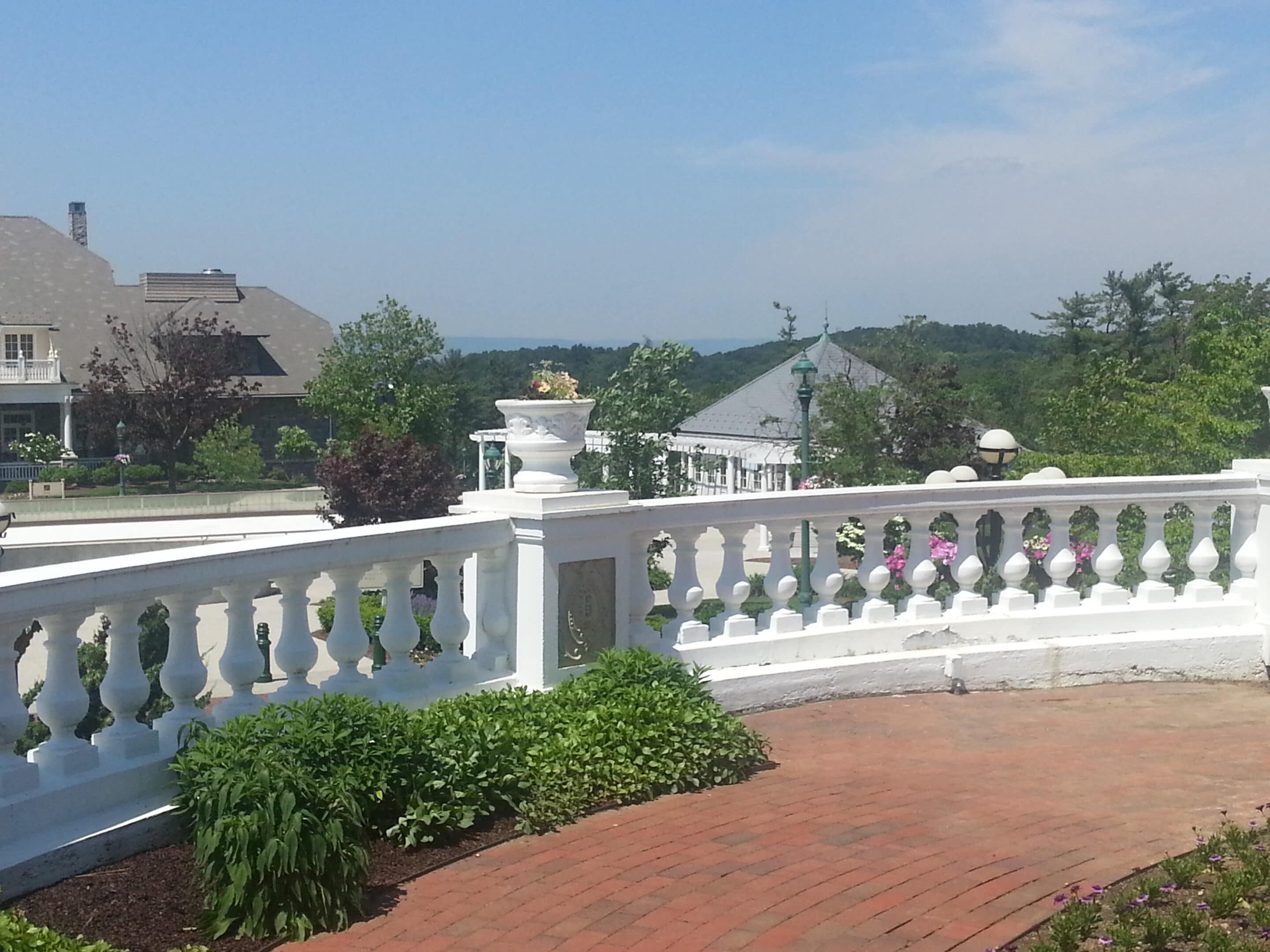
Getting to the Rocky Gap triathlon in northwestern Maryland took us through eastern and southern Pennsylvania, including the chocolate-themed town of Hershey.

Following the Pennsylvania triathlon in the southeastern part of the state, we traveled through the spectacular Pocono Mountains as we made our way north and east toward western New York and western Massachusetts.

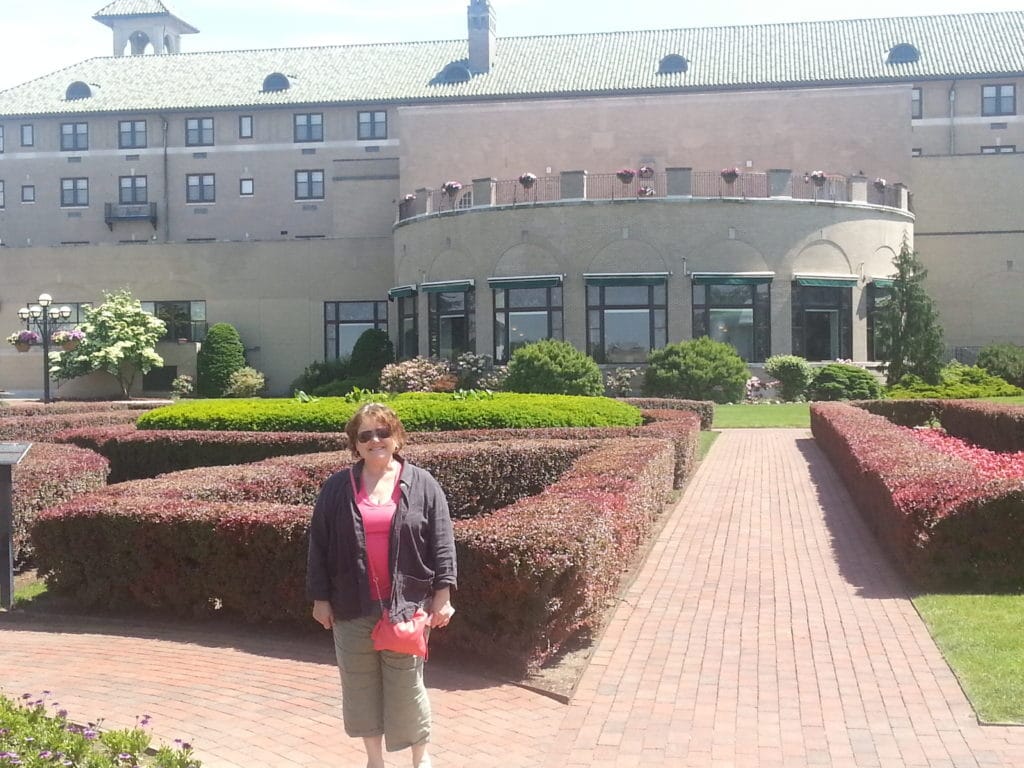
Hershey-Hotel
Joy in the courtyard behind the Hershey Hotel in Hershey, Pennsylvania.

Independence Triathlon

The Independence Triathlon, one race organized by Piranha Sports, was held at Lake Nockamixon State Park about 10 miles east of Quakertown, Pennsylvania. Quakertown is about 50 miles north of the heart of Philadelphia.

The race likely gets its name from the history of Quakertown. During the War for Independence, the Liberty Bell was hidden in Quakertown (at the time known as Richland Centre) en route to its permanent hiding place in Allentown, Pennsylvania.

Our travel to Lake Nockamixon from the hotel took us past Liberty Hall, the temporary hiding place of the bell, one of the main symbols of freedom.

Distances for the individual legs of this USAT-sanctioned sprint triathlon were:

  • Swim: 0.25 mile (400 m)
  • Bike: 10 mile (16 km)
  • Run: 2 mile (3.2 km)

Swim

The open water swim began with each of four waves – groups of triathletes within a certain age group and gender (e.g. females age 40 and over) – in the water.

In-water starts, an alternative to shore starts, are often used when the entrance to the water includes large or sharp rocks or abrupt drop-offs that are likely to cause difficulty for a group of triathletes to enter the water at more or less the same time.

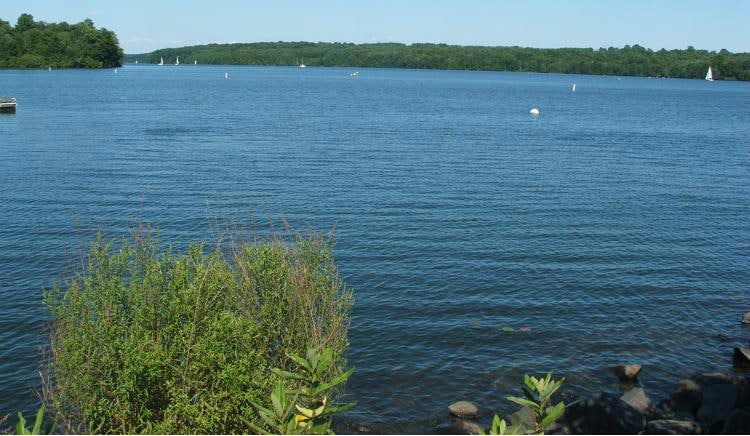
Lake-Nockamixon-beach
Lake Nockamixon. An in-water swim start was used because of the many large rocks lining the beach.

The transition area was located in a grassy area up hill from the lake. At the exit of the swim, we found that race organizers had placed non-slip, rubber mats in the water to protect our feet from the rocks. The mats continued up the grassy hill to help us avoid slipping while running up the hill.

Bike

The bike route took us out of the park onto a state highway for about 3 miles (5 km) to the first of two U-turns. Along the way, we enjoyed a flat course with a few gradual hills.

The course returned on the opposite side of the highway, up and down the same small hills. Instead of turning into the park, we passed the entrance continuing about one mile to a second U-turn. From here, we returned to the park entrance and back to the transition area.

Run

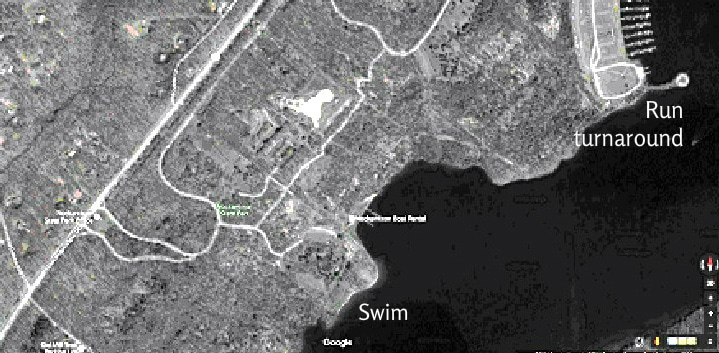
The ‘out and back’ run course followed an asphalt trail from the transition area. We turned around at a flagpole on the peninsula next to the lake’s marina. The aerial picture below shows the run turnaround in the upper right corner.

Independence triathlon run course for the Pennsylvania triathlon
Location of the swim and run courses for the Independence Triathlon.

Results

This was the first triathlon in which I placed second in my age group. Previous best age group finishes were third place. Needless to say, I was pleased with the result.

The relatively short race and sprint-only event allowed us to complete the race, take part in the awards ceremony, and get back to the hotel for a quick breakfast and shower before hitting the road for the drive back to Chicopee, Massachusetts.

Race Firsts

  • First sprint triathlon with a run of 2 miles. Sprint distance triathlons typically involve a run distance of 3 to 3.5 miles.
  • First sprint triathlon completed in less than one hour (59 minutes, 59 seconds)
Independence triathlon logo for the pennsylvania triathlon
Independence Triathlon logo shown on the race t-shirt and finisher medal.

Not a First

This was actually the second time that I competed in triathlons in adjacent states on consecutive days. The first time was in 2012 when I did triathlons in Newport, Rhode Island and Rye, New Hampshire on September 22nd and 23rd, respectively.

This would not be the last time for races on consecutive days. Balancing work, family, and other commitments, and triathlon schedules sometimes required this.

Triathlon Adventures Across America book cover

A Journey Beyond This Race

“Uplifting, real, and full of heart—I couldn’t put it down.”

Read the full journey in Triathlon Adventures Across America

Do You Have a Favorite Pennsylvania Triathlon?

Tell us a bit about your favorite Pennsylvania triathlon in the Comments below.

Comments: We’d love to hear about your experience. Join the conversation below. All comments are reviewed before they appear.

Reply notifications: Click the bell icon above Post Comment to be notified when someone replies to your comment.

Follow the discussion: Click Subscribe above the comment box and enter your email address to receive notifications whenever a new comment is added—even if you don’t leave a comment. After subscribing, check your email and click Confirm to activate notifications.

Triathlon Across the USA: State #12–Arizona

Mesa, Arizona; February 9, 2013–2nd Annual Tri Catching Cupid Reverse Sprint Triathlon, Skyline High School.

There is no shortage of reasons to do a triathlon. Among them are ones in “15 Reasons for Those 50 and Older to Do Triathlons“. In some cases, the race is secondary to other, more important goals. While being a fun race, the Arizona triathlon fit the latter.

This race is one chapter in a 50-state journey—now told in full in Triathlon Adventures Across America .

Why This Arizona Triathlon?

In the case of the Arizona triathlon, escaping the cold and ice of Minnesota during February could have been enough incentive for this race. However, there were other benefits to this triathlon.

Arizona has been home to many family members. In 2013, these included Joy’s aunt Evelyn who lived in Mesa and attended the triathlon with us. We also visited Joy’s aunt Delores and uncle Bob in Vail, Arizona, south of Tucson.

The trip also provided an opportunity to get in some outdoor activity in February not involving snow or ice.

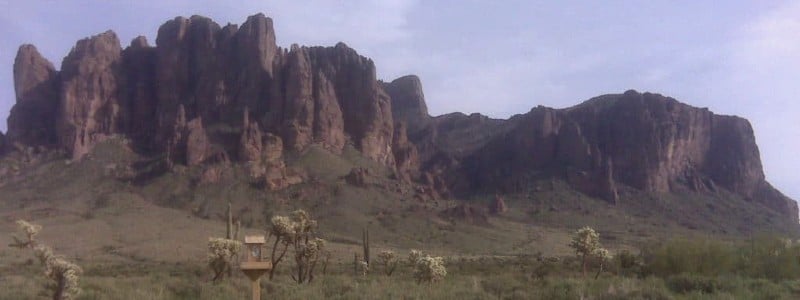
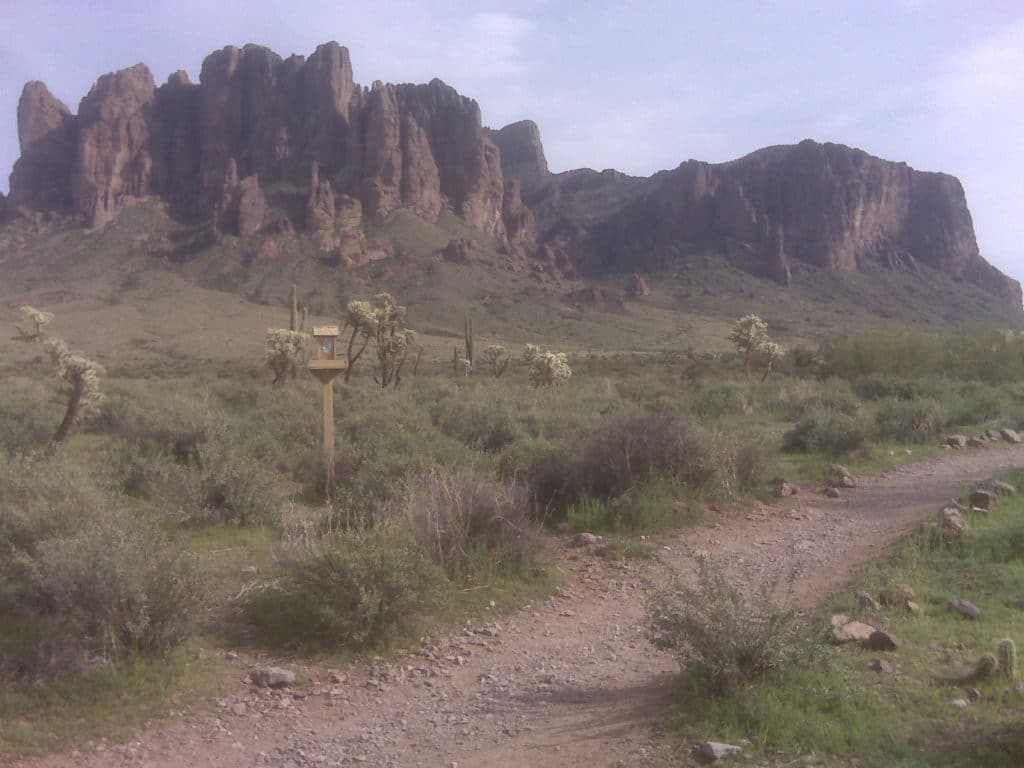
Flatiron Mountain from the Lost Dutchmen State Park outside Phoeniz, Arizona
One can reach the top of Flatiron (upper right side of the picture) after a 3-mile hike. This walk in Lost Dutchmen State Park provides good aerobic training. At the top is an outstanding view of the desert and downtown Phoenix.

Getting to the Arizona Triathlon

With plans to meet family members, enjoy the warmer outdoors, and compete in the triathlon, we left Minneapolis on Thursday evening with my triathlon bike as part of our luggage. The partially disassembled bike was securely packed in the Thule bike case and checked as luggage on Delta flight 999.

Upon arriving in Phoenix and picking up our luggage (including the oversized black bike case – traveling with a bike is another story for a later time), we drove to Aunt Evelyn’s house in Mesa and proceeded directly to bed.

After breakfast the next morning, Aunt Evelyn and Joy got in a few hands of the card game, Golf. Meanwhile, I reassembled and test rode my bike. I was now ready for the triathlon.

2nd Annual Tri Catching Cupid Reverse Sprint Triathlon

What is a reverse triathlon? As the name implies, it is a triathlon in which the order of the events is reversed. Instead of the swim-bike-run order of a traditional triathlon, the order of events in a reverse triathlon is run-bike-swim.

logo from the t-shirt of the 2013 Tri Catching Cupid Reverse Sprint and Youth Triathlon
Logo for the Tri Catching Cupid Reverse Triathlon from the race T-shirt.

The triathlon was held on and around Skyline High School, making use of the school’s track and aquatic facility.

Distances for the individual legs of the Tri Catching Cupid reverse sprint triathlon were:

  • Run: 3 mile (4.8 km)
  • Bike: 12 mile (19.3 km)
  • Swim: 400 yards (366 m)

Run

This was the first race of the season and a test of the training that I followed since the last race in Clearwater, Florida the previous November. Since that race, the run training plan I followed involved three runs per week:

  1. A ‘long, slow’ run of 6 miles during which the goal was to keep my heart rate within the aerobic zone,
  2. One session of interval training involving 5-7 repeats of short (0.25 to 1 mile) bursts of high intensity followed by a recovery period aimed at reducing my heart rate to within the aerobic zone, and
  3. A ‘brick’ (bike followed by run) session involving a 3 mile run after a cycling class.

For the Arizona triathlon, the run course started on a quarter mile track inside an outdoor track and field center. True to the name of the event, a young man dressed in a Cupid costume led the runners on the run course.

After one lap of the track, the course continued outside the facility on sidewalks and running paths north of the transition area. The loop eventually led back to the transition area next to the pool and track.

The good news was that I met the time goal I had set at the beginning of the previous three months’ training.

Bike

The 12-mile bike leg consisted of three loops of a one mile square section (four miles per loop) of public road. This leg was uneventful, except for the time I ran off the road and through tall grass that lined the road.

Let me explain. Since the course was relatively flat and boring, I started fidgeting with the cover on the water bottle clamped between the aerobars. Apparently, I was paying too close attention to the water bottle and rode off the side of the course into knee-high tall grass.

During the few seconds of riding in the tall grass, I fully expected to ride into a large rock and fall, or worse yet, damage my wheel.

None of these doomsday scenarios played out, however. I edged the bike back onto the road. The only evidence of this near-disaster was a few pieces of long grass caught in crevices of my bike frame. Eventually, even these was fell out. No one would know of my irresponsible, distracted riding.

When I look back on all these worries, I remember the story of the old man who said on his deathbed that he had had a lot of trouble in his life, most of which had never happened.

Winston Churchill

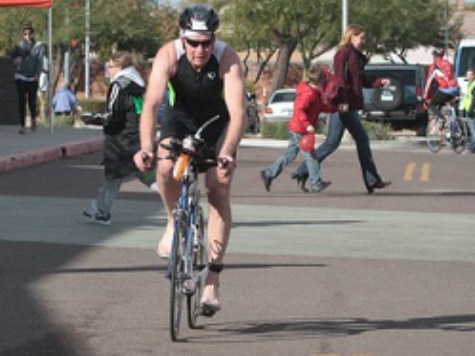
At the end of the third lap, I entered the parking lot a short distance from the transition area. While coasting toward the transition, I slipped my feet out of the bike shoes, leaving the shoes clipped to the pedals.

bike-swim-transition
Arriving into the transition area following the bike leg of the triathlon. Note that my feet are out of the shoes that remain clipped into the bike pedals.

Swim

A quick transition from the bike to swim helped me pass one guy in my age group. While he had finished the bike leg ahead of me, I beat him into the pool.

However, the glory was short lived. During the first of the 16 lengths of the 25 yard pool, he passed me. At the end of each of the lanes, we ducked under the rope to swim to the opposite end of the pool in the next lane.

I finished the swim and exited the pool to cross the finish line, clean and refreshed from the run and bike legs.

Lessons from the Arizona Triathlon

The triathlon results were also, in some ways, reversed.

With less than 100 participants, this race was small relative to most triathlons. Within my age group – males 60 years and older – there were four participants.

Ironically, the oldest competitor in our age group, a man of over 70 years, took first place within our age group. On the other hand, the youngest competitor, me, placed fourth.

A bright spot is that all of us finished well within the top half of all participants.

Once again, I learned humility and respect for the mental and physical ability of our community of Senior Triathletes.

Race Firsts

  • First reverse triathlon.
  • The Arizona triathlon was the first with part of the run course on a track.
  • This was my first triathlon with the swim in an outdoor pool.
  • First race that served as a fundraiser for a Synchronized Swim Team.

Arizona Triathlon as a Fundraiser

Tri Catching Cupid doubled as a fundraiser for the Arizona Desert Dolphins Synchronized Swim Team (Reason #2 of ‘15 Reasons for Those 50 and Older to Do Triathlons‘).

Following the race, all participants and spectators were treated – and it truly was a treat – to a demonstration by the Arizona Desert Dolphins Synchronized Swim Team. The athletes made synchronized swimming look easy even though it is far from easy. Synchronized swimming demands advanced water skills, significant strength, endurance, and flexibility. It also requires exceptional grace and precision timing.

Triathlon as a Family Reunion

Joy and I have been rewarded by prioritizing triathlons based on the location of family and friends. While we did eventually see these aunts and uncle again, this long weekend was among the last times we were with them before they passed away. We now look back with fondness at the time we had with them around this triathlon.

Joy and Terry with Aunt Evelyn at the Tri Catching Cupid Reverse Triathlon
A highlight of the Arizona Triathlon was being with Aunt Evelyn Schock during her last winter in Arizona.
Triathlon Adventures Across America book cover

What Could Your Journey Be?

“It made me think, ‘Wow, wouldn’t it be fun to try to do this too?’”

Explore the journey across all 50 states

Leave Your Questions and Comments Below

What are your thoughts about reverse triathlon? Do you like them or not? Why? Tell us in the Comments below.

Comments: We’d love to hear about your experience. Join the conversation below. All comments are reviewed before they appear.

Reply notifications: Click the bell icon above Post Comment to be notified when someone replies to your comment.

Follow the discussion: Click Subscribe above the comment box and enter your email address to receive notifications whenever a new comment is added—even if you don’t leave a comment. After subscribing, check your email and click Confirm to activate notifications.

This post was first published on January 1, 2017. At the latest update on May 11, 2020, it appears that this triathlon was last competed in February 2016.

Triathlon Across the USA: State #31–Indiana

North Liberty, Indiana; September 17, 2016 – Tri The Creek Triathlon, Potato Creek State Park

I knew this day would be interesting as soon as I stepped outside the Holiday Inn Express in Plymouth, Indiana. In a few hours, I would begin the Tri The Creek Triathlon, the Indiana race in my Triathlon Across the USA adventure.

While it wasn’t exactly a downpour, the rain was coming down hard enough that I felt compelled to run across the parking lot to our van with my suitcase in hand.

This would not be the first time I had completed a triathlon in the rain. However, the rain this morning was the hardest I had ever seen before the start of a race.

This race is one chapter in a 50-state journey—now told in full in Triathlon Adventures Across America .

Planning the Indiana Triathlon

I registered for the 7th annual Tri The Creek Triathlon on February 19, 2016. This was the same day I registered for the Illinois triathlon.

I chose the Tri The Creek triathlon put on by 3Disciplines for its proximity to Chicago where I planned to be during the days before the event. The race venue was an easy 2-1/2 hour drive south and east of Chicago. It turned out that the venue was an unexpected and pleasant bonus.

Venue for the Indiana Triathlon

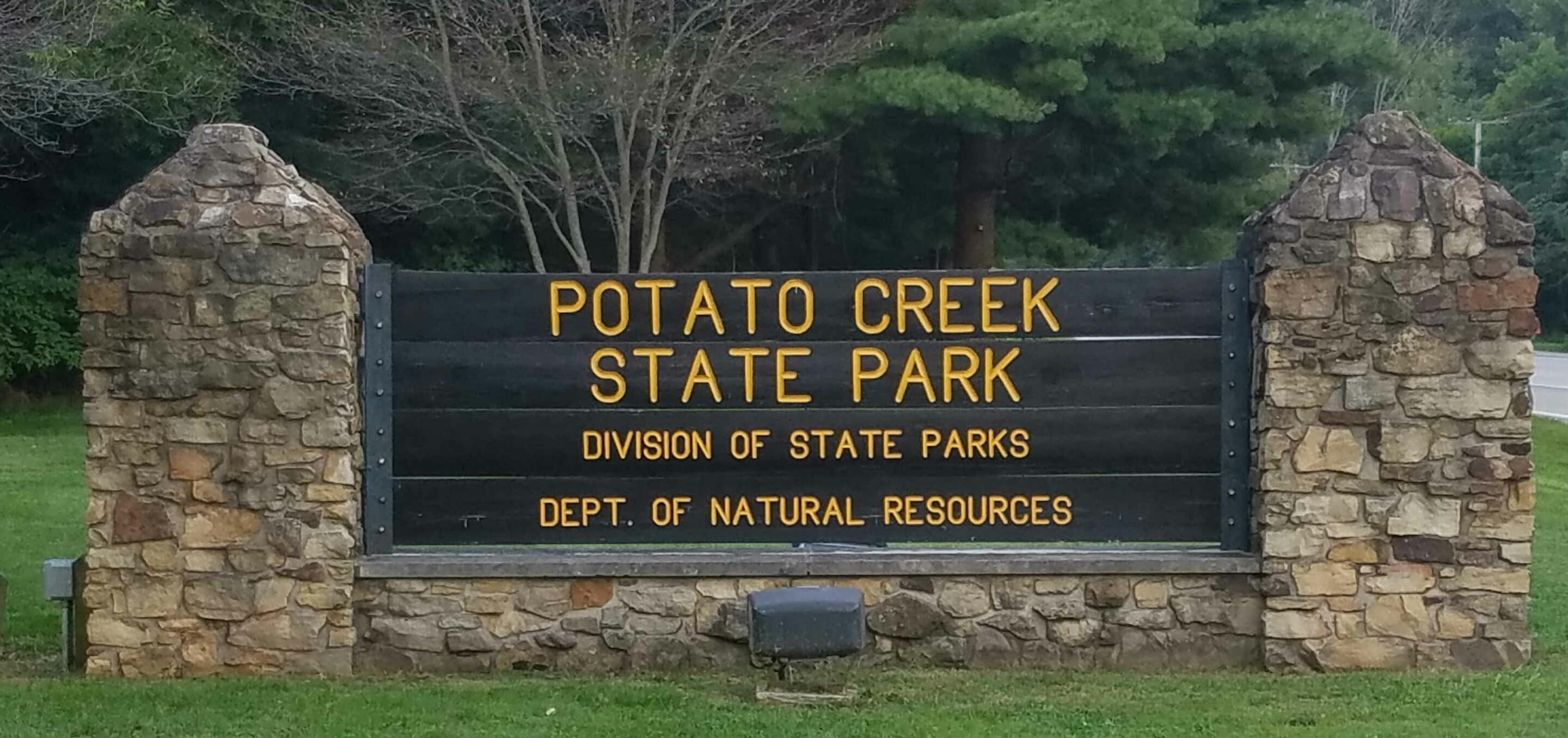
Tri The Creek Triathlon’s name comes from its venue, Potato Creek State Park. The entire race occurred within the boundaries of this 3,840-acre park three miles east of North Liberty, Indiana.

According to the Indiana Department of Natural Resources, the park’s name, Potato Creek, came from the “potato-like roots on this area’s creek bank”. Native Americans, who inhabited the area along with early European settlers, harvested these roots. The mix of wooded areas, prairie, and wetlands make this park an inviting habitat for birds and other wildlife.

The eastern edge of the park includes the ‘Horsemen’s Campground’. Here there are plenty of trails for horses and their riders to enjoy the diverse nature of the park. A more traditional campground is located at the other end of the park, near Worster Lake, where the swim leg of the triathlon took place.

While Joy and I were exploring the park and driving the bike course on the Friday evening before the triathlon, we counted dozens of families arriving with their campers and trailers for a late season weekend of camping.

Setting Up the Transition Area in the Rain

For this triathlon, packet pickup took place only on the morning of the race. While it was not my goal to do so, I was the first person to pickup their packet.

Besides making Joy get up much earlier than normal, this also meant more time for things in the transition area to become wet from the rain.

I racked my bike with plastic bags over my shoes, which were clipped into the bike pedals. The rest of the gear–bike helmet, biking glasses, and running shoes–remained with me in the van. Here, Joy and I waited until near the beginning of the race.

waiting in the rain for the start of the Indiana triathlon
After racking my bike, Joy and I sat in the car watching the rain and talking about what this could mean for the triathlon.

Putting the Finishing Touches on My Transition Area

As the time for closing of the transition approached, I delivered my bike helmet, glasses, and running shoes to the transition area.

While the rain had let up, it was still coming down at a rate guaranteed to soak the gear in the transition area. To minimize the effect, I set my bike helmet top down on the aero bars. I stuffed my clear safety glasses inside the helmet.

However, because of the rain, I covered the helmet and glasses with a plastic bag. I pushed the bag into the helmet, which kept it from being blown away by a small gust of wind.

As is typically the case, I had laid a towel on the ground next to my bike with my running shoes on top of the towel. I use the towel for wiping sand and small rocks from my feet before hopping on the bike and before putting on my running shoes.

This time, because of the rain, I put a second towel, folded to be as thick as possible, on top of my running shoes, hoping to keep them dry for the run.

7th Annual Tri The Creek Triathlon Managed by 3Disciplines

By race time, the rain had let up a little and the temperature, at least for doing a triathlon, was a comfortable 67°F. It also helped that there was essentially no wind.

Distances for the individual legs of the USAT-sanctioned sprint triathlon in which I competed were:

  • Swim: 500 m (0.31 mile)
  • Bike: 18 km (11 mile)
  • Run: 5 km (3.1 mile)

For this event, the sprint distance was one of four distances. The three other were:

  • Olympic – 1000 m swim, 22 mile bike, 10 km trail run
  • Super Sprint – 200 m swim, 6 mile bike, 1 mile trail run
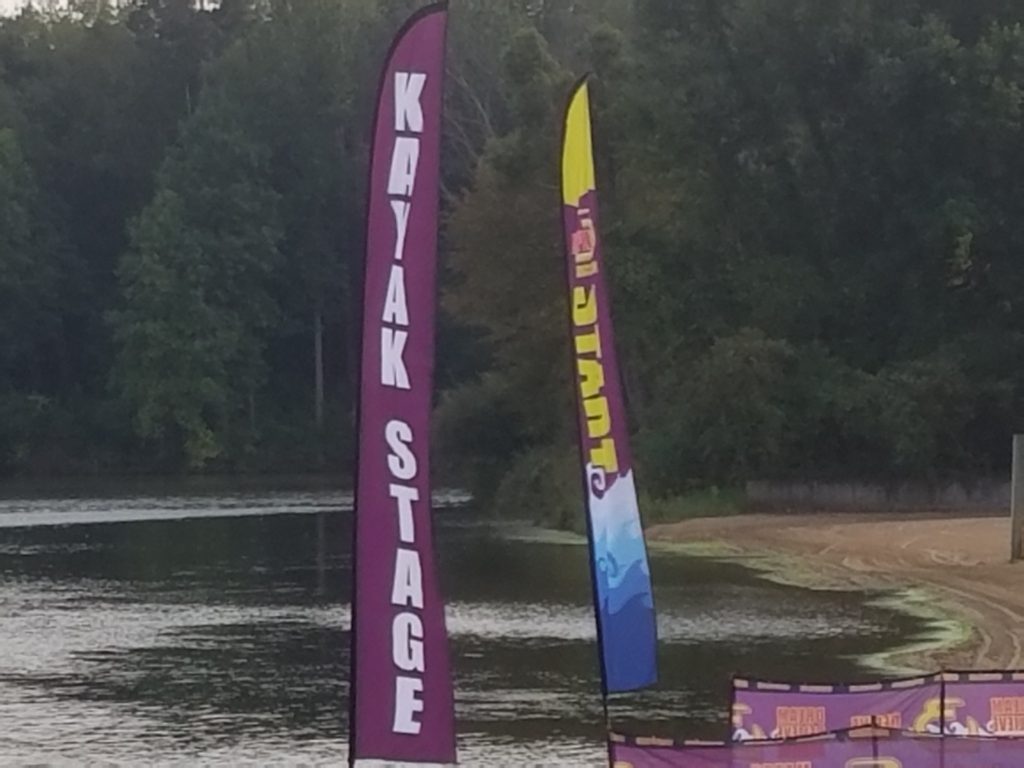
  • Sprint KayaTri – 2 mile kayak, 11 mile bike, 5 km trail run
The Indiana triathlon included an option for kayaking instead of swimming.
The Sprint KayaTri was one of the triathlon events in the Tri The Creek Triathlon. The starting location for the kayakers was next to that for the swimmers.

Swim

With the water temperature at 72°F, the race was considered ‘wetsuit legal’. This meant that, according to USA Triathlon rules, swimmers were allowed to wear a wetsuit during the swim. However, given the relatively short swim, I chose to swim without the wetsuit.

Like many of the Minnesota lakes in which I swim, Worster Lake had a considerable amount of algae, to which I am allergic. Sure enough, my nose ran the rest of the day.

By evening, my nose was fully plugged. It gradually opened throughout the next day. The same as every other lake swim.

Bike

The race course took us from Worster Lake to the Horsemen’s Campground and back.

Joy and I had driven the bike course the day before, so I knew what to expect. The course was on relatively flat roads in good condition (few holes or significant cracks). 

By now, the rain had become a mist. Roads were only slightly damp. Even so, riders were more cautious than normal. They apparently remembered the repeated warnings of the race organizers to ‘slow down on corners’.

Run

Upon reaching the transition area, I learned that putting the folded towel over my running shoes had been good.  While the towel was dripping wet, saturated from the rain, my running shoes were perfectly dry.

By the beginning of the run, the rain had nearly passed, though the sky was overcast. The cloud cover, along with the cool temperature, made for a comfortable finish.

Race organizers had described this leg as a trail run. So, while walking through the park the day before, I was sure they meant a paved trail, one used by walkers and runners.

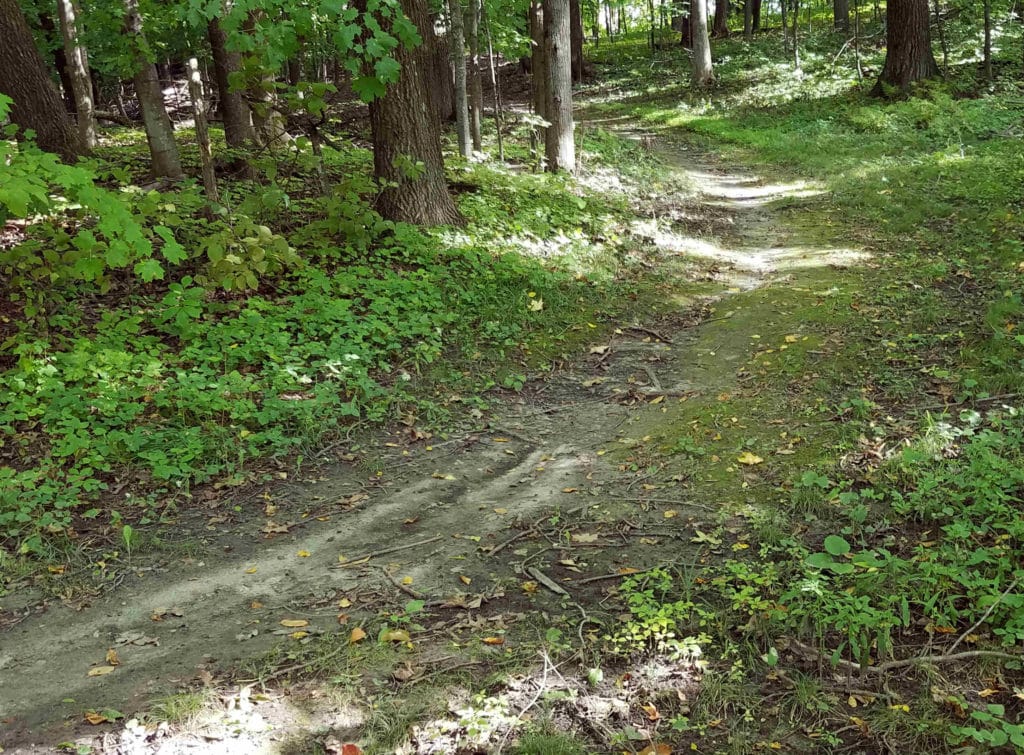
Not so. When they wrote trail run, they really meant running on a primitive trail. And this trail came complete with tree roots, boulders, loose rock, mud puddles, holes, occasional sections of grass, and lots of hills.

The run was considerably more rustic than I am accustomed. The good news was that with the trail constantly changing, I had little opportunity to think about being tired.

In fact, with about a hundred yards to go to the finish line, I had more than enough energy to respond to Joy’s “encouragement”. Her exact words were “Push it! Finish strong!” in the voice of my high school basketball coach.

The run course for the Indiana triathlon was on a dirt trail.
The run course for the Indiana triathlon was on a rustic trail complete with tree roots, rocks, and puddles.

After Completing the Indiana Triathlon

The weather continued to clear throughout the race. By the time of the awards ceremony, the sun was shining.

Nevertheless, I was glad my bike and run gear remained dry, or as dry as possible. This reduced the effects of the heavy rain before and during the race.

Thoughts of Another Senior Triathlete

Before the start of the race and afterwards, Joy and I had met Jim and Deb Panozzo from Michigan. Joy and Deb got to know each other while Jim, another senior triathlete, and I completed the triathlon.

For Jim, who celebrated his 63rd birthday the next week, Tri The Creek was his second sprint triathlon. I love his description of the run – “a cross-country course in the mud that took me back to my high school days”.

As we continued to talk, he shared his feelings about this race and the sport.

“It was a lot of fun, but very humbling. It showed my weaknesses and the things I need to work on as I approach my 63rd birthday. But, I am so grateful to God to be able to participate and finish a triathlon.”

Race Firsts

  • First triathlon in which I was the first to pickup their packet.
  • Kayaking as an alternative to swimming, another first.
  • The Indiana triathlon was my first with the run leg entirely on an unpaved trail.
Triathlon Adventures Across America book cover

A Journey Beyond This Race

“Uplifting, real, and full of heart—I couldn’t put it down.”

Read the full journey in Triathlon Adventures Across America

What Has Been Your Experience Racing in the Rain?

What has been your experience doing a triathlon in the rain or other inclement weather? How did it change your approach? What did you learn through it?

Comments: We’d love to hear about your experience. Join the conversation below. All comments are reviewed before they appear.

Reply notifications: Click the bell icon above Post Comment to be notified when someone replies to your comment.

Follow the discussion: Click Subscribe above the comment box and enter your email address to receive notifications whenever a new comment is added—even if you don’t leave a comment. After subscribing, check your email and click Confirm to activate notifications.