
Ask Our Coaches: Triathlon Training With Health Conditions After 50
Reader Request
We received the following request for guidance for triathlon training from Shelley, one of our readers.
“How to develop a training base that can accommodate increasing training times and distances to accommodate health conditions. How to make adjustments.”
Many athletes over 50 start training without a clear picture of how their health conditions will affect progress. The goal is not perfection—it’s building safely, consistently, and with flexibility.
If you’re new to triathlon after 50, this guide on how to start triathlon after 50 will help you take the first step.
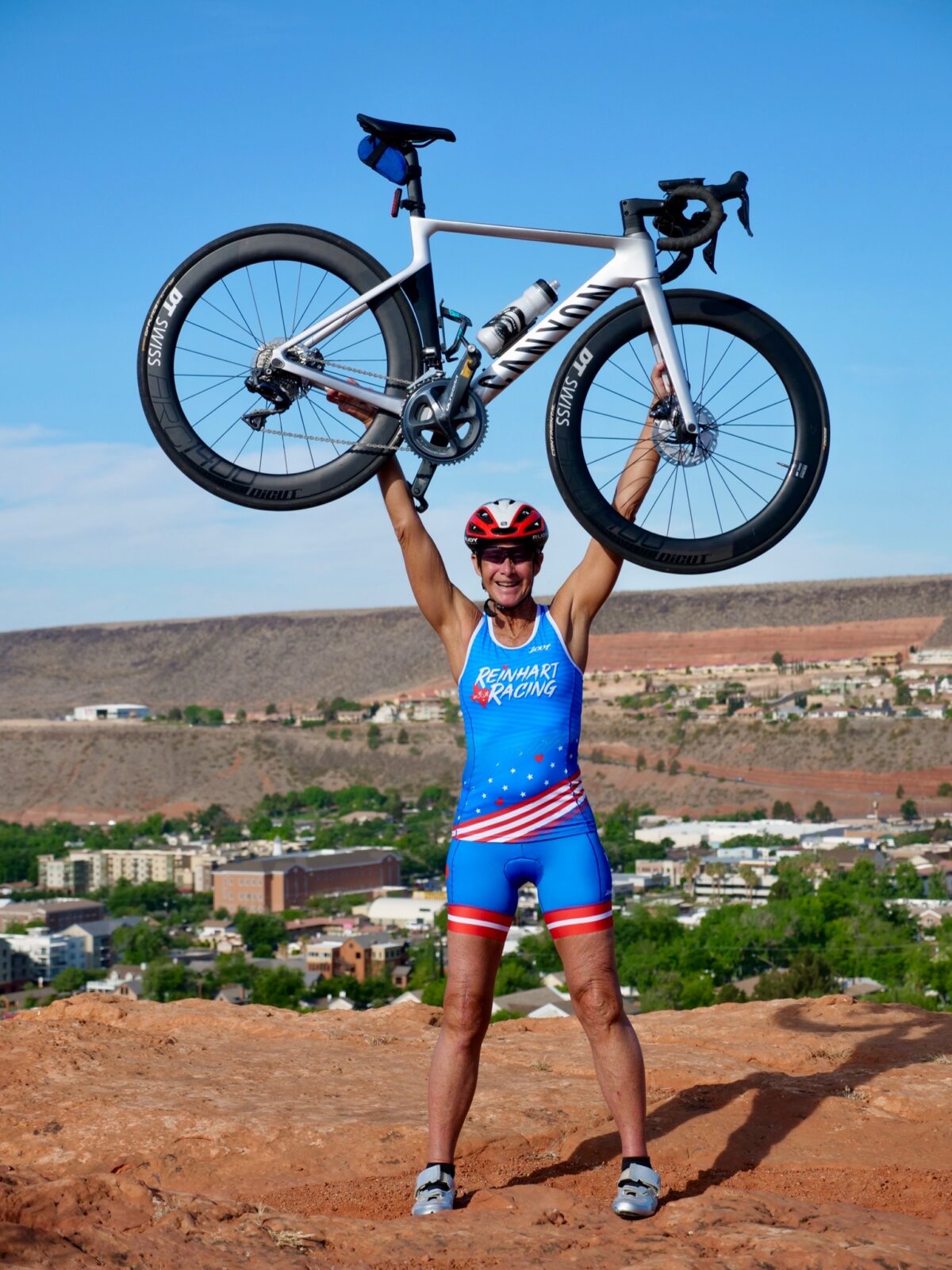
Coach Jenn Reinhart’s Advice on Triathlon Training With Health Conditions
Hi! Shelley,
Terry forwarded your question about training for a Triathlon.
It would be good to know what type of health conditions you are specifically referring to prior to answering your question. Without that knowledge, I will provide you with my answer toward maintaining good health especially as we age.
For a sprint triathlon (typically 750 m swim, 20 km bike, 5 km run)—especially with health considerations—the key is to build a base that increases total training load without triggering setbacks. You’re managing three disciplines plus cumulative fatigue, so structure and restraint matter more than ambition.
1. Establish a triathlon-specific baseline
Instead of thinking per workout, think weekly structure across all three sports.
A sustainable starting point might look like:
- Swim: 1–2×/week (10–20 min continuous or intervals)
- Bike: 2×/week (15–30 min)
- Run: 2×/week (10–20 min, or run/walk)
- Total weekly time: ~90–150 minutes
This is your global load baseline—more important than any single session.
2. Progress total load, not just individual workouts
Triathlon adds a hidden stressor: stacking disciplines.
Instead of aggressively increasing each sport:
- Increase total weekly time by ~5–10%
- Rotate which discipline gets slightly longer each week
Example progression:
- Week 1: baseline
- Week 2: +10 min bike
- Week 3: +5 min run
- Week 4: deload (reduce all by ~20%)
This avoids overload from simultaneous increases.
Helpful next step: Since sleep strongly affects recovery and training consistency, you may also find this article on sleep for recovery and performance after 50 useful.
3. Use “discipline prioritization” blocks
You don’t need to improve everything at once.
Rotate focus every 2–4 weeks:
- Block 1: emphasize bike (longer rides)
- Block 2: emphasize run (slightly longer runs)
- Block 3: emphasize swim technique/endurance
The other two disciplines stay maintenance-level.
4. Manage intensity tightly
For base development (especially with health conditions):
- ~80–90% of training = easy aerobic effort
- Avoid frequent high-intensity sessions early
A simple rule:
Coach’s Rule: You should finish most sessions feeling undertrained, not exhausted.
5. Introduce “brick” sessions gradually
Bricks = bike → run back-to-back (critical for triathlon)
Start very small:
- 20 min bike + 5 min easy run
Progress slowly:
- Add 2–5 minutes to the run portion over weeks
Adjustment rule: If bricks cause excessive fatigue, scale back immediately—they’re deceptively taxing.
6. Use flexible session scaling
Instead of rigid workouts, define ranges:
- Swim: 15–25 min
- Bike: 20–40 min
- Run: 10–25 min
Then adjust daily based on how you feel:
- Good day → upper range
- Off day → lower range
- Bad day → rest or very light
This is critical for managing unpredictable symptoms.
7. Split sessions when needed
If fatigue is a limiter:
- Bike 30 min → split into 2 × 15 min
- Run 20 min → run/walk intervals
You still build capacity without overwhelming your system.
Build discipline-specific durability
Each sport stresses the body differently:
Swim
- Low impact → safest to increase frequency
- Focus on technique first (efficiency reduces fatigue)
Bike
- Best for building aerobic volume with lower injury risk
- Can build longer durations earlier than running
Run
- Highest injury/fatigue cost
- Progress slowest (often the limiter)
9. Clear adjustment framework
Use this weekly decision model:
Progress if:
- No symptom flare
- Recovery within 24 hours
- Stable energy
Hold if:
- Lingering fatigue
- Mild symptom increase
Reduce if:
- Sleep disruption
- Elevated resting fatigue
- Pain or flare-ups
Reset if:
- Significant crash → return to last stable week
Helpful next step: For a broader look at how older athletes manage fatigue, soreness, and training load, see Recovery After 50: What Every Triathlete Must Know.
10. Example beginner week (adaptive)
- Monday: Rest or light swim (15 min)
- Tuesday: Bike (25 min easy)
- Wednesday: Run (15 min easy or run/walk)
- Thursday: Swim – focus on short intervals
- Friday: Rest or swim (technique)
- Saturday: Bike (30 min) + short run (5 min brick)
- Sunday: Easy run or bike (optional 15–20 min)
Adjust volume within ranges based on how you feel.
Progression target (over time)
You’re aiming to gradually tolerate:
- Swim: 750–1000 m continuous
- Bike: 45–60 min comfortable
- Run: 30 min continuous (or run/walk equivalent)
No rush—timeline depends on your condition, not the race calendar.
Key mindset shift
You’re not just training for a race—you’re building a resilient system.
Progress = consistency without setbacks.
The help of a coach would go a long way to help ensure that you create a safe training plan. With the TriDot Training platform, an athlete can have the AI build a custom plan to the individual athlete.
Age, sex, years of experience are all factored into the plan. The number of workouts in each discipline can be selected, days of the week, intensity, and key metrics of heart rate, pace and power.
I would be happy to answer any questions you have.
Jenn Reinhart
512-762-7759
TriDot Master Certified Coach
USAT Level II Certified Coach
IROMAN U Certified Coach
Happiness is Moving Forward!
Sign for Coaching thru TriDot or RunDot
https://app.tridot.com/onboard/sign-up/jenniferreinhart
https://app.rundot.com/onboard/sign-up/jenniferreinhart
Want to take the next step? Choose your path below.
Whether you’re just getting started or looking to improve, here are your next steps:
New to Triathlon?
Start with a step-by-step guide to triathlon after 50 designed specifically for older athletes.
Already Training?
Learn how to train smarter, recover better, and improve performance after 50.
Join the Conversation
Share your comments, questions, and experience below. You may also submit your question(s) through the website here.
Medical Disclaimer
The content on SeniorTriathletes.com is for informational and educational purposes only and is not intended as medical advice, diagnosis, or treatment. Always consult with your physician or a qualified healthcare provider before beginning or modifying any exercise, training, nutrition, or recovery program—especially if you have existing health conditions or concerns.
Participation in triathlon training and related activities involves inherent risks. By using this information, you acknowledge and accept full responsibility for your health and well-being. The author and contributors are not liable for any injuries or health issues that may result from the use of this content.





Comments: We’d love to hear about your experience. Join the conversation below. All comments are reviewed before they appear.
Reply notifications: Click the bell icon above Post Comment to be notified when someone replies to your comment.
Follow the discussion: Click Subscribe above the comment box and enter your email address to receive notifications whenever a new comment is added—even if you don’t leave a comment. After subscribing, check your email and click Confirm to activate notifications.