Triathlon Across the USA: State #26 – Washington

Bremerton, Washington, September 13, 2015 – Tri Turtle Tri, Wildcat Lake County Park

With yesterday’s race in Oregon, I had completed triathlons in half of the states of the USA.  Today, I would start the second half with the triathlon in the state of Washington.

This race is one chapter in a 50-state journey—now told in full in Triathlon Adventures Across America .

A Short Trip to the Washington Triathlon

After the awards ceremony for the Best in the West Triathlon, Joy and I pointed our van to Wildcat Lake Park, a county park outside Bremerton, Washington.  Our goal was to reach the park in time for packet pickup for the next day’s race.

We reached the park, which is located within 10 miles of the eastern edge of the Olympic National Park, with time to spare and collected the race packet. 

Meet the Race Director

There is no doubt in my mind that Lisa Ballou is the reason for the longevity of Tri Turtle Tri.  She is organized and among the most enthusiastic of race directors I have met.  Lisa’s email signature – ‘Lisa B, your Tri Turtle’ – gives you a sense of her fun-loving personality. 

Her frequent communications before and after the race encouraged both experienced and first-time triathletes.  For example, take a look at her description of the swim course from an email sent a few days before the event: 

“The ½ mile SWIM will travel in a clockwise triangle. Volunteers will be positioned on surfboards about every 100 yards along the course. Swimmers can stop and rest at these markers, if necessary. In addition, there will be swim volunteers in the water with flotation noodles to aid swimmers needing personal assistance.”

After a single sentence description of the race course, Lisa dedicated the remaining space to encouraging those less-than-confident swimmers. I know that if I were concerned about the swim, I would feel a whole lot more comfortable knowing that the water was filled with people ready, willing, and able to help me complete this first leg of the triathlon.

Another Triathlon Doubling as a Fundraiser

2015 was also the 10th year that Tri Turtle Tri donated part of its proceeds to local fitness and wellness programs, which included a free community wide “Family Fun Run” to encourage families to greater fitness.

This was the also the third year that Tri Turtle Tri, through Tri Turtle Wellness, had awarded a college scholarship to a Klahowya secondary school graduate.  The scholarship was based on the student’s essay describing how the Kitsap Tri Babe motto, “The miracle is not that I finished, the miracle is that I began,” was relevant to their life.  
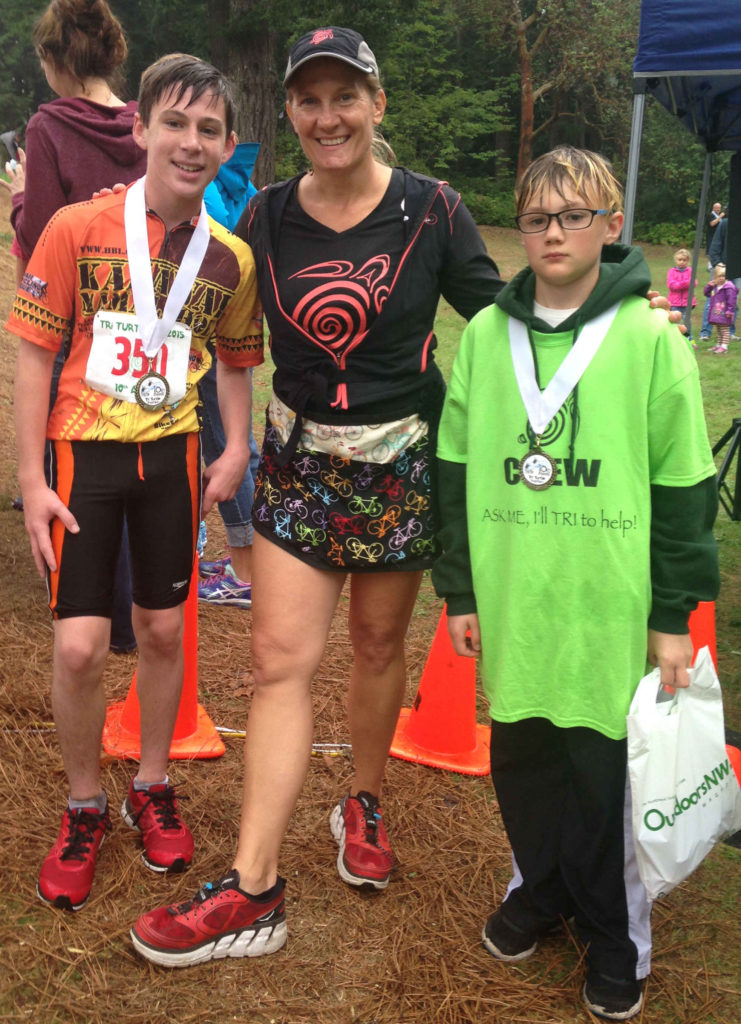
Race director Lisa Ballou with two of the members of the Klahowya Secondary School cross country team she had coached. The young man on Lisa’s left completed the triathlon while the one on the right served as a race volunteer.  The picture is courtesy of Lisa Ballou.

10th Annual Tri Turtle Tri SprintPlus Triathlon

About 400 participants gathered on this drizzly morning at Wildcat Park to swim, bike, and run in and around Wildcat Lake.

Distances for the individual legs of this USAT-sanctioned triathlon were slightly longer than those of the typical sprint triathlon, hence the name ‘SprintPlus’:

  • Swim: 0.5 mile (800 m)
  • Bike: 15.6 mile (25.1 km)
  • Run: 3.4 mile (5.5 km)

Swim

The temperature of the water in Wildcat Lake today was below 78⁰F meaning that according to USA Triathlon rules wetsuits could be worn for the swim.  The cool drizzle made the wetsuit even more desirable.

The half mile (800 m) swim followed a clockwise triangular path with two right turns before exiting the lake.

I made two mistakes on race morning that caused me to waste time on the swim, even if only a few seconds.  First, I had not identified the swim exit on the race course map.  I also missed the portion of the pre-race meeting during which Lisa pointed out where swimmers were to exit

As a result, during the final leg of the triangular-shaped course, I set a trajectory toward the area where we had entered the lake, instead of toward the actual exit which was 10 to 20 yards left of the start.

Triathlon tip: Take time before the race to learn the course as much as possible.  This should involve learning where to exit the swim by identifying a marker near the exit.

From the exit of the water, we climbed a steep hill on our way to the transition area.  Upon reaching flatter ground, the remaining jog to the transition area involved dodging, and occasionally stepping on, sharp rocks protruding from the ground.

Bike

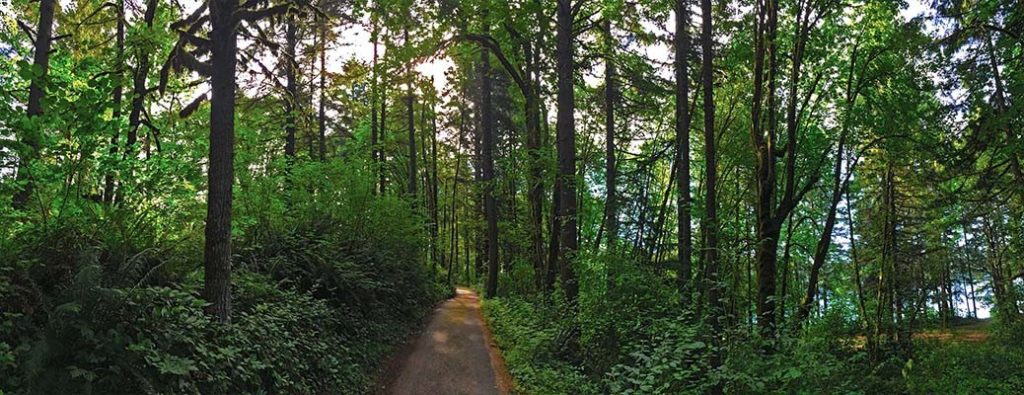
The 15.6 mile (25.1 km), out-and-back bike course took us on local roads, initially west of Wildcat County Park.  At about half way toward the turnaround, the course shifted to a southwesterly direction.  Sparse traffic allowed us to enjoy the evergreen trees, deciduous shrubs, and ground cover that was only occasionally interrupted by an access for a home or small business. 

A short distance before turning around, we exited the main road onto one that looped around to rejoin it about a half-mile southwest of where we had left it.  While the scenery still included stands of tall, straight pines, this area reminded me a lot of the northern part of my home state of Minnesota with its splotches of bogs and wetlands within the forests.

We then rejoined the main road for our return to the transition area.  At this point, we were within 3 miles of Hood Canal, a fjord that makes up part of Puget Sound.

A Hilly Ride

Even though the course featured an elevation gain of between 750 and just under 900 feet (230 to 275 m), depending upon the map used, I really did not recall it being that hilly.

There were two, actually three, reasons for the hilliness going unnoticed.  First, except for the sizeable hill at the beginning and end of the course, most of the course consisted of modest rolling hills.

Secondly, while we were riding on major traffic ways for the area, there was so little vehicle traffic on this Sunday morning, that we could enjoy the forests and wetlands along the course.

Finally, and most importantly, I was distracted by concern about my tires going flat.  As the drizzle continued throughout the race, more water collected on the road.  Hearing a hissing sound brought back the unpleasant memories of a similar sound, the one I heard during the Rhode Island triathlon in the minutes before I crashed as a result of a flat tire. 

Focused on the sound and remembering the pain of the crash, I became increasingly convinced that one of my tires was losing air.  With mist collecting on my glasses, it was impossible to get even a quick, clear glance at the tires to see if they were becoming flat.

When I could no longer stand not knowing if a crash was imminent, I stopped along the edge of the road.  After dismounting, I inspected each tire by pressing them firmly between my index finger and thumb.  Thankfully, I learned that all of my suspicions had been wrong.  Both tires were fully inflated, even if dripping wet.

I relaxed and finished the bike leg.

Run

The 3.4 mile (5.5 km) run left the transition area toward the entrance to the park for a counterclockwise run along roads which had been cut through the woods surrounding Wildcat Lake.  The tree-lined run course followed the left side of the local road, traveling against the negligible Sunday morning traffic. The course included a continuous series of hills, most gradual but several quite challenging.  At the top of the last hill, the course made a left turn for a final sprint to the finish line.

Race T-Shirt

For most triathlons, the t-shirt is provided during packet pickup either the day before or day of the race.  Tri Turtle Tri was different in that the t-shirt was presented only to finishers after they crossed the finish line.

Another unique feature of the t-shirt was that it included the participant’s names.  My name was the top one printed on the iconic turtle’s right flipper.
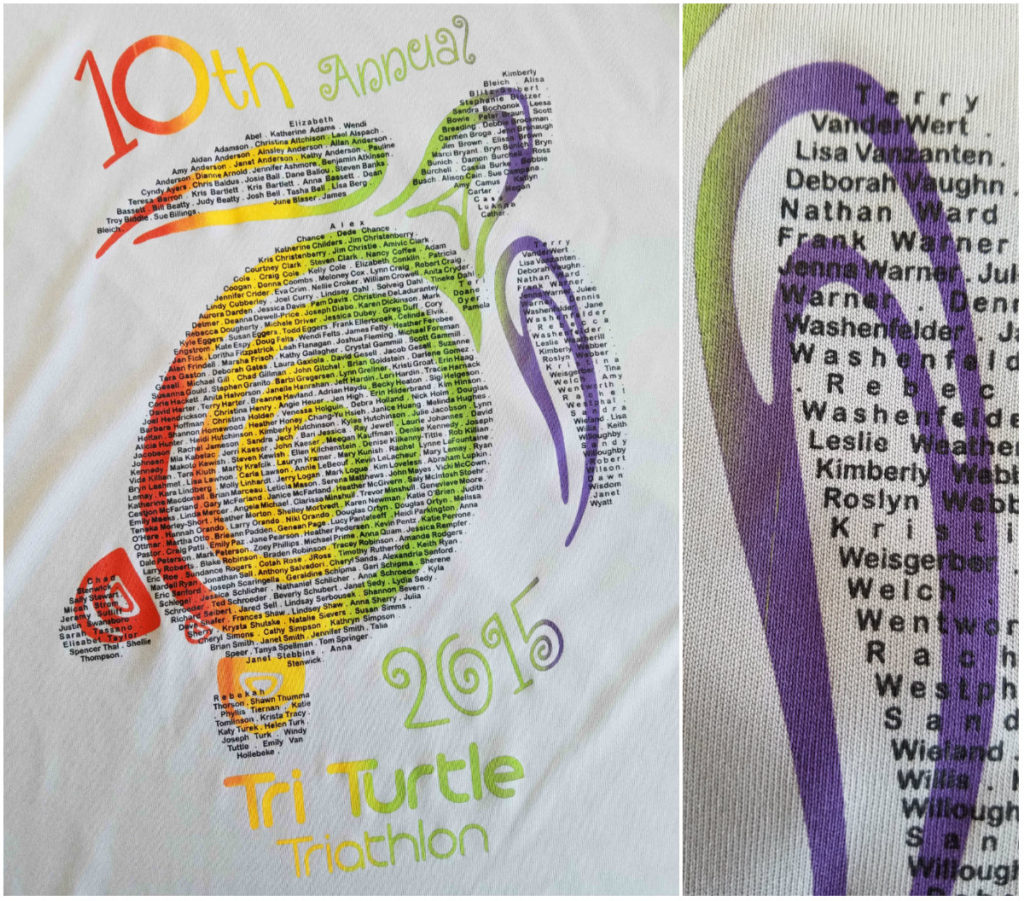
collage showing logo on t-shirt for Tri Turtle Tri and closeup of area with individual participant names
Logo from the 2015 Tri Turtle Tri finishers t-shirt (left) and the portion around the right flipper containing the names of some of the finishers, of which mine was listed at the top (right).

After the Race

Following the race, Joy and I went back to the hotel for a quick shower and to finish packing for the next leg of our trip.  The first stop was at Anthony’s HomePort and Oyster Bar in the Seattle suburb of Des Moines for a scrumptious seafood lunch with Joy’s cousin Karyn and her son.

We finished lunch around mid-afternoon and made a short trek to nearby Kent where we would stay the night before resuming our journey home the next day. 

The return included stops in Coeur d’Alene, Idaho; Bismarck, North Dakota; Watson, Minnesota to visit Joy’s cousin Tom; and Hector, Minnesota to visit our eldest granddaughter.

Race First’s

  • First time for three races in one week.
  • Received the first race shirt on which my name was printed.
  • First race for which the T-shirt was presented after crossing the finish line only to those who completed the race.
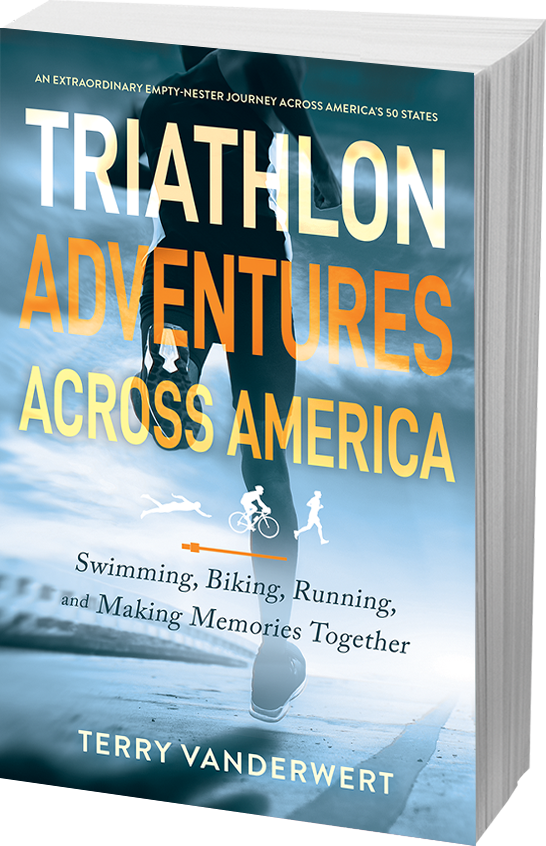
Triathlon Adventures Across America book cover

A Story That Resonates

“A must-read for every athlete and retiring business executive committed to living healthy.”

Discover the complete story

Tell Us About a Triathlon in Washington State

The state of Washington involves a wide range of natural elements, including a lot of water, snow-capped mountains, raging rivers, and the high desert. Have you done a triathlon in Washington? If so, tell us about it in the Comments below.
Comments: We’d love to hear about your experience. Join the conversation below. All comments are reviewed before they appear.

Reply notifications: Click the bell icon above Post Comment to be notified when someone replies to your comment.

Follow the discussion: Click Subscribe above the comment box and enter your email address to receive notifications whenever a new comment is added—even if you don’t leave a comment. After subscribing, check your email and click Confirm to activate notifications.

Optimal Stretching Pre and Post Workout

By Victoria Ward, Contributor

We’re all aware of how important stretching is before and after our workouts, so why is it that we decide to skip those crucial exercise steps? Well, besides being time consuming, a lot of people, myself included, think stretching is boring, and easy to skimp out on. That’s why it was only after a laundry list of injuries that I became consistent with my pre and post workout stretches. Nutrition is also very important when working out, you need to find the right balance, Sculpt Nation has some pre-workout powders that could be a great addition to your fitness goals.

But it was by stretching often that I learned how to do so effectively and make it enjoyable. Here, I’m going to lay out the exact stretching regimen I personally use, step by step, so you can try it yourself. Don’t be lazy like I was and wind of injuring yourself-some injuries never go away, like my elbow tendonitis (though I am still able to workout and wear the Best Elbow Brace for me to help support the elbow). So be proactive and put the work in.

Warming up

For those who have access, dynamic movements in a warmed pool, such as those in aquatic physical therapy, provide a fantastic way to warm up. The warm water promotes blood circulation and loosens the muscles while the aquatic medium allows stretching to be done without strain on the joints, tendons and ligaments. This is ideal for most athletes, especially with taxed or worn joints. It would be smart to perform aquatic physical therapy at least once or twice a week for general wellness and joint health. If you’re concerned about your joints, it may also be worth finding some supplement stacks that work. No one wants to be dealing with joint pain and taking supplements may relieve the pain.

Those of us without an in-gym pool will have to perform our dynamic stretching routine on ground. It burdens the joints somewhat more in this setting, but it can be relatively safe provided you move slowly and precisely through the movements. I suggest finding a whole-body dynamic stretching routine and performing it before every workout session.

It is usually recommended to perform each movement for 10-15 repetitions, though I sometimes perform as many as 20-30 if my muscles feel tight.

After dynamic stretches, I’ll get in some band work, which has worked great for improving my joint health. Taking a low-resistance band, I’ll mimic the exercises to be performed that day and hold the band in a static position for 30 seconds, or until I feel ‘loose’. Something that’s helped my wrist and elbow health, which nobody seems to be talking about, is using rubber bands. I put my fingers through a rubber band and then open them so the band stretches. I do this for perhaps 100 repetitions in each hand a couple of times a day and it’s made a huge difference in my elbow and wrist pain. With this being said, if these exercises are not making much difference to the pains being experienced, there are always options to find the best CBD topical cream or CBD oil, for example, to help relieve the symptoms of wrist pain. As this is said to be an anti-inflammatory product, this could be something worth considering, especially as your health should be the top priority.

Cooling down

After your workout, you may find your muscles much tighter than usual. To remedy this, we utilize what are known as static stretches. Unlike dynamic stretches, static stretches involve holding a certain position for some amount of time-usually 20-60 seconds. To make static stretches interesting, try pulling just a little bit farther each session. As an example, try touching your toes-if you can, then your hamstrings are pretty flexible. Now try working up to pressing your hands flat on the floor. Once you can do that then you’ve worked up some serious flexibility.

The last step is jumping into a cold bath before massaging out the muscles to break up any knots, fascia, and reduce swelling. Using a foam roller, tennis ball, your knuckle, or anything else you could think of would be a good idea. This stops muscles from getting tight and ultimately prevents many injuries. Following this you should make sure to get plenty of rest so your body can recover. Don’t make the same mistake I did-do your stretches and do them often.

Victoria Ward is a freelance writer with a profound interest in psychology, holistic health, and fitness. Her hobbies include tennis, cooking, writing, and yoga. When she’s not working, she can be found playing with her corgi, Milo.

You may also be interested in these posts

How Seniors Can Prepare for their First Triathlon

By Laurie Larson, Contributor

Triathletes of any age who are motivated and self-disciplined can safely and effectively train for a triathlon. Remember that a triathlon is not so much a sport for only the elite, but really it is a hobby that people work into their everyday lives, much like work, family, and routine duties.

According to the New York Times, there is a growing number of seniors involved with triathlons, and the Center for Disease and Control encourages older athletes to join in competitive sports. In fact, membership of USA Triathlon by older athletes has gone up by 230 percent since 2005!

Getting Started

So what age defines an “older” athlete? By most accounts, athletes over 50 are considered older, but that in no way means fitness and performance decrease as you age. To the contrary, you can perform well and continue to improve as an athlete every increasing year and decade of your life. If you are new to all three components of a triathlon, preliminary starter tips regardless of decade include:

  • If you are new to swimming, biking, and running, choose just one to work on at a time and utilize beginner training plans, building up slowly over time.
  • Look for local races and consider volunteering, where you can chat with people for knowledge and details about triathlons, as well as gain insider tips.
  • Join a triathlete training program where you can make some friends and be encouraged to be persistent with accomplishing small, manageable goals.

According to Ironman Coach Sally Drake, the limits you may experience with age include muscle loss, slower metabolism, loss in bone density, weaker immune system, and loss of joint range of motion. In order to account for such limitations, Drake says you must recognize the signs that you need to slow down or take more rest, especially if you feel pain.

See testimonials of triathletes over 50 and see Ironman training plans for triathletes who are 55+.

In terms of your 50s and then 60s and beyond, remembering specific guidelines and training recommendations per your decade will help you perform well and reduce the chance of injury. No matter how old you are, people are prone to injury and it can become more serious as people age. That’s why it’s so important to recover properly after any sporting event. We always see professionals getting sports recovery, but it’s also important for normal athletes to recover also. After running a triathlon, seniors need to make sure they receive some sort of athletic recovery treatment to keep themselves in good shape for their next sporting event. Seniors could always try and follow these tips to reduce their chance of injury too:

Training in Your 50s

According to 220 Triathlon, your joints begin to stiffen as your cartilage thins and the amount of lubricant surrounding your joints decreases. To combat this factor, choose to run on alternate days with interval sessions just once a week, in order to go easy on your joints and maximize performance. 220 Triathlon recommends a 2:1 training approach where you work hard for two weeks and rest for one week, and during that week of rest and recovery, engage in stretching, yoga, and massage. You want to reduce risks involved with overtraining and burning yourself out.

Training in Your 60s and Beyond

As you age, your muscle mass decreases. Remember that as you age, strength training is more and more critical, as by the time you turn 70, 24 percent of muscle mass is lost, where strength training increases these muscle building hormones. Restoration through sleep becomes more and more important, and napping can be very effective as well.

According to 220 Triathlon, better sleep and napping improve alertness, enhance performance, and reduce mistakes. On top of this, you can get extra alertness by consuming caffeine powder before a triathlon. If you’re well rested and have that extra boost, you’ll be able to perform to the best of your ability. Napping over 40 minutes increases release of the testosterone and growth hormone that helps repair and build muscle. It’s critical that your time of sleep is conducive of restoration, so be sure you can stay comfortable and avoid exacerbating your pain through sleeping on an improper sleeping structure. While your sleep is an important part of your rest and recovery, taking breaks is as well. Make sure you’re properly scheduling workouts and take two days of rest between your trainings.

If you don’t want to go out to do such exercises, you can hire an in-home care professional. The caretaker may assist you with the stretches, as well as your medication and other basic chores. Depending on your circumstances, there are several key types of aged care services to consider. These services include in-home care, respite or short-term care, and residential care (such as nursing homes or retirement villages). So, look for elderly care services that are appropriate for your needs and circumstances. You can learn more about such aged care services by visiting websites like careforfamily.com.au.

Consulting with Your Doctor

As with any matter concerning your health, it’s important that you consult with your doctor when making any major lifestyle changes. Once you decide to start training for a triathlon, it’s wise to visit with your doctor before, during, and after to be sure you are staying safe and healthy. Your doctor may be able to advise you on specific stretches, limits, and medications that could help you along the way. It’s always better to be safe than sorry, so keeping your doctor involved in the process is the best way to train. If you need any training tips, you can visit KCSS Online and sites alike, for workout advice as well as healthy lifestyle changes.

It turns out that age truly is just a number, provided that you account for changes in your body over time. Whether you are an aspiring athlete or someone who has been at this for a lifetime, with a proper training plan, diet, and persistence, the sky’s the limit!

Laurie Larson is a freelance writer based out of NC. She enjoys writing on health and lifestyle topics to help others live their best, healthiest, and happiest life!

You may also be interested in these posts

Triathlon Across the USA: State #25 – Oregon

Sweet Home, Oregon; September 12, 2015 – Best of the West Triathlon Festival, Lewis Creek County Park, Foster Lake

The Oregon triathlon was the second of three sprint triathlons I would complete in seven days. I had finished the first of the three, the South Davis Recreation Center Labor Day Triathlon in Bountiful, Utah. The third was the Tri Turtle Tri Triathlon in Bremerton, Washington set for the next day.

This race is one chapter in a 50-state journey—now told in full in Triathlon Adventures Across America .

Sightseeing Before the Oregon Triathlon

With four days between arriving in Oregon and the next triathlon, Joy and I toured the western part of the state, beginning in Crater Lake National Park. After the better part of a day of stopping to take pictures and to read information displays at numerous locations around the crater, we headed toward the southern end of Oregon.

The route we chose led us into the northwest corner of California where we connected to Highway 101, also named the Oregon Coast Highway once we re-entered Oregon.

During the next three days, we made our way along the entire length of the Oregon coast, passing for a short time into the southern end of Washington state.

A Leisurely Trip Up the Coast

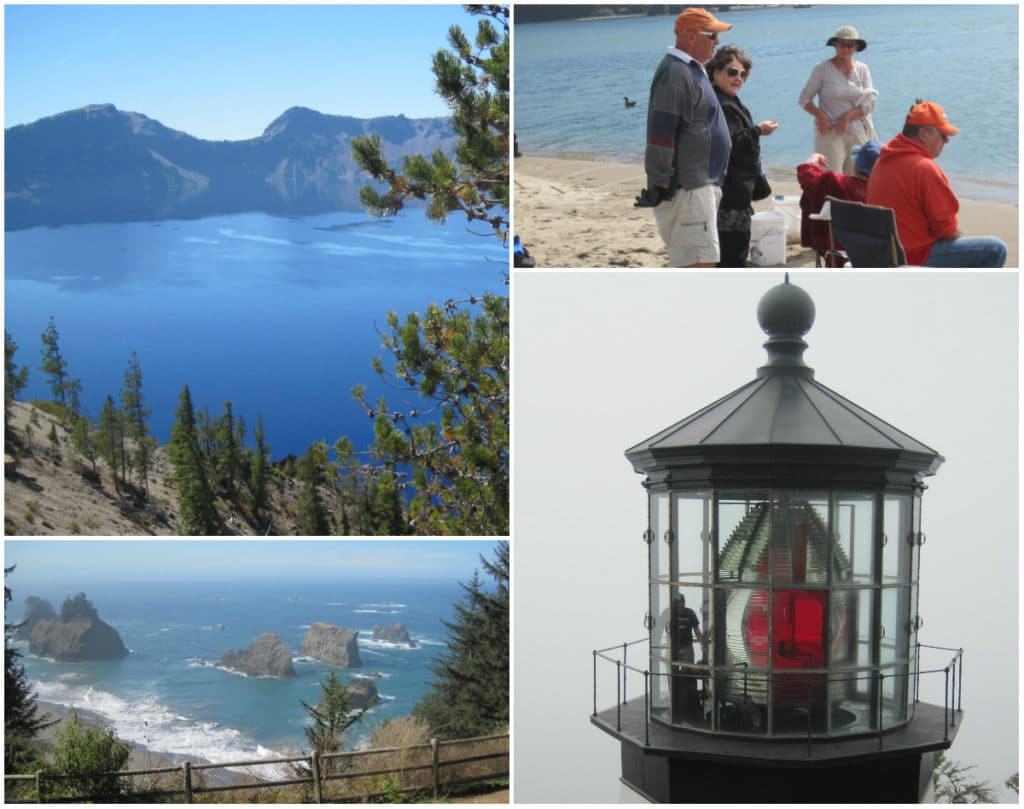
We had no schedule beyond the need to arrive in Sweet Home on Friday afternoon. So, we took our time, stopping and lingering at places that caught our attention, like Lincoln City where we learned about crabbing. The photo collage below shows some of the most memorable stops.

Crater Lake - Lincoln City Oregon - Cape Meares lighthouse - Arches Rock
Crater Lake (upper left); Joy receiving instruction on trapping crab (upper right); Top of the Cape Meares lighthouse (lower right); Oregon coast at Arches Rock (lower left).

Delightful Seafood

Both of us experienced more than a few jaw-dropping moments while taking in the beauty and diversity of the inland and coastal landscapes.

For lunches and dinners, we took advantage of our proximity to the Pacific Ocean to enjoy the local seafood.

The most memorable of these meals was during our overnight stop in Florence. It was at the Waterfront Depot Restaurant that we enjoyed the most scrumptious halibut, a crab encrusted fillet with a sweet chili sauce, that either of us has had, even to this day.

Upon returning home after the trip, we found the Waterfront Depot recipe on-line. We have almost duplicated the recipe in our kitchen several times since.

By Friday afternoon, we arrived, as planned, into Linn County, the “Grass Seed Capital of the World”, and Sweet Home, the host city for the Oregon triathlon.

A Promise of Free Camping

While registering for the race, I noticed that the call for race volunteers came with an offer of free camping within Lewis Creek County Park. Joy and I decided that she would volunteer for the race, in part so we could take advantage of this offer. We had always wanted to go camping though would have preferred to go to somewhere like Iceland where we could do a camper van rental and find out more about van camping. But, for now, we thought this would do.

We had purchased a two-person tent intending to camp at the park on Friday night. Camping offered two benefits. First, it would save the cost of a hotel. However, second, and even more importantly, it would avoid us having to rise before dawn to get to the race site around the time of the opening of the transition area.

However, it became clear that camping was no longer our first choice for the evening once we arrived at Lewis Park for packet pickup on Friday afternoon.

Sure, the park was gorgeous, and it had all the essential facilities. However, temperatures in the high 80s °F and unseasonably high humidity made the thought of camping completely unappealing. We had both become too accustomed to climate control, not to mention mattresses, for a good night’s rest while in a tent in these conditions.

One of the volunteers at packet pickup told us that the hotels within Sweet Home were fully booked for the weekend. However, thanks to a last-minute cancellation, we were blessed with the availability of a clean, air-conditioned motel room.

Triathlon tip: Some have called triathlon ‘a rich man’s sport’ because of the cost of equipment, nutrition, registration, travel to the event, and more. However, there are several ways to minimize the costs, such as camping at the race venue when available and using the suggestions in this post from Training Peaks.

5th Best in the West Triathlon Festival

Headquarters for the Best in the West Triathlon Festival was Lewis Creek County Park, in Willamette Valley a few miles east of Sweet Home. The park is home to Foster Lake, a reservoir created by a dam along the South Santiam River.

The Best in the West Triathlon Festival, managed by Best in the West Events, was a two-day affair. Saturday included sprint and half Ironman distances of the triathlon and duathlon races. In addition, each of these included relay versions in which two or three participants shared the legs of the race.

Distances for the individual legs of the USAT-sanctioned sprint triathlon in which I took part were:

  • Swim: 0.3 miles (500 m)
  • Bike: 12 miles (19.5 km)
  • Run: 3.1 miles (5 km)

On Sunday, college men and women competed in the Olympic distance race. Others, called ‘age groupers’, raced in Olympic distance triathlon and duathlon events as individuals or as part of men’s, women’s, or coed relay teams.

Sunday also included events for children and those wanting to “test the water” with triathlon. Kids competed in either a short or long course swim and run. There was also a ‘Try-a-Tri’ distance for both children and adults. For this event, the distances for each of the three sports was roughly half those for the sprint triathlon.

More information about the various races is on the event website.

Saturday’s event began with the half Ironman triathlon swim. Sprint distance racers started once all the half Ironman racers had finished the swim and were on their bikes.

Swim

While the air temperature was warm, the water temperature was below 78 ⁰F making the race ‘wetsuit-legal’ according to USAT rules.

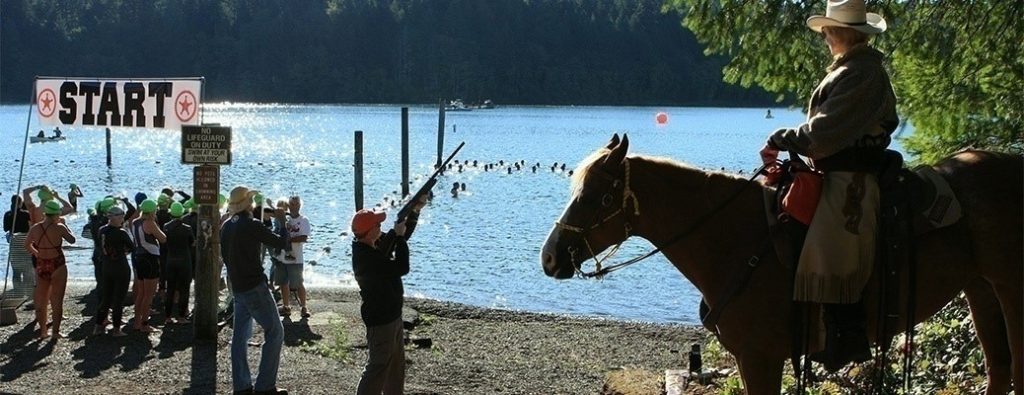
Before the start, we waded into Foster Lake to about chest depth. Here we waited for the start signal which, for this race, was produced by a real shotgun.

Best in the West Triathlon swim start at Foster Lake Oregon. (Picture courtesy of Best in the West Events.)
The Best in the West triathlon open water swim took place in Foster Lake. Swimmers took off with a real shotgun start. (Picture courtesy of Best in the West Events.)

With the shotgun blast, we swam away from the beach toward the first orange buoy (visible above the horse’s neck in the picture above).

At the orange buoy, we turned left and swam to a second turn buoy. At this second buoy, we made a second left turn and swam back to the beach. Upon reaching the beach, we jogged into the transition area.

Bike

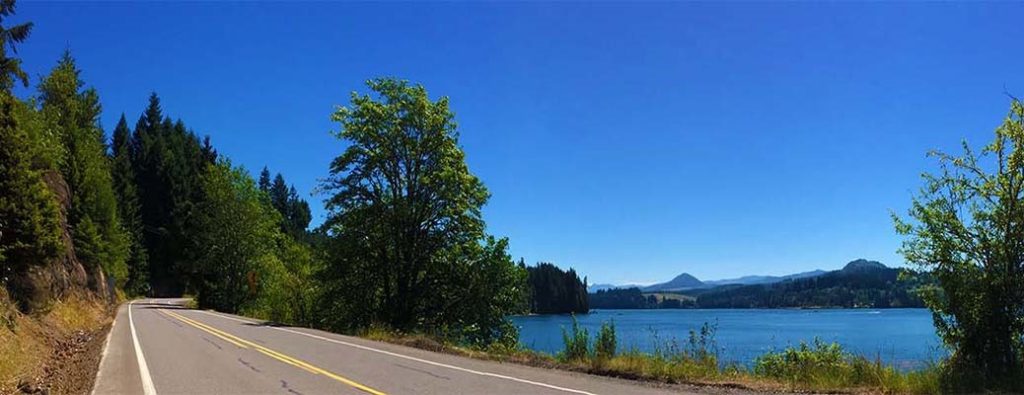
The flat bike course ran along the northern edge of Foster Lake following North River Road.

After 2-1/2 miles, we reached the end of the lake; the end containing Foster Dam and a small hill that drops about 100 ft (30 m) over a quarter of a mile. The course continued about 3-1/2 miles to the turnaround on a residential street in the northwest corner of Sweet Home.

From here, we rode back along the same route as we had just covered. This time, we climbed up the hill at the dam.

Bike course for Best in the West triathlon on North River Road at Foster Lake Oregon
A portion of the bike course for the Best in the West Oregon Triathlon was on the road that runs along the north side of Foster Lake. (Picture courtesy of Best in the West Events.)

Run

The run course covered a short distance of grass and a wooden footbridge. Other than those, the run was on paved roads and trails within the park. The gradual rolling hills with climbs of 50 to 70 feet (15 to 21 m) provided enough challenge to make the race interesting.

However, the shade and overall beauty of the tree-lined paths made for a pleasant finish to the triathlon.

Best in the West triathlon run course in Lewis Creek County Park Oregon
The run course for the Best in the West sprint triathlon was nearly completely covered. (Picture courtesy of Best in the West Events.)

Awards Ceremony for the Oregon Triathlon

I finished last of those in my age group (males age 60-64). However, for this race, it was also a third place finish. This qualified me for one of the awards given to the top three finishers in each age group.

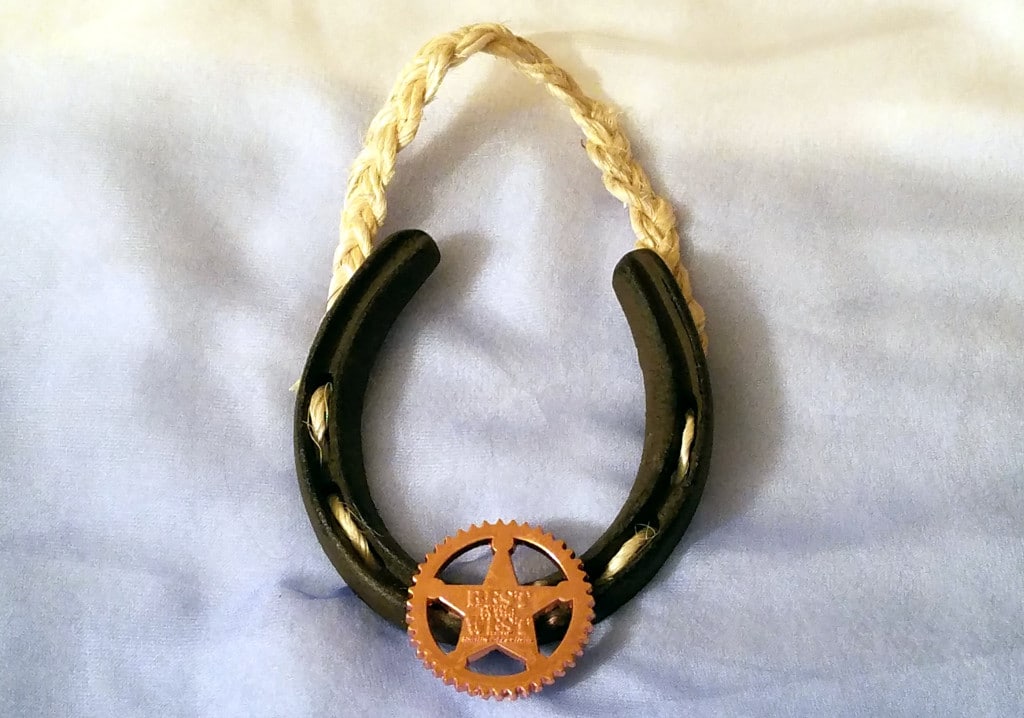
The award (pictured below) was among the most unique I have received to date. You can see other novel awards at “5 Unique Triathlon Medals; They are No Longer Just Metal“.

Age group award from the Best of the West sprint triathlon.

After the Race

Following the race, we rushed back to the motel for a shower before returning to the park for the awards ceremony.

It was then back on the road to make the five-hour drive to Bremerton, Washington. Our goal was to reach there in the late afternoon in time for packet pickup for the next day’s triathlon.

Race Firsts

  • First triathlon with a “shotgun start” involving a shotgun.
Triathlon Adventures Across America book cover

A Journey Beyond This Race

“Uplifting, real, and full of heart—I couldn’t put it down.”

Read the full journey in Triathlon Adventures Across America

What is the Most Unique ‘Medal’ or Award You Have Received at a Triathlon?

I have received many unique finisher medals and age group awards, including the one pictured above.

What has been your most unique medal?

Comments: We’d love to hear about your experience. Join the conversation below. All comments are reviewed before they appear.

Reply notifications: Click the bell icon above Post Comment to be notified when someone replies to your comment.

Follow the discussion: Click Subscribe above the comment box and enter your email address to receive notifications whenever a new comment is added—even if you don’t leave a comment. After subscribing, check your email and click Confirm to activate notifications.

error

Enjoy this post? Please spread the word :)