
What If I Want to Do An Ironman Triathlon? – Tom Lipp’s Story
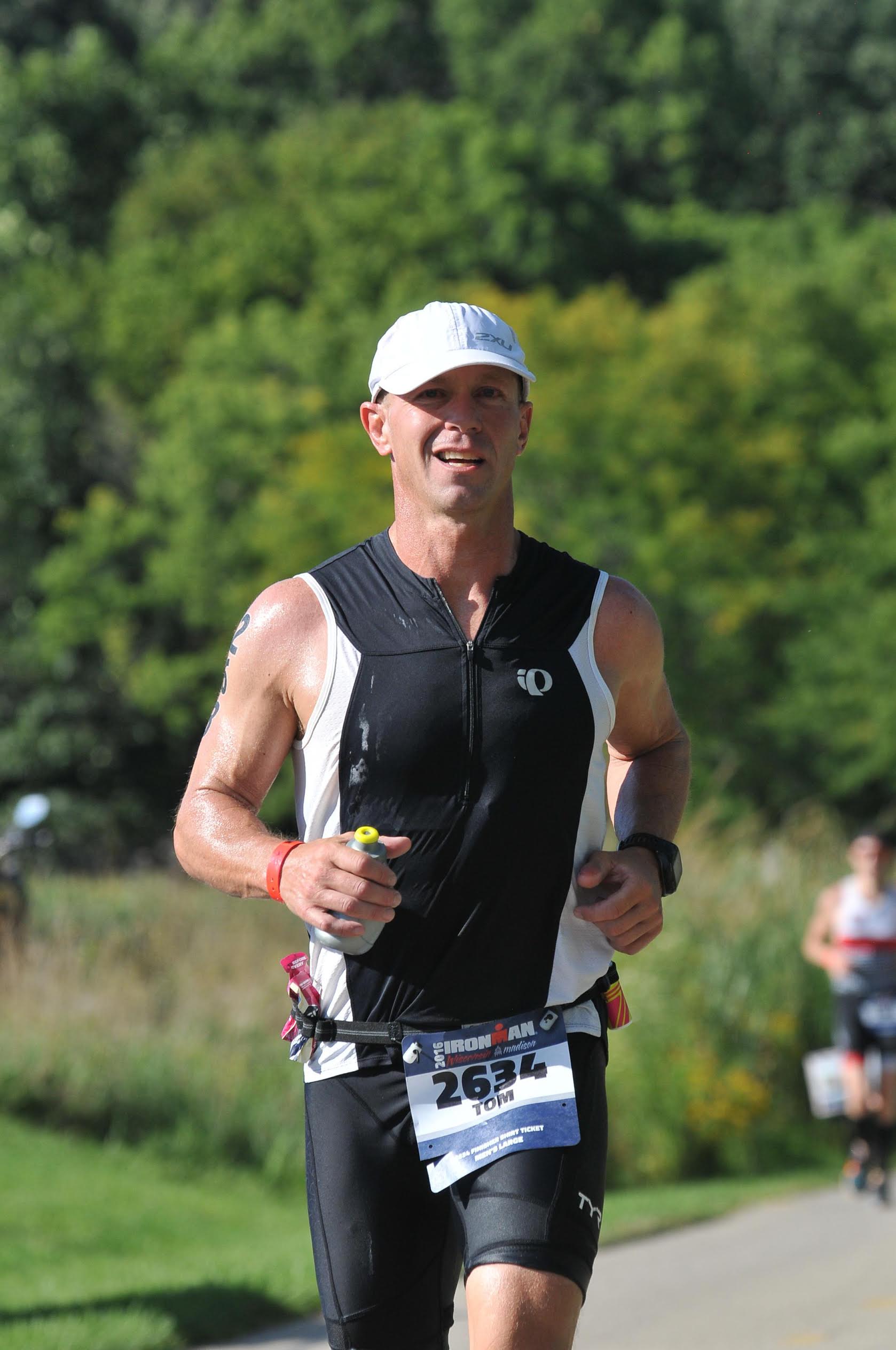
Editor’s Note (2026): When I first published Tom Lipp’s story in 2016, SeniorTriathletes.com was still in its first year. A decade later, Tom’s experience remains relevant because it illustrates a lesson many older athletes discover for themselves: big goals are achieved one step, one workout, and one race at a time.
Senior Triathlete Tom Lipp took the plunge and competed in his first full Ironman triathlon. Is an Ironman triathlon on your ‘bucket list’?
Its Starts With Inspiration
Track anyone’s start in triathlon or ask them about it. I am sure you will find ‘inspiration’ or some form of the word among the reasons they took part in their first race. Someone inspired them.
For the new Senior Triathlete Tom Lipp of Aberdeen, South Dakota, the inspiration came when he first watched his daughter complete the Fargo, North Dakota half marathon. The next year, he ran this race with his daughter and “was hooked”.
His first triathlon, one completed in 2012 with his uncle Kirby Martz, was the sprint distance Bismarck Triathlon in Bismarck, North Dakota. Later that year, he completed his second triathlon, an Olympic distance event, at the Young Life Triathlon in Detroit Lakes, Minnesota.
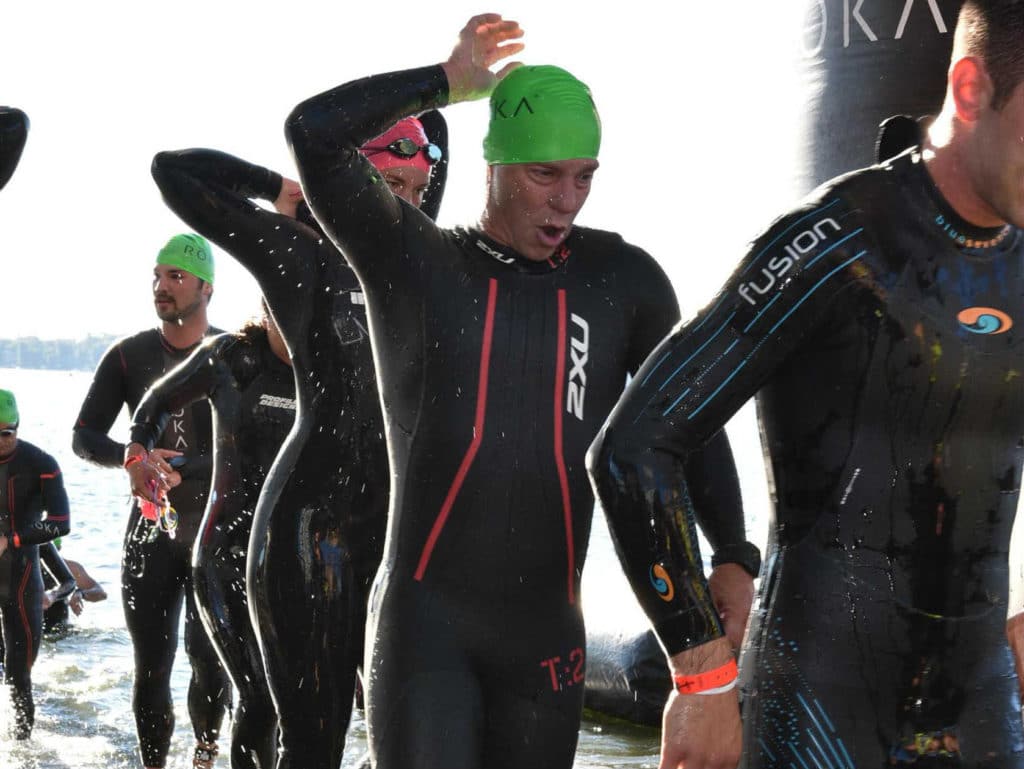
There are many stories of those for whom triathlon has become part of an active lifestyle. Training for the first race leads to more training. A second triathlon leads to a goal of improving performance “just a little”. For many, these early triathlons lead to longer distance races.
While I have only completed sprint distance triathlons until now, I have certainly wondered about completing what I consider the ultimate triathlon—the Ironman 140.6 comprising a 2.4 mile (3.9 km) swim, 112 miles (180 km) bike, and 26.2 miles (42 km) run. I am sure that I am not alone.
So when I learned Tom was planning to complete Ironman Wisconsin, I asked him to record and share his experience with other Senior Triathletes.
The rest of the post is based on Tom’s comments about his experience in preparing for and competing in his first Ironman 140.6.
As a preface to his comments, Ironman Wisconsin consistently ranks as one of the most difficult. In 2016, Ironman Wisconsin ranked 9th in difficulty, according to Ironindex™.
My point? Tom did not only take on a longer distance, but he did so in one of the more difficult triathlons.
Why This Story Still Matters
Tom didn’t start with an Ironman goal. Like many triathletes, he began with a Sprint-distance race, became curious about what might be possible, and gradually worked his way toward a longer challenge.
Whether your goal is your first Sprint triathlon, an Olympic-distance race, a Half Ironman, or a full Ironman, Tom’s story demonstrates the value of patience, planning, family support, and consistent training.
Why Did You Choose An Ironman?
“The inspiration for Ironman came almost immediately after I completed my first triathlon. I set the goal in 2012 after becoming aware of the sport and its history. There are so many motivating and inspirational stories, and I enjoy the lifestyle it requires and the challenges it offers.”
How Did You Train For Ironman Wisconsin?
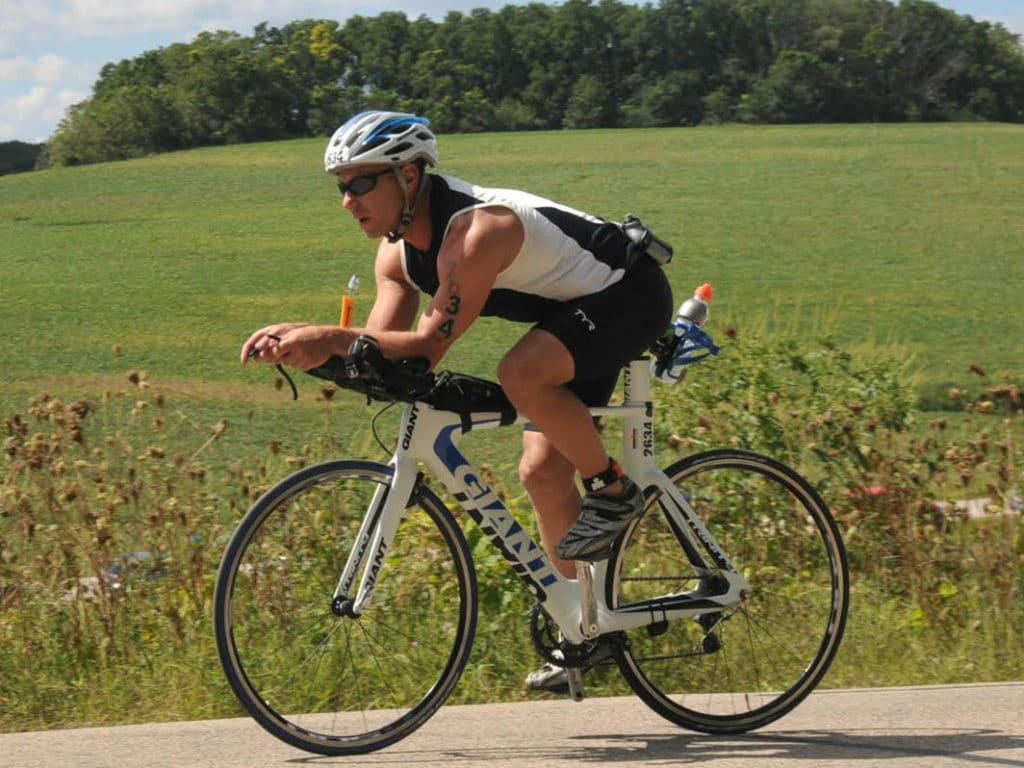
“I started training about one year before the race when a co-worker (a 2X Ironman) asked me to join a group of three others in training for Ironman Wisconsin (IMWI).
I really enjoyed training with the others in the group. Training with one of the guys, in particular, made the hard workouts not only easier but enjoyable. Unfortunately, our schedules made training as a group difficult. In fact, about 90% of my training was alone.
Training plan
In hindsight, I am sure that a coach would have been a great asset. However, I used a free 36-week training program that I found at trifuel.com.
I didn’t follow it perfectly—I did not do all the speed workouts—though think I should have followed the plan more closely.
Dealing with injuries
Full of motivation, I quickly and dramatically increased my running and biking. Within two weeks, I acquired a sore left knee that would ‘pop’ and sore Achilles tendons. I spent the next few weeks stretching, icing and working out at a reduced level.
After my initial burst, I was careful with injuries. It is hard to know if the pain was something to push through or something that needed rest. If I felt a strain, I leaned on the side of caution.
I used a foam roller and cups of ice to massage the sore or strained areas.”
Tom’s Tip: To apply ice to sore areas, fill a frozen Styrofoam cup with water and freeze the water. Cut the bottom one inch (25 mm) of the cup to expose the ice. Rub the ice on sore or strained areas.
Tom Lipp, Ironman Senior Triathlete
What Was Your Experience From Ironman Wisconsin?
“I was first struck by the number of participants, nearly 3,000. Compare this to the hundred or so for the shorter distance events I had previously done.
Then there was the course. The hills in Wisconsin are VERY different from the hills in northern South Dakota. I was not prepared for them and the bike course took a little more out of me than I had planned, which increased my run time.
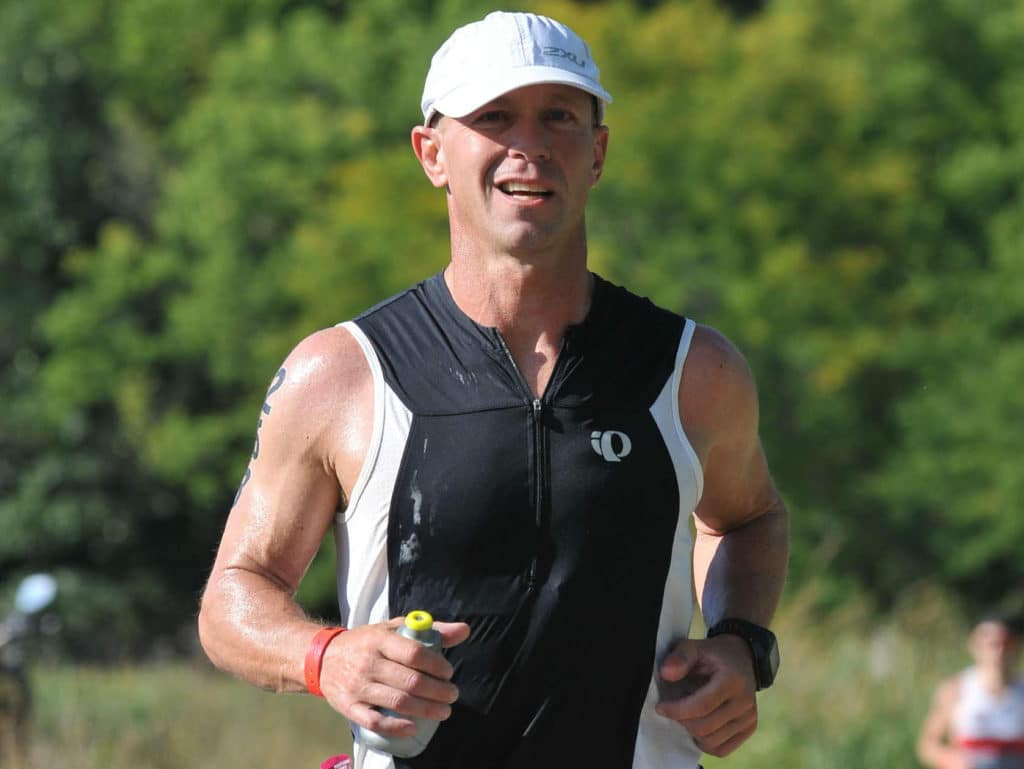
The other thing that struck me was the support that the spectators gave us. Ironman events aren’t like the normal triathlon. The crowds are huge and fan support along the bike and run make the race something to remember.”
What Have You Learned From Triathlon?
“Triathlon is the same as work or life. You need a goal, you need a plan, you need a reward, and most of all you need family support.”
It’s a family affair
“My family support was awesome and my wife Kami was incredible over the year of training. She had more than enough reasons to be upset with my lack of participation in chores, my going to bed early on a beautiful summer night, and my general absence. Instead, she picked up my slack.
Having my kid’s support throughout the summer and having them at the event meant a great deal to me. It would not have been the same without them.”
Our bodies and mind adapt
“This experience has taught me I should never stop challenging myself. Our bodies and mind are incredible and able to adapt to whatever we throw at them.”
Advice For Other Senior Triathletes
What advice do you have for Senior Triathletes who have completed a shorter distance triathlon and are thinking about the Ironman distance?
- Discuss it with the important people in your life who will be affected by your training. Their support and understanding will be vital.
- Complete at least one half Ironman distance race.
- Commit, commit, commit!
- Find a plan or coach to guide you through the training.
- Increase slowly and take care of anything that seems like an injury.
- Enjoy the journey—-It is worth it!
What Today’s Senior Triathletes Can Learn From Tom
- Big goals are achieved one step, one workout, and one race at a time.
- Training plans matter.
- Injuries require patience.
- Family support is invaluable.
- Our bodies can adapt to challenges at any age.
Whether you dream of completing an Ironman or simply finishing your first Sprint triathlon, the principles are remarkably similar.
How Far Do You Want To Go?
Not every senior triathlete dreams of completing an Ironman. Some want to improve their Sprint time. Others want to complete an Olympic-distance race, a Half Ironman, or simply stay active and healthy.
Tom’s story reminds us that the question is not whether you should do an Ironman. The question is what challenge inspires you to keep moving forward.
What Have You Learned From Training for an Ironman Triathlon?
Many readers have completed Ironman or long course triathlons. What is the one piece of advice you can offer senior triathletes who are thinking about longer distance races?





Comments: We’d love to hear about your experience. Join the conversation below. All comments are reviewed before they appear.
Reply notifications: Click the bell icon above Post Comment to be notified when someone replies to your comment.
Follow the discussion: Click Subscribe above the comment box and enter your email address to receive notifications whenever a new comment is added—even if you don’t leave a comment. After subscribing, check your email and click Confirm to activate notifications.