
Triathlon Across the USA: State #45 – Oklahoma
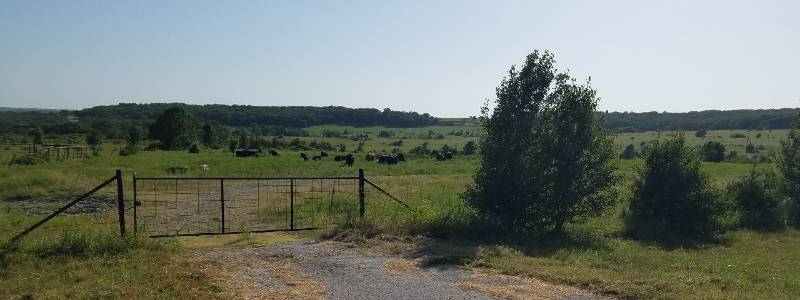
Barnsdall, Oklahoma; June 25, 2022 – Tulsa Sprint Triathlon, Twin Coves Beach at Birch Lake.

Our Oklahoma triathlon introduced us to the diversity of vegetation and terrain in the northeastern part of this state. I will also fondly remember the unique spectators along and on the bike course.

This race is one chapter in a 50-state journey—now told in full in Triathlon Adventures Across America .

Planning the Oklahoma Triathlon

The date Joy and I had set for completing the ‘Triathlon Across the USA’ goal was in sight. In fact, I had committed to reaching it within the next year. I had six states in which to complete triathlons.

Meanwhile, a wedding and high school graduation meant we would return to Minnesota for at least two weeks in late May 2022. Late in 2021, I looked for triathlons that would fit into the next summer’s schedule.

The first two states on the itinerary were Oklahoma and Kansas, two states on back-to-back days at the end of June. Then, after a couple of weeks back in Minnesota, we would head west for the three remaining states in the west – California, Idaho, and Montana.

To avoid a price increase at the end of 2021, I registered for the Tulsa Tri on December 21st.

Previewing the Oklahoma Triathlon Course

A few months after committing to the Oklahoma triathlon, we learned that our son and his family would move from their home in Omaha, Nebraska, to a neighboring state. Their timing matched ours. They planned to leave Nebraska on the day of the Oklahoma triathlon.

We joined them for ten days prior to their move to help them pack and load the rented U-Haul truck. While this time was not exactly restful, it kept us active. It also helped develop some muscles not typically used as strenuously in my triathlon training.

By the Thursday evening before the Oklahoma triathlon, we had packed the truck with everything except one bed. A neighbor helped our son pack this after we left.

Since we would drive south from Omaha to the race venue on Friday afternoon and the pre-race packet pickup location was another 45 miles south of here, I opted to delay picking up the race packet until the morning of the triathlon.

Instead, we visited Twin Coves Beach and Birch Lake late Friday afternoon, the day before the race, to (1) make sure we knew the way to the park the next morning and (2) drive the bike course. We did the latter to check out the condition of the roads and check into memory sections of the course of which to be especially mindful.

The hills I saw while driving the bike course on Friday afternoon left an impression. In fact, some of these appeared in my dreams that night. Not exactly a nightmare, but close.

Oklahoma Triathlon Venue

The Tulsa Triathlon took place at Twin Coves Beach on Birch Lake about one and one-half miles outside Barnsdall, Oklahoma.

The man-made lake formed in 1977 when the US Army Corps of Engineers completed a dam on Birch Creek a short distance before it joined another small river, Bird Creek.

With various hardwood trees, shrubs, prairie grasses, and wildflowers covering the terrain around the lake, it was easy to see why the area is a popular year-round destination for outdoor enthusiasts.

8th Annual Tulsa Triathlon

The Tulsa Triathlon is one of several running and multisport events managed by the Tulsa Area Triathlon Club.

The sprint triathlon was part of a two-day event which included:

  • Saturday: Sprint triathlon, with options to race individually or as part of a team. Following the adult triathlon, there was a kid’s triathlon.
  • Sunday: Olympic and half-iron triathlons and aquabike races with the swim-bike distances of the Olympic and half-iron triathlon.

The advertised distances for the individual legs of this USAT-sanctioned sprint triathlon were:

  • Swim: 500 m (550 yards) – Actual: 538 m (588 yards)
  • Bike: 12 miles (19 km) – Actual: 12.6 miles (20 km)
  • Run: 3.1 miles (5 km) – Actual: 3. miles (5 km)

Actual distances shown above are from my Garmin Forerunner 920XT.

A Steamy Morning

I knew it was going to be a sweaty race as I stepped outside our hotel on race morning. Even at 5 am, the temperature and humidity were enough for me to perspire while simply stowing our overnight luggage in the van.

We left the hotel around 5:15 am to make the roughly 30-minute drive from Bartlesville to Barnsdall and Twin Coves Beach. Our goal was to reach Birch Lake in time for me to pickup my race packet at 6 am, setup my transition area, and get settled for the race set to begin at 7:10 am.

Swim

The water temperature in Birch Lake this morning was 85°F. This was significant since the race followed USAT rules. According to USAT rules, no one could wear a wetsuit during the swim.

The rule as written on the USAT website is:

  • “4.4 Wet suits. Each age group participant shall be permitted to wear a wet suit without penalty in any event sanctioned by USA Triathlon up to and including a water temperature of 78 degrees Fahrenheit. When the water temperature is greater than 78 degrees, but less than 84 degrees Fahrenheit, age group participants may wear a wet suit at their own discretion, provided however that participants who wear a wet suit within this temperature range shall not be eligible for prizes or awards. Age group participants shall not wear wet suits in water temperatures equal to or greater than 84 degrees Fahrenheit.” Source: USA Triathlon.

About ten minutes before the race began, I went for a short, warmup swim to jumpstart my heart rate.

Another goal of the swim was to learn about the lake bottom. I wanted to know if I would walk or run into the water on rocks. Or would the bottom be slippery or covered with weeds?

I learned that the bottom of Birch Lake was smooth, composed of soft clay, not slippery, and with no noticeable weeds. While the water was cloudy, it provided for a comfortable swim.

The triathlon began when a portion of the 156 swimmers, the so-called ‘first wave’, started their swim on this triangular course marked by two orange buoys.

Birch Lake at Twin Coves Beach, location for the swim during the Tulsa Triathlon.

Bike

One of the first things I noticed after mounting my bike was the temperature reported on my bike computer – 84°F. (By the end of the bike leg, around 50 minutes later, the temperature was 99°F.)

This course could well be the most hilly course of any I have biked during a triathlon. I had not expected this in Oklahoma. Fortunately, my bike was in great shape.

While riding this course, I learned that some people’s definition of rolling hills differ greatly from mine. Yes, these hills ‘rolled’ in that the course had a sinusoidal pattern, up then down. What made this different from normal rolling hills was their amplitude. My speed throughout the bike leg reflected the hilliness.

A Different Profile of Spectators

In many triathlons, residents along the bike path sit in lawn chairs and cheer on the racers. Today, there were no human spectators. However, there was a multitude of other spectators – a pair of horses who looked as if they were trying to figure what was happening. There were also the less interested but attentive cattle and goats keeping their eyes on racers, without actually cheering them on.

Near mile nine of the ride, as I was coming down a hill before a right-angle turn, a small turtle raced into the road. Apparently, it saw me coming as it reached the middle of the road. He froze, pulled in his head and legs, and lay still as I passed him.

Run

The run course left the transition area near Birch Lake on a paved service road. Within the first mile, the initial road joined the main one leading to the park entrance.

With the temperature now approaching 100°F, my run actually alternated between running on flat and downhill sections of the course and walking on the upside of the hills.

After reaching the park entrance and stopping for a drink of water, I followed the course to the right for a short distance needed for the 5k distance. We turned around and returned in the direction of the finish line, this time making a short loop through one of the camping areas within the park.

After leaving the camping area, the finish line was a few hundred yards away – downhill.

After the Oklahoma Triathlon

By the time I crossed the finish line, I was a sweaty, dripping mess.

Joy graciously volunteered to drive for the three-hour trip to Wichita for the Mudwater Triathlon the next morning.

While we were eager to get started on our journey, I first took advantage of a generous supply of water, sports drinks, and fruit to start rehydrating.

I looked for a shower facility or a place in which to change clothes. Unfortunately, I didn’t find any. So, I spread a towel on the van’s passenger seat and stayed in my triathlon suit for the ride.
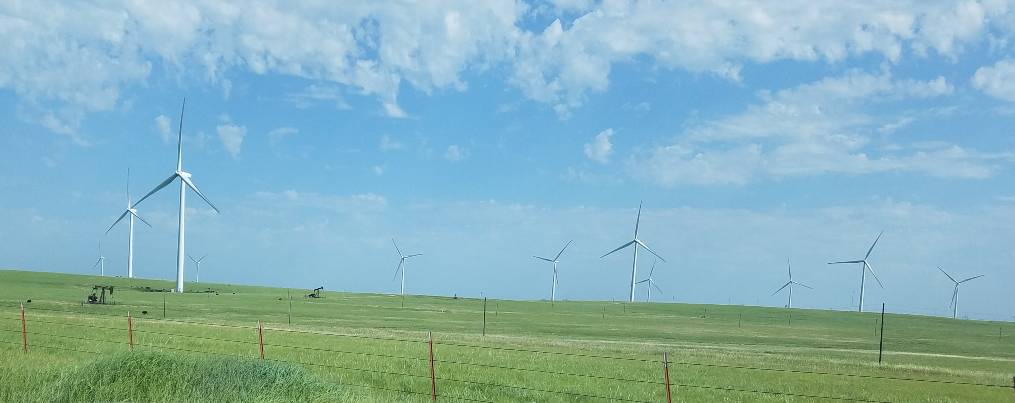
After experiencing the hills of northeastern Oklahoma during the Tulsa Tri, it was time to see the vast prairies, wind farms, oil derricks, and grazing cattle, also part of this state.

Race Firsts from the Oklahoma Triathlon

  • First triathlon in which I wore prescription glasses on the bike.
  • USAT rules prohibited wetsuits, another first.
Triathlon Adventures Across America book cover

What Could Your Journey Be?

“It made me think, ‘Wow, wouldn’t it be fun to try to do this too?’”

Explore the journey across all 50 states

Unique Spectators

Tell us in the Comments below about the most unique spectators you have had during a triathlon.

Comments: We’d love to hear about your experience. Join the conversation below. All comments are reviewed before they appear.

Reply notifications: Click the bell icon above Post Comment to be notified when someone replies to your comment.

Follow the discussion: Click Subscribe above the comment box and enter your email address to receive notifications whenever a new comment is added—even if you don’t leave a comment. After subscribing, check your email and click Confirm to activate notifications.

Triathlon Across the USA: State #44 – Delaware

Bear, Delaware; May 16, 2021 – Bear Triathlon, Lums Pond State Park.

The Delaware triathlon was part of a six-week road trip that included stops in Omaha, Nebraska; The Villages, Florida; and parts of Virginia and Delaware for triathlons in these two states.

This race is one chapter in a 50-state journey—now told in full in Triathlon Adventures Across America .

Before the Delaware Triathlon

Joy and I began the week between the Virginia and Delaware triathlons with biking on a portion of the Virginia Capital Trail, starting at Colonial Williamsburg. After a few days in the Williamsburg area, we packed up and drove to the Atlantic Coast of Delaware via the Chesapeake Bay Bridge and the Delmarva Peninsula.

We settled in Bethany Beach, Delaware from where we took the three days leading up to the Bear Triathlon to tour the coastal area between Ocean City, Maryland, and Rehoboth Beach, Delaware.

The sights and experiences during our first visit to the area between southern Virginia and the Delaware coast reminded us how thankful we are to be on this triathlon journey.

Before the Delaware triathlon, we visited the Atlantic coast at Bethany Beach, Delaware.
The Atlantic Ocean from the Bethany Beach, Delaware boardwalk.

Previewing the Race Course

Late Saturday afternoon, Joy and I drove from Bethany Beach to Lums Pond State Park, outside Bear, Delaware, to pickup the race packet for the Bear Triathlon. It surprised us to see a line of tens of cars stretching out of the park entrance onto the road leading up it. My first thought was that this was going to be a big triathlon, with a lot of participants.

The Bear Triathlon was a decent size, with about 550 competitors in the sprint and Olympic distance races combined. However, we eventually learned that Lums Pond State Park offers tremendous opportunity for outdoor activity beyond triathlon, from kayaking and paddle boating to picnicking. There was even a cricket match being played next to the race transition area.

After collecting my race packet, which included a t-shirt and race numbers for the bike and run, we drove the bike course. We do this as often as possible to check the condition of the roads, looking for potholes or other obstacles that could present a hazard during the race. This is also an opportunity to review the hills and turns along the course.

Near the end of the course, we were saddened to see the remains of a mother deer and her fawn lying on the bike path. By the next morning, these were no longer there.

Sign at the entrance of Lums Pond State Park in Bear, Delaware.
Lums Pond State Park (Bear, Delaware) is home of the Bear Triathlon.

3rd Annual Bear Triathlon

The Bear Triathlon is one of several running and multisport events managed by Rip It Events (Columbia, Maryland). The company also offers coaching services.

This race included both sprint and Olympic distance events. Organizers allowed participants of either distance to compete as an individual or as part of a relay team.

The advertised distances for the individual legs of this USAT-sanctioned sprint triathlon were:

  • Swim: 0.6 miles (966 m or 1,056 yards) – Actual: 1,348 yards (0.77 miles or 1,233 m)
  • Bike: 10 miles (16 km) – Actual: 9.9 miles (16km)
  • Run: 3 miles (4.8 km) – Actual: 3 miles (4.8 km)

Actual distances shown above are from my Garmin Forerunner 920XT.

An Anxious Group

Maybe it was because of the many race cancellations over the past year, but the triathletes competing today seemed eager to race.

Lums Pond State Park opens at 5 am. The transition area was set to open at 5:15 am.

I arrived at the park entrance a few minutes before 5 am, expecting to wait for the gate to open. I imagined there would be a few cars which had arrived before me.

However, to my surprise, the gate was already open. I passed through without stopping.

I was even more surprised when I reached the parking lot closest to the transition area. Cars were already lined up one deep across the width of the parking lot.

Cars filled with triathletes ready to race gathered in the parking lot before the transition area opened, some even before the park was to be open.

A Cool, Still Morning – Perfect For a Triathlon

The 48 °F air temperature during setup of the transition area made me happy I was wearing a sweatshirt. However, as the sun rose and race time approached, the air temperature climbed a few degrees. Meanwhile, the air remained still, with only a slight breeze. Clouds covered most of the sky.

By the start of the swim, the combination of full sleeve wetsuit and temperature in the low-to-mid 50s °F was comfortable – not too cold, not too warm.

By the time we finished the bike and run legs, the temperature was still comfortably in the mid-60s °F.

As the sun rose on race morning, the temperature became more comfortable. Perfect race conditions.

Swim

The race director reported the temperature of the water in Lums Pond to be 68°F. Not only was this race wetsuit-legal according to USA Triathlon rules, but he encouraged racers to wear a wetsuit.

Competitors started their swim in one of eight groups based on race distance, age, and gender. The first four groups, or waves, included those in the Olympic triathlon.

The three-quarter mile swim was longer than typical for a sprint triathlon. The course traveled at an angle away from the beach, then turned left toward the opposite side of the pond. After a short distance, we made a second left turn and swam parallel to the beach, finally reaching the last buoy. From here, a swim of a few hundred yards brought us to the sandy beach.

However, the swim leg was not yet complete. To finish this portion, triathletes needed to continue another roughly hundred yards before crossing the timing mat. We were then in T1, the first transition period.

The Bear Triathlon began with a counterclockwise swim around a series of orange buoys. The course started to the right in the upper picture, then turned left twice before crossing the top portion of the water. A third left turn at a buoy beyond the left edge of the upper picture led to the beach (lower left). The swim leg officially finished after completing a jog across a grassy area to the ‘Swim In’ entrance of the transition area (lower right).

Bike

We mounted our bikes just outside the transition area. The bike leg followed a course that left the park on Bucks Jersey Road. The single loop course exited and later re-entered the park at the main entrance gate.

Once outside the park, we made four right turns following Howell School Road, Red Lion Road, and Route 301. The final of the four turns brought us back on Bucks Jersey Road and the ride to the transition area.

The second right turn on the bike course of the Bear Triathlon was at Howell School Road and Red Lion Road
The second right turn on the bike course of the Bear Triathlon was at Howell School Road and Red Lion Road. Volunteers and local police ensured safety of the racers by controlling traffic at this busy intersection.

We owe a big thank you to the race crew and volunteers. They did a tremendous job of directing bikers and controlling car and truck traffic with whom we shared the road.

Run

The out-and-back run course took us on a combination of grass, dirt trail, and asphalt covered roads. One feature of the out-and-back course I enjoy is the exchange of encouragement between racers. This was on full display today.

By the time sprint triathlon racers were on the run course, some of those competing in the Olympic distance race were also on their run. The difference was the Olympic triathletes covered all but the last few yards leading to the finish line two times.

The first and last few hundred yards of the out-and-back run course were across a large grassy area that had been the location of a cricket match the day before the triathlon. The first station for water and sports drink (orange containers) is a little right of center.

After the Delaware Triathlon

After completing my race and repacking my bike and other gear (wetsuit, goggles, swim cap, bike helmet, and race number belt), I sat outside the transition area on the edge of a picnic table from where I watched others coming and going.

During this time, I met John Dean, a seasoned, senior triathlete who was closing in on his 100th triathlon. He made it. You can read John’s story, 101 Triathlons – John Dean’s Story, on this site.

I waited as long as I could for the awards ceremony. However, I eventually needed to leave to make the hotel check-out time. Thankfully, the race organizer was kind enough to send me the award I received for my second place finish within my age group.

After showering and checking out of the hotel, Joy and I started our journey back to Minnesota. Our route took us through Lancaster County, Pennsylvania, on the way to West Chicago, Illinois for an overnight stay with friends.

Upon reaching our Minnesota home, we began a multi-month project of decluttering, donating, and packing for our move to Florida in September.

Race Firsts

  • First triathlon in which the swim took place in a body of water in which swimming is normally not allowed.
Triathlon Adventures Across America book cover

A Story That Resonates

“A must-read for every athlete and retiring business executive committed to living healthy.”

Discover the complete story

Your Favorite Lake For A Triathlon Swim?

Have you done a triathlon in Delaware? Delaware is where John Dean did his first one.

Tell us about these in the Comments below.

Comments: We’d love to hear about your experience. Join the conversation below. All comments are reviewed before they appear.

Reply notifications: Click the bell icon above Post Comment to be notified when someone replies to your comment.

Follow the discussion: Click Subscribe above the comment box and enter your email address to receive notifications whenever a new comment is added—even if you don’t leave a comment. After subscribing, check your email and click Confirm to activate notifications.

101 Triathlons – John Dean’s Story

Have you ever asked yourself, “Should I do a triathlon”?

If you have been thinking about doing your first triathlon or going further with the sport, John Dean is a good guy to know. He has seen and experienced a lot through his 101 (and counting) sprint to Ironman triathlons.

I should warn you that John will most likely tell you to go for it. And, if you are older, he will also tell you “age should not be a limiting factor in triathlon”.

John Dean’s Triathlon History

The Senior Triathletes’ community represents a mix of backgrounds and experiences. Many trained for and completed their first triathlon later in their careers. Others are now training and competing in retirement.

There are also individuals like John Dean for whom triathlon has been a nearly lifelong adventure.

After completing his first triathlon 30 years ago, John continued with the sport. When we spoke recently, he had completed his 101st triathlon.

The Journey Began With Running

John’s path to triathlon began nearly 40 years ago with running. Like many of us, running was a means for him to lose some weight gained after having given up smoking.

John’s initial goal was to complete a 10k race in under 40 minutes and to finish a marathon. He told himself that once he met these goals, it would be time to move on to something a little less strenuous, like fishing or golf.

However, once John easily met those two goals – his first 10k time was around 39 minutes and his first marathon time was 3 hours 25 minutes, he kept going, trying to improve his times.

For the next ten years, John competed in running races from 5k to full marathon distances.

Including his 101 triathlons, John has raced almost 300 times. Most of these have been running races, though he has also done a few duathlons and swim races.

“Should I Do A Triathlon?”

In January, 1992, John’s friend, Peter, invited him to complete a triathlon during August in Norfolk, Virgina. Fearless and eager to take on a new challenge, John answered, ‘Sure, I’ll do that’.

However, after looking deeper into triathlon over the next couple of days, John called his friend. A bit panicked, John asked Peter, “Isn’t there swimming involved in a triathlon?”

Peter confirmed to John that there is swimming in a triathlon. The problem was that John did not know how to swim.

Upon learning this, Peter unsympathetically replied, “Well, you have eight months to learn to swim”.

So, John went to his local pool and spoke to a lifeguard. The conversation went something like this:

Coach: “How far do you need to swim?”

John: “A mile.”

Coach: “How far can you swim?”

John: “How long is the pool?”

Coach: “25 meters.”

John: “In that case, I can swim 24 meters.”

Coach: “Then let’s get to work.”

Those who are holding back from doing a triathlon because they either do not know how to swim or are not comfortable swimming should take heart. John started his inspiring triathlon journey being unable to swim a single length of the pool.

Actual First Triathlon

Not wanting to embarrass himself in front of his friend on race day, John registered for a triathlon near his home before the August race. As luck would have it, one of the Bud Light Series triathlons was scheduled for May in nearby Delaware.

John’s experience with this race, his first triathlon, convinced him he would be ready for the August triathlon, at least enough to not embarrass himself.

Second Triathlon

John’s second triathlon, the one in Norfolk, Virginia in August 1992, was bigger – meaning more participants – than his first. For this race of about 1,200 triathletes, organizers required all triathletes to rack their bikes in the transition area during packet pickup the day before the race.

The next morning, on race day, John arrived while it was still dark to finish setting up his transition area. Much to his shock, his bike appeared to be missing. He wondered, “Why would someone steal my $400 hybrid bike when there are all these $5,000 and even $10,000 bikes here?”.

With a walk around the transition area, he eventually found his bike. He had mistakenly racked it in the wrong place on the previous day. This was the first of many lessons John would learn from triathlon.

John had not set high expectations for this race. So, when he wound up near the middle of all finishers, John decided to continue with triathlon.

John’s Most Memorable Triathlons

It is easy to imagine that out of his hundred-plus triathlons, John has had some wonderful experiences.

What have been John’s most memorable triathlons? He described three.

John Dean after finishing the 2016 World Age Group Championship Triathlon in Cozumel, Mexico.
One of John Dean’s most memorable triathlon moments has been competing with the world’s greatest amateur triathletes at the World Championships in Cozumel, Mexico.

Racing in Cold, Rainy Weather

A not so pleasant but valuable experience came during one of his early triathlons. This race took place in Columbia, Maryland on a May day John described as “cold, rainy, and miserable”.

His sleeveless wetsuit and bare feet provided little protection against a temperature in the 40s °F. John remembers feeling “cold to the bone” before and during the swim.

The first oddity came during the swim. A group of swimmers donning red swim caps he encountered about three-fourths of the way through the swim had vanished by the time he reached shore at the end of his swim.

Once in the transition area, John had difficulty getting out of his wetsuit. He also fell twice trying to mount his bike. Something seemed off, but he was not sure what was happening.

The feeling that something was wrong continued after he was on the bike. Pedaling was unusually slow and difficult.

Convinced of a problem with the bike, maybe one brake dragging on the rim, John got off the bike to inspect it. He could find nothing wrong, so he remounted the bike and continued with the same difficulty.

Once again, he dismounted and checked his bike. He still couldn’t see anything wrong with the bike.

Fortunately, John eventually realized that he had been riding uphill, a fact he had not grasped prior to this. It was this sense of confusion that suggested to John the possibility of hypothermia.

Now, rather than mount and ride his bike, John ran with his bike on the bike course. As he warmed, he could eventually remount his bike and finish the bike leg and complete the run.

Thankfully, John had recognized the onset of hypothermia before it became more serious.

Racing With the World’s Best Amateur Triathletes

A much more pleasant experience occurred in 2016 after John qualified for the World Team at the USA Triathlon Age Group Championships in Milwaukee, Wisconsin.

He and his wife, Jeanne capitalized on his high place finish at nationals to travel to Cozumel, Mexico, where John competed in the World Championships. After the race, they took some extra days for rest and relaxation in the sun and sand on this Caribbean island.

The course on this Caribbean island was flat. The weather was hot and humid. However, what made this race truly memorable for John was the chance for him to compete alongside some of the world’s greatest age group triathletes.

Becoming an Ironman

John’s sole experience with Ironman came in training for and competing in Ironman Lake Placid (Lake Placid, New York). He enjoyed the experience enough to plan a second Ironman race.

However, while training for it, John realized he would rather skip rocks or play ball with his young grandkids than do a long training ride or run. Acting on this feeling, John changed his plans and returned to focus on shorter distance triathlons.

John Dean crossing the finish line at Ironman Lake Placid.

How John Trains for Triathlon

Early in his triathlon career, John filled some skill gaps in swimming and biking through “several swim coaches and one bike coach”.

As we have already learned, the swim coaches took him from a non-swimmer to one able to complete an Ironman triathlon swim. His bike coach taught him both how to train (“ride lots of miles”) and proper technique (“remember to both pull up and push down to maximize power throughout the stroke”).

After these experiences with coaches, all positive, John returned to self-coaching. He continues today to be his own triathlon coach.

Training as a Lifestyle

Training is an integral part of John’s daily routine. Each week, John trains two days each in swimming, biking, and running. The seventh is a rest day.

On the swim days, John spends at least one hour in a local pool. Over this hour, John will swim a mile through intervals of between 5 and 20 minutes of swimming, separated by brief breaks.

On the two bike days, John typically joins one of two groups for a ride of between 25 and 35 miles. Many of the rides are on the Lewes-Georgetown Trail, a rail trail easily accessed from his home.

As with the swim training, John prefers to run on his own rather than in a group. On these days, he will run between 4 and 8 miles.

This is a typical schedule since John has learned to stay flexible in his training to avoid injury.

What About Technology?

John wears a sports watch with built-in heart rate monitor to track distance, pace, and heart rate. However, he does not actively use metrics from the watch during training.

Instead, John prefers to train based on feel, sometimes referred to as perceived exertion. At the end of each training session or race, he asks “Did I give it my best?”.

John’s Advice for Other Current or Would Be Senior Triathletes

You have a glimpse of where John has come from, his achievements, and how he continues in triathlon.

What are his top pieces of advice for beginner and current triathletes?

#1 – Give It a Try

John’s email signature includes a quote (included below) from author and personal development coach Michelle Landy. John’s belief is that anyone thinking about triathlon should consider her statement.

Triathlon is far from impossible. Many of us are evidence of this, so “give it a try”.

“It’s impossible, said pride,
It’s risky, said experience,
It’ s pointless, said reason,
Give it a try, whispered the heart.”

Michelle Landy, Author and Coach

#2 – Make Time for Recovery

John has learned that we need time for recovery to minimize injury. “We can’t train seven days a week.”

He believes he would still run even if he had not gotten involved in triathlon. However, John is also convinced that, had he continued running without mixing it with swimming and biking or other physical activity, he would have spent more time nursing injuries.

This is a common argument in favor of triathlon over single sports.

#3 – Pay Attention to Nutrition, Especially for Long Course Triathlon

Triathlon training and racing can burn many calories. This is a key appeal for many who get involved with triathlon, especially when weight loss is a goal.

However, in longer training sessions and longer races, it may be necessary to take in calories to supplement those consumed. On top of this, we need to train our bodies to take in these calories while continuing to bike and run to avoid digestive distress.

#4 – Thinking About Ironman? Get Family Buy-in

It takes a certain amount of Type-A personality to compete in triathlon. Therefore, it’s not surprising that many who have done shorter distance triathlons consider competing in longer distance races.

If this is you, first decide if longer distance is a priority. If it is a priority, next get your family’s agreement. The longer the race distance, the longer the training. Training for a half or full Ironman distant triathlon requires many hours each week over several months.

Several other senior Ironman triathletes whose stories I have published have echoed this advice.

Related post: What If I Want to Do An Ironman Triathlon? – Tom Lipp’s Story

John Dean and his wife Jeanne, a faithful supporter of his triathlon journey.
John Dean’s wife Jeanne has been a faithful supporter of his triathlon journey.

Other Benefits

John has experienced another important benefit of training for a triathlon. Swimming, biking, and running are all means of stress relief.

There is even further benefit of endurance sports like triathlon. Medical research has shown that physical activity delays or prevents mental decline. As one example, here is the summary of a 2011 research report.

A rapidly growing literature strongly suggests that exercise, specifically aerobic exercise, may attenuate cognitive impairment and reduce dementia risk.

Ahlskog et al., “Physical Exercise as a Preventive or Disease-Modifying Treatment of Dementia and Brain Aging”, Mayo Clin Proc. 2011 Sep; 86(9): 876–884.

What’s Stopping You?

John recalled his recent conversation with a woman while both were at their local pool for a swim. Upon seeing his Ironman tattoo, she asked him about triathlon.

The conclusion to their conversation was John saying, “Try doing a triathlon. They are fun. Plus, you will meet great people.”

What is holding you back from getting into triathlon?

Please share your questions and concerns with those of our community in the Comments section below.

A Healthy Retirement Plan – Mark Bartolomeo’s Story

Imagine being retired or near retirement and at the start of your first triathlon. Or, the triathlon could be the first of a longer distance. Are you feeling prepared? Or are you worried if you have trained enough?

According to Mark Bartolomeo, you can not only feel, but be, mentally and physically prepared for the triathlon using the same disciplines that got you to this place in life. Goal setting and planning followed by executing the plan are just as important for triathlon as they are for other parts of our lives, including work.

That has been Mark’s approach. And, it surely seems to work as he continues to become more fit and go longer triathlon distances in retirement.

Mark Bartolomeo’s Path to Triathlon

When I first met him in April 2021, Mark Bartolomeo was in the final stages of preparing for Ironman 70.3 Gulf Coast, his first in-person half Ironman. Within the next month, he completed this race.

Five months later, when we spoke to gather information for this post, Mark was training for Ironman Florida. Just before finishing this post, Mark completed Ironman Florida, his first full distance triathlon.

How did Mark arrive at a place where he is achieving more in triathlon with age?

Mark tracks the beginning of this path involving triathlon to around age 55. He realized it was time to take off some of the extra weight he had put on. It was also time to change what he called an “unhealthy lifestyle”.

Mark started running, sometimes on a treadmill and sometimes outside. His running shoes became a regular part of luggage when traveling for work. He also started eating better, prioritizing high quality whole foods.

Over three years, Mark shed 65 lbs.

What To Do With Extra Time in Retirement?

After retiring from full-time work as an executive in the wireless communications industry, Mark found he had “a lot of extra time”.

He told me “I asked myself ‘what am I going to do with this time?'”.

Besides running, Mark had, in his earlier years, enjoyed biking. Growing up on Chesapeake Bay, he had also spent a lot of time in and on the water. He had even taught watersports in his teenage years. Retirement gave him time to continue running while resuming biking and swimming.

He saw the unique benefits of mixing swimming, biking, and running for “a full-body workout”. Soon, Mark put the three sports together, completing his first triathlon, a sprint distance race at Fort Island Gulf Beach near Crystal River, Florida.

The experience was enjoyable. Part of this came from the accomplishment, but some of it came from the venue. Mark calls this triathlon “beginner-friendly”, with its “calm swim and flat roads for biking and running.”

Mark followed his first triathlon with several more sprint triathlons, including more at Crystal River and others in Clermont, Florida. He eventually also did a couple of Olympic distance races.

Distances for each of the legs of an Olympic distance triathlon are roughly twice those for the sprint distance. For Mark, this was a reasonable step toward a longer term goal to do Ironman races.

Taking On New Challenges

Over the next two years, Mark trained for a half Ironman triathlon. With most in-person triathlons being canceled in 2020, Mark completed his first half Ironman virtually during the pandemic.

While there were many negatives associated with COVID-19, Mark found at least one positive.

Auto traffic in The Villages, Florida, where Mark had moved when he retired, was almost non-existent. Now, he could ride safely on the roads within The Villages for both training and the virtual race.

Related post: Bright Spots in Triathlon From COVID Restrictions

As racing in the USA began to re-open in 2021, Mark put this training to the test with the Gulf Coast Ironman 70.3.

Not stopping there, he continued to train for and complete Ironman Florida in early November.

Mark Bartolomeo crossing the finish line of the 2021 Ironman 70.3 Gulf Coast in Panama City, Florida. (Picture courtesy of Mark Bartolomeo.)

Triathlon Training With Coaches and Friends

Retirement has given Mark more flexibility in training. This has made it easier to train with a group of like-minded, similarly motivated individuals. The extra time has also allowed him to train longer and with greater intention and to recover properly.

Relearning to Swim

Early in his triathlon journey, Mark realized he needed help with swimming. For this, he involved a swim coach who helped him develop a proper stroke and breathing technique.

“Biking and running performance are mostly about physical endurance and mental toughness. In contrast, swimming is the one leg of triathlon for which speed is most affected by technique. You can tell those who were Olympic contenders and college swimmers.”

Building Endurance for Triathlon Performance

Besides involving a human coach for swimming, Mark has found virtual coaching through TrainingPeaks to be effective in both cost and results.

With TrainingPeaks, the athlete (that’s you if you are preparing for a triathlon) completes a questionnaire showing the time available for training. You also indicate the distance (e.g. sprint, Olympic, etc.) and date of the race for which you are training.

With this information, the virtual coach produces an initial training plan. The virtual coach sends workouts to a linked smart watch and bike computer. Results from the workout (heart rate, pace, etc.) are then uploaded to the TrainingPeaks website. Here, they are analyzed and used to track progress and adjust future workouts, all with an eye to the athlete having their best performance on race day.

The cost for this training is reasonable (tens of dollars for the entire plan), based on the number of weeks in the training plan.

Training With a Group

Mark trains with a group within The Villages Triathlon Club who are all preparing for longer distance triathlons. The weekly TrainingPeaks-generated workout plan is flexible so he can adapt it to the schedule of others in this group.

However, a typical training week for Mark and the core group who are training for Ironman distant triathlons looks like this.

  • Sunday – long run of 13 or more miles followed by a 2,500 yard swim.
  • Monday – short (1-1/2 hour) bike ride.
    • NOTE: Mark does some of these bike rides on a smart trainer linked to his bike computer.
  • Tuesday – speed run comprising a 10k run at a fast pace.
  • Wednesday – short (1-1/2 hour) bike ride.
  • Thursday – hill run comprising a 10k run in an area with moderately steep hills.
  • Friday – 80 to 100 mile bike ride followed by a 6 to 10-mile run.
  • Saturday – long (2,500 yard) open water swim.

Training with a group that includes life long Ironman triathletes near his age has unique benefits. Experienced senior triathletes with whom Mark trains have helped him with the technical aspects of training. They have also helped him develop mental toughness needed to perform in stressful conditions that can arise in both training and racing.

swim to bike transition
Heading to the swim to bike transition at Ironman Florida 2021. (Picture courtesy of Mark Bartolomeo.)

Mark’s Advice – ‘Start Short’

According to Mark, triathlon is a sport in which nearly everyone can take part. Along the way, you too will benefit from the all-around exercise accompanying swimming, biking, and running.

One of the wonderful features of the sport of triathlon is that there are distances for every level of experience, fitness, ability, and desire. Many accomplished sprint and Olympic triathletes will not consider doing an Ironman distance race. And, I have met senior triathletes who do Ironman triathlons but have no interest in sprint distance race because of the overall faster pace.

If you are still not sure, start with a “beginner-friendly” super sprint or sprint triathlon. Let us know in the Comments below if you would like help with a training plan.

It’s Not All About Triathlon

Triathlon training must include time for rest and recovery. Mark has found other activities to fill these times, including taking classes at The Villages Enrichment Academy. Occasionally, you can also find him hitting the golf ball around the many courses within The Villages.

Your Turn

I hope Mark’s story, one of starting triathlon later in life and continuing to push his personal limits in retirement, encourages you.

Share your questions and comments about Mark’s triathlon story below.

Also, let us know in the Comment section below if you are interested in sharing your triathlon journey with our community.

error

Enjoy this post? Please spread the word :)