Training to Run for Senior Triathletes

If you are among the tens of thousands of beginner or intermediate senior triathletes, this post about training for the run is for you.

Once you have a base level of aerobic fitness, it is time to add higher intensity to gain speed and endurance from your training. This post provides an overview of higher intensity run sessions. It also includes links to books with training plans you can use to prepare for your first or even your hundredth triathlon.

First, the Ground Rules of Run Training for Senior Triathletes

Before adding higher intensity to your training, it is important, even critical, to be aware of some of the key ground rules:

  • Observe the 80:20 rule of aerobic to anaerobic (high intensity) training.
  • Do not run all-out. Before beginning higher intensity sessions, run a 5k. Use your pace for this as the basis for the pace during high intensity portions. Most programs specify a pace for intervals that is below the race pace. A goal of the intervals, or even longer runs, is to use a pace that can be maintained throughout each of the repeats within a set.
  • Avoid increasing distance and speed by more than 10% per week.
  • Pay attention to running form.

More on these later in the post.

Start With Realistic Goals

Injury is the greatest risk when adding higher intensity to your run training. First, you are excited to get into the ‘real’ training. And, if you are like me, you imagine being able to run faster than your body is able.

Why do I say this? Because I have been there more times than I care to admit. Running too fast at this point usually leads to injury, enough to send you back to the start.

The best place to start is by using your last race time. However, if that has been more than a few months in the past, run the distance for which you are training. Use this time as the basis for the next 12 (sprint) to 18 (Ironman 140.6), or more, weeks leading up to a race.

Don’t Forget the Warmup

Every run session begins with 10 to 15 minutes to warm up the muscles. An easy jog will accomplish this. However, the warm-up will be even more effective using one or two of the following1,2:

  • Strides – 80 to 100 yard (meter) runs at a fast but relaxed pace; gradually accelerate over the first three-fourths of the distance and decelerate to the warm-up pace during the rest of the distance.
  • Butt kicks – 20 meters of running on the balls of your feet while trying to lift your feet high enough to kick yourself in the butt. These are often included in the first part of the strides. Butt kicks help with leg turnover speed, hamstring strength, and heel recovery.
  • High knee lifts – These are also often included in the first part of each stride. For this drill, the goal is to lift your knees as high as possible with each step in order to increase leg turnover and strengthen calves and hip flexors.
  • Skip – Combine jogging and skipping for 100 yards (meters) two or three times during the warm-up.

Types of High Intensity Runs

  • Track repeats (or repeats on a relatively flat section of a paved or concrete trail) – these runs include distances of between 400 and 2,000 yards (or meters) followed by short periods of recovery. The distance of the repeat will gradually increase throughout the training program. The goal for these is to increase maximum oxygen consumption (VO2 max) and improve running efficiency, speed, and power.
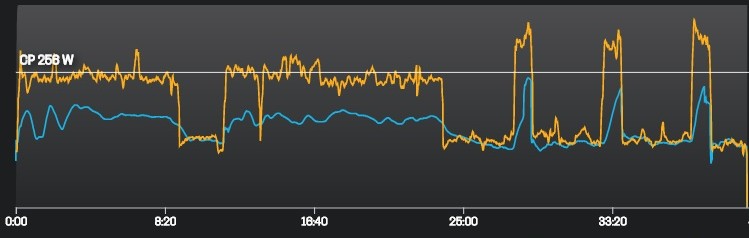
Graph shows running power (in Watts) and pace (in minutes per mile) that is part of run training for senior triathletes.  The graph shows three repeats of higher power and speed near the end of the run.
Power (in Watts) and pace (in minutes per mile) versus time from a Stryd power meter. Note the three intervals (gold and blue colored spikes) on the right third of the graph.
  • Hill repeats – According to the running power meter manufacturer Stryd, start with 2 x 15 to 20 seconds running up a hill with at least 8% grade (8 feet [meters] rise over 100 feet [meters] distance). Repeat every 7 to 14 days adding two repeats each session to a maximum of 10 per session.

Longer runs

  • Tempo runs – These are runs at a pace considered hard but still comfortable. Tempo runs are designed to increase anaerobic performance and, more specifically, the lactate threshold. The distance of these runs will vary with the distance of the race for which you are training and where in the training plan you are at the time. For example, the distances for tempo runs typically peak at about three-fourths of the way through a plan.
  • Long runs – These are the longest but also the slowest runs. The aim of these is to increase aerobic endurance.
  • Brick runs – These are runs of at least one mile immediately after a bike session. Brick runs train your body to run with good form after having completed the bike leg of a triathlon. Since this transition involves significant changes to body position (from the hunched over, aero or similar position to running), pay extra attention to your running form. An article on Training Peaks highlights typical problems with form when running after biking. It also describes the importance of proper running form in a triathlon using Olympic gold medal triathletes as examples.

Related post: Why Seniors Should Use Interval Training

Typical Run Training Session for Senior Triathletes

A high intensity run training session will consist of the following in order listed:

  • Dynamic warm-up (NO STATIC STRETCHING of cold muscles!) for 10 to 15 minutes by jogging or combining jogging with one or two of the warm-up drills described above.
  • Main set consisting of either repeats, tempo runs, or long runs.
  • Cool down by jogging for 10-15 minutes. Proper cool down provides the benefits of active recovery.
  • Stretching of warmed muscles immediately after completing the cool down portion of the run. This portion should include stretching the hamstring muscles, quadriceps, calf and Achilles tendon, and back.

The references at the end of this post contain detailed training plans for 5k (sprint) to full marathon (Ironman 140.6) distances.

Watch Your Form

Some books on triathlon training provide detailed descriptions of proper running form. These point to proper foot strike, head orientation, elbow angles, stride length, and so on. Kind of intimidating and too much for me to remember when I am running.

That’s why I appreciate that Joe Friel3 boils these down to simply ‘running proud’. You get most of the way if you think about looking proud – head high, standing tall, clearly defined steps, modest stride, etc.

Leave Your Questions and Comments Below

What have you learned to make your run training more effective? What is your favorite high intensity routine and why? Least favorite and why?

References

  1. Linda Cleveland and Kris Swarthout, Train To Tri – sprint and Olympic distances only (paid link)
  2. Bill Pierce, Scott Murr, and Ray Moss, Run Less Run Faster – 5k to full marathon (paid link)
  3. Joe Friel, Triathlete’s Training Bible – 5k to full marathon (paid link)
Affiliate Disclosure

How Does Choosing Running Shoes Change As We Age?

After beginning to train for my first triathlon, I purchased a pair of running shoes from a specialty running store. I was happy with the shoes and the experience. I was also pleased to have learned through this fitting that a wider shoe (2E) is a better fit for me than is a standard width.

However, after that first purchase, I started shopping for shoes online, partly for convenience. I was working full-time and did not relish shopping during the precious hours outside of work. Websites like barbieinablender.org were super helpful and I quickly began to realize that shopping online may be better than shopping in-store. You could buy a pair of shoes at the click of a button!

Online shopping allowed me to take advantage of sale prices which I was sure could not be matched by brick & mortar businesses that sold shoes. (I am now convinced that this was wrong.)

For these purchases, I used internet resources, such as the shoe finder apps and calculators on the websites of some manufacturers, to select specific brands and models of shoes.

Questioning My Process for Selecting Running Shoes

Recently, I came upon a Silver Sneakers post titled 5 Steps to Find the Right Workout Shoes. The article included some new – at least for me – suggestions for lacing and tying running shoes based on foot shape, selecting socks, and breaking in new shoes.

The author’s information was useful. However, comments from the post’s readers were even more enlightening. The author stressed the point that shoes should be comfortable. Meanwhile, the readers highlighted how often shoes did not fit properly or were uncomfortable.

I had to stop and think about how I would go about selecting my next pair of running shoes. What was the most effective way to find them? And, did my needs in a shoe change with age?

Does Age Matter? Yes & No!

I asked Kurt Decker, an avid runner and General Manager of TC Running Company, if he has observed an effect of age on shoe selection.

While, in his experience, the age of the runner is not a specific factor in choosing a running shoe, he has seen some tweaks that runners tend to make with age. The two major changes are:

  1. Increasing the amount of cushioning in the shoe and
  2. Increasing the width of the shoe; feet tend to become wider, or splay, with age and more miles of running.

“Aging is like so much in life – it’s different for each of us.”

Terry VanderWert

The Running Store Approach to Choosing Shoes

Even before reading the SilverSneakers article, I had started to question the online tools I had used for selecting shoes.

Every time I used a particular calculator, a different model of shoe would be recommended even though I had given the same answers to the questions. Besides, how could static tests of balance and bending account for dynamic movements during running?

I decided to visit the local TC Running store to experience their fitting process. When we first met, I told the salesperson, Travis, that I was doing research for a Senior Triathletes post. As a result, he was kind enough to explain the process and shoes in detail.

Step 1: Evaluating a Current Pair of Slightly Worn Running Shoes

I have read that the wear pattern on a current pair of running shoes paints a picture of the owner’s running form. Therefore, I brought along a pair of shoes that were the most worn yet still being used for running.

Travis asked if the shoes had been used exclusively or nearly always for running (which they had been) or for other non-running activities such as walking around my home or office. Running creates a unique set of movements and stresses and, therefore, wear pattern.

He pointed out that while conventional wisdom involves inspecting the heel for its wear pattern, the more important area to inspect is across the width of the shoe under the ball of the foot. The uniform wear on my shoes pointed out that I have a fairly neutral gait and foot strike. He was also able to see a small but minimal effect of asymmetry in my ankles.

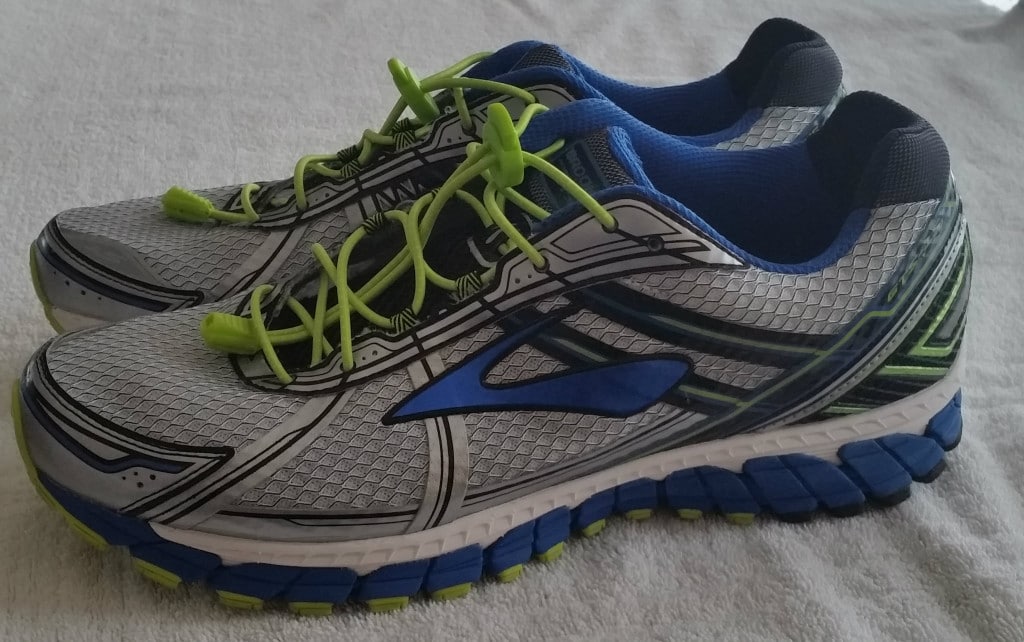
A moderately worn pair of running shoes. We used these as part of the process for choosing new running shoes.

Step 2: Checking My Gait Without Shoes

Before choosing a single pair of shoes, Travis had me walk with socks but no shoes across a hard surface. He observed my movement as I walked about 10 yards away from and then back to him.

From this, he selected three pairs of shoes based on the level of support he judged that I needed.

Step 3: Observing My Running Gait

Next, I tried on shoes from two manufacturers. The shoes represented two different technologies for support of the foot during running.

I did not try the third pair; I was not planning to purchase shoes that day and did not want to keep Travis from ‘paying customers’.

The first pair I tried were light gray Brooks Adrenaline 19 with GuideRail technology. GuideRails, new with this year’s models, provide support through, as the name implies, rails (rods) molded into the shoe on each side of its heel.

The second shoes, an olive green pair from New Balance, provide support through stiff foam along the edges of the shoe from the heel to middle of the arch.

I jogged about 10 yards away from and then back toward Travis in each of the pairs while he observed me. His conclusion was that both pairs appeared to provide the required support.

Both shoes were extremely comfortable and nice looking. They surely made me want to buy a pair. At the very least, I may have looked for the best deals online to satiate my curiosity! However, I refrained from the temptation since I didn’t need them yet.

Brick & Mortar or Online?

I am much more likely to purchase from a brick & mortar store like TC Running Company, that specializes in running shoes, rather than from an online store.

As near as I could tell from the discussions, the prices from TC Running are comparable to those from online sources. For the price-conscious shopper, TC Running also offers ‘last year’s’ models at discounted prices, just like the online stores.

Even if the prices were slightly higher, I would be much more confident in the selection of shoe based on a dynamic evaluation of my running form than from a static-only (at best) assessment with the online stores.

I understand why businesses choose to sell online. After all, an online store allows you to cater to shoppers who cannot browse and buy when retail locations are not traditionally open. As well as that, an ecommerce platform (visit this link to see one) can provide data and analytics about products and customers much quicker and easier than if that were to be analysed in a brick & mortar store. But for me, the actual store always wins.

If the Shoe Fits, You Will Wear It

Most runner’s shoes are selected after trying on several pairs of shoes to find a pair that provides the balance of support, fit, and comfort. The same process for determining the right shoes is used for all ages, even if the outcome in terms of the specific shoes that are selected changes with time.

Remember: Shoes that fit properly and feel comfortable when running are much more likely to get used.

Leave Your Comments and Questions Below

Where do you buy your running shoes?

How, if at all, have you found your shoes to change with age?

Please share your thoughts below.

What Does Science Say About Running for Seniors?

Is running safe for seniors, defined here as those age 50 and over? What if our joints are showing early or advanced signs of arthritis?

This post summarizes what I learned while investigating what science has to say about running for seniors.

What Does the Research About Seniors and Running Tell Us?

A majority of senior triathletes come to the sport from a background of running. However, those who have not spent their ‘before triathlon’ lives as runners face at least some level of confusion about whether they should begin running later in life. The ‘conventional wisdom’ is that running is hard on our joints, especially those that may already show signs of age.

An internet search of the phrase ‘running vs. walking’ produced interesting and even pleasantly surprising results from academic research. It turns out that academic research results do not support the conventional wisdom.

I must preface the following comments with the disclaimer that the physicians of some, including my wife, who have artificial knees, hips, or other joints may advise their patients against running. I am not qualified to debate this advice.

However, if your doctor has given you the ‘ok’ to run, then consider the following.

Running and Injuries for Seniors

A review of 400 articles which covered 15 studies based on data gathered for the same subjects over time produced the following conclusions:

A drawback of running is the relatively high risk of injury, with an incidence varying between 19% and 79% according to a review of several studies. . . . Acute running injuries are rare, consisting mainly of muscle injuries, sprain, or skin lesions (blisters and abrasions).[1]

The major conclusions from this review were that the tendency for injury is higher for those, especially men, with a history of leg injuries and that shoe inserts/orthotics should be avoided. Podiatrist treatment could be beneficial to people who suffer these types of injuries (such as places like heartlandpodiatry.com). The authors admitted that there could be a connection between previous injury and the use of inserts. “It is possible that runners who are more prone to injury are given orthotic/inserts earlier”.

Only one of eight studies included in the review showed that age had a significant effect on injuries. In the one study which did show an effect, age was shown to make subjects more susceptible to overuse injuries, especially to the hamstrings and Achilles tendon.

Another report showed that the link to leg injuries is primarily related to two anatomical factors – feet with high arches (cavus feet) and unequal leg length.[2]

There is also evidence that for older runners, the loss of shock-absorbing capability can increase overuse injuries. However, this can be countered through the use of running shoes with optimal cushioning properties and by limiting running under high impact conditions.[3]

The Benefits of Running Outweigh the Risks

Even if we interpret these studies to mean that older runners are more susceptible to overuse injuries, the conclusions suggest that these factors can be managed.

On the other hand, there is plenty of evidence from research to show that there are important benefits of running.

Muscular efficiency – improved ability for ‘moving young

One study[4] showed that “older runners had a 7-10% better walking economy than older walkers over the range of speeds tested . . . and had walking economy similar to young sedentary adults over a similar range of speeds”. The researchers concluded that “Running mitigates the age-related deterioration of walking economy whereas walking for exercise appears to have minimal effect on the age-related deterioration in walking economy.”

Another study[5] concluded that older runners had modified their biomechanics to adjust for reduced strength of some muscles of the calf. The result was more effective movement of older runners during walking as compared to their non-runner counterparts. Researchers concluded that “runners may be able to transfer motor adaptation from running to walking even in old age.”

One other study[6] concluded similarly that “vigorous exercise, such as running, prevents the age related deterioration of muscular efficiency and, therefore, may make everyday activities easier.” The study showed that “running economy”, which is determined primarily by the storage and release of elastic energy from the leg, is only minimally different between young runners and those over 65 years.

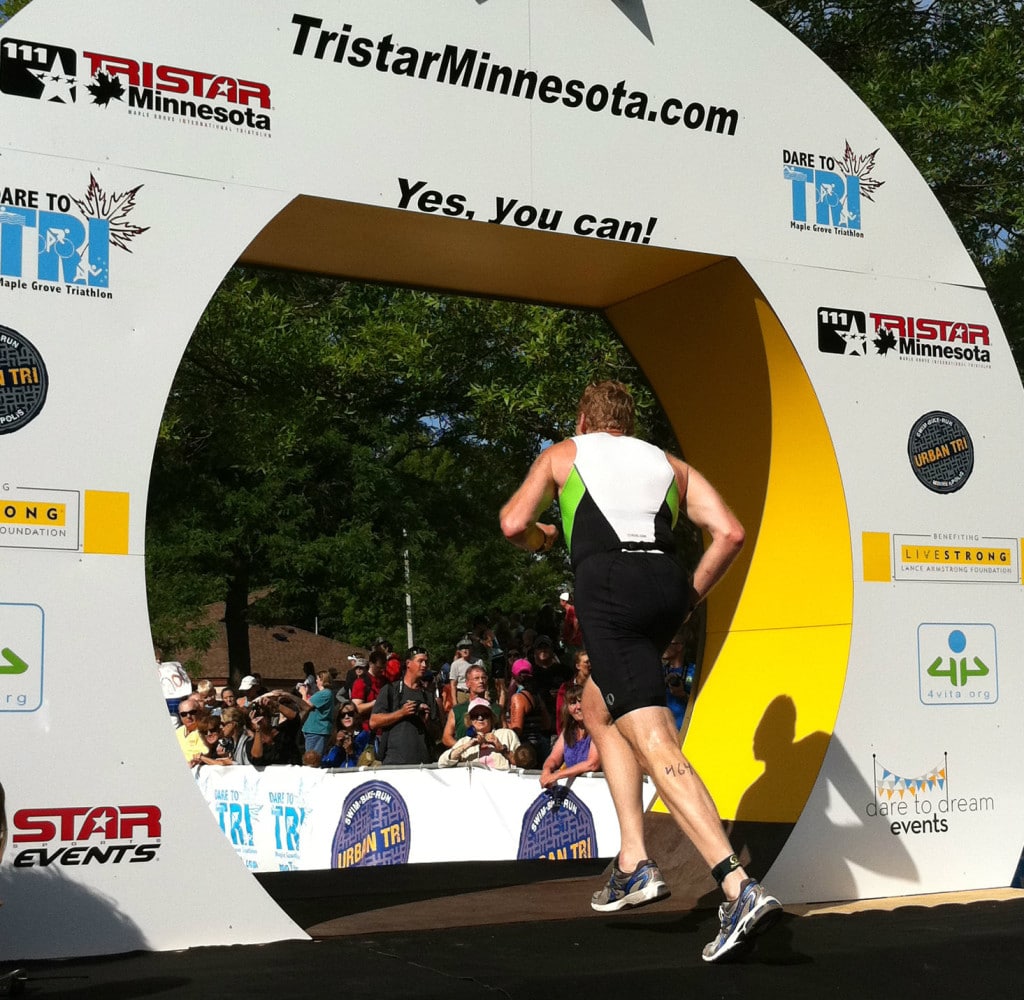
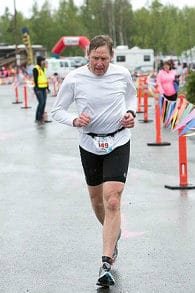
A senior triathlete running across the finish line of the Maple Grove Minnesota triathlon

Crossing the finish line at the Maple Grove, Minnesota triathlon

Weight control through running for seniors

Running has also been shown to be more effective for weight control than walking alone. In one study[7], researchers attempted to determine if running and other exercises, including walking, would produce the same benefits in terms of weight control (BMI and waist circumference). The conclusion was that non-running exercises could not be substituted for running to achieve the same weight loss results.

Similarly, another study[8] showed that even though the change in BMI is strongly related to the change in energy expended for both running and walking, the change in BMI was greater for running than walking This means that running would be good to get involved in, and getting some appropriate clothing (such as that from https://www.ryderwear.com/collections/womens-shorts
) can help the process be easier and less dragging on the body.

Reduced mortality from certain chronic diseases and cancers

Studies have also shown that exercise, whether running or walking, significantly reduces cardiovascular disease, Chronic Kidney Disease, pneumonia, influenza and other illnesses in people with diabetes. [9] Likewise, the risk for fatal brain cancer has been shown to be reduced by both running and walking. [10]

Running has also been shown to significantly reduce mortality of breast cancer after diagnosis, whereas walking was shown to have a non-significant effect. [11]

More Running is Not Always Better?

People who are physically active have at least a 30% lower risk of death compared to those who are inactive. However, according to conclusions of the Copenhagen City Heart Study [12], the ideal amount of exercise for improving longevity is uncertain.

Findings of the study found that light and moderate runners have lower mortality than sedentary non-runners. On the other hand, “people who run most days of the week at a pace faster than 7 miles per hour have the same risk of death as sedentary individuals.” [13] That’s good news for slow runners like me!

Running Can Be Good For Seniors

Science shows that running has a number of health benefits. The benefits of running are generally greater than those from walking alone, especially when done in moderation.

While running is more likely to lead to injury than walking, paying attention to and minimizing conditions that lead to overuse injuries – along with strength training and stretching – will minimize the occurrence of injuries.

Remember, if you have not been running recently, start slowly (see How To Start – Or Re-Start – Running). If you have been running, don’t increase distance or intensity too quickly.

Leave Your Comments and Questions Below

What are your thoughts about the conclusions presented here?

Has your running changed with age? If so, how?

References

[1] van der Worp, Maarten P., et al., “Injuries in Runners; A Systematic Review on Risk Factors and Sex Differences”, PLoS One, 2015; 10(2): e0114937.

[2] Fields, Karl B., et al., “Prevention of Running Injuries“, Current Sports Medicine Reports: May/June 2010 – Volume 9 – Issue 3 – pp 176-182.

[3] Bus S. A., “Ground reaction forces and kinematics in distance running in older-aged men“, Med Sci Sports Exerc. 2003 Jul;35(7):1167-75.

[4] Ortega J. D., et al., “Running for exercise mitigates age-related deterioration of walking economy“, PLoS One. 2014 Nov 20;9(11):e113471.

[5] Karamanidis, K., et al., “Aging and running experience affects the gearing in the musculoskeletal system of the lower extremities while walking“, Gait & Posture, April 2007; 25(4):590-6.

[6] Beck O. N., et al., “Older Runners Retain Youthful Running Economy despite Biomechanical Differences.” Med Sci Sports Exerc. 2016 Apr;48(4):697-704.

[7] Williams P. T., “Non-exchangeability of running vs. other exercise in their association with adiposity, and its implications for public health recommendations“, PLoS One. 2012;7(7):e36360.

[8] Williams, Paul T., “Greater Weight Loss from Running than Walking during 6.2-yr Prospective Follow-up“, Med Sci Sports Exerc. 2013 Apr; 45(4): 706–713.

[9] Williams P. T., “Reduced total and cause-specific mortality from walking and running in diabetes“, Med Sci Sports Exerc. 2014;46(5):933-9.

[10] Williams P. T., “Significantly greater reduction in breast cancer mortality from post-diagnosis running than walking“, Int J Cancer. 2014 Sep 1;135(5):1195-202.

[11] Williams P. T., “Reduced risk of brain cancer mortality from walking and running“, Med Sci Sports Exerc. 2014;46(5):927-32.

[12] Schnohr P., et al., “Dose of jogging and long-term mortality: the Copenhagen City Heart Study“, J Am Coll Cardiol. 2015 Feb 10;65(5):411-9.

[13] Greenfield, Paige, “Why Walking Is Better Than Running”, http://www.huffingtonpost.com/prevention/walking-versus-running_b_8123084.html.

Masters Running: What Hal Higdon Teaches About ‘Moving Young‘

A review of “Masters Running: a guide to running and staying fit after 40”, Hal Higdon, Rodale Press ©2005.

Staying active as we age is one way to not only live longer but with higher quality.  Of the 500 respondents to a survey of runners, 93% indicated that they ran to stay fit.

In his book “Masters Running”, Hal Higdon shares advice from his life as a runner.  Lessons from his experience will help you become a better runner and decrease the inevitable effects of aging.


A Little Background

Running is my weakest leg of a triathlon.

I could resign myself to the fact that, according to Dr. David L. Costill, I had simply failed to “carefully select my parents”.  However, I don’t just want to participate in triathlon.  I want to compete in the sport.  For this reason, I have read several books on running and am following a run training program from “Run Less, Run Faster” by Bill Pierce et al.

However, I found the advice from Hal Higdon particularly useful when I started running around 10 years ago.  I have also followed his ideas for the times I have restarted running after an injury or extended time away from running.


About the Author of “Masters Running”

Hal Higdon is a competitive runner and has been since he was in college at Carleton College in Northfield, Minnesota.  He continued to run after college and competed internationally at Masters (over age 40) events.

However, despite his own accomplishments, he was struck by 91-year-old Duncan MacClean who he described as ‘moving young’ despite his age.    As Higdon wrote, cosmetic surgery and hair color can change our appearance, but unless we stay active, the first time we move, we will give away our age.  Celebrated USA Triathlete Tony Schiller made a similar comment during our conversation.

In the book, Higdon shares the results of academic research that, in the late 1970’s, documented what we now take for granted, that those who remain active, live longer on average.  The more strenuous the activity the greater the effect.  Swimming, biking, and running are among the activities that have the most impact on longevity.

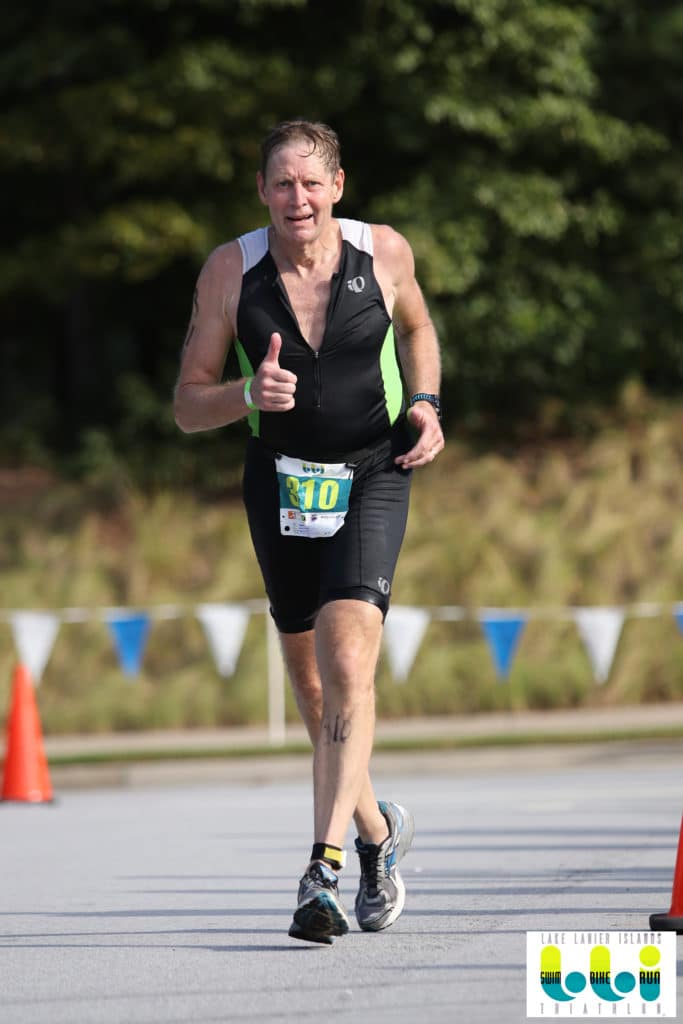
near-the-finish-line-at-the-Georgia-triathlon

Sprint to the finish line at the Lake Lanier Islands Triathlon 2018. The picture was taken by Tim Nettleton for TrueSpeedPhoto.com and provided compliments of Georgia Multisports.

Starting to Run

Starting from the proof provided from studies by researchers Ralph S. Paffenberger, Jr., M.D.; Kenneth H. Cooper, M.D.; Michael L. Pollock, Ph.D.; Jack H. Wilmore, Ph.D.; and David L. Costill, Ph.D., Higdon shares ideas on how to become a runner and continue running well into the senior years.

There is no argument that our abilities and needs relative to running and other types of physical exercise change as we age.  Nevertheless, those who commit to running can be successful by:

  • starting to train,
  • training more once started,
  • training smarter, and
  • learning when to rest.

While it is best if we never get out of shape, this news may be too late for some.  We must work with what we have and start from where we are.

If you want to start running, Higdon provides a simple plan that he calls the ’30/30 Plan’.  This approach involves a mix of walking and running for 30 minutes per day for 30 days.


Improving the Run

Having started running, we can adopt Higdon’s ideas for improving our running ability by:

  • gradually, but consistently, increasing the intensity (speed and distance) of running
  • strength training.

Higdon makes a major case for strength training indicating that the number one goal for the book is to convince the reader to include regular strength training in our routines.  The book includes an entire chapter on how to create a personalized strength training program.

Training smarter includes cross training.  This fits the plans of a triathlete who must train in three sports.  Higdon also identifies sports that support running, such as cross-country skiing and snowshoeing, as well as complementary activities such as stretching.

“Masters Running” includes information about rest and recovery.  Proper rest and recovery helps to prevent injury while maintaining the benefits of previous smart training.


Order “Masters Running”

Through examples and anecdotes from his nearly lifelong experience with running, Higdon not only makes points important to becoming a better runner but also illustrates why these are important, something our inquiring minds appreciate.


error

Enjoy this post? Please spread the word :)