Running Another Triathlon, This One With Cancer

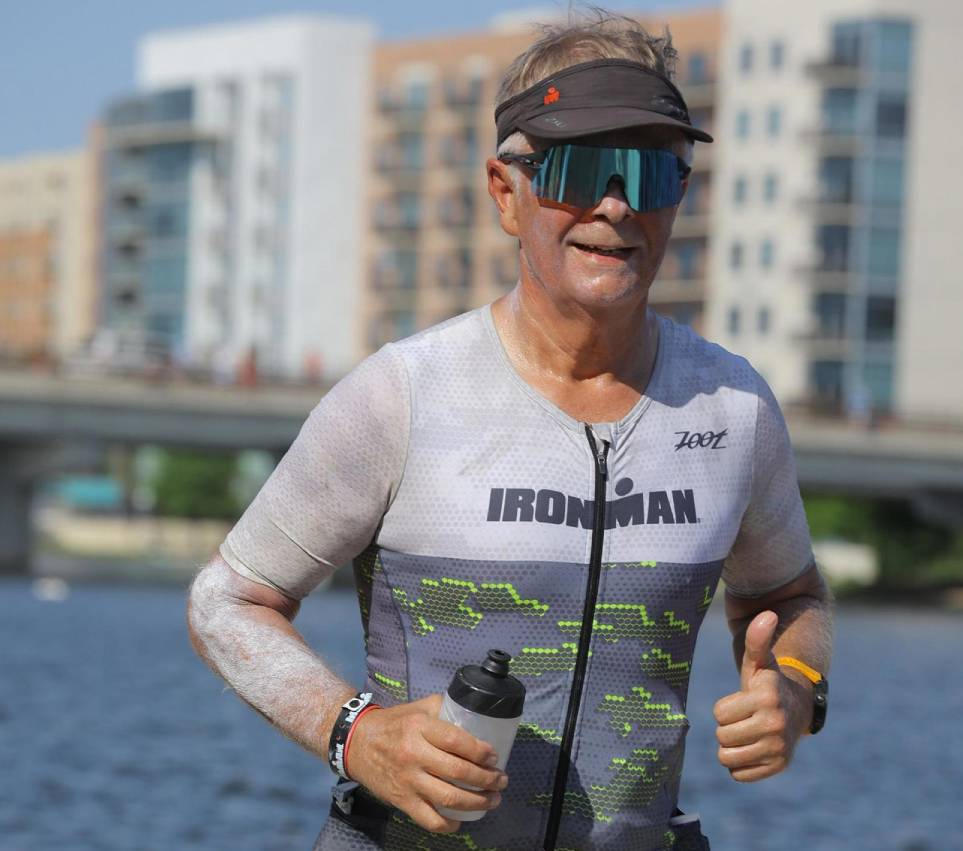
One of the unexpected joys of writing for the Senior Triathletes website has been meeting people like Laurent Labbe. Laurent has become a friend over the years, as he has shared his experiences with triathlon and lessons from the sport. I have followed him to numerous countries through triathlon and multi-day bike races. And, I have learned from his lessons in swimming, biking, running, nutrition and hydration.

Through our email exchanges, Laurent has introduced me to his wife and children. I have especially enjoyed seeing the ways his family has become part of the sport.

Laurent Labbe and sons who are watching their father do triathlon with cancer
Laurent Labbe has introduced his sons to triathlon, hoping to pass on his love for the sport to the next generation.

A New Challenge

So, it affected me profoundly to learn of another race Laurent has recently entered, this one against cancer.

A few weeks ago, Laurent sent me an update, a message I have come to enjoy eading. But this message was different. He began with the statement, “Unfortunately, this year was complicated for me.”

The message continued with, “All started quite well with the Hong Kong Marathon in January and my best time as an old guy (5 hours, 20 minutes) and in February, Oman IronMan [IM] 70.3. I finished, not as well as I was expecting. Running was still difficult for me.”

“I registered again for the Nice [France] full IM with my son again. (We did the 2019 version together.) But, some unpredictable events crashed my plan.”

Laurent had been training for Nice, despite “long time abdominal pain.” At the beginning of April this year, his doctors found a cancerous tumor on his colon. Through two surgeries, one in mid-April and the second at the beginning of May, the doctors removed the tumor.

Despite the surgery and thanks to Laurent’s good physical condition, he recovered fast, even surprising his doctor. He was home within one week of surgery. Two weeks after the second surgery, he was back to biking,

Then, after the oncologist confirmed the cancer during a followup in late May, Laurent began a six-month oral chemotherapy treatment.

“Of course, I had no choice but to postpone the June IM in Nice. Instead, my son and I decided to try Barcelona on October 5th this year, despite my still being under chemotherapy treatment.”

If Cancer Were Not Enough Challenge For Laurent’s Next Triathlon

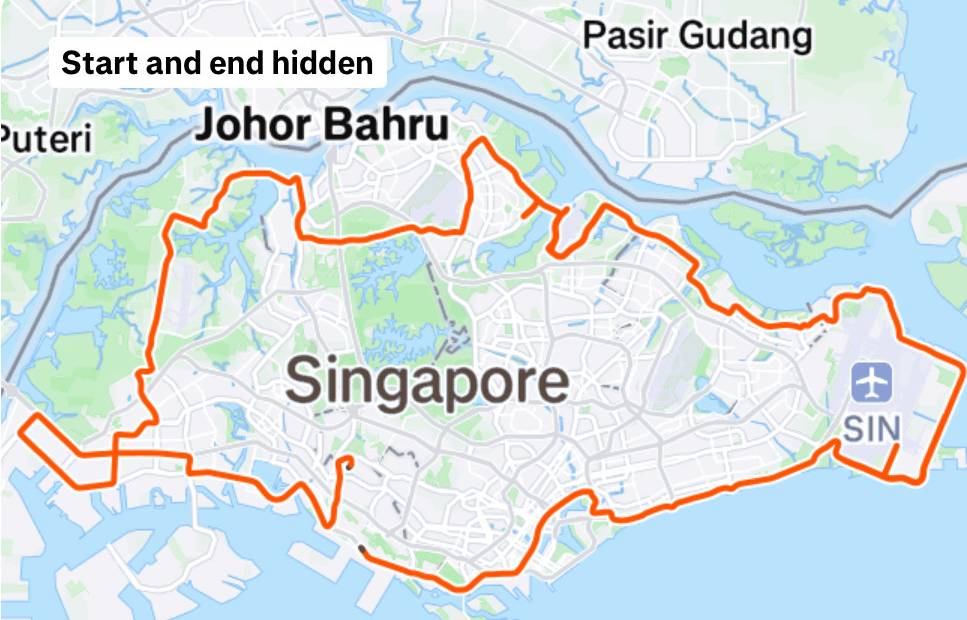
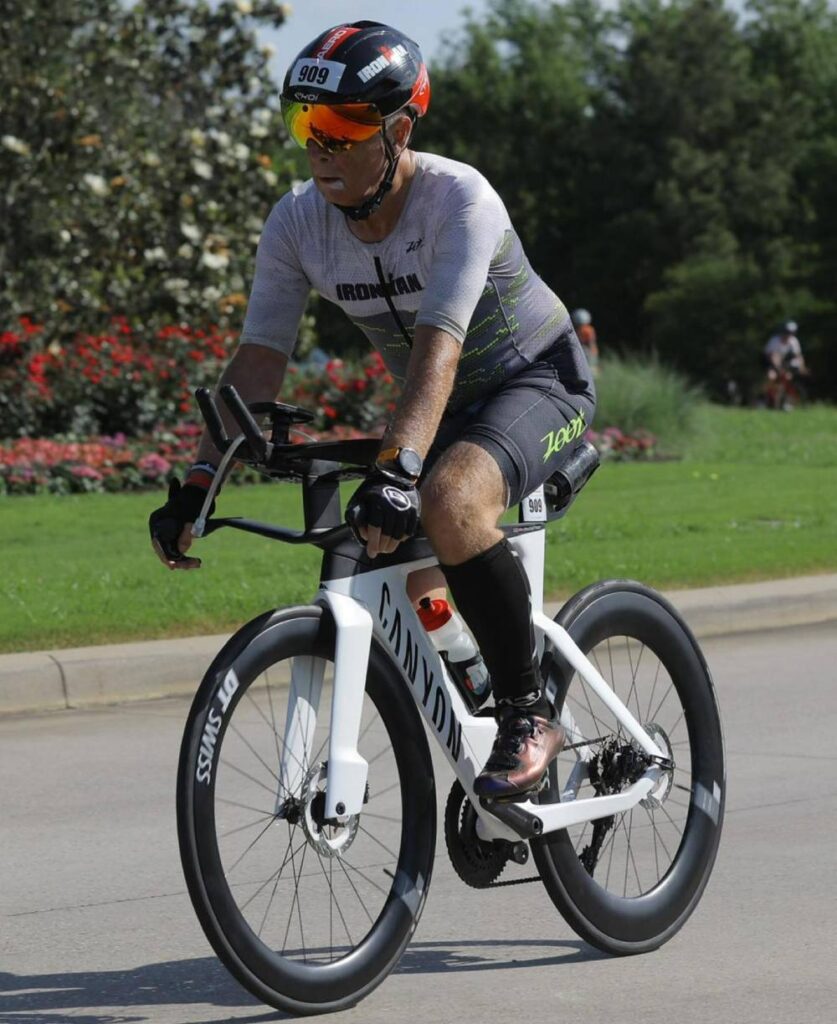
Ironman Calella-Barcelona

Setting A Goal

Finishing With A Personal Record

Supporting Laurent during this triathlon were his son and daughter-in-law.

Lessons From Triathlon With Cancer

Share Your Questions And Comments Below

Have you trained for a triathlon while being treated for cancer? If so, what have you learned?

Do you have questions for Laurent?

Please share your comments and questions below.

Comments: Join the conversation below — Click on “Subscribe” (located above the Comment box) if you’d like to be alerted to replies to your Comment. Even if you do not submit a comment, you may subscribe to be notified when a new comment is published. Please note that I review all comments before they are posted.

Book Review: Triing by Senior Triathlete Doug Morris

Between 1986 and early 2016, Doug Morris did 168 triathlons in the 50 states of the USA and on six continents. Doug’s story, Triing, is full of practical lessons about the sport of triathlon around the world. It also shows how he juggled family life, work, and triathlon training and racing throughout what he termed the “Journey.”

Following are my key takeaways from reading Triing: A Journey of discovery, challenges, and camaraderie while racing in 50 states and the continents beyond.

About the Author

As a boy growing up in rural Indiana, Doug Morris raced imaginary competitors on a mock racecourse filled with obstacles. It was here that he began to hone his self-identified competitive Type A personality. This early interest in racing blossomed into competitive running while studying at Indiana University. Here, Doug specialized in 800 meter racing, including at several national championships. However, that was still just the beginning as he continued racing for the next seven years after graduating.

Then, in 1986, Doug’s girlfriend and now wife of over 35 years, Chris, suggested they do their first triathlon, an Olympic distance race in Chicago, Illinois. A couple of years passed before his next triathlon, after which he completed about one race per year. As the triathlon bug grew within a competitive host, Doug soon set new goals. Among the first was to qualify for and race in the IRONMAN World Championships in Kona, Hawaii.

“A finisher may sport a tattoo, but whether she raced in a full-distance race or any other triathlon, she will forever be a triathlete after the first race.” – Doug Morris in Triing

In the meantime, Doug and Chris married and had two daughters. Both girls were born with an extremely rare neurodevelopmental disorder, alternating hemiplegia of childhood (AHC). Doug’s work provided the family with the opportunity to live in various places in the United States and in Thailand.

Triathlon training and racing continued to be an integral part of Doug’s life. Training was his form of stress relief. And when the stress was gone, he persevered long, difficult, and sometimes dangerous training sessions. Still, through challenges of many kinds, he stayed true to his race day mantra, “I chose to be a competitor instead of a spectator”. The reward was awesome results, including first place overall and age-group finishes in short and long course triathlons.

What I Learned From Reading Doug’s Story

Through Doug’s description of his triathlons, I learned about various places around the United States and in ten countries on six of the seven continents of the world. Some places I had visited before, some even for a triathlon. Still, I appreciated Doug’s perspective on the people he met, food he ate, places he and his family members visited, and their experiences. It was especially interesting to learn about racing in significantly different cultures, especially those of Thailand, Australia, and South Africa.

Triing highlights the special importance of mental toughness for longer triathlons. It was also inspiring to read the demonstrations of camaraderie, especially among “middle to back-of-the-packers”, who shared their resources with each other during races so they could all take home a finisher medal.

Doug also confirmed an observation I made during my triathlon career, that not everyone, especially some bosses, appreciated his love of triathlon.

The Morris family (left to right): Eldest daughter, Hayes; Rita Tweed (Doug’s “adopted mother-in-law” and originator of the idea for Triing); youngest daughter, Caroline: Chris; Doug. 

What I Especially Enjoyed About Triing by Doug Morris

Throughout this book, I enjoyed seeing how Doug integrated triathlon into both his family life and career. Early on, Doug’s two young daughters joined him on training rides, seated in a trailer towed by his bike. Later, his daughters’ knowledge of triathlon grew as they accompanied him to races.

For many triathlons, one or more family members joined Doug while traveling to a new part of the country or world. While Doug raced, they often volunteered and always encouraged other racers. Through such experiences, Doug watched his daughters mature.

Doug credits Chris for his success. First, she managed the home while he was training and racing. But she also provided much-needed encouragement, notably when he was on the verge of quitting.

After taking a year off from racing following a career-related blow, Chris told Doug, “It’s time to signup and race, or you’ll be a bitter, miserable middle-aged man regretting a missed opportunity.” That was the end of his sabbatical from triathlon, and when he went all-in to complete the Journey.

Triathlon Mimics Life

Doug also documents the connections between triathlon and his career. I enjoyed reading how Doug took lessons from training and racing into the office and his work. Sometimes, he also found lessons from college and work influencing his training.

Since the story begins with Doug’s first triathlon through completing the 50-state and six continent Journey, you will also see how he changed physically, mentally, and emotionally. I appreciated the many people along this path who influenced, pushed, and even inspired him.

Here is one example. In what appeared to be his most difficult triathlon, when he was barely able to keep going, a woman ran by him and said, “You did not come all this way here to walk.” He agreed and finished the last 10 km of the race.

I also appreciated that he stayed true to following the rules, even when competitors did not. This was especially evident is his description of some non-draft legal triathlons in which many of his competitors ignored the no drafting rule. Doug was both competitive and, in most races, a contender for a spot on the podium. Following the rules when others weren’t could cost him. Still, he followed them.

For Whom Is This a Must-Read

Given the number of triathlons documented, anyone interested in an in-depth view of triathlon, the triathlete’s mind, and the challenges and rewards of the sport will find Doug’s story interesting and inspiring. However, in particular, anyone with aspirations for long course (70.3 or 140.6) triathlon ought to read Triing. You will learn of issues that seldom or never come into play for shorter races. You will also see how his training schedule adjusted based on the upcoming schedule of races and their distances.

For a sport in which there are an inordinately high number of ways to spend a lot of money, Doug’s insights are also worth considering.

What I Would Have Liked to Learn More About

In a few locations, Doug mentions triathlon coaches. Some provide value commensurate with their cost. Still, others are not as good. As a triathlete who has never hired a coach, I would have liked to read what he learned about how to spot a good coach and know when to make a change.

Want to Buy Triing?

If you want to purchase a copy of the book, please consider using my Amazon affiliate link. With this purchase, I earn a small commission that helps cover the costs of maintaining and growing SeniorTriathletes.com.

Doug Morris also recently released an audiobook version which can be purchased at Triing: A Journey of discovery, challenges, and camaraderie while racing in 50 states and the continents beyond by Doug Morris – Audiobooks on Google Play.

Share Your Questions and Comments With Doug Morris

Do you have questions or comments for Doug? Please leave them below and I will make sure he gets them.

Comments: Join the conversation below — Click on “Subscribe” (located above the Comment box) if you’d like to be alerted to replies to your Comment. Even if you do not submit a comment, you may subscribe to be notified when a new comment is published. Please note that I review all comments before they are posted.

Affiliate Disclosure

What’s Next For You in Multisport Racing?

What’s next for you in triathlon or other multisport racing? With registration for next year’s triathlons beginning to open, this question may be one you are asking yourself.

It has been a little over one year since I achieved my goal of doing a triathlon in all 50 states of America. So, the “what’s next” question is one I have been asking myself a lot. It’s also a question others who know of my recently completed triathlon goal have been asking me.

In this post, I share my thoughts hoping to learn more about your plans and goals.

Longer Distance Triathlon

I am sure that most people who have completed more than one or two triathlons think about doing longer distance races. For me, this started about mid-way through my 50 state triathlon journey. Since I viewed the marathon as my greatest challenge for completing an Ironman triathlon, I started by training for and completing a half-marathon. In my plan, the half marathon was a stepping stone to a full marathon.

An injury and challenges at work at the beginning of the next year sidelined my plan to run a full marathon during the year. I never resumed training for the iron distance.

Still, I have always wondered if I can do what so many of you in our community have done. It seems natural to wonder if we can go further.

There is also value in inspiring those who come after us, such as children and grandchildren. By taking on tough challenges, we can be part of the movement to change people’s perspective on age. Triathlon has certainly done that for me.

However, I no longer see this as a priority. Investing 12 to 14 hours per week training for an iron distance triathlon is not a commitment I am ready to make. While I still train for sprint distances, my days include many other activities around the house and with my wife, other friends, and family.

Maybe I should set my sights on an intermediate distance triathlon, such as the international distance. Along with this, I might aim to compete at the National Senior Games, Pan-American Masters Games, or World Masters Games.

Aquabike Racing

I credit senior triathlete Nikki Austin for getting me to consider this option. In preparing Racing For Fun – Nikki Austin’s Story, I learned about the aquabike multisport event.

Running has always been my most difficult leg. While I have trained in running the most of the three legs, following the “train your weakness” philosophy, I am still slow.

On the other hand, the guy who performed my bike fittings tells me that my body is made for cycling. And, biking has been my strongest leg.

For this reason, the aquabike multisport event appeals to me. I have swam and ridden the distances of a half iron triathlon many times. I just need to get an updated fitting and/or different bike seat to be comfortable over the distance.

New Venues for Sprint Triathlons

Even after considering alternatives to the sprint distance, I still come back to my first triathlon love, sprint. This morning, I read a comment on SeniorTriathletes.com from a reader about the most beautiful venue for a triathlon. Her’s was June Lake, California.

That caused me to think about other places across the USA, some in which I had once considered doing a triathlon. What if we went back to these? Certainly, there are plenty of new places to explore, new experiences waiting to be enjoyed, and new people to meet.

What’s Next for You?

Clearly, I have not made up my mind on what’s next for multisport training and racing. The only thing I am certain of is that I need to stay physically and socially active for healthy aging.

Are there other multisport race-related goals you are considering? Please share your plans and the motivation behind these.

Comments: Join the conversation below — Click on “Subscribe” (located above the Comment box) if you’d like to be alerted to replies to your Comment. Even if you do not submit a comment, you may subscribe to be notified when a new comment is published. Please note that I review all comments before they are posted.

What Motivates Older Triathletes? – Sarah Gordon’s Story

In September 2023, I had the amazing opportunity to visit Cozumel, Mexico, with a group of close triathlete friends and my husband by my side in support. The picture above is of our group that went to Cozumel. I am the third from the left. We all competed in the Ironman 70.3 race, and it was truly an amazing adventure!

The entire experience embodied the spirit of the triathlon community: hard work in training, comradeship in wanting the best for each other, and lots of sweat, smiles, hugs, and love. Perhaps what impacted me the most was the incredible moments shared in friendship when accomplishing new and challenging goals.

And, along the journey through 6 to 8 months of training, there were plenty of setbacks for us as a group: illnesses, job changes, injuries, surgeries…all the different ways life tries to derail a goal. But we made it with resilience, friendship, and enthusiasm and had an incredible time!

I share this as an introduction about this one particular adventure to explain the “why” behind my purpose and passion. What motivates older triathletes?

A Bit More About Sarah Gordon

I am currently a student at Concordia University, Chicago. I am a doctoral candidate in the Leadership program for Health and Human Performance.

Training and competing with my friends over the years has impacted me greatly in returning to school to obtain this degree and, most certainly, my dissertation topic. Watching people overcome obstacles and seeing the joy and excitement on friends’ faces as they finish strong with a podium win has made an impact on me. As a friend recently stated, the triathlon community “embodies the best of humanity.”

It only seemed natural to focus my dissertation topic on being a triathlete and the triathlon community. The number of older triathletes competing in triathlon intrigued me. I wanted to learn more about what motivates older triathletes, those age 65 and over. I was also curious if this group has a unique perspective on aging.

With these questions, I decided to devote my dissertation research to answering these questions.

Are You A Triathlete Aged 65 Or Over? If So, Here’s Your Chance To Be Heard

The “Survey Link” below will take you to a page where you can learn more about my study. You can, if you wish, participate in my research through a survey. The first page contains more details of the study. After reading this page, you will have the option to continue with the survey or exit the page.

Survey Link

Want to Contact Sarah Directly? Here’s How

Have questions or thoughts for Sarah? You are welcome to contact her directly at slgordon48.sg@gmail.com.

error

Enjoy this post? Please spread the word :)