Can I Do Triathlon With Afib?

If you have been diagnosed with afib, is it worth training for multisport endurance competition, such as triathlon? This post, prompted by a reader diagnosed with afib, contains valuable advice from a cardiologist whose father is an ultramarathon runner.

Disclaimer

What is Afib?

Cardiologist Dr. Brian Saluck, Citrus Cardiology Consultants, P.A. describes atrial fibrillation (AF), or afib, as “a rapid heartbeat which is irregularly irregular. This means that the duration from beat to beat is different and the rhythm of the heart is not regular.”

He also noted three categories of AF:

  • Rapid AF, for which the heart rate is above 110 beats per minute (bpm).
  • Controlled AF for which the heart rate is between 60 and 110 bpm.
  • Slow afib for which the heart rate under 60 bpm.

The irregular-irregularity common to all types makes afib a condition to be taken seriously. According to StopAfib.org, “If you have non-valvular afib, you are nearly five times more likely than someone without the condition to have a stroke; if you have valvular afib, your risk is 17 times higher. In fact, about 15% or more of all strokes in the US are related to afib. You also have twice the risk of dementia, three times the risk of heart failure, and a 40 to 90 percent increased risk of death compared with people your age who don’t have afib.”

What Are Risk Factors For Afib?

Several factors contribute to the risk of stroke or heart failure in patients with non-valvular atrial fibrillation (AF). These include the patient’s history with diabetes, hypertension, congestive heart failure, valve disease, and prior stroke or transient ischemic attack. Other factors include age, gender, and if the patient has sleep apnea.

Medical professionals often assign a number to each of the primary risk factors to arrive at a score called CHA2DS2-VASc. The risk score is used to define a treatment plan, including prescription of medications such as anti-coagulants.

Is endurance exercise a risk factor for producing an Afib event?

Is there such a thing as exercise-induced AF? “Yes, for some people, exercise can be a risk factor, ” according to Dr. Saluck.

“There is a thought that in athletes whose resting heart rate is too slow, exercise can induce an afib. A normal heartbeat, over 50 bpm, suppresses other irregular heart beats. However, if the sinus heart beat, that originating from the sinus node of the heart, is low, the irregular heartbeats can take over.”

Planning To Start Triathlon But Have Afib?

“The potential risk of exercising with AF is heart failure, ” stated Dr. Saluck. “As you demand more oxygen to the heart, the heart is not relaxing normally. When you are in afib, you lose the atrial kick that normally occurs when the top part of the heart, called the atrium, contracts during the peak filling of the ventricle. That extra little contraction improves the cardiac output by 15 to 20%.

“When you are not in a normal rhythm, that is in afib, you do not have the normal contraction of the sinus node. When the atrium does not contract, you lose the extra 15 to 20% efficiency. A person with afib can go into heart failure because of this.”

A person diagnosed with afib should check with their doctor before beginning triathlon training.

According to Dr. Saluck, “a patient with afib who is considering triathlon should have an electrocardiogram (EKG or ECG) and an echocardiogram, which is a sound wave picture of the heart. These will ensure that the structure of the heart is intact and that there are no valve problems with the heart which can cause the afib, such as a mitral valve regurgitation or aortic valve narrowing (stenosis), something older adults are more likely to exhibit.”

“A lot of times, afib is a marker for underlying ischemia or decreased blood flow to a heart artery. So, if the patient has risk factors in the family and has afib, I might want to do an exercise stress test by putting the patient on a treadmill to see how their endurance is and what their heart rhythm response is to exercise.”

“We also want to make sure their electrolyte levels are okay and check their thyroid to make sure it is not off.”

Depending on the patient, their initial results, and their history with endurance sports, including the distances and duration of the events, these tests may be repeated yearly or less frequently. “If everything with the initial tests is normal, the patient is probably good for five years.”

Managing Afib While Training For And Competing In Triathlon

Plenty of men and women diagnosed with AF take part in endurance sports, such as triathlon. Applying the advice of their primary physician or cardiologist means they can derive the benefits of exercise while minimizing the risks associated with the condition. Here is an approach for managing these risks.

Be Aware of Afib Related Signs and Triggers

While training or racing, listen to and look at your body for signs of AF. For example, are you feeling shortness of breath? Do you feel fatigued? Are legs becoming swollen? These could be warning signs of heart failure.

Not all the sports of triathlon may pose equal risk. A May 2023 publication in Clinical Journal of Sports Medicine reported an association between swimming and AF. In their paper titled AFLETES Study (Atrial Fibrillation in Veteran Athletes and the Risk of Stroke), authors Pallikadavath et. al. wrote, “This is the first study to demonstrate that swimming was associated with an increased risk of AF when compared with other sports and after adjusting for lifetime exercise dose.”

According to Dr. Saluck, this finding may be consistent with the ‘divers reflex’ phenomenon. The ‘divers reflex’, or mammalian diving reflex, is a common response of all mammals to entering cold water. One result is a drop in heart rate. This happens when, with swimming, a person first enters cold water. If the heart rate is already low, as is likely for trained athletes, the irregular heartbeats can take over.

While training, pay attention to your body and learn its response to the unique stress from each of the sports.

Monitor Heart Rate and Heart Rate Signature

According to ActiveCor, maker of KardiaMobile ECG sensor, “Pushing too hard is the number one reason why exercise may become unsafe for someone with atrial fibrillation.”

Technology for monitoring heart rate has been available for many years and is even more widely accessible today.

According to Dr. Saluck, pay attention to how rapidly your heart rate rises at the beginning of exercise and how quickly it comes down after exercise. Normally, heart rate should rise slowly over three to five minutes. Once exercise has ended, it should drop considerably over one to two minutes.

Recently, companies including Apple, Samsung, Fitbit, and Garmin have come out with wearable devices having an FDA cleared ECG (electrocardiogram) function. While not a watch or wearable device, ActiveCor’s KardiaMobile is a small sensor device that connects to your smartphone to record an ECG.   

Start Hydrated and Stay Hydrated

Hydration level is critical to heart function and a common thread in many of AF triggers. As we become dehydrated, our heart rate naturally increases. Dehydration also contributes to an imbalance in electrolytes, particularly magnesium and potassium.

There is also a high association between alcohol and AF, especially for those who drink more than mildly. In addition to weakening the heart muscle, alcohol is also a powerful diuretic, contributing to dehydration.

Restful Sleep

Sleep apnea not only affects the quality of sleep but can also increase AF events. “As we age, we lose muscle tone. This can extend to the muscles in the throat, increasing the risk of sleep apnea,” says Dr. Saluck.

Manage Anxiety

“Mental stress and anxiety definitely increase your risk for heart rhythm disturbances. Anxiety in particular can change the hormonal receptors of the heart.”

Broken heart syndrome‘ is a stress-related phenomenon which can also cause AF. Sudden acute but stressful events, such as loss of a loved one, being in a car accident, or dealing with financial problems may trigger ‘broken heart syndrome’.

Stress, whether physical, mental, or emotional, must be managed for us to perform at our peak athletically as well as to control AF.

Conclusion – Can I Do A Triathlon With Afib?

A diagnosis of AF does not automatically mean a person cannot begin or continue with multisport endurance activities like triathlon, duathlon, or aquabike. However, it is important to involve your doctor and/or a cardiologist in the initial and ongoing discussion.

Cardiologist Dr. Brian Saluck offers a few key recommendations. First, hydrate well before starting and then stay hydrated with electrolytes throughout the training session or race. He also recommends wearing a heart rate monitor to make sure their heart rate does not go too high outside its normal range. If your heart rate goes high or you don’t feel normal, take a break.

Acknowledgements

Thank you to Dr. Brian Saluck, Citrus Cardiology Consultants, P.A. for contributing to and reviewing this post.

Share Your Questions and Comments Below

Do you have questions about doing triathlon with afib which were not answered? Did you find the information in this post useful? Let me know in the Comments below.

Comments: Join the conversation below — Click on “Subscribe” (located above the Comment box) if you’d like to be alerted to replies to your Comment. Even if you do not submit a comment, you may subscribe to be notified when a new comment is published. Please note that I review all comments before they are posted.
Individual Competition, Team Effort – Gene Peters’ Story

Triathlon is a competition involving three activities, usually swimming, biking, and running. The three activities, or legs, are most often performed by an individual. However, reaching the finish line of a triathlon requires training and the support of others, including family and friends. This is Gene Peters’ triathlon story.

Gene Peters’ Path to Triathlon

Gene’s introduction to triathlon occurred in the early 1990s, in his late 40s, when his younger brother and his brother-in-law, both in their 30s, were doing triathlon.

“What’s wrong with these guys?” He thought, “This is crazy. These guys have missed their opportunity to be serious competitors in triathlon. Why bother?”

If the window to compete in triathlon had closed for these guys in their 30s, it definitely had closed for Gene, who was nine years older than his brother. That’s what he thought, at least.

While Gene was somewhat active while growing up in central California, he was not athletic. “As a kid, I was shy and not athletic. I was never among the first to be picked when teams were formed.”

However, he had stayed active during college until his late 30s, racing motorcycles off-road and riding ‘centuries’ (100 mile bike rides).

Volunteering at Wildflower Triathlon

A few years later, Gene’s brother asked him and his wife Kitty to help out as volunteers at the Wildflower Triathlon at Lake San Antonio in central California. Gene’s brother was responsible for feeding the race volunteers who came from a local college. He needed help with barbecuing at the end of the race. Since most of this work was done after the race, Gene and his wife were able to get up close to what happened during the race by volunteering at the sole transition area for this triathlon.

While sitting around the campfire later that day, Gene’s brother threw out a challenge. If Gene would compete in next year’s triathlon, his entry would be free.

“Anything my brother offered to participate in with me was perfect. The guy was an absolute joy to be with, He was fun.”

There were two challenges right from the start. The sprint triathlon involved mountain biking and Gene did not have a mountain bike. Second, the only swimming he had done was in group lessons he had taken when six or seven years old and when he water skiied later on. With water skiing, he wore a wetsuit. In other words, he was starting from the point of a near beginner swimmer.

Before the race, Gene developed his swimming first by swimming back and forth in the small round pool managed by the HOA (homeowners association) and later in a local community pool.

First Triathlon – Wildflower Off-Road Sprint

When Gene arrived for his first triathlon, he learned he needed a wetsuit for this race. The only one he had was for jet skiing, which was not appropriate for the triathlon swim. He ended up borrowing a Farmer John wetsuit from his brother-in-law. However, because the suit did not fit well, he said “I would have been better off not wearing a wetsuit”.

“Then on the mountain bike leg, I was chugging along when who should pull up beside me but Paula Newby-Fraser. She said ‘You’re not even breathing hard’.”

After finishing his first triathlon, he and his wife were talking about the race. Gene told Kitty, “You know, I think this could be fun.”

He told her that he would need a wetsuit and a bike. They walked over to the expo where vendors were selling triathlon related items.

After looking at the price tags on the triathlon wetsuits, Gene remembers thinking out loud, “How much use am I really going to get out of a wetsuit? I mean, how many triathlons will I do?”

Knowing something Gene had not yet realized, Kitty said, “Go ahead and get it.” Since then, he has worn out that wetsuit and two or three more wetsuits as he trained and raced in other triathlons, including eight or nine times in the Wildflower half Ironman.

Competing in Olympic and Half Ironman Triathlon

The next year, he went back to the Wildflower event, this time to complete the half Ironman distance. His goal for this race was to finish with a Kona-qualifying time. However, Gene learned how difficult it is to qualify for Kona.

For the next several years, during his late 40s and early 50s, Gene continued to compete in Olympic and half Ironman distance triathlons. He was not giving up on his goal to race in Hawaii.

Gene also realized he was a triathlete, something which had taken him a while to recognize. “For a long time, I thought I was playing, not a real triathlete.”

Related post: My First Triathlon – Is This How George Plimpton Felt? Plimpton was a journalist who competed as an amateur in different professional sporting events. He then wrote about the experience.

1996 – A Milestone Year

In 1996, Gene’s brother invited him and his wife to volunteer with him and his then girlfriend and later wife at the Ironman World Championships in October.

One month before traveling to Hawaii, Gene and his wife moved to Park City, Utah. While going for his first bike ride in his new home state, Gene was hit by a car. In the accident, his back was broken in two places.

Despite being in a back brace, he made the trip to Hawaii. While being stationed at T2 (bike to run transition area), he spent most of his time lying on the grass. However, at one point during the race, still under the influence of pain medication, he got up and walked over to where the bikers were coming in and runners going out, and proclaimed, “I gotta do this!”

He went back the next year, now fully recovered and without the influence of pain medication, to get a better picture of the race.

Related post: In this post Restarting to Bike After a Crash, you will read how Gene and other senior triathletes have recovered from a bike crash to start riding again.

First Ironman Triathlon for Gene Peters

In 2000, Gene completed two full (140.6) Ironman triathlons, including his first in Oceanside, California, near Marine Corps Base Camp Pendleton, north of San Diego.

Soon after registering for the Oceanside triathlon, Gene’s friend contacted him to let him know the race director had opened 500 more race spots for Ironman Canada in Penticton, British Columbia. Gene and his friend stayed on the registration website overnight in order to secure spots in this race.

Gene qualified for the Ironman World Championships in Kona, Hawaii for the first time in 2004. Sadly, his younger brother, the one who had gotten him into triathlon, passed away in 2003.

All totaled, Gene has completed 35 Ironman triathlons. Included in these are three World Championships in Hawaii. He has already qualified for the 2024 World Championships in Hawaii.

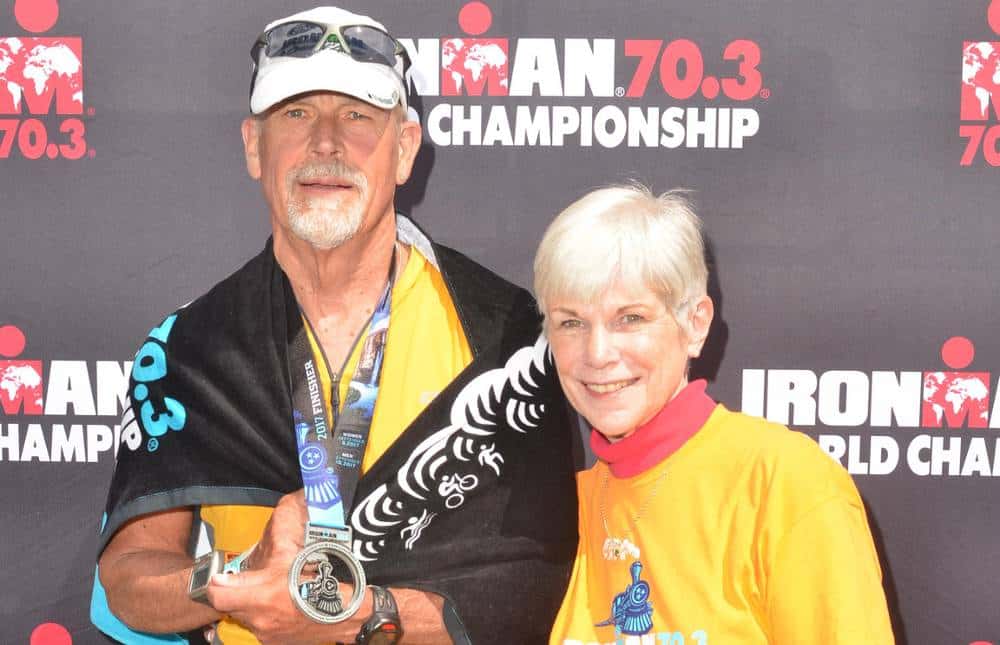
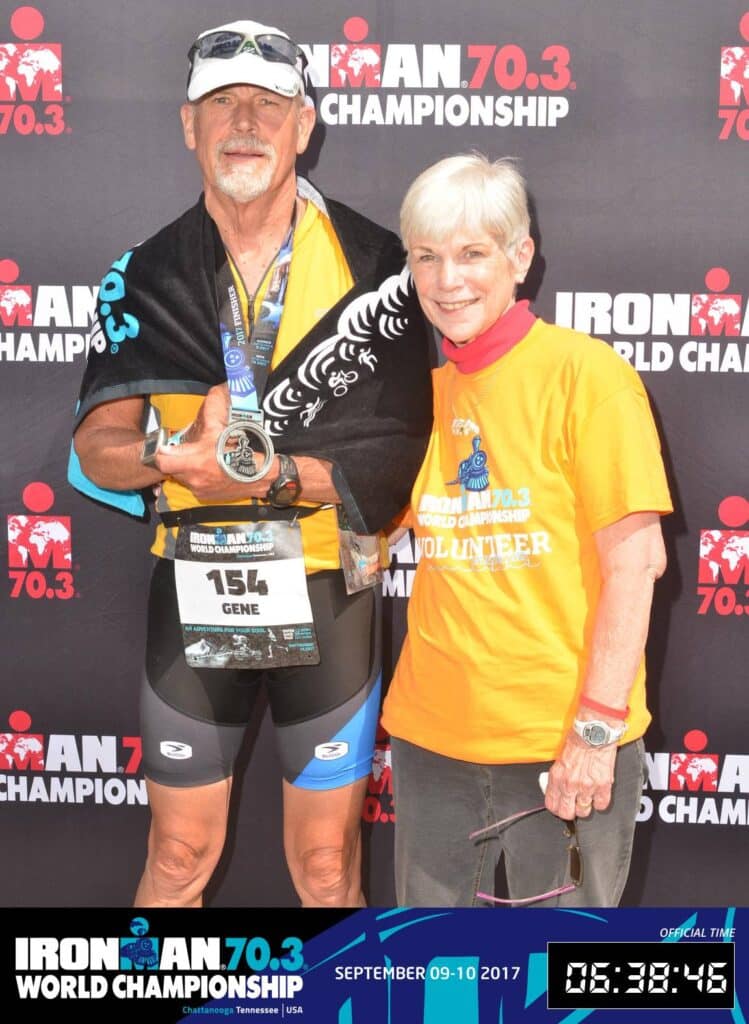
Gene and Mary "Kitty" Peters at the 2017 Ironman 70.3 World Championship in Chattanooga, Tennessee
Gene and Mary “Kitty” Peters at the 2017 Ironman 70.3 World Championship in Chattanooga, Tennessee, USA

A Love for Triathlon Training

Gene ‘loves’ triathlon training and his association with the sport. He told me that it has taught him discipline, self-determination, and confidence.

“While I have always been relatively healthy, I have been in better shape in my 60s and 70s than I was in my 30s.”

Training/Preparing for Ironman Triathlons

Gene’s characterization of his Ironman triathlon training is straightforward: “I follow directions”.

Several years ago, Gene began using the TriDot® system, initially without a coach.

Since February 2017, he has been coached by Kurt Madden, a TriDot coach who is also one of the senior triathletes coaches. Of Kurt, Gene says that he “is excellent at adjusting to what my needs are and what my condition is.”

Kurt is Gene’s second TriDot coach. The first one, selected because Gene and he had graduated from the same college, was about half Gene’s age and focused on Olympic distance triathlon. The relationship lasted one year because of their differences in age and focus.

Before starting the relationship with Kurt, Gene spoke to a lady at TriDot about “needing a coach who could relate to the needs of the older triathlete and what we are going through. You need to have a program that recognizes that older triathletes don’t recover as fast, sometimes, as a person in their 30s.”

Gene attributes the TriDot system for impressive race results. “In the last ten years, I have podiumed in 100% of my races.”

Gene Peters’ Advice

Earlier in his racing career, Gene did triathlons and ran marathons. Today, however, he focuses on triathlon.

“I learned unless I warmed up with a nice long swim and bike, I pushed too hard on the run. I would hurt myself.

“Now, I do only half marathons. I stopped doing full marathons except as part of a full Ironman.”

Stay Consistent

Gene echoed what many have told me to be a key to success with triathlon – consistent training. Gene has thought about the time he has spent training for an Ironman triathlon, acknowledging it is not for everyone.

Operating his own accounting business enabled him to train consistently. On top of this, Gene had not only the support, but encouragement, of his wife to continue training and racing.

Tribute to Mary C. “Kitty” Peters

In October 2022, with 55 years of marriage to Gene, Kitty passed away. Gene was by her side.

Before she passed away, Kitty would help keep Gene stay on track, knowing how important and valuable the training was to him. She was known for telling her friends how proud she was of her husband.

Kitty also willingly volunteered at many triathlons, being known for the smile with which she greeted finishers. According to Gene, she volunteered at more Ironman races than he had done. As a registered nurse, she often provided medical help at triathlons.

In reflecting on our conversation, it is doubtful that Gene would have accomplished what he has throughout his triathlon career had he not had her never-ending support. She is and always will be missed.

Who’s Behind Your Triathlon Accomplishments?

Who do you credit for your triathlon achievements? In what way(s) have they supported you?

Give them the recognition they deserve in the Comments below.

Comments: Join the conversation below — Click on “Subscribe” (located above the Comment box) if you’d like to be alerted to replies to your Comment. Even if you do not submit a comment, you may subscribe to be notified when a new comment is published. Please note that I review all comments before they are posted.
Ask Our Coaches: Tapering for a Half Ironman

Question

I have a 1/2 IM in early November and am not sure how much and how soon to taper. I am 67 and figure that the usual tapering routine might not be ideal for someone my age? Any suggestions? Bobby D.

Our Coaches’ Replies

Coach Kurt Madden

Bobby,

Good morning from San Diego!

Tapers can be tricky and it really depends upon the following:

  1. What is a typical taper you have used in the past to optimize your results for a ½ marathon?
  2. Have you tapered for any other races this year?
  3. Do you have any injuries?
  4. Have you put in a block of training consistently for say 12 – 16 weeks?
  5. Is this your “A” race or “B” race?

Generally speaking, most people your age, will go with a 10-day taper which means their longest run is 3 weeks before at say, 2:20. Two weeks before, the long run is reduced to 1:45, and a week before the race, the long run is 1:10.  This is also assuming that you are running four times a week with a faster session of say 50 – 1:10 at a Zone 4 or getting anaerobic, two recovery sessions, and a long run.

Hopefully, this information is helpful and you might consider looking at RunDot to get in on a free trial:

https://app.rundot.com/onboard/sign-up/kurtmadden

Regards, 

Kurt Madden

Email: kurt.madden@tridot.com

Coach Tony Washington

Hi Bobby,

I’ll echo Coach Kurt’s response. What have you used in the past? I’ve found with good consistent training, my folks need a shorter taper. We want to be prime to race. Not too flat, but fresh and ready to roll. I recommend some short, sharper intervals around race pace to build some race day muscle memory.  

Good luck in your race. Kurt or I will be glad to help you ready and provide a race pacing plan.

https://app.tridot.com/onboard/sign-up/tonywashington

Cheers,

Tony

Email: tony.washington@tridot.com

Have a Question For Our Coaches?

Send your question to Our Coaches here.

What Masters Athletes Need To Know About Nutrition

During a Stryd “For the Love of Running” webinar, registered dietitian Sakiko Minagawa presented nutrition guidelines for endurance athletes. She identified the day-in, day-out nutrition needed for athletes, including masters triathletes, to perform at their highest levels.

What was almost comical, however, was the number of questions focused on race day nutrition.

I thought about this scene after the webinar. Most of us recognize the importance of daily nutrition. However, in truth, we spend more time investigating the latest dieting fad or fueling strategy while grabbing whatever is convenient for a meal.

“Eating well and being active” is a ‘one-two-punch’ for healthy living of older adults, according to the website Eat Right. In fact, what we eat before, during, and after training can be part of our competitive strategy as an athlete.

Nutrition is a key component to health and sports performance.

Sakiko Minagawa, MS, RDN, LD

For the masters endurance athlete, paying attention to nutrition is even more important than for the younger person. Changes to our bodies that occur with age make what we eat increasingly important.

How Our Bodies Changes With Age

As we age, we must change what we eat and drink, how we rest, and how we spend our leisure time and train for endurance sports like triathlon.

“People who did the equivalent of 30-40 minutes of jogging per day, five days a week showed biological markers of a person seven years younger.”

From a report cited in “Six Principles of Triathlon Training for Seniors

How are we to change the way we eat, sleep, and play? By considering the most important changes to our bodies that occur with age.

Loss in lean body mass and bone mass

At around age 50, our skeletal muscles lose cells and become smaller and stiffer according to Dr. Vonda Wright in Masters Athletes: A Model for Healthy Aging. Without intervention, the reduced muscle mass and increased stiffness results in lower strength, reduced power, and more frequent muscle strains and joint pain.

Decrease in total calorie needs

Resting metabolic rate (RMR) is the energy (measured in calories) necessary for normal body functions such as heart rate, blood pressure, and body temperature.

Lean body mass (muscle) has a higher RMR than fat. Therefore, any loss of lean body mass, including that related to age, will reduce the calories required to maintain a given weight.

Decrease in nutrient absorption

For a significant portion of the senior population, age means reduced production of stomach acid. This may seem like a good thing given the barrage of advertising for medications to treat heartburn and acid reflux. However, less stomach acid can affect absorption of nutrients from food sources.

Decreasing absorption of nutrients, such as vitamin B12, vitamin D, calcium, iron and magnesium, affects bone health, blood pressure, and other metabolic processes.

How Age-Related Changes Affect Nutrition Needs of Masters Endurance Athletes

The changes with age explain why proper nutrition is one of six keys to triathlon training for seniors and even more critical to get right than for younger athletes.

The physiological changes mean that we need fewer (net of exercise) calories, higher amounts of protein, and greater amounts of key nutrients.

Sakiko Minagawa challenges us to do this by eating smarter and more efficiently. We must minimize so-called empty calories while consuming more nutrient-dense foods in the proper proportion.

Following are guidelines for older adults from government and private sources.

Nutrition for the General Population of Older Adults

In the United States, the Department of Health and Human Services and Department of Agriculture update dietary guidelines every five years based on the current nutrition science.

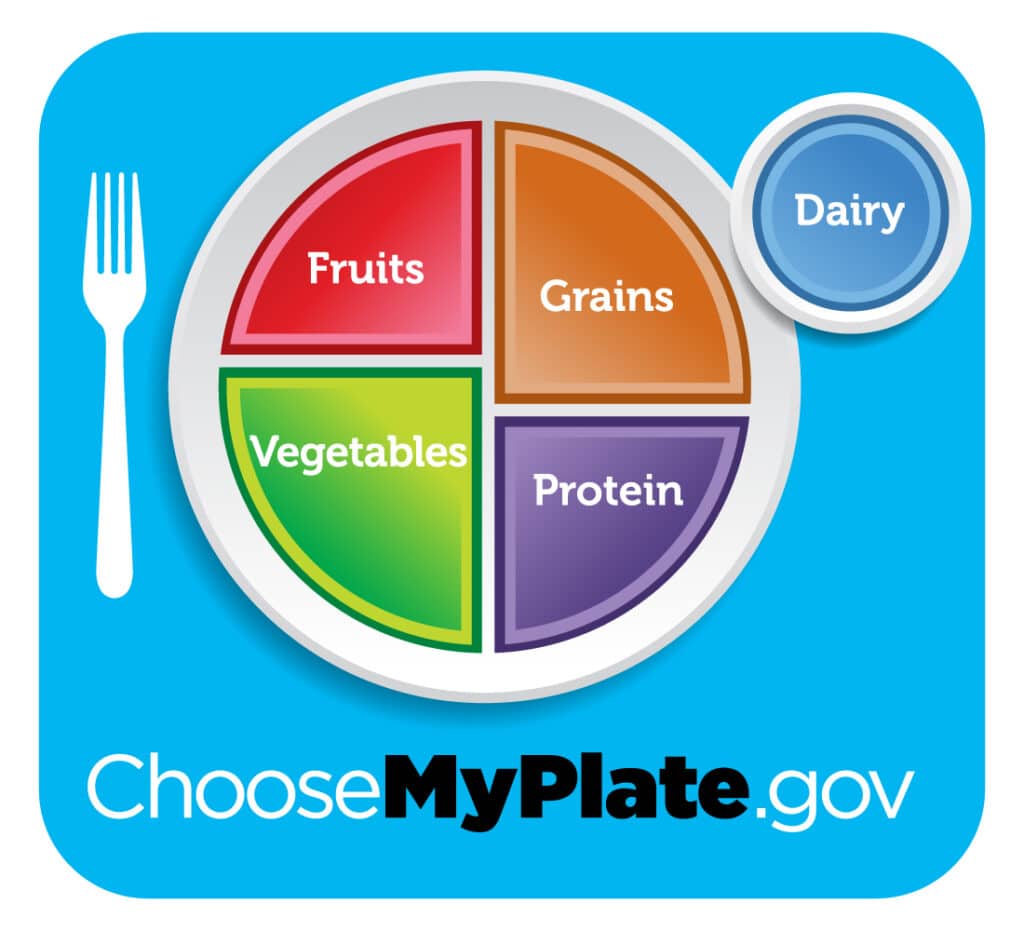
The greater number of people living longer has led to specific guidelines for older adults. MyPlate for Older Adults published by Tufts University is based on the 2015-2020 Dietary Guidelines for Americans but targeted to those age 65 and over. Check out their short, informative video with these recommendations and the following guidelines from nutrition professionals.

https://www.choosemyplate.gov/
United States Department of Agriculture publishes nutrition guidelines.

Greater amounts of protein

It is important to pay attention to protein intake, avoiding skimping. Muscles of older adults require greater amounts of amino acids to achieve the same muscle-building effect that occurs in younger athletes.

The current recommended dietary allowance (RDA) for protein is 0.8 grams per kilogram (1.3 ounces per 100 pounds) of body weight per day for adults over 18, or about 65 grams (2.3 ounces) of protein for a 180-pound adult. Research suggests that adults over age 65 require greater amounts.

More anti-inflammatory foods

Fish oil (through fish, like salmon and sardines, and supplements) and certain plant (e.g. flaxseed) and nut-based oils (e.g. olive, avocado, and walnut) are recognized for their anti-inflammatory properties. According to sports nutritionist Dr. Nancy Clark, “healthy plant and fish oils provide a health-protective anti-inflammatory effect. Given that diseases of aging such as heart disease, diabetes, and arthritis are triggered by inflammation, consuming canola, olive, avocado, walnut, and fish oils that reduce inflammation are a wise choice.”

Vitamins and minerals

The reduced ability with age to absorb nutrients from food means that we need to eat foods higher in certain nutrients. Prioritize fruits and vegetables high in vitamin D (e.g. salmon, eggs, orange juice) and calcium (e.g. green leafy vegetables, broccoli), though balance is also important.

Hydration

Water is necessary for regulating body temperature, transporting nutrients throughout our bodies, lubricating joints, and other bodily processes. However, as we age, thirst becomes less reliable as an indicator of hydration level. With the less sensitive thirst response, we are more likely to become dehydrated and, therefore, need to pay more attention to staying hydrated.

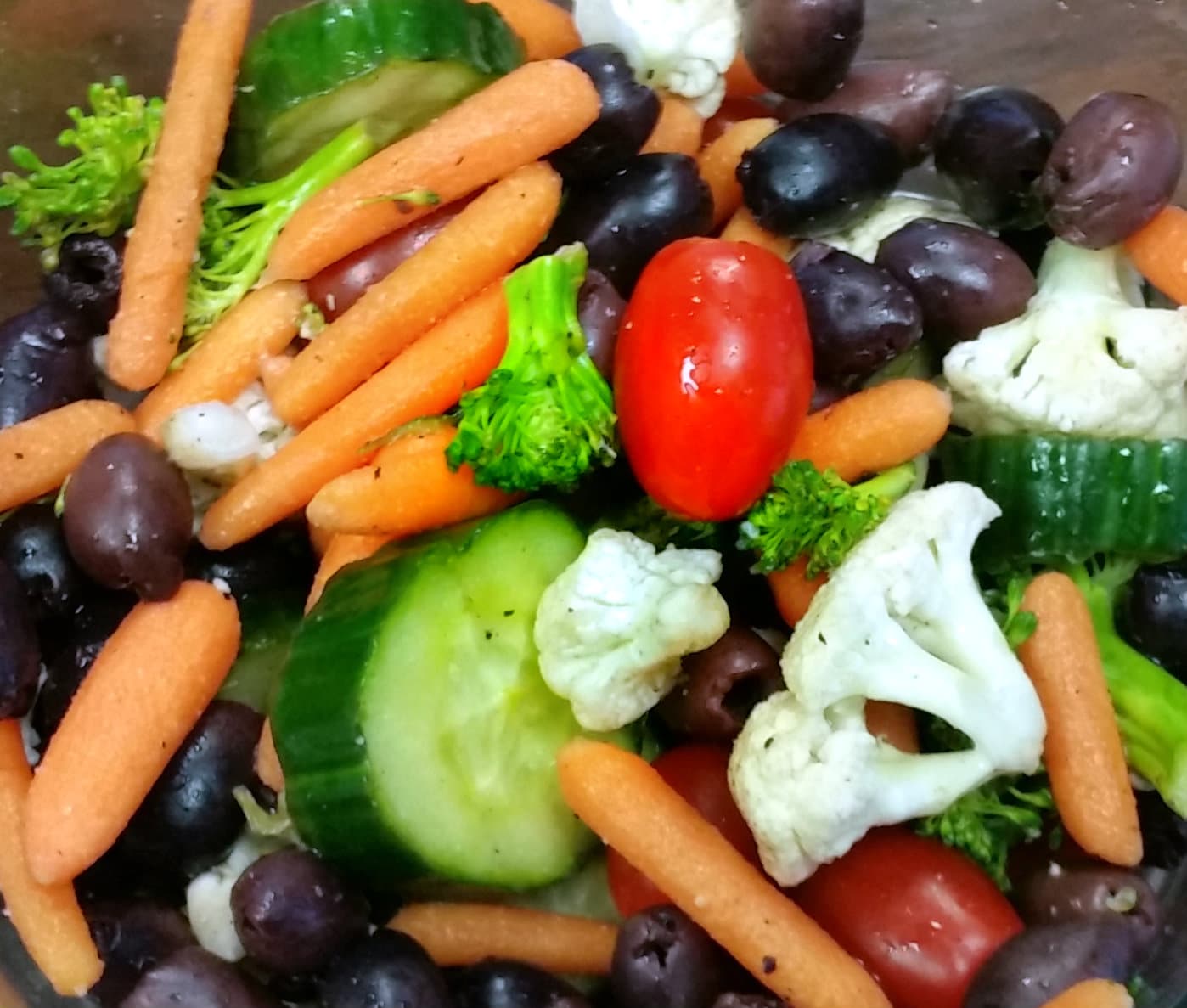
It is helpful to remember that water can come in many forms. These include the obvious ones, including coffee, tea, milk, and soup. Water can also be consumed in fruits and vegetables. Registered nutritionist and chef Ian Harris points out that “vegetables such as celery, cucumber, iceberg lettuce, tomato and zucchini contain over ninety percent water”. In addition, “melons such as cantaloupe and watermelon have some of the highest water content, at more than 90 percent.” Many other commonly available fruits contain over 80 percent water.

Watch your salt intake

According to registered dietitian Sally Kuzemchak, those over age 50 are more likely to be “salt sensitive”. We need to pay even greater attention to salt intake. However, you don’t have to forego taste. Herbs and spices make effective salt alternatives.

Supplements

Consuming a balanced diet with nutrient-rich foods such as whole grain, fruits, vegetables, protein, and dairy should be our first choice for nutrient needs, according to Sakiko Minagawa. However, given the importance of avoiding bone mass loss, active seniors may benefit from supplements such as protein powder, vitamin D, calcium, and/or a multivitamin to meet the nutrient needs not provided by food. Prior to taking supplements, review any plans with a dietitian and/or physician to avoid any potential negative consequences from overdosing or interactions between supplements and medications.

Choose Organic for These Fruits and Vegetables

The fruits and vegetables in the table below quickly absorb herbicides and pesticides. Therefore, it is best to choose organically farmed forms of these whenever possible.

StrawberriesSpinachKale, collard & mustard greens
NectarinesApplesGrapes
Bell & hot peppersCherriesPeaches
PearsCeleryTomatoes

Source: Dr. Livingood.com

More Nutrition Guidance for Masters Endurance Athletes

Active seniors, including triathletes, need even greater amounts of amino acids to achieve the same muscle-building effect that occurs in younger athletes. Dr. Nancy Clark recommends that the masters athlete consume 1.4 to 1.6 grams of protein per kilogram of body weight per day (0.6 to 0.7 gram per pound of body weight per day) spread throughout the day. This effectively means doubling the amount of protein recommended for the general population.

For a masters athlete who weighs 150 pounds (68 kg), this means 95 to 110 grams of protein per day. Distribute your protein intake throughout the day. Consuming 25 grams four times per day is a good goal.

In addition, the masters athlete should consume an additional 40 grams of protein after hard exercise for muscle repair and recovery as soon as possible after finishing the session. Think whey protein smoothie since whey protein is high in the amino acid leucine, which triggers muscle growth.

Some research also suggests potential benefits of protein consumption before sleep for overnight muscle protein synthesis. Sakiko Minagawa recommends foods such as Greek yogurt, cottage cheese, and milk which are great sources of protein as a pre-bedtime snack. These help with recovery and adapting to exercise training.

Stay hydrated

The active senior triathlete, especially one who sweats a lot during endurance training, needs to pay special attention to staying hydrated. Follow the guidelines for drinking healthy water-based beverages and eating fruits and vegetables high in water content. Pay attention to the color of your urine and consume enough water in whatever form so it is consistently light-colored.

While we need to avoid excessive salt intake, the endurance athlete needs to make sure he/she does not become electrolyte deficient during training, especially in high temperatures.

Meal Guidelines for Active Seniors

MyPlate for Older Adults provides the following guidelines:

  • 50% of the plate should contain several servings of various colored fruits and vegetables. These can be fresh, frozen, or canned but look for low sodium and low added sugar varieties.
  • 25% of the plate (at least three ounces) should contain whole-grain pasta, breads, cereals, or rice. These are important sources of nutrients and fiber.
  • A serving of low-fat or fat-free dairy (milk, yogurt or cheese) fortified with vitamin D to provide protein and much needed nutrients.
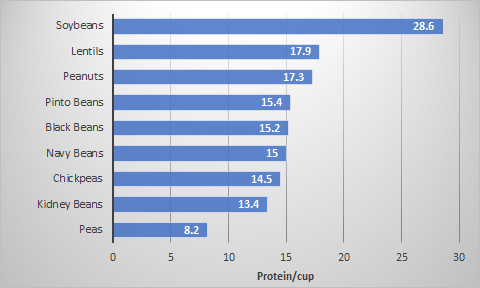
  • Vary protein choices with more fish, beans and peas (see the chart below), and milk. Many of these protein sources also contain significant amounts of important nutrients such as vitamin D and calcium.
  • Consume plenty of fluid from sources such as water, coffee, tea, soups, and high water content fruits and vegetables.
  • Oils used for salads or food preparation should be liquid oils.
Beans and peas are a source of protein to support nutrition for masters endurance athletes
Grams of protein per cup of commonly available beans and legumes. Source: healthline

Endurance athletes in training should adjust these guidelines to accommodate their special needs for higher protein intake, more water consumption, and additional vitamin D and calcium. “Kill two birds with one stone” by eating more fish such as swordfish, salmon, tuna; milk; yogurt; eggs; and cheese since these are good sources of both protein and vitamin D.

A Healthy and Surprisingly Good Tasting Recipe High in Protein and Fiber

Besides hummus, I had not found recipes with chickpeas that both my wife and I enjoyed. That changed with the following recipe from Bon Appétit.

Quite Possibly the Best Chickpeas

  • 1 lb. dried chickpeas, soaked overnight, drained
  • 1 medium onion, thinly sliced
  • 6 garlic cloves, crushed
  • 2 – 3 x 1 inch strips lemon zest
  • 1/4 cup extra-virgin olive oil
  • Kosher salt, freshly ground pepper

Recipe Preparation

Combine chickpeas, onion, garlic, lemon zest, oil, and a couple big pinches of salt in a large pot. Add 2 quarts of water and stir to combine. Bring to a boil, then reduce heat to medium-low and simmer, stirring occasionally and replacing any water that evaporates, until chickpeas are tender, about 2 hours. Taste and season to taste. Let cool.

If you make this recipe, share your thoughts in the Comment below.

Involving an Expert

Older athletes should avoid extreme or fad diets. However, you may be impatient to lose weight or increase athletic performance. Eating whole, unprocessed foods following the balanced, healthy eating patterns described in the USDA guidelines is best.

Consult a dietician for additional nutrition recommendations for your specific health and sports performance goals.

Acknowledgements

Thank you to Sakiko Minagawa, MS, RDN, LD for contributing to this post.

Share Your Questions and Comments

As an endurance athlete, what is the most important lesson about nutrition you have learned?

Comments: Join the conversation below — Click on “Subscribe” (located above the Comment box) if you’d like to be alerted to replies to your Comment. Even if you do not submit a comment, you may subscribe to be notified when a new comment is published. Please note that I review all comments before they are posted.
This post. originally published on April 7, 2020, was updated on September 19, 2023.

error

Enjoy this post? Please spread the word :)