How to Improve Triathlon Training Results
You have followed your triathlon training plan to the last detail. Still, you wonder if there are other things you can do to improve the results of your training and, therefore, help you be more competitive or at least better prepared for your first or next triathlon.?

The quick answer is ‘Yes’. There are factors outside training that can help you improve your triathlon training results. There are others that can negate some improvements in training. And, there are others whose effect simply ‘depends’.

Background

In Six Principles of Triathlon Training for Seniors, we identified the need to consider the unique needs of seniors, especially those involved in endurance sports like triathlon. That post specifically highlighted the need to consider the physiological changes that come with aging and how we rest, eat, hydrate, and stretch after training.

The goal of this post is to help you identify other changes in your triathlon training that can make you a higher performing senior triathlete.

Natural Processes

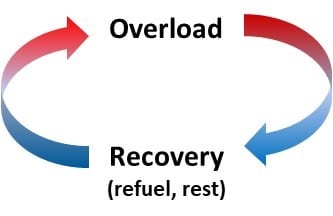
The human body becomes stronger by repeating a process involving overload, followed by rest and recovery. Adaptation is another name for this process.

For adaptation to produce the results we want, we must manage both the overload and the rest and recovery portions. Too much or too rapid of an increase in overload can cause injury and an extended time away from the activity (e.g. swimming, biking, running). On the other hand, incomplete recovery prevents the complete benefit of the overload from being realized.

To balance progressive overload while avoiding injury, the ideal training plan will involve sessions in which the total stress increases in a controlled manner. Each session is followed by a period of recovery that allows for healing from the effects of this stress (e.g. micro tears of muscle fibers). It is during the recovery period when gains from training become cast into our body.

With time at the same level of stress, progress will slow and even stop. This explains why repeating a routine may initially result in muscle soreness but later produce no soreness and actually feel too easy.

It also explains the need to increase the stress over time or vary it regularly (called periodization) for strength and endurance to increase.

Ways To Boost Training Results

According to Steve Magness in The Science of Running [Affiliate disclosure], there are actions we can take to increase the benefits of our training.

“Amplifiers of adaptation are anything that may boost our subsequent adaptation either by acting early and increasing the stimulus or by increasing the conversion of that stimulus to an adaption by bolstering recovery from the workout.”

Given the overload-recovery process mentioned above, we can look at two areas for improvement. The first is increasing the efficiency of the workout. The second is to recover more completely using the body’s God-given processes.

Increasing Efficiency

One strategy for increasing the benefit of workouts is to train our body to be more efficient. We can implement this by pushing it to use muscle fibers not normally used in a particular training session. One approach is to repeat a training session within the same day. The second routine will be done with the body in a fatigued condition.

A second way to make our training more efficient is by creating situations that require our body to use fuel sources not normally called upon. For this, we can use longer bike rides and runs. However, if your training involves relatively short distances, as those of sprint triathlon, then another way to approach this is by training in a fasted condition.

Faster, More Complete Recovery

During recovery, the body repairs itself. For example, while we rest after intense exercise, micro-tears in muscle fibers heal. With the correct amount of overload followed by complete recovery, which includes sleep, the result is a stronger muscle than before the exercise.

Post exercise nutrition, especially involving protein, and hydration also contribute to faster, more complete healing and recovery of our body.

In addition, the masters athlete should consume an additional 40 grams of protein after hard exercise for muscle repair and recovery as soon as possible after finishing the session.

What Masters Athletes Need To Know About Nutrition

There is also news my wife, Joy will whole-heartedly embrace. Research has shown that post exercise massage can also improve recovery.

According to research led by Dr. Mark Tarnopolsky at McMaster University (Hamilton, Ontario, Canada), massage after hard exercise increased mitochondria formation. Additional mitochondria produced faster healing of the muscle. In one study, massage after hard exercise also reduced indicators of cellular stress and inflammation.

Actions That Limit Training Results

The inflammatory cycle arising from exercise involves repair of micro tears and strengthening of the previous damaged tissue. Interfering with this natural cycle of overload and recovery reduces the benefits that come from training.

Speeding Up Recovery

One of the most common mistakes in executing a training plan is to accelerate recovery. Artificially speeding up recovery dampens the response to training and, therefore, reduces the benefits of the hard work.

The adage ‘No pain, no gain’ takes on new meaning when we take anti-inflammatory drugs to dampen pain after exercise. Doing so actually interrupts the natural recovery process. The result is to reduce the gains that would have been realized had nature been allowed to take its course.

We can say the same about taking synthetic anti-oxidants after hard exercise.

Oxidation that comes from exercise is one of the main triggers for mitochondria production. This is good in that mitochondria convert the energy we take from food into energy required for operation of our trillions of cells.

Synthetic anti-oxidants trick the body into minimizing the negative effects of oxidation. The result is a blunting of what would have been the production of good mitochondria.

Interestingly, research has also shown that these negative effects do not accompany naturally occurring antioxidants, such as those coming from tart cherries and berries. Apparently, our bodies know what to do with real food so incorporate it into the recovery process.

Interfering With Recovery

Sleep is arguably the most important part of recovery. Therefore, environmental factors (temperature, light level, noise) and behaviors that interfere with sleep will hinder recovery.

However, as noted in Rest and Recovery: Why It’s Important for Senior Triathletes, “rest doesn’t have to mean retiring to the sofa”. Cross training is an excellent way to train during recovery while deriving the benefits of exercise.

Approaches With Mixed Triathlon Training Results

Other factors to consider in training include:

  • Caffeine consumption
  • Mental and emotional stress
  • Carbohydrate intake before and during training
  • Strength training in combination with endurance training
  • Heat and humidity
  • Altitude

Several of these have mixed results based on their contribution to total stress. If the additional stress from one or more of these takes the total stress of a routine into an unhealthy zone, results can be negative. Caffeine consumption, mental and emotional stress, heat and humidity, and altitude contribute to the total stress of a workout.

Results of others, such as strength training, depend on the timing of the exercise within a routine. For example, strength gains from weight training will be greater when running before the strength workout than in the reverse order.
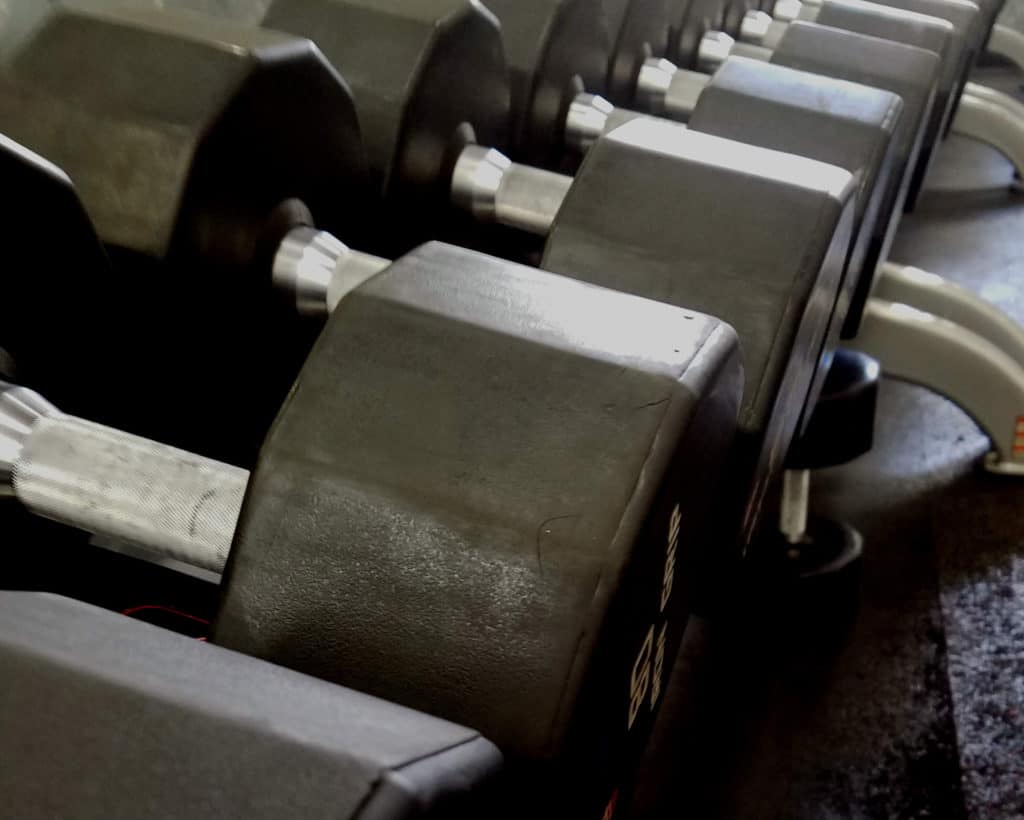
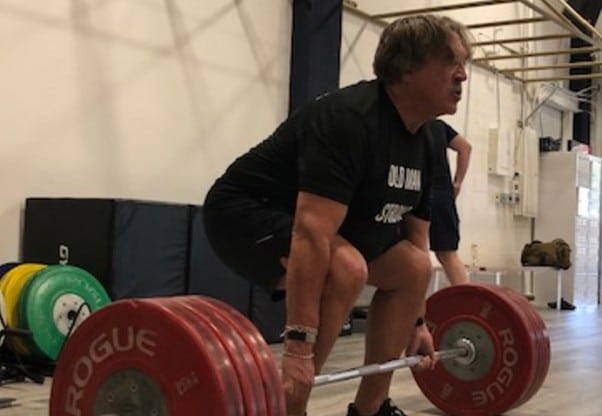
Strength training along with endurance training can improve triathlon training results.
Strength training before a run will have different results than when done after a run.

Caution: Be Careful When Trying to Improve Your Triathlon Training

Training is most consistent when training stimulus or stress increases gradually. The commonly held rule of thumb is to avoid increasing stress over 10% per session. This rule of thumb has plenty of critics. However, it has proven effective for me.

This means, for example, that the weight included in an exercise not increase over 10% from one session to the next. Or, it means not increasing the distance run by over 10% from one run to the next.

Share Your Questions and Experience in the Comments Below

What is your experience related to the comments in this post?
Affiliate disclosure

An Unlikely Triathlete – Craig Cross’s Story

Is there certain experience you must have as a senior before competing in your first triathlon?

According to Craig Cross, his Scottish ancestry makes him much more likely to be weightlifting than running. Furthermore, before his first triathlon, Craig had only biked – a little. That’s it.

The one-two punch of genealogy and inexperience made Craig an unlikely triathlete. However, through persistence, a knowledgeable coach, and the support of new friends, he is now an Ironman triathlete.

Craig Cross Before Triathlon

While his peers were playing sports in high school and college, Craig Cross was in Alaska fishing commercially. This experience launched him into a lifelong career in fishery management which he continues today as an advisor to fisheries.

However, after pouring himself into work for more than four decades, Craig realized at age 60 that he needed to lose some weight. On top of this, he was finding everyday tasks, like getting dressed and tying his shoes, to be uncomfortably difficult.

“I joined a Crossfit gym near my home in Seattle, Washington. I began to work on improving my balance and building core strength” Craig told me. “And, boy, was it difficult. So difficult that for the first six months, I literally crawled off the gym floor and pulled myself onto a couch at the end of each workout.”

But he stuck with it. Over the next three years, Craig saw his balance improve, core become stronger, and overall fitness grow.

First Triathlon At Age 61

After about a year of Crossfit, Craig, then 61, decided to do the Whidbey Island Triathlon near his home west of Seattle.

Craig signed up for the triathlon despite having never learned to swim. He told me “I put on a wetsuit for the first time for this race. About midway through the swim, I felt so constricted by the wetsuit, that I stopped and pulled it halfway down. I dog-paddled and side-stroked my way to the end.”

Since he had biked a bit in his 40s, Craig was able to complete the bike leg without any problem. He finished his first triathlon by walking the run leg of the triathlon. Even though he crossed the finish line “dead last”, Craig Cross was officially a triathlete, a senior triathlete at that.

Learning to Swim

For the next three years, Craig continued to exercise. He did two or three sprint triathlons per year. However, he wasn’t making the kind of progress he had expected.

Craig said “I still couldn’t swim. I was still walking the run. I was finishing last or near last in all of the triathlons”.

“So, I joined a triathlon team. I joined a Masters Swimming class. And, I continued to lift weights.”

Reflecting on learning to swim in the Masters swim class, Craig said “I started out in the kiddie pool. The instructor, Kainoa Pauole, taught me how to side breathe and breathe under water. She also taught me a proper swim stroke.”

“I quickly realized that Kainoa understood my needs as an older athlete.”

Taking It To The Next Level

After competing in triathlon for about five years, Craig decided that he wanted to do a half Ironman triathlon.

The first step was to hire Kainoa as his triathlon coach. According to Craig, “Since Kainoa understood my unique needs, she brought me along slowly, over a year and a half, to avoid injury.”

Coming to coaching with a masters degree in kinesiology and exercise science; experience as a college swimmer, triathlete, and marathon runner; and specific training in triathlon coaching, Kainoa made all the difference for Craig.

“The key for my training, and I believe it applies to older people in general, especially those new to the sport, was to start by getting my body ready for triathlon. I started by strengthening my core. I also built up the muscles around my knees and hips. After awhile, I started to swim consistently with the Masters team. Then, finally, I began to run.”

Craig’s Advice On Training For Senior Triathletes

Craig has now completed over 20 triathlons, including 17 sprints and four Olympic distance triathlons. In April, 2021, Craig completed his first Ironman 70.3 in Des Moines, Iowa. Not stopping there, Craig is scheduled to compete in the Victoria, British Columbia, Canada Ironman 70.3 on May 29, 2022.

Given where he started from, Craig Cross is worth listening to for advice on training, especially if you are not sure you can complete a triathlon.

“If you are serious about keeping going with triathlon as a senior, join a club and hire a coach, especially if you are doing longer distance races.”

Craig Cross, Ironman triathlete

Use Other Senior’s Experience With Triathlon

During most of the year, when preparing for a sprint or Olympic triathlon, Craig trains six days and rests one day each week. Some of the time he trains with the triathlon club or Masters swim team and other times he is on his own.

A typical training week includes two open water swims, two bike rides of 20 to 30 miles each, a 5 km run on one or two days, and one 10 km run. Craig also lifts weights two days per week.

Being part of a triathlon club and Masters swim team has been invaluable.

“It may sound strange for someone in their 60s, nearly 70, to say they are being mentored. But that is precisely what one of the guys on the triathlon team is doing. This man, who is in his 70s and doing full Ironman triathlons, has helped me understand the importance of recovery.

“Recovery is important for triathletes in general. However, for seniors, recovery is a HUGE deal. Recovery takes longer with age.

“This gentleman also holds me a little bit accountable. For example, if I miss an open water swim, the next time I show up he will ask ‘Where were you last time?’

“Being part of a team is one key to progressing and continuing in triathlon.”

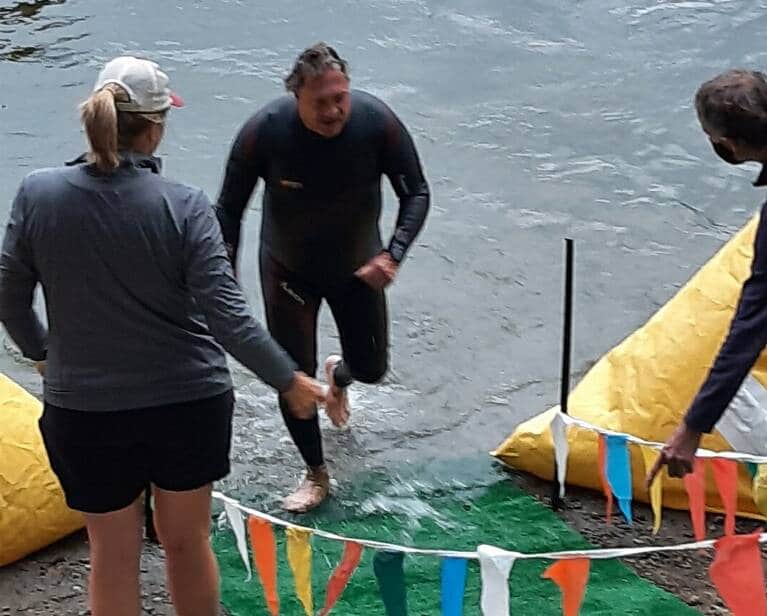
Craig Cross exiting the swim at Whidbey Island Triathlon in July 2021.

Hire a Coach With the Right Experience for Longer Distance Triathlons

The second key to competing in triathlon as a senior is to hire the right coach, especially for longer distance (half and full Ironman) races. Craig emphasizes the need to have a coach, like Kainoa, who understands the unique needs of the older athlete.

Craig now hires Kainoa as his coach for the six months before a longer distance race. During other times, Craig trains using the schedule of the typical training week described above and competes in sprint or Olympic distance events.

“Kainoa develops a schedule in TrainingPeaks that helps me build endurance. While I am not fast, I am ‘forever’.

“Kainoa’s plan gives me a range of heart rate to stay within during the bike and the run. She monitors my heart rate, my cadence on the bike, and how I am feeling during each workout. With this information, she will adjust the schedule, sometimes adding another rest day and sometimes ramping up my training.

“About six months before the Des Moines triathlon, she also had me train my body to take food and electrolytes during workouts, something I would need to do during a race.

“Kainoa’s monitoring continues until I start tapering a couple of weeks before the race. It holds me accountable. Besides, her involvement also protects me from overtraining.”

How Triathlon Has Benefited Craig Cross and His Family

Craig has found triathlon to offer benefits beyond the physical ones. Some of these are included in our “15 Reasons for Those 50 and Older to Do Triathlons“.

Here are the top additional benefits for Craig:

  1. Challenges him mentally by pushing him to learn new skills. There are technical aspects of each of the three sports that are interesting to study.
  2. The variety in swimming, biking, and running as well as weightlifting keeps training fresh.
  3. Motivates family members. Seeing their father and grandfather push himself physically and mentally, even in his late 60s, has inspired family members to stay active and take on new challenges. Craig recently did a triathlon with his son, grandson, and daughter.

From An Unlikely Triathlete to Ironman

During our conversation, Craig repeatedly told me “I am not an athlete”. Of course, his story says otherwise.

What has been the secret to Craig’s achievements in triathlon? According to his coach, Kainoa Pauole, it is dedication, discipline, and consistency in training.

“Craig is a dedicated and disciplined athlete.  I know he is a busy guy with work and his family responsibilities but he still remains so consistent with his training.  All of his hard work has paid off as he has found great success in our sport.”

Notice that there is nothing Kainoa said about having experience or exceptional skill in one or more of the sports of triathlon. If that doesn’t encourage you to take up the sport – so long as your doctor concurs – I’m not sure what will.

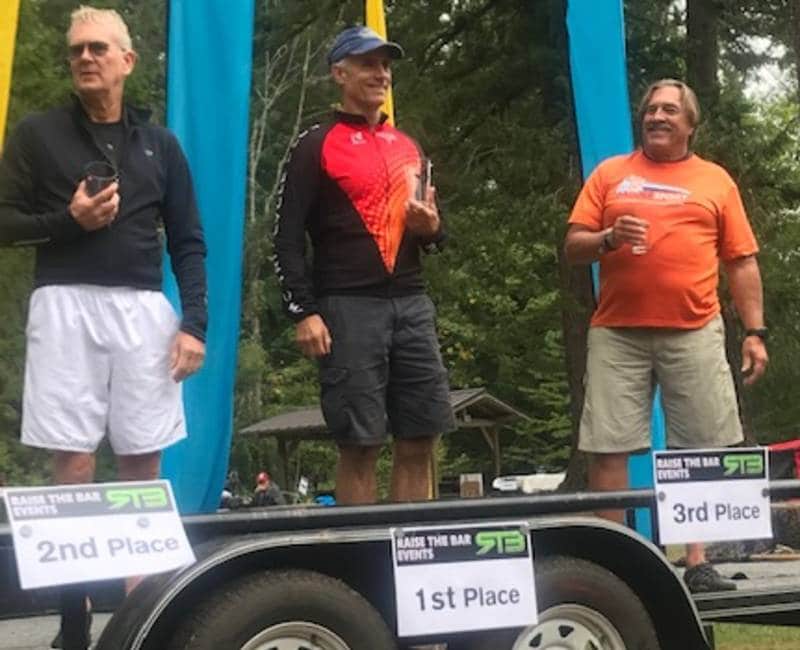
Craig Cross celebrating a third place age group finish at the 2019 Lake Meridian Triathlon.

It’s Your Turn

Many who get involved in triathlon come with experience in one or more of the three disciplines of swimming, biking, and running. However, as Craig Cross proves, this is not required. You can become a triathlete after age 60 even with limited experience in the three sports.

A significant number of readers of SeniorTriathletes.com are in a situation similar to Craig’s when he first thought about doing a triathlon. You are not sure how to, or even if you should, jump in and give the proverbial ‘tri’.

Craig Cross and scores of others age 50 and over have proven that you can do a triathlon later in life. You can also learn to swim and run after age 60.

And, with consistency, it is even possible to “become faster and go farther” with age. This, despite the common wisdom that we only decline with age.

What’s keeping you from tri-ing? Share your questions and comments for Craig below.

Comments: We’d love to hear about your experience. Join the conversation below. All comments are reviewed before they appear.

Reply notifications: Click the bell icon above Post Comment to be notified when someone replies to your comment.

Follow the discussion: Click Subscribe above the comment box and enter your email address to receive notifications whenever a new comment is added—even if you don’t leave a comment. After subscribing, check your email and click Confirm to activate notifications.

Balance in Training Intensity for Senior Triathletes

Finding the right balance in the intensity of your triathlon training will make training more enjoyable, lead to greater consistency, and produce better results.

Training Intensity for the Over-50 Triathlete

A few months ago, I listened to separate podcasts with Phil Maffetone and with Coach Parry. Both made the point that senior endurance athletes are more likely overtraining than undertraining or training too easy.

Had you watched me as I listened to these, you would have seen my head nodding in agreement.

Their comments were in line with the results of our 2021 survey of senior triathletes. Respondents to the survey indicated that ‘injury or illness’ is the second greatest challenge for triathlon. Certainly, overtraining is a major contributor to injury and illness.

So, training at the right intensity is something many of us think about. But, how do we get it right?

I hope to answer this question – and hear from you on this subject – through this post.

“Training in its simplest form is a balancing act. [T]he goal is to simultaneously build and develop seemingly opposing forces. In the world of distance running, we need to balance speed versus endurance, strength versus efficiency, and flexibility versus stiffness, to name a few.”

Steve Magness in “The Science of Running“, p. 160 (2014).

What Is Meant By Overtraining?

In the two years before adopting the MAF-180 training method, I found myself in a vicious cycle. One day, I would train hard, trying to make up for the last session which I had skipped or shortened. This was typically followed by two or more days of no training to recover from soreness or injury and from excessive fatigue.

Overtraining is caused by training at too high an intensity, one involving more stress than our body can handle given its level of fitness, strength, recovery, and other ‘stuff’ happening during this time. Early symptoms of overtraining include prolonged muscle soreness, laboring to complete routines that would typically be possible, and/or several days of sub-par performance.

Generally, the problem is solved by a few days to a week of low intensity training (walking, slow jogging or biking) and extra rest. However, continued pain or sluggishness with other symptoms, such as insomnia, loss of interest in training, and headaches, is cause for seeing a physician.

Is It Possible To Undertrain?

Yes, it is possible to undertrain, though it is not common.

As a reference, I define ‘undertraining’ as training at a volume and/or intensity that is not sufficient for completing the distances of a multisport event in a reasonable time. For example, if you are competing in an Ironman 140.6 triathlon, you must train for completing the 2.4 mile swim in the allotted time. And, you must have enough energy left to complete the bike and run legs.

Looking at it another way, you will undertrain for an Ironman triathlon if you only train at sprint triathlon distances.

What Is The Right Balance?

This question reminded me of an email discussion I had with Laurent Labbe, a Senior Triathlete who lives halfway around the world from me in Asia.

Laurent told me about a meeting he had with a supplier whose manager was formerly a professional cyclist. During lunch, the two of them, both over the age of 50, discussed the difficulties in finding a group or club with which to train. Both found young people to be too fast and people their age to generally be too slow.

In the end, these two guys agreed that the right balance was to train at a pace that represented a “reasonable effort”.  

At the most basic level, the top two keys to achieving the right balance, or “reasonable effort”, in training are:

  1. Progressing modestly when increasing training stress. In this context, distance, speed, and weight being lifted are all measures of training stress. Here is where the 10% rule of thumb should come into play. The ‘10% rule’ tells us to never increase the level of stress by more than 10% from one session to the next.
  2. Recovering properly between sessions. Recovery is probably the most under-utilized training tool in our arsenal. It involves rest as well as hydration and nutrition, everything needed to allow our bodies to adapt to and strengthen from the stress applied during the previous training session.

Don’t Ignore Other Sources of Stress That Affect Training Balance

The above two keys to balanced training assume that the major stress during training comes from the intensity of the activity. However, as Steve Magness points out in “The Science of Running“, there are a host of other factors that contribute to total stress.

These additional sources of stress include environmental (ambient temperature, humidity, altitude) and physical (hydration, type and availability of energy sources, sleep quality) factors. Life events such as travel, family and work related issues, and other commitments also add stress.

Put into a mathematical format, balance is:

   St = Sr + Se = Rt, where   

St = Total stress during training
Sr = Stress from training routine
Se = Stress from external sources
Rt = Recovery from total stress after training

How I Have Found The Right Balance

I mentioned earlier about the vicious cycle of overtraining and long recovery that my training had become. Over the past two years, I have found that training with a heart rate monitor in a range defined by the MAF-180 method for the bike and run has forced me to train at a lower intensity. It also corrects for additional stressors during a particular workout.

This more “reasonable effort” has made training more fun. As a result, I train more frequently and have avoided injury caused by overtraining. As the post titled “Training to Train – Building Aerobic Fitness for Senior Triathletes” documents, I have also seen steady improvements in fitness.

Before leaving this question, I have two more suggestions for the 50+ triathlete from my experiences.

First, avoid setting too aggressive a schedule for training for your next race. A related suggestion is to not try making up for lost time should you be forced to temporarily suspend your training for whatever reason.

The Right Balance In Training Is Not Static

The ‘just right’ amount of training will also vary day to day.

Think about these questions:

  • How hard did you train yesterday? What amount of muscle damage resulted from this session?
  • How well did you rehydrate and refuel after this workout?
  • What was the quality of sleep last night?
  • What is the weather (temperature, humidity) where you will be training today?
  • Did you hear any alarming news this morning?
  • How are you feeling today?

The answers to these will help determine how hard you should train on a given day.

The definition of “reasonable effort” also changes over time as you become more fit.

I recall a conversation with Paul Zellner while I was discussing his experience with triathlon. Paul mentioned that he has found it necessary to push himself with age. He said that he felt that he was often training at too easy a level.

Paul is a multiple marathon and Ironman triathlon finisher. He is also currently active in these sports. Therefore, it is not surprising that his definition of “reasonable effort” has changed as his fitness increases.

How To Know If You Are Training ‘Just Right’

There are various ways to monitor your training stress and recovery between sessions. These range from the simple and free to complicated and expensive.

TrainingPeaks, for example, provides users a way to rank their session using feeling (from frowning to smiling face) and a 1 to 10 ranking of perceived exertion. While I am not a fan of these qualitative rankings, they are accessible to everyone. They can also highlight trouble, especially when feeling or perceived exertion suddenly changes.

Resting heart rate is a more quantitative, yet still accessible, measurement. One member of The Villages Triathlon Club told me that he measures his heart rate upon waking each morning. If the measured rate on a particular day is more than 10% above the typical value, he will reduce the intensity of his training for that day.

This approach has support from the author of a post on the ANT+ website titled “By The Numbers – What Your Heart Rate Monitor Is Telling You“. The author writes “If you see a rise of 10 percent or more in your resting heart rate it may indicate that you are fatigued, emotionally stressed or your immune system has been weakened.”

Other Metrics For Training Recovery

If you wish to dig deeper into this subject, you can look at other tests and measurements for assessing the level of recovery. These include:

  • Measuring heart rate variability (HRV)
  • Measuring ground contact time – uses a foot pod power meter such as one produced by Stryd
  • Blood tests for creatine kinase and cortisol levels (generally used for elite and professional athletes)

The first two are available with additional equipment or sensors. However, the latter (blood tests) are most likely beyond the need of amateur athletes.

How Do You Know When You Are Training At The Right Intensity?

What metric or approach do you use to judge if you are training too hard or too easy? Leave your comments below.

Triathlon Across the USA: State #43 – Virginia

Spotsylvania Courthouse, Virginia; May 9, 2021 – Lake Anna State Park, Kinetic Lake Anna Triathlon

Our Route To The Virginia Triathlon

The Virginia triathlon was part of a six-week road trip that included stops in Omaha, Nebraska; The Villages, Florida; and parts of Virginia and Delaware for triathlons in these two states.

Before traveling to Virginia for the Lake Anna Triathlon, Joy and I had spent most of April in The Villages, Florida. During this visit, we joined The Villages Triathlon Club for their April meeting. I also took part in one of the club’s swim sessions.

This race is one chapter in a 50-state journey—now told in full in Triathlon Adventures Across America .

Lake Anna State Park

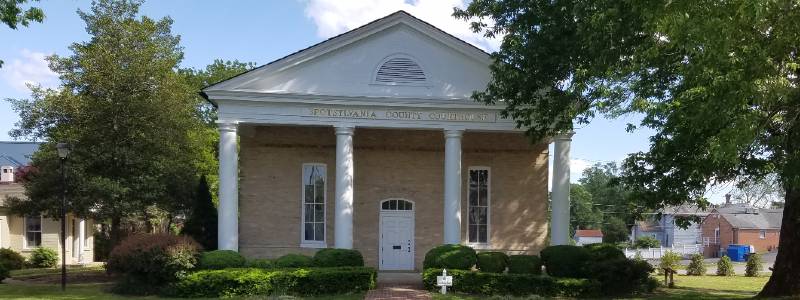
Late Saturday afternoon, Joy and I headed toward Lake Anna State Park for packet pickup. The route included a detour into the village of Spotsylvania Courthouse to visit the historic courthouse pictured at the beginning of this post.

We soon arrived at the area in the park next to Lake Anna. At 13,000 acres, Lake Anna is one of the largest freshwater reservoirs in Virginia. The lake is formed by the North Anna Dam on the North Anna River. (I love the name Anna, in part because it belongs to our youngest granddaughter.)

After collecting my race packet, which included a t-shirt, a pair of socks, and race numbers for the bike, bike helmet, and run, we drove the bike course. I do this to check the condition of the roads, looking for potholes or other obstacles that could present a hazard during the race. This is also an opportunity to review the hills and turns along the course.

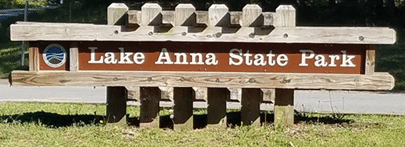
Lake Anna State Park was the location for the Kinetic triathlon, my Virginia triathlon in the Triathlon Across the USA quest.
Lake Anna State Park, about 80 miles south of Washington, DC,, was the location of the Kinetic Lake Anna triathlon.

A Funny Thing Happened On The Way To The Virginia Triathlon

Most of us know that navigation apps can be fickle. I am sure all have experienced at least one occasion of being led astray by them.

On race morning, I left the hotel by myself while it was still dark. Thanks to COVID-19, spectators were discouraged from attending the race, so Joy stayed in the hotel.

I was sure I would have no difficulty getting to the park when the transition area opened at 6 AM. After all, I had driven to Lake Anna State Park only hours earlier.

While it was still very dark, the route seemed familiar, at least parts of it.

So, when the Waze app I was using told me to take a left at Partlow Road, I blindly obeyed. Yes, I made the turn even though I saw a sign for Lake Anna State Park a little beyond the intersection.

I thought “Wonderful. A shortcut. I’ll be there early.”

After about ten minutes on winding roads typical of the area, I passed a small lumber mill that I had passed only minutes earlier. I realized that my ‘shortcut’ was not one at all when I found myself back at the intersection at Partlow Road.

This time, I ignored Waze, followed the Lake Anna State Park sign, and arrived at the park in another 20 minutes. I was a few minutes later than planned. However, I still had plenty of time to get a great position in the transition area for my bike.

16th Annual Kinetic Lake Anna Triathlon

The Lake Anna Triathlon is one of over twenty multi-sport events managed by Kinetic Multisports (Durham, North Carolina). This triathlon has been held every year, except 2020, since 2005.

The advertised distances for the individual legs of this USAT-sanctioned sprint triathlon were:

  • Swim: 750 m (820 yards) – Actual: 787 m (861 yards)
  • Bike: 15.5 miles (25 km) – Actual: 15.4 miles (24.8 km)
  • Run: 3.1 miles (5 km) – Actual: 3.1 miles (5 km)

Actual distances shown above are from my Garmin Forerunner 920XT.

Would It Rain?

I woke to check the temperature on my phone app. It showed 39°F. While I was born and raised in Minnesota, I had just come from an unseasonably warm month in Florida with daily highs in the 80s and 90s.

Then, in the minutes before the start of the race, I heard a young woman, a friend of one triathlete, read from her phone that rain was likely to begin around 8 AM, the start time for the race.

It remained cloudy for most of the race, which meant we did not fight with looking into the sun. However, it never rained.

Last Minute Activities – National Anthem and Quick Practice Swim

Just before the transition area was officially closed, race announcer Jill Blankenburg led us in an outstanding rendition of the National Anthem.

The race director then asked swimmers to gather on the beach for the swim start. Before the start, however, organizers gave those of us who wished to get into the water time to do so.

I always take advantage of this quick warm-up for two reasons. First, I like to know the condition of the beach. Will I be running into water with sharp rocks, weeds, muck, or a solid but irregular bottom?

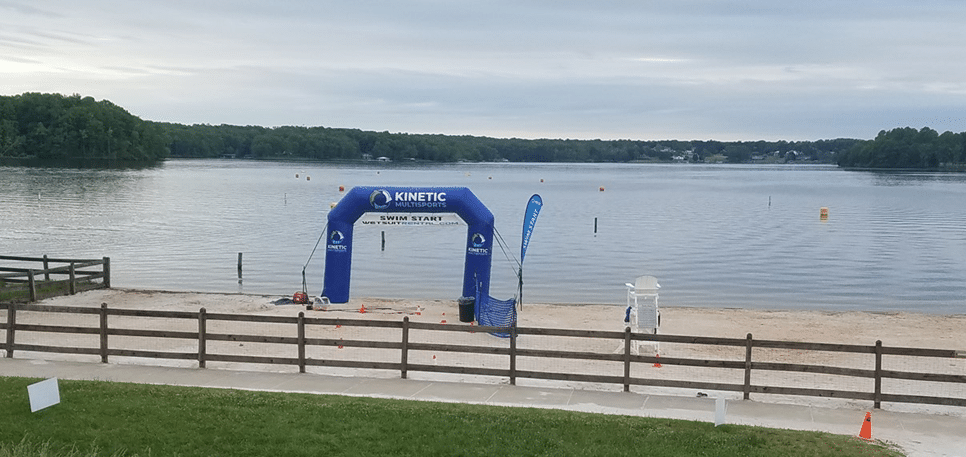
With this short swim, I learned that Lake Anna is hands-down one of the nicest lakes in which I have done a triathlon swim. As the picture below attempts to show, the beach and lake bottom are of sugar sand consistency. Not as white as sugar, but clearly as soft. Besides, I did not see a single weed during the swim.

The ‘out, across, and in’ swim course was marked by orange and yellow buoys. About every five seconds, a racer would begin their swim by passing through the blue arch and crossing a timing mat.

More Reasons for a Practice Swim

A second reason for taking advantage of the practice swim is to get my heart rate up a bit. Doing so at this point makes it much less likely that my heart rate will spike during the first minutes of the race when excitement can drive me to swim faster than normal.

There is a third reason for doing the practice swim. I like to get the shock of cold water entering my wetsuit out of the way. When, shortly thereafter, I start the swim, my wetsuit is filled with water warmed by my body heat.

Today, this was especially relevant. The official water temperature was 68°F, making me glad to have a full wetsuit. Still, there were many with sleeveless wetsuits. There were even some more hearty souls who braved the water in just a triathlon suit. To top it off, a couple of guys, one who had to be close to my age, did the swim in only a swimming suit and no shirt.

Swim

After the time allotted for the practice swim, racers gathered behind the ‘Swim Start’ arch. Once the air horn sounded and the first competitor crossed the timing mat and entered the water, another swimmer entered the water about every five seconds.

This ‘time trial’ start is one positive effect of COVID-19. It reduces the density of swimmers in the water and, therefore, reduces, though not eliminates, contact between swimmers.

After swimming in a straight line out to the furthest buoy on the left side of the course, across those at the end, and straight back into shore, always keeping to the left of the buoys, I reached land. In crossing a timing mat on the shore, the swim leg was complete.

Bike

The temperature at the start of the bike leg was 46°F. Because of this, I put on a light, long-sleeved shirt for the ride.

The bike course reminded me a lot of the course for the Ohio triathlon – hilly with enough variety in the scenery to make the ride interesting.

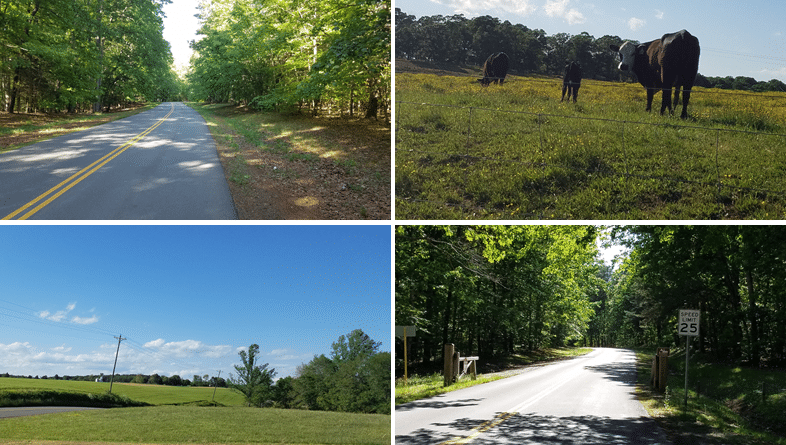
The course followed the road out of the park, then turned left, heading northwest on the smooth, tree-lined Lawyer’s Road.

At mile 5, the course began an equilateral triangle-shaped loop covering another 5 miles of hills and turns. It was during this portion of the course that we passed farming areas with horses and cattle. There were even two Christmas tree farms – Belmont and Ralph’s – on the stretch furthest away from the park.

We soon rejoined Lawyer’s Road and returned to the transition area on the side opposite the one on which we had ridden a few minutes earlier.

A big thanks goes to the race crew and volunteers who did a tremendous job of directing bikers and controlling car and truck traffic with whom we shared the road.

Beyond the hills and turns on the roads, the bike course provided interesting scenery, from gorgeous stands of trees to pastureland, some occupied by horses and cattle.

Run

By the time I was ready for the run, the air had warmed to 50 °F and the sun was peeking through the clouds. I shed the long sleeve shirt for a pleasantly cool run, all within the park.

As advertised, the run course included “a good uphill coming out of transition”. This hill continued for most of the first mile.

For the next mile and a half, the course covered gradually rolling hills. The last half mile followed a paved walking trail that traveled nearly completely downhill as it guided us toward the lake.

The end of this trail broke out near the beach. From here, we ran the last few hundred feet on grass to the finish line.

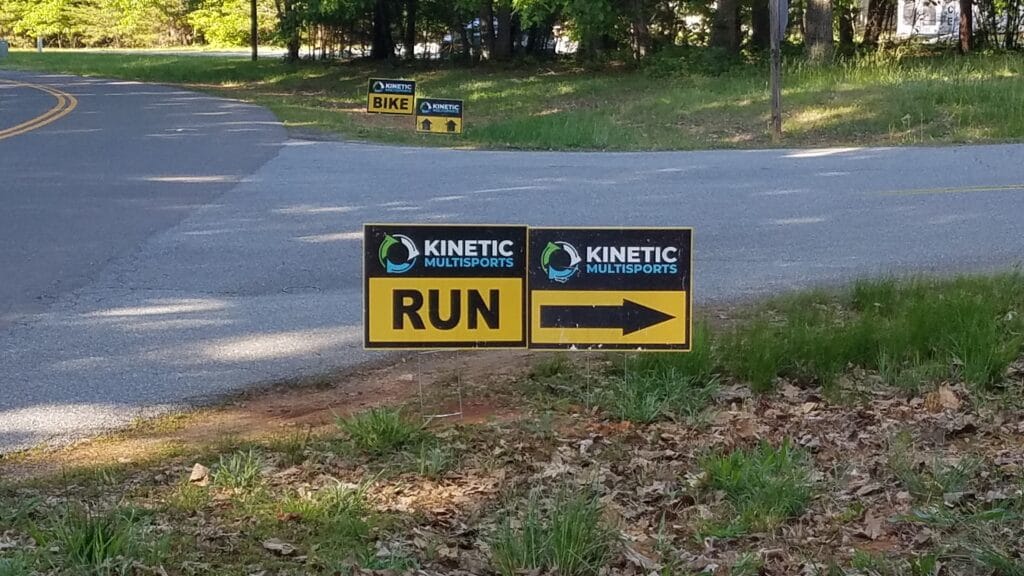
The bike and run courses for the Lake Anna Triathlon shared the road into the park for most of the first mile.

COVID-Style Awards Ceremony

Remember when triathletes gathered to celebrate the accomplishments of fellow racers? When high fives and hand shakes were prolific? Hopefully, we will get these back. I miss the celebrations.

Virtual awards ceremonies miss the point. Was it ever really about the actual award?

For this event, the Kinetic Multisports team creatively took advantage of a natural amphitheater in front of the Lake Anna beach. Rather than dismiss attendees after the race, organizers made use of the hill to reintroduce an award’s ceremony where attendees could both share in the results and stay distanced.

Race Firsts

  • First triathlon using my triathlon bike with running shoes and flat pedals having a toe cage, rather than biking shoes and clip-in pedals. I saw this at the Arkansas triathlon shortly before I fell on my bike, because I couldn’t get my bike shoes unclipped quickly enough.
  • First race in which I forgot to bring glasses as protection from bugs or other airborne material. Turned out just fine.
Triathlon Adventures Across America book cover

A Journey Beyond This Race

“Uplifting, real, and full of heart—I couldn’t put it down.”

Read the full journey in Triathlon Adventures Across America

Your Favorite Lake For A Triathlon Swim?

What is the nicest lake in which you have done a triathlon swim?

Have you done the Lake Anna triathlon or another triathlon in Virginia?

Tell us about these in the Comments below.

Comments: We’d love to hear about your experience. Join the conversation below. All comments are reviewed before they appear.

Reply notifications: Click the bell icon above Post Comment to be notified when someone replies to your comment.

Follow the discussion: Click Subscribe above the comment box and enter your email address to receive notifications whenever a new comment is added—even if you don’t leave a comment. After subscribing, check your email and click Confirm to activate notifications.

error

Enjoy this post? Please spread the word :)