The following question from one reader is the basis for this post: “How has AI really affected triathlon coaching for older athletes? What does the human coach add?”
The One Thing That Never Changes
As the sport of triathlon continues to evolve, one constant remains: change. Gear, training plans, and the role of professional coaching have transformed significantly over the years.
This article aims to illustrate how technology, artificial intelligence, algorithms, and a professional coach can add value to the triathlon journey for senior athletes.
AI’s Strength for Senior Triathletes
Much like how apps and technology enable more efficient routes when traveling to unfamiliar places, our sport can be trained more effectively by using vetted, fine-tuned AI-driven training plans. However, a simple AI or chatbot, like ChatGPT, cannot incorporate all the factors influencing training success—such as age, start date, lifestyle, nutrition, body metrics, stress, readiness, and environmental variables.
In essence, generic plans might work for one person but not another. Companies claiming to use AI often differ widely in their approach. Conversely, platforms like TriDot are designed to provide senior athletes with:
Age-Specific Personalization: Adjusts workout intensity, volume, and recovery based on the athlete’s age. For example, a 65-year-old receives different prescriptions compared to a 35-year-old, ensuring effective yet safe training.
Normalized Training Stress (NTS): Quantifies training stress considering age, fitness, and environmental conditions, reducing injury risk and promoting long-term consistency.
Environmental Normalization: Adjusts guidance based on variables like temperature, humidity, elevation, and terrain, allowing seniors to train optimally in various settings.
Fewer Injuries & Improved Performance: Data shows that senior athletes training with platforms like TriDot experience fewer injuries and significant performance gains—some qualifying for world championships while training fewer hours than traditional plans.
Continuous Adaptation: The system updates prescriptions based on ongoing performance and recovery data, helping athletes avoid overtraining and ensuring progress.
Where Does a Coach Come In?
A common question might be: “If I use a vetted AI training platform, why do I need a coach?”
Throughout my career as an educator, coach, and consultant, I’ve seen the immense value of a “thought partner” or accountability partner. Every athlete is unique—like a puzzle piece—and having a coach skilled in emotional intelligence and personalized guidance can be priceless.
A professional coach can benefit any athlete at any distance. Sure, a person doing a sprint race will face different issues and challenges than a person doing a 70.3 or full distance event. Still, they all benefit from the human support.
Relative to AI, a professional coach can leverage AI platforms to address:
Medical history, medications, orthopedic limitations, surgical history
Adjustments for arthritis, bone health, tendons, and prior injuries
Menopause- or andropause-specific recovery and strength strategies
Technique improvements (swim stroke, bike fit, run gait)
Smarter recovery and strength programs
Personalized nutrition and race fueling strategies
Data interpretation (HRV, sleep, fatigue) for injury prevention
Decision-making strategies, such as when to cut or modify sessions
Motivation, mental skills, and race rehearsal guidance
Here’s What Senior Triathletes Say
The synergy of a vetted AI platform with a credentialed coach provides the “best of both worlds.” Conversations with athletes and coaches indicate that this combined approach can improve performance by approximately 30%.
Here are testimonials from two senior female triathletes using TriDot and my coaching services:
“As a 61-year-old with nearly two decades of racing, I was invited by my coach, Kurt Madden, to share my experience with AI-based training. Before Tridot in 2018, I relied on generic plans and brief coaching support. Despite aging, my drive remains strong. AI helped me train smarter by personalizing daily plans based on my thresholds, age, and environmental factors. Over the years, it emphasized more rest and Zone 2 training without sacrificing performance. My VO2max and race results have improved or remained steady in seven years—without injury. AI can manage training effectively, but it cannot replace the emotional and strategic support of a coach. Together, they offer the best outcome.”
And, here is what another senior triathlete wrote:
“Approaching 70 and with 20 years of Ironman and 70.3 races, I initially used Tridot’s AI plans without a coach. The AI was helpful but lacked personal insight into mental and life challenges. When I qualified for the Ironman World Championships in Nice, I partnered with a coach to add that human element. The coach tailored my training, helped me avoid overtraining, and ensured safety. AI provided the foundation, while the coach ensured my success—especially for an older athlete.”
The Choice Is Yours
In conclusion, triathlons are a complex sport, blending swimming, biking, running, strength training, recovery, nutrition, race strategy, and more. Some athletes prefer a DIY route, while others seek long-term sustainability and enjoyment through top-tier training platforms paired with experienced coaches. The right combination can make all the difference.
Let us know in the Comments below what you have learned about the pros and cons of an AI-only training plan.
Comments: We’d love to hear about your experience. Join the conversation below. All comments are reviewed before they appear.
Reply notifications: Click the bell icon above Post Comment to be notified when someone replies to your comment.
Follow the discussion: Click Subscribe above the comment box and enter your email address to receive notifications whenever a new comment is added—even if you don’t leave a comment. After subscribing, check your email and click Confirm to activate notifications.
“I’m 77 and have been doing tri since age 63. VO2max info that is specific would be helpful. Research suggests that one can’t really increase it as we age. Hanging onto what we’ve got seems to be the objective.”
That request from a reader is a smart and practical way to frame it. With aging, we rarely regain the VO2max of our youth, but smart training and lifestyle choices can significantly slow the decline. In fact, many masters athletes manage to maintain impressive aerobic capacity well into their 70s and beyond.
In this post, we will discuss (1) what VO2max is and how it typically changes, (2) the physiological causes of decline (with distinctions between men and women), and (3) evidence-based strategies to blunt that decline, tailored for women and for men. We close with a selection of research papers you can link to for deeper dives.
What Is VO2max?
VO2max (maximal oxygen uptake) is the maximum rate at which your body can take in, transport, and use oxygen during intense exercise. It’s a well-accepted benchmark of cardiorespiratory fitness and endurance potential, that is the product of the amount of blood the heart pumps and the amount of oxygen our muscles extract. This product is often normalized by body weight to yield values reported in the technical literature.
For those interested in the calculation, here is the definition in the form of an equation:
VO2max = (CO – (Ca – Cv))/W (units: mL·kg-1·min-1), where
CO = Cardiac Output typically measured in Liters per minute (L/min), which represents the volume of blood the heart pumps per minute.
Ca = Amount of oxygen (in milliliters of oxygen per 100 milliliters of blood) in arterial blood
Cv = Amount of oxygen (in milliliters of oxygen per 100 milliliters of blood) in venous blood
NOTE: The value of Ca – Cv is the amount of oxygen removed from the blood as it passes through the muscles and internal organs.
W = Weight of the individual in kilograms (kg)
Measuring VO2max
There are two primary ways to measure VO2max: the highly accurate, but more involved, Gold Standard, and the accessible, real-world field tests.
The Gold Standard is a VO2max lab test performed in a clinical setting under the supervision of medical or exercise professionals. It involves running on a treadmill or cycling on a stationary bike while wearing a tight-fitting mask that directly analyzes the oxygen you breathe in versus what you breathe out (indirect calorimetry). This method provides the most accurate number, making it the preferred choice for elite athletes, clinical diagnostics, and precise exercise prescription. However, it requires specialized, expensive equipment, is time-consuming, and demands exercising to exhaustion, which isn’t suitable for everyone.
A more accessible approach for determining VO2max for active older athletes involves a 1.5-Mile Run Test (also known as the Cooper test, developed by Dr. Kenneth Cooper). With this test, the athlete plugs their time to run 1.5 miles into a scientifically validated equation.
While not as precise as the lab test, this field test is easy to administer, requires minimal equipment, and provides a repeatable benchmark for tracking fitness improvement over time. Other field tests to estimate VO2max, including a walking test, may be more appropriate for those just beginning to train for triathlon or other multisport endurance events.
How VO2max Changes With Age and Sex
The reader’s comment at the beginning of this post suggested a tendency for VO2max to decline with age, which is generally the case.
General Decline With Age
As we get older, our VO2max gradually decreases. For adults who are mostly sedentary, this drop averages about 10 percent per decade after the age of 25 or 30, or roughly 1 percent per year.
Studies that have tracked men and women over many years show a fairly wide range in how much VO2max declines. On average, men lose about 0.4 to 0.5 milliliters of oxygen per minute per kilogram of body weight each year, while women tend to lose around 0.2 to 0.35. These numbers can vary depending on how active a person remains and how VO2max is determined.
Research from long-term projects such as the Baltimore Longitudinal Study shows that the decline becomes more noticeable later in life, especially after age 70. People who stay active experience much smaller drops than those who become less active. In fact, well-trained older athletes often see only about half the decline of sedentary adults—about 5 percent per decade instead of 10 percent.
It’s also important to note that the decline is not perfectly linear. It often accelerates when training volume or intensity decreases or when health conditions limit activity. Additionally, studies that compare younger and older people at one point in time (called cross-sectional studies) usually underestimate the true rate of decline seen in long-term (called longitudinal) studies that follow the same individuals over decades.
Overall, while the average adult can expect a 5–10 percent drop in VO2max per decade, consistent exercise—especially aerobic and strength training—can greatly slow this decline and help maintain a higher level of fitness into the later decades of life.
Typical VO2max normalized by weight is both higher for active individuals and declines by half the rate compared to those who have been sedentary throughout their lifetime.
Differences in Decline Between Men and Women
At any given age, women’s VO2max values are typically about 15–30 percent lower than men’s. This is believed to be a result of men’s larger hearts, greater blood volume, and higher hemoglobin levels. However, as both men and women age, the pattern of change in their VO2max declines differs slightly. As pictured in the chart below, some research shows that men may experience a steeper decline than women. Because of this, the gap between men’s and women’s VO2max values often narrow in the later decades of life. (The lower decline by age decade for women closes the gap between the initially higher values for men.)
The decline in VO2max continues, and generally increases, with age for both men and women. However, changes are greater for men than women. Source: Fleg, J. et al, “Accelerated Longitudinal Decline of Aerobic Capacity in Healthy Older Adults.” Circulation. 112. 674-82. 10.1161/CIRCULATIONAHA.105.545459.
Causes for VO2max Decline With Age?
The gradual decline in VO2max that comes with aging results from several physiological changes affecting both how much oxygen the heart and lungs can deliver and how efficiently the muscles can use it. These changes happen in everyone, but the reasons and patterns differ slightly between men and women.
Central (Heart and Circulatory) Factors
One major reason VO2max decreases with age is that the cardiovascular system becomes less efficient at pumping and distributing oxygen-rich blood. The maximum heart rate—the fastest your heart can beat—drops by about five to ten beats per decade. This limits the overall cardiac output, or the total volume of blood the heart can deliver per minute.
As the heart and blood vessels age, they also become less elastic. The heart’s ability to fill and contract strongly during intense exercise declines, and arteries become stiffer, which reduces blood flow. Even in highly trained athletes, these central changes gradually lower the body’s ability to move oxygen from the lungs to the working muscles.
Peripheral (Muscular and Metabolic) Factors
At the same time, changes occur in the muscles themselves. With age, most people lose muscle tissue, a process known as sarcopenia. This reduces the amount of “machinery” available to use oxygen during exercise.
Mitochondria—the energy-producing parts of cells—also decrease in number and efficiency, meaning muscles can’t generate energy as effectively as before. Capillary density within the muscles tends to decline, so less oxygen is delivered to each fiber. Fat tissue can infiltrate muscles, reducing their quality and function.
Together, these changes make the muscles less capable of extracting and using oxygen even when it is available.
Differences Between Men and Women
As people age, both men and women experience a decrease in VO2max, but the main reasons for this decline tend to differ between the sexes. For men, the drop in VO2max is mostly tied to the heart’s reduced ability to pump blood and deliver oxygen throughout the body. Men typically start with higher VO2max values because they have larger hearts, more blood volume, and higher hemoglobin levels to help carry oxygen. As they age, these heart and blood-related factors tend to diminish the most, leading to a greater absolute loss in VO2max.
Women, on the other hand, are more affected by changes in their muscles as they age. The loss of muscle mass, as well as the muscles’ ability to extract and use oxygen, plays a bigger role in their declining VO2max. After menopause, hormonal shifts—like a drop in estrogen and testosterone—cause blood vessels to become less flexible and make it harder for the body to grow new capillaries. This limits oxygen delivery to muscles and speeds up muscle loss and the drop in mitochondrial function, which means muscles become less efficient at using oxygen.
Even though women’s VO2max values are generally lower than men’s, most of this difference can be explained by differences in body composition, especially muscle mass. When VO2max is adjusted for the amount of lean muscle—especially in the legs—the gap between men and women narrows a lot. In fact, by late life, the difference between men’s and women’s VO2max becomes smaller, partly because men’s cardiac output declines more steeply, while muscle-related changes dominate in women.
The Bottom Line
In summary, men are more likely to see VO2max fall due to heart and blood changes, while for women, the main causes are loss of muscle and reduced muscle quality combined with hormonal changes. Despite these differences, staying active with endurance and strength training is key for both sexes to slow down these age-related declines and minimize the VO2max gap.
Next, we’ll show how we can use this knowledge to tailor training for the older male and female triathletes.
Strategies to Slow the Decline in VO2max
As we have just stated, the decline in VO2max that comes with age is real—but it’s far from inevitable. Research shows that the rate of decline can be cut nearly in half through consistent training and healthy lifestyle choices. Even into the 70s and 80s, both men and women can improve or maintain much of their aerobic capacity.
Below are the most effective, science-supported strategies for preserving VO2max, followed by specific guidance for men and women.
Universal Strategies for Men and Women
1. Keep Moving—Consistency Is Everything
The single most important factor in slowing VO2max decline is maintaining regular aerobic activity. People who stop training often lose VO2max rapidly, but those who continue—even at lower intensity—keep much more of their capacity. Activities such as swimming, cycling, brisk walking, and running all count. The key is to stay consistent year-round.
2. Include a Mix of Intensities
Research shows that a blend of steady, moderate workouts and occasional higher-intensity intervals provides the best results. Intervals—short bouts of harder effort followed by recovery—stimulate the heart, lungs, and muscles in ways steady exercise alone cannot. Even one or two short interval sessions per week can help preserve aerobic power.
3. Maintain Mobility, Stablity, and Muscle Strength
Because muscle loss contributes directly to lower VO2max, strength training is essential. Two or three sessions per week that focus on major muscle groups—especially the legs, hips, and core—can preserve muscle quality and improve endurance performance. Bodyweight, resistance bands, light weights, and yoga all work if used consistently and progressively.
Additionally, it is imperative to start with mobility and stability exercises prior to adding additional load or weight to ensure you have a solid framework.
Older athletes need more recovery time between demanding workouts. Adequate rest, good sleep, and attention to early signs of overtraining help prevent setbacks. Think of recovery as part of training, not as time off.
Furthermore, easy walking sessions can be viewed as active recovery, as compared to passive recovery, and can be a big bonus.
5. Fuel and Hydrate Well
Adequate protein intake (around 1.2–1.6 grams per kilogram of body weight per day) supports muscle repair and growth. Staying hydrated and consuming enough calories also help the cardiovascular system function effectively. Proper nutrition ensures that the body has the raw materials it needs to adapt positively to exercise.
Periodic testing—whether through a lab VO2max test, a fitness tracker estimate, or even time trials—can show how your fitness is changing. Monitoring helps you adjust training volume or intensity before a small dip turns into a long-term loss. Testing on a monthly or quarterly basis should be of great benefit.
Strategies Specifically for Men
For men, the primary goal is to maintain cardiac strength and blood delivery.
Continue doing moderate-to-vigorous aerobic training several days each week.
Include intervals or tempo workouts that elevate heart rate and stimulate stroke volume.
Combine aerobic training with strength training to preserve lean muscle and testosterone levels, both of which support oxygen transport.
Ensure adequate protein and nutrient intake to support muscle repair and maintain energy levels.
Monitor recovery carefully—higher intensity brings benefits, but only when balanced with sufficient rest.
Strategies Specifically for Women
For women, the focus should include maintaining muscle quality and supporting hormonal balance.
Pair regular aerobic training with frequent resistance work to prevent muscle loss and keep mitochondria active.
Because estrogen decline affects vascular flexibility and oxygen delivery, aim for a variety of activities—cycling, swimming, walking, and yoga all help circulation and recovery.
Ensure adequate protein and nutrient intake to support muscle repair and maintain energy levels.
Short, higher-effort intervals can still produce significant gains, even in the late 70s, as shown in research on postmenopausal women.
Balance and Enjoyment for the Long Haul
Finally, it’s important to remember that longevity in training depends on enjoyment and sustainability. Triathlon offers a perfect balance of swimming, cycling, and running—three activities that spread out the physical stress and keep workouts interesting. Mixing in rest days, flexibility sessions, and easy social rides or swims makes it easier to stay active for the long haul.
The Bottom Line
Regular aerobic exercise, combined with strength work including mobility and stability work, recovery, and good nutrition, can dramatically slow the decline in VO₂max that comes with aging. For both men and women, the goal isn’t to stop the clock—it’s to stay strong, mobile, and capable for as long as possible. Consistency and a balanced approach are what make that possible.
The encouraging news is that both sets of changes can be slowed significantly through consistent endurance and resistance training. By challenging the cardiovascular system and maintaining strong, active muscles, older athletes—men and women alike—can keep their VO2max far higher than what would be expected for their age.
Suggested Training Week for a 75–80-Year-Old Triathlete (Example)
Below is a sample training week that incorporates the above elements for female and male triathletes.
The structure and volume are similar, but the emphasis shifts slightly—men focus more on maintaining cardiac output and higher-intensity aerobic capacity, while women place more emphasis on preserving muscle mass, vascular flexibility, and recovery.
Remember to tailor session durations, intensity, and volume according to your fitness, injury history, and recovery capacity.
Typical Week for a 75–80-Year-Old Female Triathlete
Day
Emphasis
Sample Session
1
Swim + Technique / Aerobic
30–40 minutes focusing on stroke efficiency, balance, and controlled breathing. Include short aerobic efforts.
2
Bike / Steady Endurance
60 minutes steady aerobic pace (70–80% HR) to build capillary density and endurance; maintain comfort and posture.
3
Strength & Core (Muscle Maintenance
45 minutes focusing on major muscle groups (legs, glutes, hips, core). Include light resistance work and balance drills to counter muscle loss.
4
Run / Walk or Aqua Jog
30 minutes easy to moderate effort, emphasizing soft surfaces and form. Use aqua jogging if joint discomfort occurs.
5
Recovery + Flexibility
30 minutes of gentle swim, yoga, or Pilates. Focus on mobility, joint health, and blood flow.
6
Brick (Bike + walk/Run)
40–45-minute ride followed by 10–12-minute easy walk-run. Prioritize smooth transitions and low-impact endurance.
7
Rest / Active Recovery
Easy walk or stretching; optional light strength maintenance or balance work.
Typical Week for a 75–80-Year-Old Male Triathlete
Day
Emphasis
Sample Session
1
Swim + Aerobic Technique
35–45 minutes focusing on steady aerobic pace and breathing control; moderate drills for efficiency.
2
Bike / Endurance + Intervals
60 minutes including 4 × 4-minute intervals at 85–90% HR or power; recovery between intervals. Focus on maintaining cardiac output.
3
Strength & Core
45 minutes of full-body strength (legs, hips, upper body, core). Include resistance bands or light weights to sustain power output.
4
Run / Walk Intervals
30–35 minutes alternating run and walk segments; aim for moderate effort. Focus on leg turnover and aerobic rhythm.
5
Swim / Recovery
30 minutes easy swimming or aqua jogging. Light drills and stretching to aid recovery.
6
Brick (Bike + Run)
45-minute ride + 10–15-minute easy run or walk-run. Moderate intensity to simulate race conditions.
On higher-intensity days (Day 2, Day 6), ensure preceding and following days have lighter loads or recovery.
Rotate in weeks with reduced volume or “recovery weeks” every 3–4 weeks.
Monitor fatigue, sleep, soreness, heart-rate variability, and adjust training intensity accordingly.
Using the TriDot Training Platform
To take the guesswork out of your training sessions and receive an optimized and personalized training program for a 75 – 80-year-old triathlete, you might want to utilize TriDot which can add benefits such as:
Personalized training adjusted for age, fitness, and recovery.
Focus on the “right training” rather than simply more training.
Continuous adjustments and feedback to reduce injuries and overtraining include mobility, stability, and strength training.
Environmental normalization and training stress are quantified.
Support, community, and structure.
Race-preparation tailored for multiple levels and multiple distances.
Choose from several subscription levels that will meet your needs.
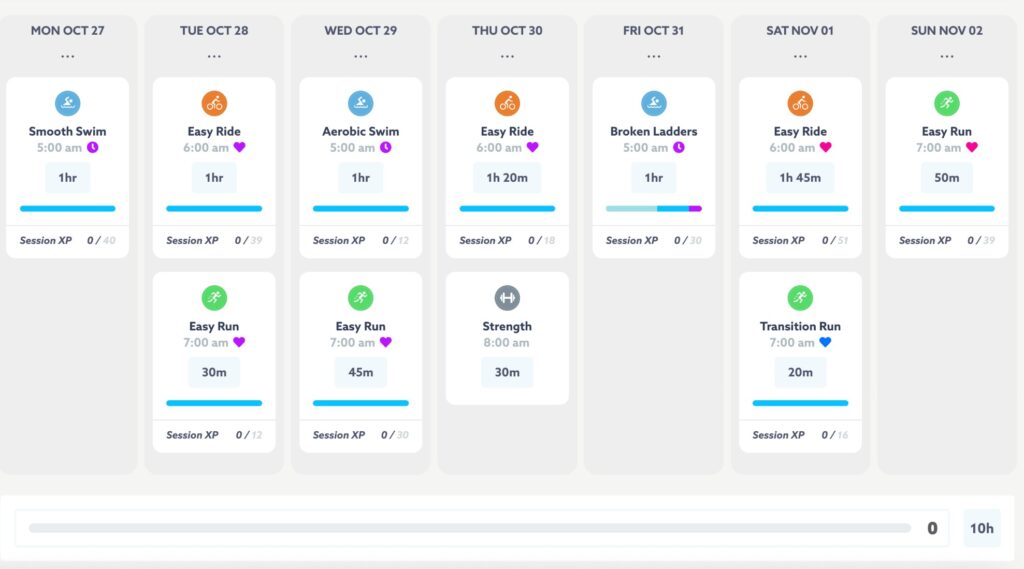
Following is a sample of a week of training from TriDot for Gene Peters, an 81-year-old triathlete. Gene won his age group at the recent Ironman California event on October 20, 2025. The plan shown emphasizes a large amount of recovery.
Sample training schedule using the TriDot training platform for an experienced 81-year-old male triathlete. This schedule follows completion of an Ironman 140.6 triathlon.
Men and women start with different physiological baselines, but consistent endurance and strength training benefit both sexes. Staying active not only slows the decline in VO2max but also helps minimize the differences between men and women as they age. In summary, here are the main lessons from research:
Decline in VO2max with age is inevitable—but modifiable. How much you lose depends heavily on what you do, not just what your genes say.
Consistent, lifelong training is the most powerful “anti-aging” tool for VO2max preservation.
Men and women share most mechanisms of decline, but women face additional challenges from hormonal shifts, muscle quality, and metabolic changes.
Tailor training smartly: use interval work, strength training, proper recovery, and nutrition to maximize your retained capacity.
Small gains are possible, even at advanced age, especially if training is consistent, targeted, and adaptive.
Remain adaptable — listen to your body, monitor trends, and don’t be afraid to back off temporarily if signs of overreaching appear.
For Further Investigation
Want to look at the research more closely? Here are the top ten research papers and related reports we identified while preparing this post.
Note: this paper, which is based on longitudinal studies, contains data showing a peak VO2max at around age 30 and a later age at which the rate of decline for men surpasses that for women.
Have you been tracking your VO2max? Either way, how will you use this information? Share your questions and thoughts in the Comments below.
Comments: We’d love to hear about your experience. Join the conversation below. All comments are reviewed before they appear.
Reply notifications: Click the bell icon above Post Comment to be notified when someone replies to your comment.
Follow the discussion: Click Subscribe above the comment box and enter your email address to receive notifications whenever a new comment is added—even if you don’t leave a comment. After subscribing, check your email and click Confirm to activate notifications.
by Kurt Madden, Director of Coach Development, TriDot, and Senior Triathlete
Triathlons can be enjoyable yet grueling tests of endurance, combining swimming, biking, and running at varying distances. For senior athletes, understanding and utilizing heart rate zones is key to tailoring training effectively, maximizing both safety and performance. This article presents insights into heart rate training that will be especially beneficial for senior triathletes, guiding you through important practices for swimming, biking, and running.
Understanding Heart Rate Training
Heart rate training leverages the heart’s response to exercise, allowing athletes to gauge their intensity during different training sessions effectively. One of the primary advantages of this method is the personalized training plan it offers based on individual fitness levels rather than a one-size-fits-all approach. For senior athletes, this individualized focus is especially crucial, as fitness levels, recovery times, and health considerations will vary more significantly among older triathletes.
Determining Heart Rate Zones
Before diving into specific training practices, it’s essential to establish your heart rate zones. Most sports scientists identify five primary zones:
Zone 1: Very Light (50-60% of maximum heart rate)
Zone 2: Light (60-70% of maximum heart rate)
Zone 3: Moderate (70-80% of maximum heart rate)
Zone 4: Hard (80-90% of maximum heart rate)
Zone 5: Maximum (90-100% of maximum heart rate)
To find your maximum heart rate, you can use the formula: 220 minus your age. For example, a 65-year-old would have a maximum heart rate of about 155 bpm (220 – 65). For more accurate measurements, consider conducting a maximal exercise test or utilizing a field test under appropriate supervision.
TriDot, a sophisticated online training platform, conducts regular assessments—such as a 400-yard swim, a 20-minute bike ride to gauge power, and a 5K run—allowing you to determine average heart rates in various situations.
Environmental Factors
It’s important to understand that environmental conditions and fatigue can significantly influence heart rate responses. For instance, running in the heat of midday in Florida versus in the cool mornings of Colorado will produce different heart rate outcomes. This variance is another reason why an adaptable system like TriDot can be very beneficial. It can adjust your heart rate zones based on local conditions and your physical responses.
Swimming poses unique challenges for heart rate monitoring due to water buoyancy and evaporation cooling. Studies, like those published in the Journal of Sports Science & Medicine, highlight that swimming tends to require higher effort for lower heart rates, primarily because of breathing techniques and the need for adjustment to water resistance.
Key Practices for Heart Rate Training in Swimming
Warm-Up: Begin every swim with a dynamic warm-up. Gradually aim to elevate your heart rate into Zone 2 before you tackle your main sets.
Interval Training: Use interval training focusing on shorter high-intensity efforts. For instance, swim 100 meters at a strong pace to reach Zone 4, then recovery at Zone 2 for a designated period.
Monitor Recovery: Utilize the cooldown phase to observe how rapidly your heart rate returns to either Zone 1 or Zone 2. Faster recovery rates often indicate better cardiovascular fitness.
Breathing Patterns: Practice bilateral breathing (breathing alternately on both sides) to regulate exertion levels and maintain a more stable heart rate.
Heart Rate Training in Biking
Bicycle training can substantially improve endurance and performance for senior triathletes. An article from Bicycling Magazine illustrates that effective heart rate training allows cyclists to sustain higher intensities over longer periods while minimizing fatigue.
Key Practices for Heart Rate Training in Biking
Threshold Training: Identify your lactate threshold utilizing heart rate. Training below and above this threshold will enhance your body’s efficiency in handling lactic acid. Intense efforts typically reside in Zone 4 .
Long Rides in Zone 2: Integrate extended rides in Zone 2 to boost aerobic capacity; these slower-paced workouts will build endurance without overstressing the body.
Hill Workouts: Climbing steep grades can quickly elevate your heart rate. Engage in hill repeats where you push hard into Zone 4 during the ascent and allow yourself to recover in Zone 2 while descending.
Long Steady State Rides: Schedule long rides that maintain moderate heart rate zones to stress your cardiovascular system without risking injury.
Heart Rate Training in Running
Runner’s World emphasizes the advantages of heart rate training in running, highlighting that a well-maintained heart rate can optimize both speed and endurance—critical factors for success in triathlons.
Key Practices for Heart Rate Training in Running
Easy Runs in Zone 2: Establish a routine of easy runs that ideally stay within Zone 2. This pace supports aerobic capacity and allows for needed recovery while still contributing to your overall training volume.
Tempo Runs: Integrate tempo runs into your training that push your heart rate into Zone 3 or low Zone 4. For example, after an adequate warm-up, aim to sustain a hard effort in Zone 3 for about 20 minutes before cooling down. This practice develops your lactate threshold, improving your ability to maintain a faster pace over longer durations.
Interval Sessions: Incorporate short bursts of high intensity in your running regimen. An example is sprinting for one minute to reach Zone 4, followed by a recovery jog in Zone 2 for a couple of minutes. This oscillation between high and lower intensity will help improve both speed and cardiovascular efficiency.
Fartlek Training: Fartlek, which translates to “speed play” from Swedish, offers a fun way to improve heart rate training. By varying your pace and intensity throughout a run—like alternating between faster efforts in Zone 4 and moderate efforts in Zone 2 —you simulate race conditions, which can improve performance during competitions.
Putting It All Together
Combining heart rate training across swimming, biking, and running requires meticulous planning and execution. Here are practical tips for executing a heart rate training program that includes all three disciplines:
Consistent Monitoring
Utilize a heart rate monitor across all training sessions to maintain accuracy. Factors like hydration, nutrition, and fatigue can significantly impact heart rate responses, so being mindful of these elements is crucial.
Seasonal Planning
Structure your training year to include cyclic phases that focus on base training, building strength, peaking for events, and allowing for recovery. Early in the year, emphasize building your aerobic base in Zone 2, while later phases accommodate higher-intensity efforts in Zones 4-5.
Recovery Days
Plan for recovery sessions that land within Zones 1-2. These are essential for allowing the body to repair and strengthen, helping reduce fatigue and risk of injury.
Testing and Reassessing
Regularly reassess your fitness levels every few months through structured workouts, like time trials or clinical tests. This will assist in adjusting your heart rate zones based on improvements and changes in your fitness level.
Consider Individual Preferences
Everyone is unique. Pay attention to personal responses to heart rate training. Different athletes may thrive on varying styles of workouts (e.g., short intervals vs. longer sustained efforts).
Leveraging TriDot
TriDot provides an exceptional platform for senior triathletes. This innovative training technology optimizes training sessions based on effort, allows for precise recovery, and considers environmental factors to help reduce injury risks while maximizing performance potential.
Heart rate training emerges as an essential tool for senior triathletes aiming to enhance their performance across swimming, biking, and running. Applying these heart rate training principles can lead to improved endurance, faster recovery, and greater overall race results. By strategically employing heart rate zones in your training plan, senior athletes can personalize their approach, minimize injury risks, and achieve their triathlon objectives.
Remember, whether you’re tackling challenging workouts or focusing on recovery days, being aware of your heart rate is key to achieving triathlon success. With these insights and strategies under your belt, you are now ready to elevate your triathlon training experience and embrace the journey ahead with confidence and enthusiasm. Happy training, and let’s make every heartbeat count!
Have Questions for Our Coaches?
Post your questions about heart rate zones or comments about your experience using this approach for your training below.
Comments: We’d love to hear about your experience. Join the conversation below. All comments are reviewed before they appear.
Reply notifications: Click the bell icon above Post Comment to be notified when someone replies to your comment.
Follow the discussion: Click Subscribe above the comment box and enter your email address to receive notifications whenever a new comment is added—even if you don’t leave a comment. After subscribing, check your email and click Confirm to activate notifications.
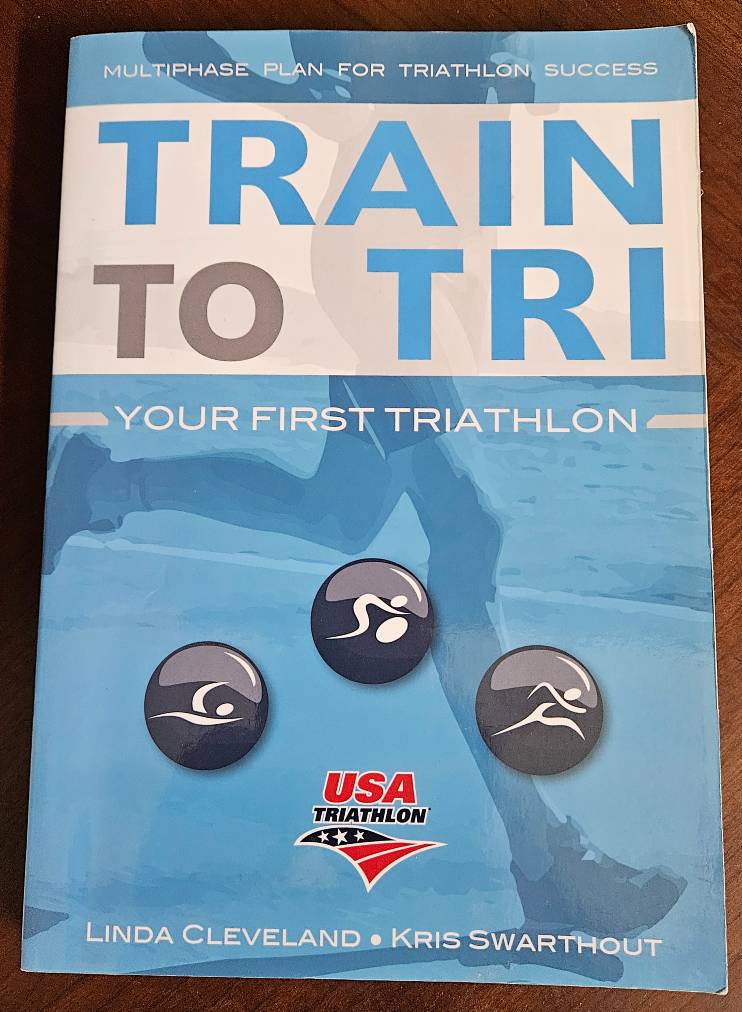
Looking to complete your first triathlon? Want to inspire and motivate your children, grandchildren, parents, friends, or co-workers?
If so, Train To Tri: Your First Triathlon by Linda Cleveland and Kris Swarthout is for you. This 246-page guide provides the essential information needed to prepare for your first triathlon.
Authors: Linda Cleveland and Kris Swarthout, both USA Triathlon Level 2 coaches with lots of experience competing in triathlon and coaching triathletes.
Publisher: Human Kinetics
Who is this book for?
Train To Tri is written primarily for those considering or already committed to completing their first sprint or standard (formerly called Olympic) distance triathlon.
Even though it is aimed at first-timers, it is not just for those doing their first triathlon. While I have completed over 40 sprint triathlons, I found several useful training tips. I have already put some of them to use.
What does the book cover?
The book opens with a 24-question Triathlon Readiness Assessment. Results of the self-assessment help the future triathlete identify with one of three categories – bronze, silver, or gold – and select the training plan included later in the book. This initial section also provides guidelines for choosing the specific race for your first triathlon.
I like the basic strategy of the first triathlon training plan laid out by the authors – to focus most of the training effort on your weakest leg.
You should focus the most time and effort on [your third strongest sport] to develop strength and endurance as well as improve technique. (page 9)
Gear
Once you decide to do a triathlon, you will quickly learn about the incredible amount of clothing and equipment (called ‘gear’ in the triathlon world) surrounding the sport. Since not all the gear is necessary for your first triathlon, the authors distinguish between the ‘necessary’ and the ‘nice to have’ or ‘you can wait and decide after your first race’ gear.
Your Triathlon Support Group
Training with a group can provide the extra motivation needed to push through a training program and reap the rewards of completing your first triathlon. A group can also help you to improve your technique more quickly.
In this chapter, the authors suggest ways to create a support network for your training in swimming, biking, and running that includes various clubs and your family, friends, and co-workers.
You may have various support group options. For example, if you live in a retirement community, such as The Villages, Florida, you have a built-in support group in The Villages Triathlon Club. Members train and race together with encouragement galore.
If you are working in an area without a triathlon training club in the area, you can create your own support group through a local fitness center, community pool, bike shop, and running store. This provides flexibility to follow your specific training plan while enlisting the support of instructors and others with experience from which you can benefit.
Swim
The chapter on swimming covers the basic elements of an efficient stroke with illustrations for a proper freestyle technique. I appreciated the suggestion for traveling and swimming, especially the advice for making use of the typical small hotel pool.
Interestingly, many triathletes find swimming to be their weakest sport. If you are in that group, get comfortable being in the water and with swimming with other people as you will experience on race day. Whether swimming in a pool or in open water, you will inevitably come close to, if not in contact with, other swimmers. Staying calm is the key to finishing the swim.
If the race you choose includes an open water swim, you will want to practice swimming in open water to become familiar with ‘sighting’. For safety reasons, I recommend adding the ISHOF Safe Swimmer (see also below) to your list of gear.
Bike
Most of us know how to ride a bicycle. However, many have never ridden in a large group at speeds associated with a triathlon.
Therefore, the focus of this chapter is safety. According to the authors, safety in biking begins with a review of the various components of the bicycle to make sure that they are each in good working order. They also describe the most important cycling skills and suggestions on how to hone these, both individually and in group rides.
When riding on the road in traffic, you need to follow the rules of the road as if you were driving a car. (page 78)
Run
We all know how to run. Right? Well, not necessarily in a way that is the most efficient or that minimizes the possibility for injuries. About half of this chapter is dedicated to proper cadence (steps per minute) and body form. The rest of the chapter introduces training with a heart rate monitor and training involving the three-run types included in the weekly training plans.
If you take one thing from this chapter, remember to progress slowly (the ‘10% per week’ rule) to minimize the likelihood of injury. Unfortunately, we need to be reminded of this every so often.
Strength and Flexibility
Building strength and increasing flexibility are two keys to increasing your performance in triathlon. For many of us who spend a lot of time sitting during their workday, lack of flexibility can be the major root cause of injury. The authors show that a relatively small amount of time spent in strength training and stretching can lead to better performance and fewer injuries. Plus, these are another way to ‘mix it up’ and keep the training interesting and fresh.
Nutrition and Rest
If we all know how to run, most of us are even better at fueling (aka eating). The challenge is to eat properly. It becomes even more complicated when we are exercising, burning more calories, trying to build muscle, and recovering from the stress of training.
Triathlon training can be a great way to shed pounds and improve your health. Eating the right foods in the right amount and at the right time is the focus of this chapter. The authors are clear: “Although your daily caloric burn will certainly increase based on your training volume, you don’t have a license to hit the buffet for every meal”.
The chapter begins by showing us how to calculate two important numbers related to exercise – resting metabolic rate (RMR) and caloric burn rate. The authors discuss how to eat (or ‘fuel’ as they define it) throughout the day. This includes eating before, during, and after workouts. Sample menus for triathlon training days help to illustrate the principles of proper fueling.
The chapter concludes with a discussion about the importance of rest within a process known as periodization. The authors even provide a simple test to help us determine when our body is telling us to take a day of rest.
If you do not get adequate rest, the muscles will fatigue and eventually fail, resulting in injury. (page 139)
Training plans
It’s now time to put the information from the previous chapters together and begin to train for your first triathlon. Sample 8-week training plans are provided for bronze-, silver-, and gold-level athletes for both sprint and standard distance triathlons. I appreciate that the authors show readers how to tailor the plans to meet their particular strengths and weaknesses and their individual schedules.
Preparing to race
I love this section. Here, the authors take the new triathlete down the ‘home stretch’ to completing their first race.
Filled with practical advice, the authors walk us through the two weeks leading up to the race. With greater detail for race day, you can feel the thrill that begins upon waking and includes crossing the finish line and heading to the refreshment area for a cold drink and banana.
Train To Tri is pragmatic and focused. It includes essential information for each of the sports of triathlon. The authors season the information with the nuances of practicing them within a triathlon.
You can trust the USAT-certified coaches with this ‘no-nonsense’ guide.
Let us know what you think of Train To Tri
Share your experience with this book in the Comments below.
Comments: We’d love to hear about your experience. Join the conversation below. All comments are reviewed before they appear.
Reply notifications: Click the bell icon above Post Comment to be notified when someone replies to your comment.
Follow the discussion: Click Subscribe above the comment box and enter your email address to receive notifications whenever a new comment is added—even if you don’t leave a comment. After subscribing, check your email and click Confirm to activate notifications.
Disclaimer: Please note that SeniorTriathletes.com is a participant in the Amazon Services LLC Associates Program. This is an affiliate advertising program that provide a way for sites to earn advertising fees. They do this by advertising and linking to amazon.com. Amazon, the Amazon logo, AmazonSupply, and the AmazonSupply logo are trademarks of Amazon.com, Inc. or its affiliates. As an affiliate, I will receive a small commission for any purchases of this product that you make through Amazon.
This post was originally published on January 21, 2018. It was updated on September 5, 2025.








Comments: We’d love to hear about your experience. Join the conversation below. All comments are reviewed before they appear.
Reply notifications: Click the bell icon above Post Comment to be notified when someone replies to your comment.
Follow the discussion: Click Subscribe above the comment box and enter your email address to receive notifications whenever a new comment is added—even if you don’t leave a comment. After subscribing, check your email and click Confirm to activate notifications.