
Indoor Cycling After 50: Are Spin Classes or Structured Workouts Better for Triathlon?
Ask Our Coaches | Off-Season Training Series — Part 1
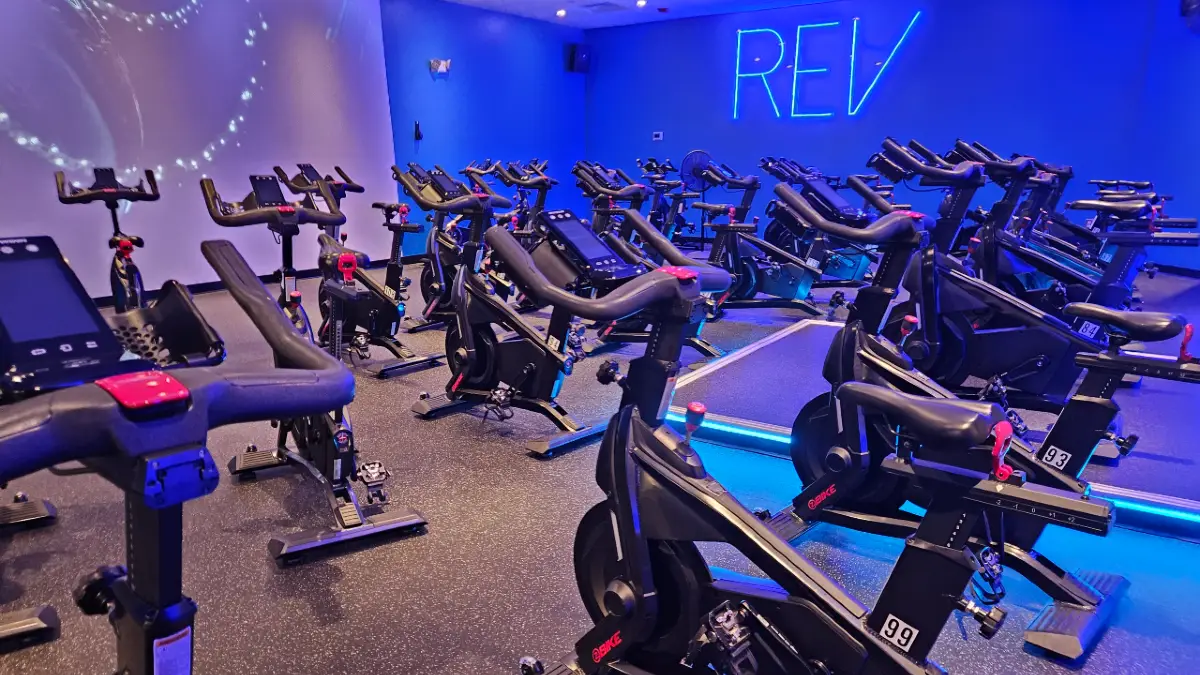
For many triathletes over 50, the off-season means spending more time riding indoors. Group cycling classes offer motivation, camaraderie, and a challenging workout. Others prefer following a structured training plan on a stationary bike or indoor trainer.
But which approach is better for improving performance in the cycling leg of a triathlon?
We asked Coach Kurt Madden, Director of Coach Development at TriDot and an experienced triathlon coach, how older triathletes can make the most of their indoor cycling workouts.
His recommendation begins with a distinction worth considering: The off-season is an opportunity to become a stronger cyclist, not simply maintain the fitness you already have.
Why Kurt Recommends Developing Power During the Off-Season
Kurt believes masters triathletes should prioritize developing cycling power early in the off-season, when they have time to build fitness before their next race.
As Kurt explains, “Developing power early in the season has shown to be the best approach because you will be able to retain it much longer during the season when you are adding more volume.”
He illustrates the benefit with an example involving functional threshold power (FTP), an estimate of the highest power an athlete can sustain during prolonged, demanding cycling.
Suppose one athlete enters the race season with an FTP of 175 watts while another has an FTP of 150 watts. If both can sustain the same percentage of their FTP during a race, the first athlete can produce more power.
Kurt’s point is that improving FTP creates the potential for stronger cycling performance.
However, power development and aerobic endurance are not mutually exclusive. Both contribute to cycling performance, and Kurt recommends incorporating them into the off-season training plan.
Featured Resource: Understanding the Power-Stamina Paradox
Why might building cycling power early in the off-season be more effective than immediately increasing the length of your rides?
In TriDot Podcast Episode 70, Revisiting the Power-Stamina Paradox, the coaches explain how power and stamina work together to determine triathlon performance. They discuss why emphasizing longer workouts too early can limit opportunities to improve power, and how training priorities should change as race day approaches.
Why it’s worth listening: The discussion provides additional context for Kurt Madden’s recommendation to develop power during the off-season while balancing stamina, training stress, and recovery.
Listen to TriDot Podcast Episode 70: Revisiting the Power-Stamina Paradox →
Are Indoor Cycling Classes Effective for Triathlon?
Indoor cycling classes can provide substantial cardiovascular training, develop cycling power, and improve cadence. Kurt acknowledges these benefits.
However, he also identifies limitations when the objective is improving triathlon performance.
Some classes emphasize riding at cadences above 100 revolutions per minute, frequent changes between seated and standing positions, or other activities that may not closely resemble how an athlete rides during a triathlon.
Kurt also points out that structured cycling workouts may include sustained intervals of 4–10 minutes in Zone 4, which typical indoor cycling classes may not accommodate.
Training on one’s own bicycle, particularly in the aero position when appropriate, provides an opportunity to develop fitness in the position used during a triathlon. This may be difficult to replicate in a group cycling class.
For these reasons, he generally favors structured workouts designed around the individual athlete’s training objectives.
Does this mean triathletes should abandon group cycling classes?
Not necessarily. Athletes who enjoy classes can still benefit from them. The important consideration is whether the workout supports their particular training goals.
A triathlete might, for example, remain seated during portions of a class that call for frequent position changes or modify the intensity to better match the day’s training objective.
The distinction is between completing a challenging workout and completing one that contributes to a specific improvement in cycling performance.
How Should Two Weekly Indoor Cycling Workouts Be Structured?
For a sprint-distance triathlete over 50 who can ride indoors twice per week, Kurt recommends two structured sessions with different objectives.
His example includes:
- Tuesday: Power development – A workout focused on improving cycling power, often through intervals at relatively high intensity.
- Saturday: Stamina development – A workout designed to improve the ability to sustain cycling effort over time.
Kurt emphasizes the importance of adjusting the workouts to the individual athlete: “The intensity of both sessions should be determined by your individual fitness, stress, and readiness.”
For example, if an athlete completes a demanding threshold workout on Tuesday but has not fully recovered by Saturday, Kurt would reduce the intensity or duration of Saturday’s workout.
The objective is to produce a useful training stimulus without accumulating more fatigue than the athlete can effectively recover from.
What Might Power Training Look Like?
Kurt provided an example of how a Tuesday power session could change over four weeks.
| Week | Example main workout |
|---|---|
| 1 | 3 × 7 minutes in Z4 |
| 2 | 6 × 3 minutes in Z4 |
| 3 | 10 × 1 minute in Z4 |
| 4 | 20-minute FTP assessment |
These are examples of the main working intervals, not complete workouts. Warm-up, recovery between intervals, and cool-down would also need to be incorporated.
Notice that the duration of the intervals changes from week to week. Kurt emphasizes variety rather than repeating the same workout indefinitely.
He also recommends conducting FTP assessments in a controlled indoor environment, where wind, traffic, and changing road conditions are less likely to affect the results.
During a week that includes an FTP assessment on Tuesday, he recommends reducing the intensity of Saturday’s cycling session.
A word of caution: These examples illustrate Kurt’s training approach. They are not a recommendation that every triathlete over 50 should immediately begin performing Zone 4 intervals.
Understanding Cycling Training Zones
Kurt’s recommendations refer to training zones, particularly Z3, Z4, and higher intensities.
Training zones describe different levels of exercise intensity. However, their definitions are not universal. A Zone 4 workout in one training system may not correspond exactly to Zone 4 in another.
Kurt uses TriDot’s individualized training zones, established through assessments that incorporate performance measures such as power and heart rate.
For example, he explains that an athlete’s test results might produce a Z4 cycling power range of approximately 140–153 watts. Another athlete would have different values.
The important point is that training zones should reflect the individual athlete’s capabilities, rather than using the same wattage or heart-rate targets for everyone.
Kurt recommends a variety of interval workouts in Z4–Z6 to develop cycling power, with the actual workload adjusted according to the athlete’s fitness, stress, and readiness.
Lower-intensity training also has an important role in developing aerobic fitness and supporting recovery.
For readers using a different training system, the lesson is to understand what each zone represents within that system before attempting to reproduce another athlete’s workout.
How Does Recovery Fit Into the Plan?
Recovery is particularly important when cycling workouts are combined with swimming, running, and strength training.
Kurt suggests that some athletes may benefit from an additional 30–60-minute easy ride on Thursday. He also mentions a 30–60-minute aerobic swim on Tuesday as another way to incorporate lower-intensity training into the week.
These are optional sessions, not mandatory additions. Whether they are beneficial depends on the athlete’s overall training load and recovery.
He emphasizes that training should reflect the athlete’s response to previous workouts. An athlete who is still carrying significant fatigue may need to reduce the intensity or duration of a planned session.
Kurt uses TriDot to monitor fitness, training stress, and readiness, but the underlying principle applies regardless of the training platform: The training plan should respond to the athlete, rather than requiring the athlete to complete every scheduled workout regardless of recovery.
Strength training and mobility work must also be considered when planning the week. They contribute to the overall training load and should be scheduled with attention to recovery.
What About Triathletes in Their 70s and 80s?
This is an especially relevant question for SeniorTriathletes.com readers.
Kurt believes the same general approach to developing cycling power applies to experienced triathletes in their 70s and 80s. However, he emphasizes that workouts should be adjusted according to each athlete’s current fitness, training stress, readiness, and upcoming race objectives.
A healthy, experienced 75-year-old preparing for a sprint triathlon may require a different training plan from another athlete of the same age preparing for a longer-distance event.
Similarly, two athletes of the same age may have very different capacities to tolerate and recover from higher-intensity workouts.
The practical lesson is that age matters, but individual fitness, recovery, and training objectives should guide the prescription.
Making Indoor Cycling Work for You
Kurt’s advice provides several useful considerations for masters triathletes planning their off-season training.
- Identify what you want to improve. If the goal is stronger triathlon cycling, choose workouts that develop the capabilities needed for that goal.
- Include both power and stamina training. Higher-intensity intervals and sustained cycling efforts serve complementary purposes.
- Understand your training zones. Know how your particular training system defines intensity before following zone-based workouts.
- Adjust training to your recovery. A demanding workout is beneficial only when the athlete can adapt to it.
- Consider the entire training week. Cycling workouts must fit alongside swimming, running, strength training, and rest.
Group cycling classes can remain part of an effective off-season program, especially for athletes who enjoy the motivation and social interaction. However, structured workouts offer greater control over the training stimulus and may be better suited to specific performance goals.
The central question is not whether a workout is difficult, but whether it is helping you become the cyclist you want to be when the next race season arrives.
What’s Next in Our Off-Season Training Series?
This article begins a new Ask Our Coaches series exploring how triathletes over 50 can use the off-season to improve performance.
Upcoming installments will address swimming and running, followed by a closer look at how strength training should differ between the off-season and race season.
Eventually, we’ll bring these perspectives together into a comprehensive guide to off-season triathlon training after 50. We will also attempt to highlight how this training changes with age and fitness.
We’d also like to hear from you.
Do you participate in indoor cycling classes, follow a structured training plan, or combine the two? Have you found that one approach produces better results in your triathlon cycling?
Share your experience in the Comments. Your observations may help other older triathletes make better use of their off-season training.
Special Offer for SeniorTriathletes.com Readers
Coach Kurt Madden is offering a complimentary four-week trial of the TriDot training platform, along with two complimentary consultation sessions with him, to the first 10 readers who take advantage of the offer.
The trial provides an opportunity to experience how individualized training can account for fitness, training stress, and recovery.
Interested? Email Kurt to learn more and claim the offer.
Limited to 10 participants. Availability is subject to confirmation with Kurt Madden, Director of Coach Development at TriDot.
About the Coach: Kurt Madden is Director of Coach Development at TriDot, a certified triathlon coach, and a longtime contributor to SeniorTriathletes.com’s Ask Our Coaches series.







Comments: We’d love to hear about your experience. Join the conversation below. All comments are reviewed before they appear.
Reply notifications: Click the bell icon above Post Comment to be notified when someone replies to your comment.
Follow the discussion: Click Subscribe above the comment box and enter your email address to receive notifications whenever a new comment is added—even if you don’t leave a comment. After subscribing, check your email and click Confirm to activate notifications.