Training to Train – Building Aerobic Fitness for Senior Triathletes

This post is the first in a series about training for the beginner and intermediate triathlete age 50 and over. Its focus is creating aerobic fitness for senior triathletes. Originally published on September 17, 2020, it was updated on October 14, 2020 with additional test results.

The foundation for structured triathlon training is a solid base of aerobic fitness. Even elite athletes typically begin each new season with a ‘base phase’.

In Train To Tri: Your First Triathlon, (paid link) the Base Phase is defined as “the period during a training cycle where basic endurance is the focus, normally in the beginning of the season.”

Look at training plans for triathlon or for the individual sports of a triathlon. In most of these, you will read about ‘base building’ or something similar.

But what does ‘building a base’ mean? And, how does one go about it? More specifically, how do senior triathletes develop this base level of aerobic fitness?

While there is plenty of discussion about the need to achieve a base level of fitness before beginning structured training, there is seldom detail on how this is done. The closest advice I had previously found was to train at ‘low to moderate intensity’ for one to two months at the beginning of the season.

I need something more specific. And, I need to know when I have completed the Base Phase.

Following is information about the plan I have started to use for the aerobic base building phase. I believe it answers these two needs.

Aerobic Fitness is the Foundation for High Performing Senior Triathletes

During the three decades of the 1940s, 1950s, and 1960s, eastern European athletes dominated endurance sports by adopting training programs in which the training stresses were varied throughout the year.

In the 1960s, this concept was refined and formalized by Dr. Tudor Bompa of the Romanian Institute of Sports. His research, which led to him becoming known as the “father of periodization’, helped eastern European athletes dominate sports on the world stage.

This domination by the eastern Europeans ended when athletes across the rest of the world learned about and adopted periodization.

Periodization is based on the idea that training is most effective when it progresses from general to that specific to the athlete’s main sport. In the context of triathlon, this means starting with building a solid base of endurance before focusing on performance, that is, speed and distance, in swimming, biking, and running.

Why Senior Triathletes Need to First Develop an Aerobic Fitness Base

I understand. You are eager to get out and train hard. Besides, who wants to spend two months plodding along in the run. Isn’t ‘No pain, no gain’ our mantra?

I am constantly reminded that patience is not only a virtue but one of the triathlete’s best friends. Here’s why senior triathletes need to start by developing aerobic fitness.

Minimizes injury while building strength

Combined with strength, a base level of aerobic fitness for senior triathletes is our main antidote to injury.

The wisdom of the ‘No pain’ philosophy has come into serious question. I certainly no longer buy this. My impatience has nearly always led to injury or at least enough fatigue that training is not consistent.

This is supported by Coach Parry who provides the “Faster After 50” training program. In a video interview, Coach Parry gave the top five tips for starting to run after age 50.

Interestingly, his number 1 tip is to “walk before you run”. This approach has the combined benefit of (1) building aerobic fitness and (2) strengthening body parts such as tendons that are most subject to injury.

Building aerobic fitness and strength combine to gradually prepare the body to minimize, if not avoid, injury when eventually subjected to higher intensity training.

Results in more effective race specific training

Secondly, without a base level of aerobic fitness, we will not have the endurance needed to execute the high intensity workouts required to increase our performance. Without an aerobic base, we will never be a serious contender in a sprint triathlon, never mind a longer distance race.

As a result of inconsistent training due to injury and fatigue, my aerobic endurance had become sub-standard. Even though I usually ran 3 days per week, most of the time my heart rate was well above the aerobic zone.

That my aerobic fitness needed improvement was confirmed earlier this year when I started running with a Stryd power meter. My results, displayed in the Stryd Powercenter app, showed that my strength was well above average for my age. However, my fitness, fatigue resistance, and endurance were all below average. 

In short, I was able to run fast enough in hill repeats and short sprints, just not for very long.

I decided to take a step back and work on my aerobic fitness.

Developing Aerobic Fitness for Senior Triathletes

The base level of aerobic endurance is developed through an extended period of moderate level physical activity. This is activity that our bodies can eventually sustain for hours since it is fueled by fat, something of which we all have plenty.

But, how do you know what is ‘moderate’?

One approach is to limit one’s pace by breathing only through the nose. A second guide is to limit one’s running pace to that at which you are able to maintain a conversation.

A more objective approach is to use a heart rate monitor. Today, these are available as a chest strap connected to a smartphone or watch, a sensor built into a sports watch that measures heart rate at the wrist, and, more recently, as a sensor built into earbuds.

What is the heart rate at which you should be training to most effectively build base aerobic fitness?

Training with a heart rate monitor – the CDC method

There are different approaches to developing the aerobic endurance base using a heart rate monitor (HRM).

The United States Centers for Disease Control (CDC) defines the target heart rate for moderate-intensity physical activity rate based on age. Following is the CDC calculation of heart rate range with an example for a 70-year-old person.

  1. Subtract your age from 220.
    • Example: For a person age 70, the maximum heart rate is 150 (220-70 = 150) beats per minute (bpm).
  2. Next, multiply the maximum heart rate by 64% and 76% to obtain the lower and upper limits of the heart rate range for moderate-intensity physical activity. In our example for the 70-year-old person, these limits are:
    • 64% value: 150 x 0.64 = 96 bpm
    • 76% value: 150 x 0.76 = 114 bpm

In summary, the CDC method shows that a person age 70 should maintain a heart rate between 96 and 114 bpm during a period of moderate-intensity physical activity.

Training with a heart rate monitor – the MAF method

An approach that is more specific to triathletes is the MAF (Maximum Aerobic Function) method developed by Dr. Phil Maffetone. Dr. Maffetone was the coach for six-time World Ironman Champion, Mark Allen, so I consider him credible.

The MAF method promotes building a healthy aerobic system based on managing three components: exercise, nutrition and stress.

Part of the Maffetone approach is MAF-180 for calculating the aerobic zone heart rate range, also based on age. However, the calculation is even simpler.

Applying this method, our active 70-year triathlete will train with a maximum heart rate of 180-70 = 110. The lower end of the training range is 10 bpm below the maximum.

So, using the MAF method, the heart rate range for our 70-year triathlete during the base building phase is 100 to 110 bpm.

Putting it in practice

In my first use of this method, I followed a program of running/walking five days per week. On the other two days, I cross trained with biking, swimming, and kayaking. Except when swimming, I wore a heart rate monitor chest strap synced to my Garmin watch. Throughout each session, I would adjust my pace to keep my heart rate within the rate recommended in the MAF method.

As predicted by Dr. Maffetone, the time to complete the second mile was longer than the first mile, and so on. However, the time to complete each mile gradually decreased over the period. This was evidence that my aerobic fitness was increasing.

When Should You Consider the Base Period Complete?

Most training programs will recommend a base building period of up to two months. This assumes training within the aerobic heart rate range for 5 to 7 days per week along with adequate rest and proper nutrition.

For a new runner, the authors of Run Less, Run Faster (paid link) prescribe a “3-month base training” program that combines running and walking. Once this is complete, the runner would begin their training plan.

If you are anything like me, you want something more definitive. Joe Friel in The Triathletes Training Bible (paid link) describes a numerical approach to determine when the base phase can be considered complete.

Friel’s method uses a ratio of pace (run) or power (bike or run) to heart rate for segments of a fixed run or bike course. Results are pictured in the next section in a second graph below that for Pace.

When this ratio for the first portion of the session is consistently within 5% of the ratio for the second portion, you have arrived at the end of the Base Phase.

Use the Comments section below to request a copy of the Google Sheet that includes these calculations.

Results of Aerobic Fitness Training with the MAF-180 Plan

The original post was published after 28 days with the program after which I continued the plan. However, after 36 days, I took a 10-day break from any exercise as a result of illness and cold, rainy weather. I then re-started the program with some unexpected results discussed and pictured below.

MAF-180 test results for run/walk on the same 3.5 mile
course while maintaining heart rate in the prescribed range.
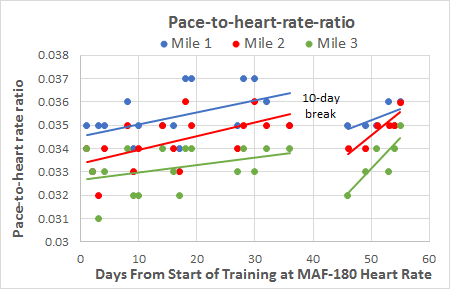
Pace-to-heart rate ratio results from the MAF-180 test for run/walk on the
same 3.5 mile course while maintaining heart rate in the prescribed range.

Lessons From The First Two Months

Data from the MAF-180 program normalized using Joe Friel’s approach has shown me the following:

  • The downward trend in pace over time is as anticipated by Dr. Maffetone. So is the increase in time for successive miles.
  • There is considerable day-to-day variation in pace. These result from external (e.g. temperature, humidity, wind) and internal (e.g. hydration, degree of recovery from the previous day) factors.
  • Fitness is fragile. A ten-day break almost completely erased the gains from the previous 28 days.
  • Don’t lose hope. Even if fitness appears to disappear quickly with a break, it will recover quickly after a short break. The pace and pace-to-heart rate ratio graphs show a greater slope after the break. They also converge much faster in the days after the break. Presumably, this is because I had retained some of the previous aerobic fitness.
  • Pace-to-heart rate ratio appears to be a better metric than pace alone.

Where Do You Go From Here?

With a proper aerobic endurance fitness base, you can now proceed to higher intensity workouts. These build the anaerobic system and increase performance.

After completing the base phase, gradually increase the intensity of your exercise. This is especially true if you are planning to race. For example, you can add speed drills into your swimming, biking, and running sessions.

However, even then, the consensus among trainers is to maintain an 80:20 ratio of aerobic (moderate intensity) to anaerobic (high intensity) training. And, also heed the rule of thumb of not increasing the intensity or duration of a session by more than 10% per week to avoid injury.

What Is Your Experience and Approach To Building Aerobic Fitness?

Share your thoughts and questions about aerobic training in the Comments section below.

Don’t forget to request a copy of the Google Sheet that includes the calculations and graph templates if you want to run a similar test.
Affiliate Disclosure

Why Senior Triathletes Should Use Interval Training

Interval training for senior triathletes provides important health and fitness benefits through short, intense periods of exercise. It is not surprising that, in recent years, high intensity interval training, or HIIT, has been among the most researched type of fitness program.

The interest in HIIT comes in part because of its value for the growing population of seniors. For the older athlete, HIIT can be an important part of a training plan. Why? Because it reduces the wear and tear of continuous, low to medium intensity exercise used to help us stay competitive as we age.

What is HIIT?

According to the American College of Sports Medicine (ACSM), high-intensity intervals are defined as those exercises performed at 80 to 95 per cent of one’s maximum heart rate. Intervals are between five seconds and eight minutes long.

The periods of high intensity are followed by periods of complete rest or active recovery performed at 40 to 50 per cent of one’s maximum heart rate. These periods depend on a person’s fitness but are generally longer than the high intensity period. As you will read further on, recovery is a critical part of an effective HIIT protocol.

Since there are so many ways to apply the principles of HIIT, this technique is used by elite and amateur athletes. It is even used as part of cardiac rehabilitation.

HIIT exercises can be performed in the gym using stationary bikes and treadmills, in the pool or lake, and at home using only bodyweight.

You May Already Be Using HIIT

If you have taken a cycling class at your local fitness center, you have probably made use of HIIT. Tabata, one of the most well known methods of applying HIIT, consists of eight repetitions of 20 seconds pedaling at 170% of maximum sustainable oxygen uptake followed by 10 seconds of rest. Done properly, the cyclist will maintain the same level of power for each repetition, rather than have the power taper off with each successive interval or even vary between intervals.

Other examples of high intensity interval training for the swim and run legs of a sprint triathlon are:

Interval training helps senior triathletes be more competitive racers.
High intensity interval training can help athletes of any age become more fit and competitive racers.

Benefits of High Intensity Intervals

High intensity interval training has three main benefits:

  • Reduces the tendency for overuse injuries,
  • Minimizes boredom – and the tendency to skip workouts – from repeating the same routine day after day,
  • Increases performance, that is, helps us become faster.

While longer, moderate intensity workouts build our body’s aerobic system, high intensity intervals tap into and strengthen both the aerobic and anaerobic systems.

In a May 22, 2019 article in Science Focus magazine titled “HIIT is changing the way we work out, here’s the science why it works“, author Jamie Millar explains the changes occurring during and as a result of high intensity intervals:

“Ramping up the intensity forces your body to tap into its anaerobic system for energy, because it can’t supply the oxygen required to work aerobically quickly enough; in the recovery intervals, your body reverts to its aerobic system. As the session goes on, your body relies less on the anaerobic system, because quick-release energy sources of phosphocreatine and glycogen (glucose stored in your muscles) become depleted. Your body will therefore start to rely more on the aerobic system, which releases energy more sustainably but slowly from fat.”

In Millar’s comments, we see benefits in developing our anaerobic system and in burning more fat. The latter is one reason why HIIT (along with proper nutrition) is great for weight loss.

What Senior Triathletes Should Know About Interval Training

Getting the most from HIIT and avoiding injury from it requires a well-thought out and properly executed plan. Here are three fundamentals of this type of routine.

First, Warmup

Before engaging in intense intervals, it is essential to warm up our muscles and get our heart rate up. My typical warmup is a 10 to 15 minute swim, bike, or run before the interval portion of the session.

Second, Recover Properly

Recovery in the context of HIIT (High Intensity Interval Training) has three meanings:

  • Recovery between each interval of a session,
  • Proper recovery at the end of HIIT session, and
  • Fully recovering between sessions.

Recovery during a HIIT session – Experts remind us to honor the recovery time specified in each interval. During the so-called ‘recovery interval’, our body clears out lactic acid from our muscles. One study showed that a recovery of 3 minutes between 4 minute running intervals led to faster, more productive intervals than when shorter or self-selected recovery intervals were used.

Recovery after a HIIT sessionA study by the German Federal Institute of Sport Science showed that active recovery, such as 15 minutes of moderate jogging after a HIIT session, led to a beneficial increase in anaerobic lactate threshold compared to passive recovery.

Recovery between sessions – Between HIIT sessions, it is important for our body to eliminate the lactic acid, hydrogen ions, and hormones (e.g. adrenaline) produced during the anaerobic exercise. For some types of HIIT, recovery also involves repair of micro tears of the muscles.

It is because of the time and need for complete recovery between intense sessions that most training programs include no more than one HIIT session per week.

Third, Be Patient

As with any form of physical activity that I can think of, doing too much too soon is a formula for injury. The key is to progress slowly.

For example, here is an example of a progression I have used, one that has NOT led to injury:

  • Hill repeats – start with 2 x 15-20 seconds running up a hill with at least 8% grade (8 feet [meters] rise over 100 feet [meters] distance) after a 10-15 minute warm-up run. Repeat every 7 to 14 days adding two repeats each session to a maximum of 10 per session. (Source: Stryd.)

On the other hand, I have become injured twice while trying to run intervals too fast. Too fast in this case means significantly faster than my 5k race pace. In one case, I injured a hamstring. Another time, I injured muscles around both knees.

Both injuries required a week without running. I am sure that I lost more than I gained from the sessions.

Managing Risks

The idea of becoming fit for little investment in time may sound appealing. However, that should not be the takeaway from this post.

To gain the benefits and avoid possible serious injury, HIIT must be done properly. The risk of high intensity can outweigh the benefits if done improperly.

Before starting a HIIT program, proponents of HIIT unanimously agree that you should discuss your plans with your physician.

How Do You Use High Intensity Intervals in Your Training?

Comment below to let us know how you are using intervals in your training? What have been the results?

Affilitate Disclosure

Tis the Season for Fresh Tart Cherry Juice

A few weeks ago, bright white blossoms covered the Montmorency cherry trees in our backyard. My thought? First, I was reminded at how beautiful they are. Next, I began to imagine the fresh cherry juice, cherry flavored kombucha, and tart cherry salsa we would soon enjoy.

The taste of freshly picked and pitted fruit from these cherry trees is wonderful. However, the mouth puckering liquid from this fruit also heals and strengthens. You see, tart cherries are packed with anti-inflammatory and anti-oxidant compounds.

Incorporating tart cherry juice as part of a healthy eating pattern can be a great way to add variety into an individual’s diet.

Sikako Minagawa, MS, RDN, Peak Performance Sports Nutrition, LLC

Related post: What Masters Athletes Need To Know About Nutrition

What Does the Science Say?

On February 20, 2020, the Cherry Marketing Institute issued a press release titled “New Meta-Analysis: Tart Cherry Juice Concentrate Found to Help Improve Endurance Exercise Performance”.

For the report cited in this release, researchers analyzed results of ten separate studies on the role of tart cherry juice on performance in endurance exercise. Only those based on randomized controlled trials were included in the research.

For their work, researchers used meta-analysis to analyze the combined results of individual studies. For reference, meta-analysis is a common research method. Meta-analysis applies statistical analysis to dig deeper into combined results of multiple scientific studies that address the same question.

According to the press release, co-author Philip Chilibeck, PhD, professor in the College of Kinesiology at the University of Saskatchewan concluded:

“The results of this meta-analysis found that tart cherries did help improve performance, and we gained greater insight into the potential mechanism responsible for this benefit.

Other findings of the study were:

  • Timing: Tart cherry concentrate is effective when taken for 7 days to up to 1-1/2 hours before exercise.
  • Fitness level: The least trained athletes showed the lowest improvement from consuming tart cherry juice.
  • Dose: The daily consumption of anthocyanins (compounds with anti-oxidant properties) by study participants ranged from 66 to 2,760 mg. However, the study did not identify the relationship between the amount of tart cherry concentrate consumed and athletic performance.
  • Mechanism: Improvements in performance are most likely related to the low glycemic index, anti-inflammatory, anti-oxidative, and blood flow enhancing effects of tart cherry concentrate.

How Can Triathletes Most Benefit from Tart Cherry Juice?

According to registered dietician Beth Schutt, tart cherry juice has the greatest benefit for athletes who are well into their training plan. In an article for USA Triathlon, she wrote:

“It is readily agreed upon, though, that prior to racing and directly after racing, tart cherry is most useful.  For the athlete who is deep into racing season and in a cycle of race, recover, repeat, tart cherry should be on the menu consistently.”

As the study cited above shows, there is less benefit when beginning to train and during the base building phase. Conversely, tart cherry juice’s benefits for recovery and performance become more valuable as race day approaches.

Benefits Beyond Sports Performance

For older adults, there are additional reasons for consuming tart cherries. According to registered dietician Sakiko Minagawa:

“In addition to sports performance, research suggests other benefits for older adults. Tart cherry juice may help reduce cardiovascular risk factors such as blood pressure and LDL cholesterol in this group.”

Looking for Tart Cherry Juice?

Not sure where to purchase tart cherry juice or its other forms (powder, juice concentrate)? One source is Swanson Vitamins. Please note that Senior Triathletes is an affiliate of this business. This means I will earn a small commission on any purchases from this company if you use this link.

Leave Your Questions and Comments Below

What is your go-to food or drink for post exercise recovery?

“Atomic Habits” for Triathletes

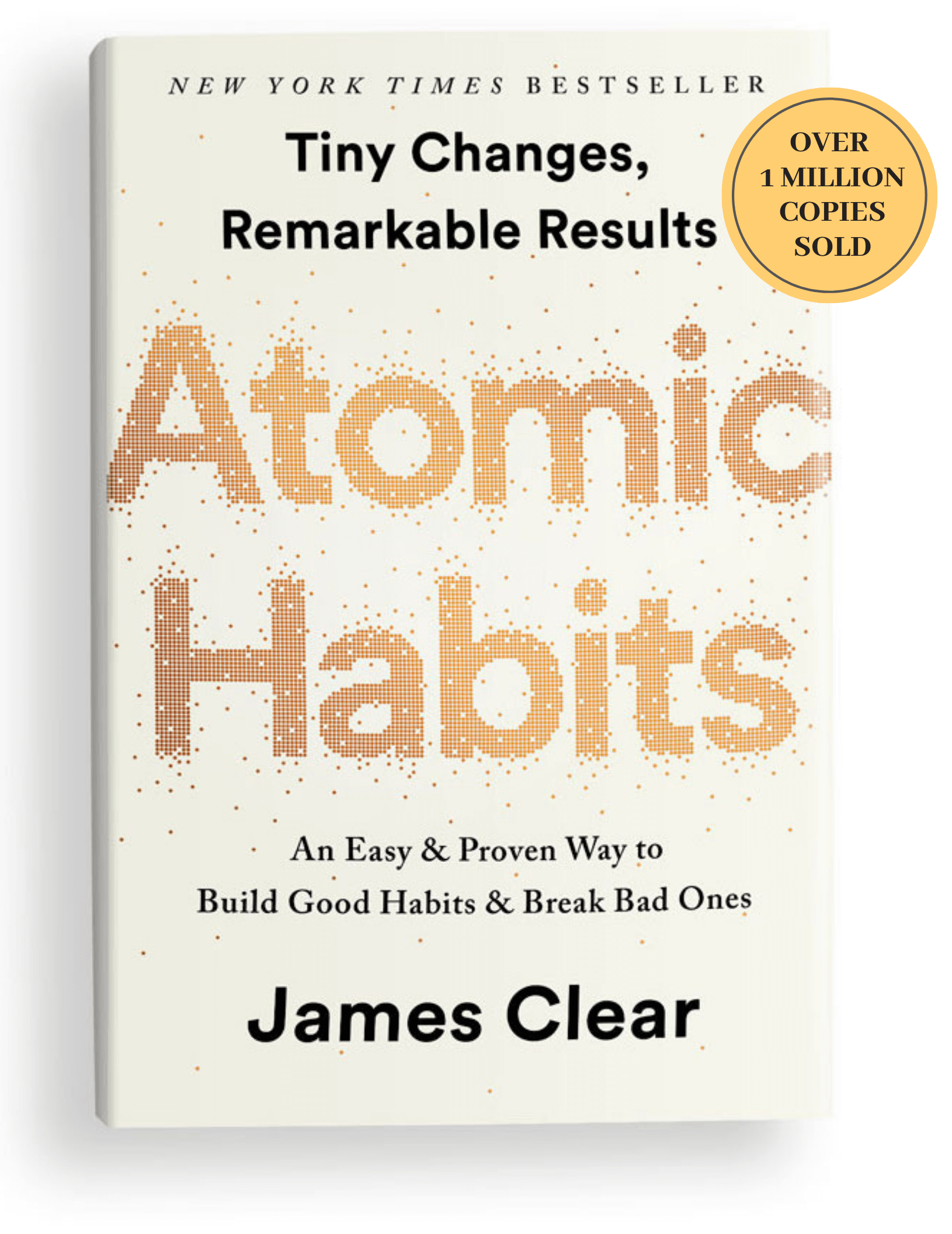
“Atomic Habits: An Easy & Proven Way to Build Good Habits & Break Bad Ones” by James Clear is for those, including triathletes, who wish to create new, performance-enhancing habits. It is also for those who want to eliminate destructive habits.

In the introduction to the book, Mr. Clear shares a powerful case study involving the British Cycling team. By applying the principles in this book, the team went from a perennial loser on the world stage during the 20th and early 21st centuries to the dominant competitor from 2007 to 2017.

During this ten-year period, British cyclists earned 178 world championships and sixty-six Olympic or Paralympic gold medals. They also won five Tour de France races.

This is the first example of many that highlights how so-called atomic habits have been used to improve fitness training, running, and personal and professional development efforts.

Following are my takeaways from the book, from the perspective of a triathlete.

What are ‘Atomic Habits’?

Atomic habits are regular activities or routines that, while small (hence the word ‘atomic’) and easy to do, provide significant impact (also related to ‘atomic’) on a process. Repeating these over time (as a habit) leads to a compounding effect.

According to James Clear, “Habits are the compound interest of self-improvement. The same way that money multiplies through compound interest, the effects of your habits multiply as you repeat them.”1

Developing the habit of consistent, regular, and structured training is an example of an atomic habit related to triathlon.

How to Develop Positive ‘Atomic Habits’

“Atomic Habits” summarizes the approach to developing new, performance-enhancing habits in a two-step process:

  • Determine the person you want to be and how you want to be defined.
  • Take small actions that prove that you are this person. Repeat these actions.

In How to Build a New Habit: This is Your Strategy Guide, James Clear clarifies what he means by ‘small’ relative to new actions.

One of the actionable pieces of advice from this book is “Start with a small habit”. Or, to say it another way, begin with an activity to which you cannot say ‘No’ because it is so easy to do.

This can, for example, mean combining walking and running until your fitness reaches the point that you can run for an entire session. It can also mean breaking up a larger activity into smaller ones. An example of this principle is swimming 10 minutes separated by a rest rather than swimming 20 minutes right away.

Before you know it, you are running the entire distance or swimming for 20 minutes (or more) without a break.

Related post: Book Review: The New Psycho-Cybernetics

Focus On Who You Want To Become

Rather than focusing on the action you want to achieve (such as to complete an Olympic-distance triathlon), the approach described in “Atomic Habits” starts with defining yourself in terms of the person who will achieve the goal.

In the triathlon example, the person makes the subtle but important change to define him/herself as an Olympic triathlete. From here, the triathlete develops a training plan, eating habits, sleep behaviors, and so on (the process) consistent with an Olympic-distance triathlete.

The new habits develop through a four-step process detailed in the book and described in the first column of the table below.

StepMakes an object of a good habitMakes an object of a bad habit
CueObviousInvisible
CravingAttractiveUnattractive
ResponseEasyDifficult
RewardSatisfyingUnsatisfying

James Clear also describes ways to make sure the new habit sticks. These include habit stacking (combining an existing positive habit with the desired new habit), changing the environment, and reframing a habit (from “I have to go for a run” to “I get to go out into the fresh air and improve my heart health”).

You will also learn about the Diderot Effect and the Goldilocks Rule and how these can support building new habits.

Be Patient, New Habits Require Time

It often takes time to make new habits part of our new-normal routine. Mr. Clear cautions us to be wary of how we interpret the results as we work to develop new habits.

The tendency is to expect linear results. For example, in my training, I expect to see consistent (linear) reductions in my 5k time as I restart running after a break. However, this is not the way results typically come.

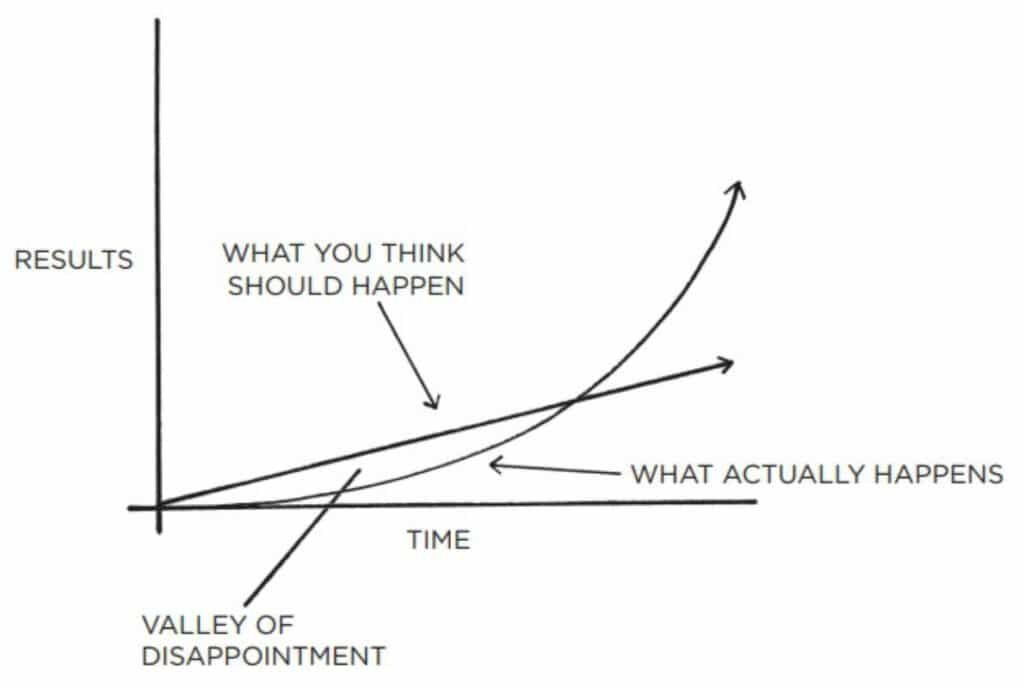
The graph of Results vs. Time below shows Mr. Clear’s representation of our expectations and experience as we build new habits.

Figure 1: Plateau of Latent Potential from page 22 of “Atomic Habits” by James Clear.

While we expect linear results, actual results are non-linear. The gap between the expected and actual results creates what Clear calls a “Valley of Disappointment”.

Seeing this graph for the first time created an ‘Aha-moment’. My experiences in run training definitely follow this, one reason that patience is so important. When impatience wins, I will try to speed up the results by training harder or longer. The result is usually injury and longer recovery time.

Summary

Our beliefs and the views of ourself can be engaged to drive processes that help us achieve our goals. Focusing on becoming the person we want to be can lead to greater performance than if we had focused on the goal. Atomic habits help us become who we want to be and perform at a higher level.

For More Information About “Atomic Habits”

“Atomic Habits: An Easy & Proven Way to Build Good Habits & Break Bad Ones” is available in print and audio versions at Amazon.com by clicking the link or picture below.

Throughout the book, James Clear refers to resources on his website for creating atomic habits. Please checkout the website at https://jamesclear.com/.

  1. Clear, James, “Atomic Habits: An Easy & Proven Way to Build Good Habits & Break Bad Ones”, Avery, 1st edition (October 16, 2018), p. 17.)

Affiliate disclosure

Share Your Questions and Comments Below

What has helped you develop new habits related to triathlon? Let me know what you think about the ideas presented here.

This post, originally published in March 2020, was updated on February 23, 2022.

error

Enjoy this post? Please spread the word :)